




What Are the Purported Benefits of AOD9604?
AOD 9604 peptide is a synthetic fragment derived from the C‑terminal region of human growth hormone (hGH) that has been investigated primarily for its effects on fat metabolism and, more recently, for potential roles in musculoskeletal research. In animal models and in vitro systems, AOD9604 appears to reproduce some of hGH’s lipolytic actions while avoiding activation of the classical GH/IGF‑1 growth axis.
Preclinical and early human work of AOD 9604 with a strength of 3mg suggest the following research‑level properties:
- Fat metabolism and body‑weight regulation (preclinical):
- In obese Zucker rats, chronic oral administration of AOD9604 (500 µg/kg/day for 19 days) reduced body‑weight gain by more than 50% compared with controls and increased lipolytic activity in adipose tissue, without impairing insulin sensitivity.
- C‑terminal hGH fragments encompassing residues 177–191, including AOD9604, have been shown to stimulate lipolysis and inhibit lipogenesis in obese rodent models, influencing energy balance and fat oxidation.
- Selective action on adipose tissue vs GH/IGF‑1 axis:
- AOD9604 shares some of hGH’s effects on adipose tissue, including modulation of lipid metabolism, but does not stimulate IGF‑1 production or GH‑receptor–mediated mitogenic activity in the systems studied.
- Across six randomized, placebo‑controlled human trials (≈900 adults), AOD9604 did not raise serum IGF‑1, did not deteriorate oral glucose tolerance, and did not produce the sodium retention, edema, or glucose‑intolerance profile typically associated with systemic hGH therapy.
Because of this profile, the AOD 9604 (or AOD-9604) peptide is often described in the marketplace as an “AOD 9604 weight loss peptide.” From a clinical‑evidence standpoint, however, human trials have shown at most modest and inconsistent effects on body weight, and the compound is not an approved obesity treatment.
Any investigation that seeks to buy AOD 9604 as weight loss and metabolic peptides should therefore treat it strictly as an experimental tool for studying energy balance, adipocyte biology, and related pathways, rather than as a validated therapeutic agent.
Beyond metabolic research, sponsor‑driven preclinical work has explored potential musculoskeletal effects:
- In a rabbit collagenase‑induced osteoarthritis model, intra‑articular AOD9604 enhanced morphological and histologic cartilage regeneration, and AOD9604 combined with hyaluronic acid (HA) produced greater improvements in cartilage scores and shorter lameness duration than either agent alone.
- In vitro studies and patent filings from the development program report that AOD9604 increased proteoglycan and collagen content in cartilage cell cultures and may promote osteogenic differentiation of adipose‑derived mesenchymal stem cells, suggesting possible utility for studying cartilage matrix and bone formation pathways.
Notably, these cartilage, bone, and stem‑cell findings are entirely preclinical and largely sponsor‑generated. To date, there are no completed human trials demonstrating clinical benefit of AOD9604 in osteoarthritis, fracture healing, or other tissue‑repair indications.
What Is the Chemical Makeup of AOD9604?
AOD9604 is a synthetic hexadecapeptide modeled on the lipolytic C‑terminal domain of human growth hormone. AOD9604 corresponds to the C‑terminal fragment of hGH spanning residues 177–191, with an additional N‑terminal tyrosine residue (Tyr‑hGH 177–191). This yields a 16‑amino‑acid peptide that structurally resembles the homologous region of native hGH while lacking the domains required to activate the full GH receptor/IGF‑1 axis.
- Peptide Sequence:
- Tyr-Leu-Arg-Ile-Val-Gln-Cys-Arg-Ser-Val-Glu-Gly-Ser-Cys-Gly-Phe-OH
- Molecular properties (AOD9604 free peptide):
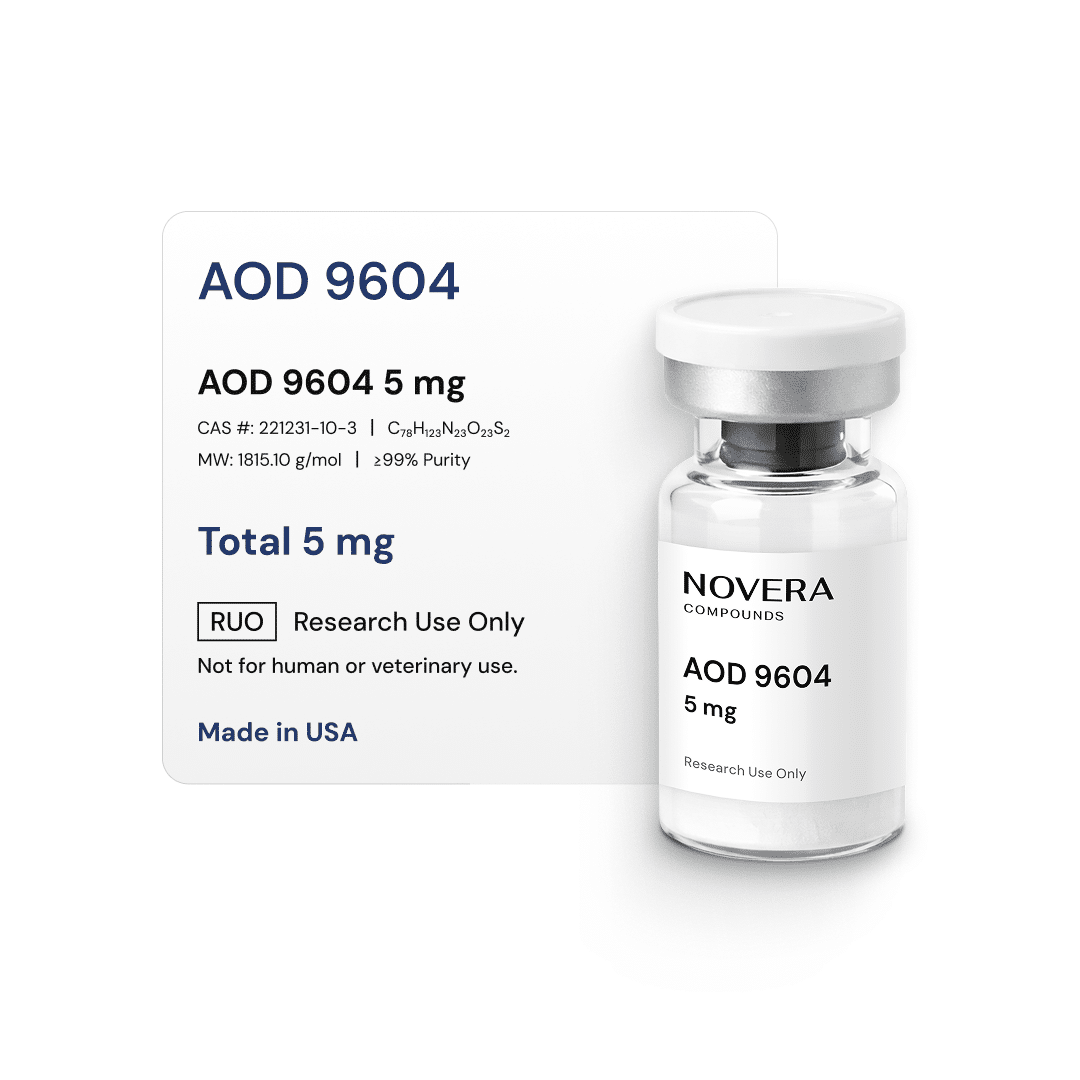
- Molecular formula: C₇₈H₁₂₃N₂₃O₂₃S₂
- Molecular weight: 1815.1 g/mol
- CAS: 221231-10-3
- Cyclic disulfide structure:
- The peptide contains two cysteine residues that form an intramolecular disulfide bridge between positions 7 and 14, described as a (7→14) cyclic disulfide.
- This cyclization improves conformational stability and resistance to proteolytic degradation compared with a linear C‑terminal fragment.
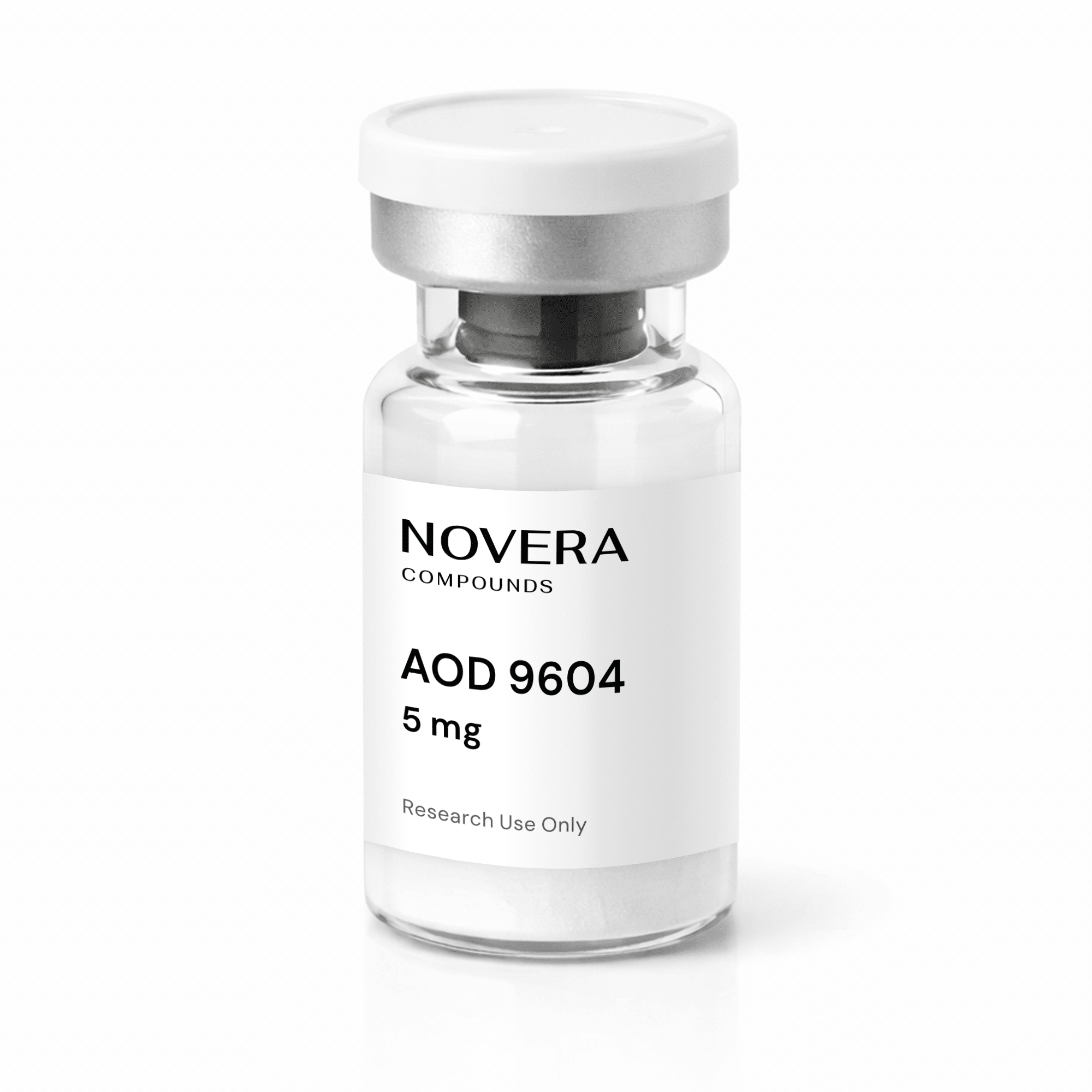
Moreover, AOD9604 is typically manufactured by solid‑phase peptide synthesis under cGMP and supplied as a lyophilized white powder for maximum stability. It is commonly provided in small‑dose research vials (for example, 3 mg or 5 mg per vial), which can be reconstituted with sterile diluent immediately before use. This makes it straightforward to source AOD 9604 for research as an AOD 9604 5 mg vial or similar presentation from specialized peptide suppliers, depending on catalog offerings.
Given these characteristics, laboratories that buy AOD 9604 generally employ it as a tool compound to probe the biology of C‑terminal GH fragments and to dissect pathways related to lipolysis, adipocyte metabolism, and extracellular matrix synthesis.
What Does Scientific Research Say About AOD9604?
AOD 9604 for research has been evaluated in six randomized, double-blind, placebo-controlled studies assessing safety and metabolic outcomes in obese and non-obese adults.
Intravenous single-dose studies (25–400 µg/kg) in healthy and obese volunteers reported no treatment-related serious adverse events and no meaningful changes in IGF-1, glucose, or laboratory safety markers, with adverse events comparable to placebo.
Oral dosing studies (9–54 mg), including single-dose and 7-day protocols, demonstrated good tolerability across all doses. Mild gastrointestinal effects were more frequent at higher doses, but no consistent safety signals were observed. There were no significant changes in glucose regulation, insulin, IGF-1, ECG findings, or other safety endpoints.
A 12-week Phase IIb study in obese adults (1–30 mg/day) showed safety and tolerability similar to placebo. While sponsor reports suggested modest reductions in abdominal fat in earlier trials, detailed peer-reviewed efficacy data remain limited.
A 24-week Phase IIb trial incorporating diet and exercise interventions did not demonstrate a statistically significant weight-loss benefit versus placebo. As a result, development of AOD 9604 as a pharmaceutical anti-obesity agent was discontinued.
Research interpretation:
AOD 9604 appears well tolerated across a wide dose range, with no consistent effects on IGF-1 or glucose metabolism. Human data indicate small and inconsistent effects on body weight, insufficient to support clinical development, which should inform how AOD 9604 is described in scientific and informational contexts.
Musculoskeletal and Exploratory Research
In a rabbit model of knee osteoarthritis, weekly intra-articular administration of AOD 9604 (0.25 mg) improved cartilage structure and histologic scores compared with saline. Combination treatment with hyaluronic acid produced greater cartilage regeneration and shorter lameness duration than either agent alone.
Preclinical in vitro studies suggest that AOD 9604 may promote osteogenic differentiation, enhance myoblast maturation, and increase chondrocyte production of collagen and proteoglycans. Database and patent literature further note retention of select hGH-related bone activities.
These findings remain preclinical and support the use of AOD 9604 in research exploring cartilage biology, bone metabolism, and tissue remodeling, without establishing clinical efficacy.
What Are the Storage Conditions for AOD9604?
To preserve the integrity of the AOD 9604 peptide during storage and experimental use, standard peptide‑handling practices should be followed. Specific validated stability data for AOD9604 are limited, so researchers should always prioritize the supplier’s COA and label instructions.
Unreconstituted (lyophilized) AOD9604:
- Products are supplied as a lyophilized powder for maximum stability.
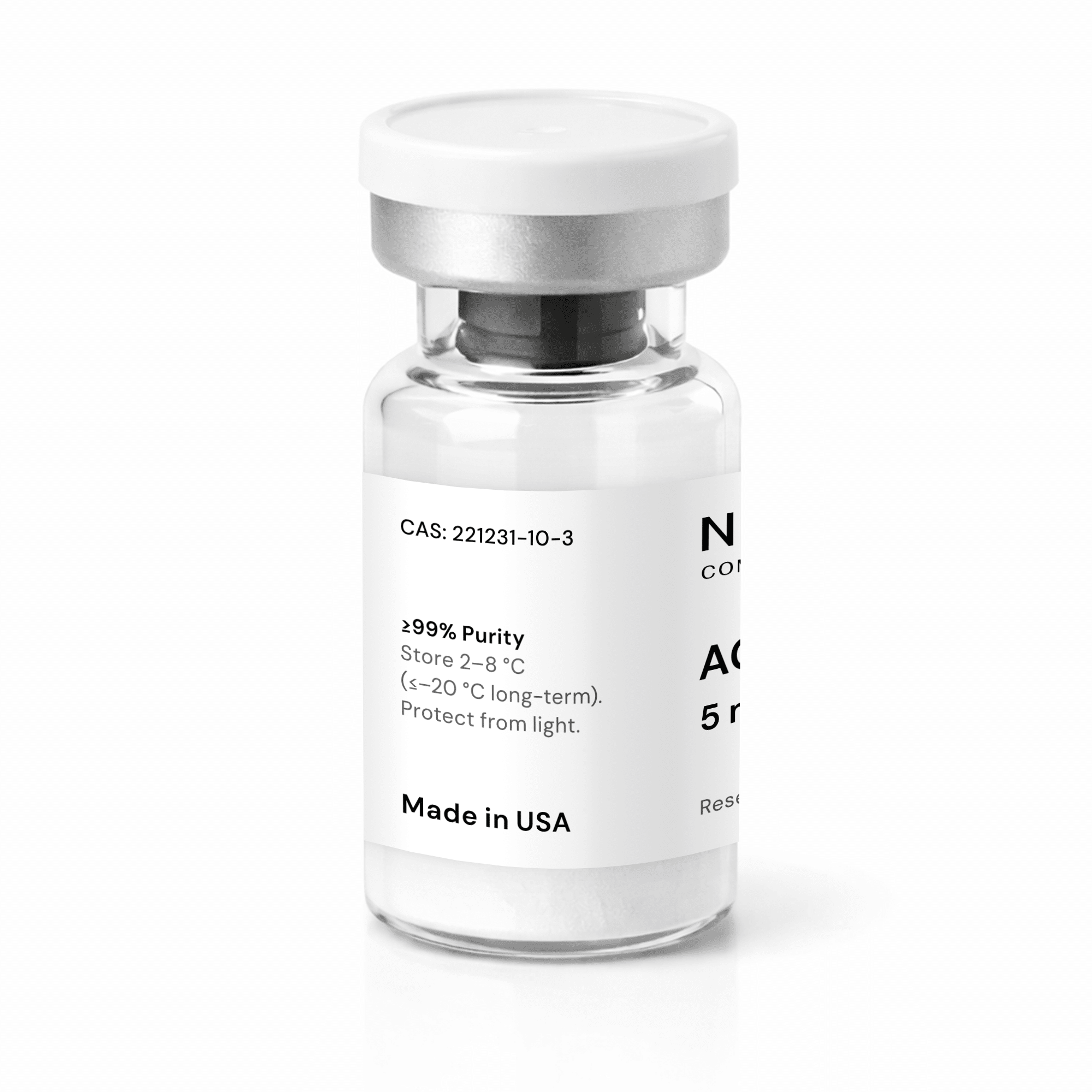
- For short‑ to medium‑term storage, keep vials refrigerated at 2–8 °C, protected from light and moisture. Under these conditions, small research peptides often remain stable for several months.
- For long‑term storage, deep‑freeze conditions (typically –20 °C to –80 °C) are recommended to minimize degradation; many laboratories store lyophilized peptides under these conditions, although users should follow supplier‑specific guidance and monitor batch‑specific expiry.
Reconstituted AOD9604 solutions:
- Reconstitute the lyophilized material with an appropriate sterile solvent (e.g., sterile water or bacteriostatic water) immediately before use, following institutional aseptic technique.
- Store reconstituted solutions at 2–8 °C, protected from light.
- To avoid degradation from repeated freeze–thaw cycles, prepare single‑use aliquots if freezing reconstituted peptide is necessary for your protocol. Where possible, minimize or avoid freezing reconstituted solutions unless supported by internal validation data.
Handling considerations:
- Allow frozen or refrigerated vials to reach room temperature in a dry environment before opening to prevent condensation on the peptide.
- Gently swirl or invert during reconstitution rather than vigorous shaking to reduce mechanical stress on the peptide backbone.
- Dispose of unused peptide and solutions according to institutional biosafety and chemical‑waste guidelines.
For investigators who buy AOD 9604 or use AOD 9604 for research, adherence to these handling and storage principles helps maintain batch integrity and reproducibility across metabolic, adipocyte, or musculoskeletal studies.
Additionally, researchers interested in AOD9604 for research can source the peptide from specialized research‑only suppliers that offer high‑purity lyophilized vials (e.g., 3 mg or 5 mg) and analytical documentation. When you buy AOD 9604, it should be understood that:
- AOD9604 is not approved for human or veterinary administration and is not an FDA‑approved medication for obesity, osteoarthritis, or any other indication.
- Any references to “AOD 9604 weight loss peptide” or tissue‑repair potential are based on preclinical models and limited, inconsistent human data, and should not be interpreted as validated clinical outcomes
Are you looking to buy AOD9604 online?
If you’re looking to order AOD9604 online at wholesale prices, contact Medical Spa RX for guidance on how to do so.
Sources
https://academic.oup.com/endo/article-abstract/142/12/5182/2988749
https://pubmed.ncbi.nlm.nih.gov/26275694
https://jofem.org/index.php/jofem/article/view/213/278