



HYALGAN®
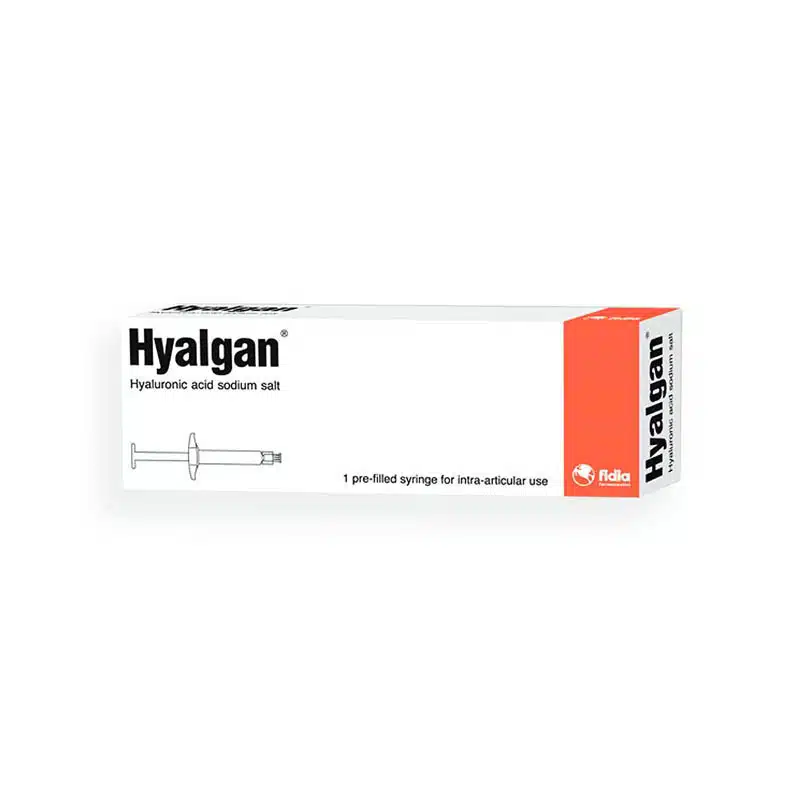
HYALGAN® by Fidia Pharma is an FDA-approved avian-derived sodium hyaluronate viscosupplement for the treatment of painful osteoarthritis of the knee. Supplied as a 20 mg/2 mL prefilled syringe, HYALGAN® injection therapy is delivered as a course of three to five weekly intra-articular injections. Medical Spa Rx stocks HYALGAN® with secure online ordering, bulk and individual options, and straightforward checkout for licensed practitioners. Clinic buyers can buy HYALGAN® online below, in single units or volume quantities.
Find More with Just a Click!
Can’t spot what you need in our catalog? Fret not–just sign up for our expert consultations. We will provide the insights you need. We're here to guide you to your clinic's potential; no product browsing needed
Showing the single result
Other information
About HYALGAN® — Decades of Clinical Evidence in Knee Viscosupplementation
HYALGAN® carries one of the longest clinical track records of any viscosupplement in active use. Developed by Fidia Pharma and approved by the Food and Drug Administration for intra-articular treatment of painful knee osteoarthritis, it delivers avian-derived sodium hyaluronate, a molecule closely resembling the hyaluronic acid present in healthy synovial fluid [1][2]. That research history is why the product still holds shelf space in clinics that have since adopted newer options, and it makes HYALGAN® among the most familiar intra-articular HA products to practitioners and payers alike.
Why Practitioners Choose HYALGAN® Over Other Viscosupplements
Investigations by the HYALGAN® study group, including the randomized clinical trial by Altman, Moskowitz, and colleagues in the Journal of Rheumatology, remain reference points in the viscosupplementation literature [1]. Across multiple controlled clinical trials and controlled single-blind trials, HYALGAN® gel injections have shown meaningful benefit in pain and function for patients with knee OA [1][2]. For practitioners fielding payer questions or patient hesitancy, a product with that much published history behind it is easier to stand behind than a newer entrant with a thinner file.
HYALGAN® also bills under J-code J7321 and is supported by recognized CPT coding pathways and Medicare coverage criteria for eligible knee OA patients [3]. That administrative clarity reduces back-office friction, which matters more in practices running insurance-heavy volume.
Treatment Areas and Patient Indications
HYALGAN® is FDA-approved for intra-articular treatment of painful osteoarthritis of the knee in adults who have not responded adequately to conservative non-pharmacological therapy and simple analgesics [1][2]. The target population presents with chronic knee pain driven by articular cartilage degradation, reduced synovial HA concentration, and declining joint lubrication. For these patients, HYALGAN® injections offer a non-surgical management pathway with documented potential for sustained pain reduction.
The knee is the approved site of administration. Clinical experience with intra-articular sodium hyaluronate in the hip, shoulder, and ankle appears in the literature, but those applications are off-label for HYALGAN® and warrant appropriate informed consent. A knee with joint effusion is not a barrier to treatment; aspirating excess fluid before injection is standard practice in those cases. Licensed practitioners looking to buy orthopedic injections for knee OA management can add HYALGAN® to a Medical Spa Rx order alongside the rest of their intra-articular stock.
How HYALGAN® Works — Sodium Hyaluronate and Synovial Fluid
In a healthy knee, synovial fluid contains endogenous hyaluronic acid providing both lubrication during movement and viscoelastic cushioning under compressive load. Osteoarthritis degrades that HA progressively, reducing concentration and molecular weight, and with them the mechanical protection the joint depends on. HYALGAN® is injected directly into the knee joint to supplement the HA naturally in synovial fluid, temporarily restoring the viscoelastic environment that supports normal joint function [1][2].
HYALGAN® ingredients are avian-derived sodium hyaluronate at approximately 500 to 730 kDa, suspended in phosphate-buffered saline. It is classified as a medical device rather than a pharmaceutical drug, and that distinction carries through to regulatory status, billing approach, and how the mechanism gets framed against steroid-based alternatives. The supporting literature includes data from multiple controlled clinical trials and controlled single-blind trials conducted by the HYALGAN® study group, covering long-term efficacy and safety alongside the comparative efficacy of different dose schedules of hyaluronic acid [1][2].
At Medical Spa Rx, we stock hyaluronic acid across orthopedic and aesthetic applications, and practitioners who buy HA dermal fillers are working with the same underlying chemistry they encounter in viscosupplementation. Clinics running both service lines can buy dermal fillers on the same order.
About the Manufacturer — Fidia Pharma
Founded in 1946 and headquartered in Abano Terme, Italy, Fidia Pharma is a life sciences company built around hyaluronic acid. For nearly eight decades it has concentrated its research, manufacturing, and commercial capability on HA-based technologies spanning viscosupplementation, wound care, and ophthalmology, and the company remains closely associated with the future of hyaluronans in orthopedics as the category develops [4].
HYALGAN® is the flagship of Fidia’s viscosupplementation portfolio, which also includes Hyalubrix and Sinovial. Those products differ in molecular weight, concentration, and injection frequency, but reflect the same HA manufacturing base. Clinics sourcing regularly work with a product from a manufacturer for whom viscosupplementation is a core discipline rather than a side line.
HYALGAN® Product Spotlight
Each HYALGAN® 20 mg/2 mL prefilled syringe contains 20 mg of avian-derived sodium hyaluronate in sterile phosphate-buffered saline, ready for direct intra-articular administration without reconstitution. The prefilled format removes preparation steps at the point of care, which counts for something in a busy injection clinic. A standard course delivers one 2 mL syringe per injection, weekly across three to five injections, according to clinical assessment and patient response [4].
Practitioners who need regular volume can purchase HYALGAN® online through Medical Spa Rx, with bulk pricing available to verified licensed buyers and single-unit ordering for practices treating occasional cases.
Where to Buy HYALGAN® Wholesale and What a Course Costs
HYALGAN® injection price is harder to pin down per patient than for fixed-course products, because the schedule runs three to five weekly injections rather than a set number. A practice budgeting on three and treating on five under-orders by a wide margin. Clinics weighing HYALGAN® injection alternatives on cost alone often miss this, since a per-syringe comparison against a three-injection product flatters HYALGAN® on paper and understates it in practice.
The J7321 per-dose billing structure works in favor of the longer course where coverage applies, since each injection bills separately rather than the course billing as a unit. That makes the reimbursement picture, not the acquisition price, the number worth modeling. We generally suggest practices run the arithmetic at a five-injection course and treat anything shorter as upside.
Licensed practitioners can buy HYALGAN® wholesale through Medical Spa Rx, with tiered pricing on volume orders and single syringes for practices treating occasional cases. HYALGAN® knee injections ordered as a full course arrive as individual prefilled syringes rather than a bundled pack, so stock planning runs per-injection rather than per-patient.
HYALGAN® Injection Administration, Dosing, and Aftercare
HYALGAN® is administered by intra-articular injection into the knee joint under aseptic technique. Where a patient presents with joint effusion, aspirating excess synovial fluid before injection is standard and helps distribution of sodium hyaluronate within the joint space [4].
The standard HYALGAN® injection dosage is one 2 mL syringe per session, with the full course delivered as three to five weekly injections depending on clinical protocol and patient need. Clinical studies have evaluated multiple schedules, and both three-injection and five-injection regimens have produced meaningful symptom relief in appropriately selected patients [1][2].
Patients worried if HYALGAN® injections are painful should be informed that mild discomfort during or immediately after injection is expected with any intra-articular procedure, and local anesthetic is available at the practitioner’s discretion. Post-injection soreness, transient warmth, or slight swelling at the knee generally resolve within a few days. Patients should avoid strenuous or prolonged weight-bearing for 48 hours after each injection [4].
Response timelines vary on how long it takes for HYALGAN® injections to work. Some patients notice improvement within the first few weeks of the course. Others experience gradual, cumulative relief that continues building for weeks after the final injection. Patients should be encouraged to complete the full prescribed course before assessing outcomes [1][2].
Receiving and Storing HYALGAN® in Clinic
Shipping for avian-derived viscosupplements carries a documentation dimension that non-avian products do not. Where a patient challenge or an adverse event follows treatment, source documentation on the lot matters, so cartons and inserts are worth retaining rather than discarding at unboxing.
Beyond that, receiving practice is standard for prefilled intra-articular products. Check that syringe barrels are intact and the solution is clear before stock moves to the treatment room, and confirm lot numbers against the shipping documentation. A syringe showing particulate matter, discoloration, or barrel damage should be set aside rather than used. Store per the conditions in the current package insert, keep syringes in the original carton until the point of use, and consult the individual product IFU for complete handling and administration guidance.
Regulatory Status, J-Code, and Medicare Coverage
HYALGAN® holds FDA approval as a Class III medical device under Premarket Approval application P950027 for intra-articular treatment of painful knee OA [3]. Its long-term efficacy and safety profile was evaluated through the full PMA review and is supported further by extensive post-market clinical experience. As an approved device rather than a biologic or prescription drug, HYALGAN® follows a regulatory pathway that matters for procurement, billing, and informed consent.
The HYALGAN® J code is J7321, the HCPCS Level II code for avian-derived sodium hyaluronate viscosupplementation billed per dose [3]. The J code for HYALGAN® is among the most widely recognized in the viscosupplement category. Practitioners should document the appropriate HYALGAN® injection CPT code for the intra-articular procedure and verify current coding requirements with their billing department or CMS resources, since guidance is updated annually.
Medicare covers HYALGAN® injections for eligible beneficiaries under applicable CMS viscosupplementation criteria, which generally require documented knee OA diagnosis and inadequate response to conservative therapy [3]. Commercial payers may apply different authorization requirements. Confirm patient-specific eligibility, obtain prior authorization where required, and keep supporting documentation before proceeding.
HYALGAN® Safety Profile — Side Effects and Contraindications
HYALGAN® is generally well tolerated in appropriately selected patients, with a safety profile established across decades of controlled clinical trials and post-market use. The most commonly reported side effects of HYALGAN® injections are localized and transient: injection-site pain, swelling, and warmth, typically resolving within 48 hours without intervention [1][2].
Contraindication screening is essential before every course. The critical one is hypersensitivity to avian proteins including eggs, feathers, or poultry, given the product’s avian origin. HYALGAN® is also contraindicated in patients with active joint infection or with skin disease, inflammation, or infection at or near the intended injection site. A review of patient history, allergy status, and current clinical condition should precede each treatment course [1][4]. This screening requirement is the single practical disadvantage of avian-derived viscosupplements, and it is worth building into intake rather than handling at the point of injection.
Comparing HYALGAN® to Other Viscosupplements
HYALGAN® vs ORTHOVISC®
ORTHOVISC® uses ultra-high-molecular-weight sodium hyaluronate from non-avian bacterial fermentation, against HYALGAN®’s 500 to 730 kDa avian material. Both follow multi-injection protocols, so the divide is allergy screening rather than schedule. Practices serving avian-sensitive patients can buy ORTHOVISC® as the alternative.
HYALGAN® vs EUFLEXXA®
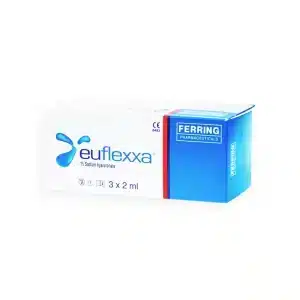
EUFLEXXA® is non-avian, biofermentation-derived, and given across three injections against HYALGAN®’s three to five. Both are indicated for painful knee osteoarthritis, so patient selection turns on source and schedule rather than indication. Where avian protein hypersensitivity is confirmed or unconfirmed, clinics can buy EUFLEXXA® and skip the screening step entirely, which is the practical reason most practices stocking HYALGAN® keep a non-avian option beside it.
HYALGAN® vs MONOVISC®
MONOVISC® is a single-injection, cross-linked, non-avian product, which suits patients who struggle with multi-week attendance. HYALGAN® requires the full course but brings an evidence base a single-injection product cannot match. Practices serving both patient types can buy MONOVISC® alongside their HYALGAN® stock.
HYALGAN® vs SYNVISC®
Both are avian-derived, so allergy screening applies either way. The compositional difference is structural: HYALGAN® uses non-cross-linked sodium hyaluronate at roughly 500 to 730 kDa, while SYNVISC® contains cross-linked hylan G-F 20 at a substantially higher effective molecular weight. Those differences carry through to injection frequency and to the clinical evidence profile behind each product. Clinics wanting a cross-linked hylan option on hand can buy SYNVISC® through the same catalog.
HYALGAN® vs SUPARTZ®
These two are the closest comparison in the category, both avian-derived, non-cross-linked sodium hyaluronate for knee OA viscosupplementation, both requiring the same allergy screening. Molecular weight range, course specifics, and manufacturer are the differentiators. HYALGAN®’s research record is the deeper of the two, anchored by the HYALGAN® study group publications, which is usually what decides it where a practice is choosing one avian product to stock rather than both. Practices carrying across the category can buy SUPARTZ® from the same order.
FAQs
What is HYALGAN®?
HYALGAN® is an FDA-approved Class III medical device from Fidia Pharma for intra-articular treatment of painful osteoarthritis of the knee [3][4]. It contains avian-derived sodium hyaluronate at 20 mg per 2 mL prefilled syringe and ranks among the most extensively studied viscosupplements in clinical use. It is not a steroid or a pharmaceutical drug.
How does HYALGAN® work?
HYALGAN® is injected directly into the knee joint, where it supplements the hyaluronic acid naturally present in healthy synovial fluid [1][2]. Osteoarthritis reduces native HA concentration and viscoelasticity, impairing lubrication and cushioning. The injection temporarily restores those mechanical properties to the joint environment.
What is the HYALGAN® J code?
The J code for HYALGAN® is J7321, the CMS HCPCS Level II code for avian-derived sodium hyaluronate viscosupplementation billed per dose [3]. Confirm the appropriate CPT code for the intra-articular injection procedure with your billing department, since CPT coding is updated annually.
Does Medicare cover HYALGAN® injections?
Yes, for eligible beneficiaries under applicable CMS viscosupplementation coverage criteria, which generally require documented knee OA diagnosis and inadequate response to conservative therapy [3]. Commercial payers may set their own requirements, so confirm patient-specific eligibility and prior authorization needs before proceeding.
How long does it take for HYALGAN® injections to work?
Response timelines vary. Some patients notice reduced pain within the first few weeks of the course, while others experience gradual relief building across the three to five weekly injections and continuing after the final dose [1][2]. Encourage patients to complete the full course before evaluating outcomes.
Are HYALGAN® injections painful?
Mild discomfort at the injection site is expected with any intra-articular procedure and should be communicated to patients in advance [4]. Local anesthetic is available at the practitioner’s discretion. Post-injection soreness, temporary warmth, or slight swelling typically resolve within 48 hours.
What are the side effects of HYALGAN® injections?
The most commonly reported are localized and transient: injection-site pain, swelling, and warmth around the treated knee [1][4]. Systemic reactions are uncommon. Avian protein hypersensitivity is the most important contraindication, so screen all patients for sensitivity to eggs, feathers, or poultry before treatment. Active joint infection or skin disease at the site also contraindicates use.
HYALGAN® vs SYNVISC® — how do they compare?
Both are avian-derived viscosupplements with substantial clinical evidence behind them. HYALGAN® delivers non-cross-linked sodium hyaluronate at roughly 500 to 730 kDa; SYNVISC® uses cross-linked hylan G-F 20 at a higher effective molecular weight [1][2]. They differ in molecular architecture, injection frequency, and course structure, and selection usually reflects practitioner preference, institutional familiarity, and payer considerations.
Trying to buy HYALGAN® online?
Medical Spa Rx offers a direct route to buy HYALGAN® injection online through secure checkout built for licensed practitioners and clinic procurement teams. Add the 20 mg/2 mL prefilled syringe to your cart, select individual units or bulk quantities, and complete the order through our encrypted platform. Volume pricing applies to higher-quantity orders, and all orders are fulfilled to verified healthcare professionals in line with applicable regulations.
Resources
- Altman RD, Moskowitz R; Hyalgan Study Group. Intraarticular sodium hyaluronate (Hyalgan) in the treatment of patients with osteoarthritis of the knee: a randomized clinical trial. Journal of Rheumatology. 1998. https://pubmed.ncbi.nlm.nih.gov/9818665/
- Maheu E, Ayral X, Dougados M. A hyaluronan preparation (500-730 kDa) in the treatment of osteoarthritis: a review of clinical trials with Hyalgan. International Journal of Clinical Practice. 2002. https://pubmed.ncbi.nlm.nih.gov/12510956/
- S. Food and Drug Administration. P950027: Hyalgan, Premarket Approval (PMA). FDA. Last Updated 06/29/2026. www.accessdata.fda.gov/scripts/cdrh/cfdocs/cfpma/pma.cfm?id=P950027
- Fidia Pharma USA Inc. Hyalgan package insert / prescribing information. Fidia Pharma USA. www.hyalgan.com/wp-content/uploads/2023/02/HYALGAN-package-insert-Fidia-USA.pdf
The page and all of its displayed contents are for medical professionals, designed to inform only, and not as a replacement for medical advice.
Written and reviewed by the Medical Spa Rx Editorial Team
All clinical and product claims on this page have been checked against peer-reviewed research, manufacturer data, and regulatory sources in accordance with our Editorial Policy .