



DERMALAX™
Dermalax® is a South Korean cross-linked hyaluronic acid (HA) dermal filler manufactured by Across Co., Ltd. and described as CE-marked in the reviewed materials. The range includes four formulations: Deep, Deep Plus, Implant, and Implant Plus, differing in lidocaine content and intended injection depth. For practitioners comparing Dermalax filler against other Korean and European HA lines, this guide breaks down the formulation science, the clinical indications, and how the brand stacks up product by product.
Find More with Just a Click!
Can’t spot what you need in our catalog? Fret not–just sign up for our expert consultations. We will provide the insights you need. We're here to guide you to your clinic's potential; no product browsing needed
DERMALAX™ products
Other information
Buy Dermalax® | Order Wholesale
Medical Spa Rx carries the full Dermalax® range and supports licensed practitioners who want to buy Dermalax® wholesale, with product comparison, sourcing guidance, and account support geared to clinic requirements.
What Is Dermalax®? South Korean Cross-Linked HA Filler Explained
Dermalax® is manufactured in South Korea by Across Co., Ltd., a medical device company producing CE-marked hyaluronic acid HA injectables for international aesthetic markets. The filler is built on a cross-linked hyaluronic acid base using the BDDE (1,4-butanediol diglycidyl ether) cross-linking method common to most modern HA fillers. The HA itself is non-animal derived, produced through bacterial fermentation rather than extracted from animal tissue, which is standard across reputable Korean and European brands.
The line covers four products that differ mainly in viscosity and lidocaine content:
- Dermalax® Deep: medium viscosity, no lidocaine
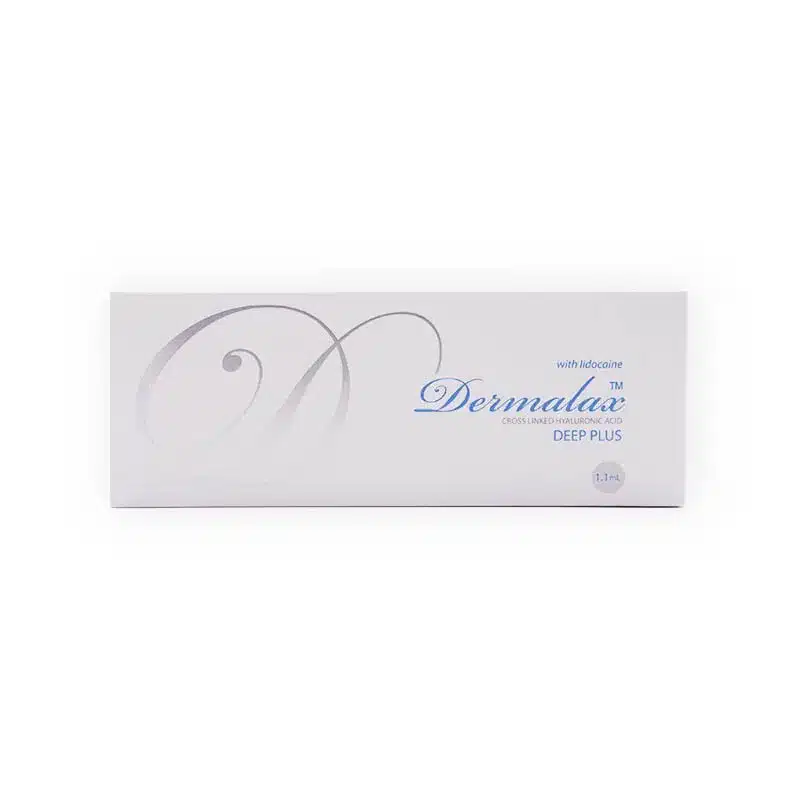
- Dermalax® Deep Plus: medium viscosity, with lidocaine
- Dermalax® Implant: high viscosity, no lidocaine
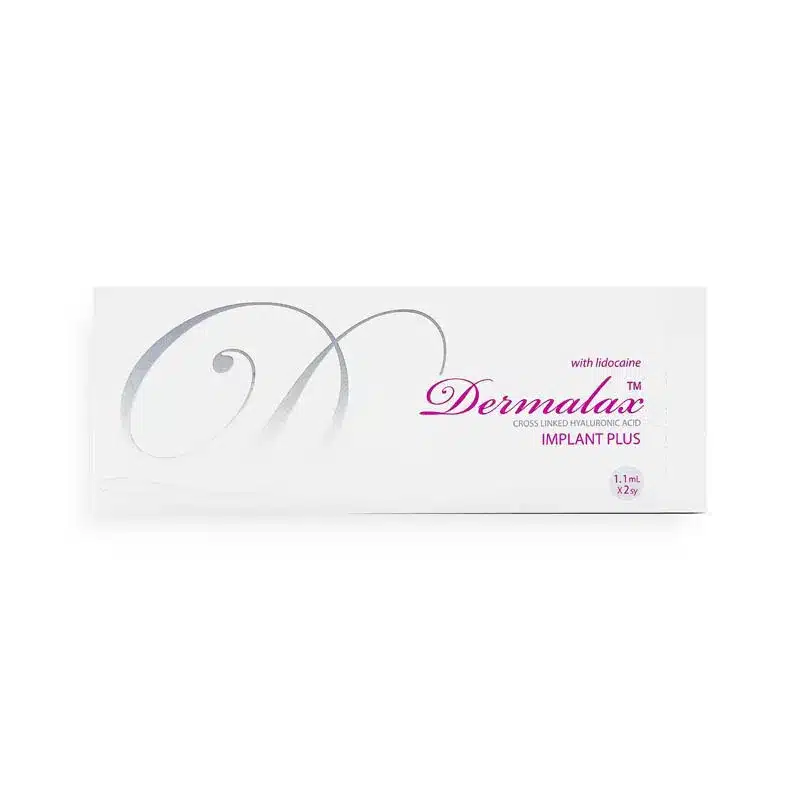
- Dermalax® Implant Plus: high viscosity, with lidocaine
This structure gives practitioners flexibility to match viscosity to treatment depth and to manage total lidocaine exposure across a session.
Regulatory Status and FDA Position Before Comparing
Before comparing Dermalax® to other brands, it is worth being clear on where it is, and is not, cleared for use. Dermalax® carries CE marking, meaning it meets the regulatory standards required for medical devices sold in the EU, UK, and a number of international markets that recognize the CE framework.
Dermalax® filler is not FDA approved. It has not received FDA clearance for sale or use in the United States, and while it holds CE marking for applicable European markets, regulatory requirements differ between countries. Practitioners who plan to order Dermalax® online should confirm what their own jurisdiction permits before procurement or treatment, since approval status governs where the product can be lawfully used.
Dermalax® Product Range: All 4 Products
Each Dermalax® product is built around the same cross-linked HA base but formulated for a different clinical purpose. Practitioners who buy Dermalax® filler typically stock more than one formulation so they can match viscosity to the treatment at hand.
Dermalax® Deep Plus is a medium-to-high viscosity cross-linked HA with lidocaine, primarily indicated for deep dermal implantation in nasolabial folds, cheek augmentation, and moderate-to-severe lines. It is the most widely used product in the Dermalax® range in day-to-day clinical practice.
Dermalax® Implant Plus carries the highest viscosity in the line, formulated with lidocaine and designed for deep tissue placement in the cheek, chin, and jawline, along with volume restoration in severely deflated areas. It offers strong lifting capacity for structural work.
Dermalax® Implant is a high-viscosity HA without lidocaine, applied to the same structural indications as Implant Plus. It is typically chosen by practitioners who prefer to apply topical anesthesia separately rather than rely on the lidocaine content of the filler itself.
Dermalax® Deep is a medium-viscosity, non-lidocaine formulation used for nasolabial folds, lip volume, and moderate lines and wrinkles. It is often the entry point for practitioners new to the brand.
Some practitioners deliberately choose the non-Plus lidocaine Dermalax implant option when they need to manage total lidocaine dose carefully across a longer, multi-area session.
Cross-Linked HA Technology: What Practitioners Compare
The technical detail that matters most when comparing HA fillers is the degree and method of cross-linking, since it directly determines how the gel behaves once injected. Dermalax® uses BDDE cross-linking, a widely adopted approach considered the standard crosslinker in the category, and it increases the durability of the gel and its resistance to enzymatic degradation compared with uncross-linked HA [3].
Cross-linking density is often described through G’ (the elastic modulus), which correlates with lifting capacity:
- Higher G’, as seen in Dermalax® Implant and Implant Plus, supports deep structural placement and stronger lift.
- Lower G’, as seen in Dermalax® Deep and Deep Plus, produces a softer result better suited to folds and lips.
Like other cross-linked hyaluronic acid dermal fillers, Dermalax® is fully reversible with hyaluronidase, and the HA used across the range is biocompatible and non-animal in origin.
Dermalax® Compared to Other HA Fillers
Dermalax® vs NEURAMIS®
NEURAMIS® (Medytox, South Korea) comes from one of South Korea’s more established BTX and HA manufacturers. Its range includes NEURAMIS® Light for fine lines, Deep for folds and volume, Volume for cheek augmentation, and a Deep Lidocaine option, giving it a slightly broader spread than the four-product Dermalax® line at comparable price points. Medytox’s longer manufacturing track record in South Korea gives NEURAMIS® a degree of established brand recognition.
On raw clinical performance, Dermalax® Deep Plus and NEURAMIS® Deep are broadly comparable in HA concentration and cross-linking approach, and both are CE-marked. NEURAMIS® tends to have stronger recognition in parts of the Asian market, while Dermalax® has built a wider distribution footprint across Europe through specific distributors.
Dermalax® vs HYAcorp®
HYAcorp® (BioScience GmbH, Germany) is manufactured in Europe rather than South Korea, a meaningful point of difference in this comparison set. It is specifically positioned for body contouring, including buttock augmentation and breast projection, in addition to facial indications, which gives it a broader scope than Dermalax®’s facial-only range.
For facial use specifically, Dermalax® Deep Plus and HYAcorp® MLF1/MLF2 sit in a similar viscosity and depth bracket. HYAcorp® benefits from its German manufacturing provenance, which matters to practitioners in markets that favor European-origin products, and it generally carries a premium relative to Korean HA fillers including Dermalax®. Both are CE-marked.
Dermalax® vs PERFECTHA®
PERFECTHA® (IBSA Farmaceutici, Switzerland/France) uses SOFT TECH™ cross-linking, a monophasic cohesive HA gel with a smooth, unified consistency. Dermalax® is likewise a monophasic cross-linked gel, so the meaningful distinction between the two lies in cross-linking technology and cohesivity rather than a monophasic-versus-biphasic split. The PERFECTHA® range spans Subskin, Deep, Derm, Derm Plus, and Lips, covering both facial and body applications. Its cohesive gel is often noted for smooth tissue integration and comparatively low migration risk after injection.
Dermalax® is generally the more accessible option on price, while PERFECTHA® commands a premium in line with its European technology. Both are CE-marked, and neither is FDA-approved. For deep volume work, the closest comparison pair is Dermalax® Implant Plus against PERFECTHA® Subskin, though Subskin is used in larger volumes for subcutaneous placement while Implant Plus is positioned for facial deep implantation specifically.
Dermalax® vs REVOLAX®
This is the most directly comparable pairing in the set, since both are South Korean cross-linked HA fillers distributed internationally. REVOLAX® (Across Bio / MedyLabs) and Dermalax® (Across Co., Ltd.) share a similar manufacturing origin and a comparable HA concentration profile of roughly 20 to 24 mg/mL cross-linked HA. The main structural difference is range size: REVOLAX® ships in three formulations, Fine, Deep, and Sub-Q, while Dermalax® runs four, Deep, Deep Plus, Implant, and Implant Plus.
REVOLAX® Sub-Q is built specifically for deep structural work in the nose and chin and does not have a direct match in the Dermalax® line, though Dermalax® Implant Plus delivers a comparable lifting force for cheek and chin volumizing. Both brands are CE-marked, neither is FDA-approved, and pricing between the two is broadly comparable. Dermalax® signals lidocaine content through its Plus suffix, while REVOLAX® also offers lidocaine variants across its own range.
Dermalax® vs HYAFILIA®
HYAFILIA® (HuMedix, South Korea) is a CE-marked range available in Classic, Plus, and Grand formulations. It is frequently noted for a particularly smooth gel texture, a characteristic often attributed to its specific manufacturing process relative to other Korean HA fillers.
Dermalax® Deep Plus and HYAFILIA® Plus line up closely on indication and HA concentration, while HYAFILIA® Grand is comparable to Dermalax® Implant and Implant Plus for deep volumizing work. Both brands are reversible with hyaluronidase, CE-marked, and not FDA-approved. HYAFILIA® is also notable for a reasonably well-documented body of clinical studies and real-world outcomes relative to other Korean HA brands in its segment.
Dermalax® Lip Filler and Other Treatment Areas
Matching the right Dermalax® product to the treatment area is largely a question of viscosity and depth:
- Nasolabial folds and moderate lines: Dermalax® Deep Plus is the standard choice, offering volume restoration at a depth suited to the fold itself.
- Lips: Dermalax® Deep or Deep Plus is used here as a Dermalax® lip filler, providing volume and border definition without the heavier lifting force of the Implant products.
- Cheeks and midface: Dermalax® Implant Plus or Implant are used for cheek augmentation and deeper midface volume.
- Jawline and chin: Dermalax® Implant Plus is generally preferred for structural contouring in this area.
How Long Does Dermalax® Filler Last?
Longevity varies by product and treatment area, though it falls in a range consistent with other established Korean dermal fillers. Dermalax® Deep and Deep Plus, used in folds and lips, typically last around 6 to 9 months, with one clinical trial tracking sustained improvement out to 48 weeks [2]. Dermalax® Implant and Implant Plus, used for cheek, chin, and deeper volume work, tend to last longer, generally 9 to 12 months. As with any HA filler, individual results vary based on metabolism, injection technique, and treatment area.
On the whole, Dermalax® performs in line with expectations for a mainstream cross-linked HA product. Its CE marking and documented clinical use put it on comparable footing with other Korean dermal fillers, and the clinical studies and real-world outcomes to date are consistent with that segment [2].
Dermalax® for Delicate Skin
Thinner, more translucent skin, such as around the eyes or lip border, calls for a lower-viscosity product. Dermalax® Deep is the more appropriate choice for these areas, since Implant and Implant Plus are formulated for deeper structural placement and are not intended for superficial injection. Practitioners who purchase Dermalax® online for delicate work tend to keep Deep on hand specifically for these cases.
A few practical points for delicate areas:
- Use fine-gauge needles or cannula technique to reduce bruising risk.
- Avoid superficial placement of Implant or Implant Plus products.
- Be aware of Tyndall effect risk when placing any HA filler too superficially in thin, translucent skin; correct depth placement is essential.
Key Benefits of Dermalax® for Aesthetic Practitioners
Some of the key benefits practitioners cite when they stock Dermalax® include:
- A CE-marked Korean HA filler that is generally cost-competitive against European brands.
- Four products spanning lidocaine and non-lidocaine options, giving flexibility across a treatment session.
- Standard cross-linked HA technology in line with other established Korean brands.
- A range covering everything from dermalax lip filler work to deep facial volume restoration in a single product line.
These benefits of Dermalax®, combined with a growing base of Dermalax® reviews from practicing clinicians, are part of why the brand continues to gain traction as an alternative to higher-priced European fillers.
Storage and Handling
Appropriate storage is essential for preserving the quality and performance of Dermalax®. The product should be kept between 2°C and 25°C, protected from direct sunlight, and never frozen. Because the range is temperature-sensitive, shipping and cold-chain handling matter, and clinics that buy Dermalax® wholesale should confirm that transit conditions and storage on arrival stay within the stated range. Verify the expiry date before use and maintain the recommended storage conditions throughout.
For lidocaine Dermalax® Plus formulations, the manufacturer’s handling instructions should also be followed. As with any injectable medical device, practitioners should review the official instructions for use before administration.
Side Effects, Safety, and the Immune System Question
Common Dermalax® side effects are largely the same as those seen with other HA fillers and are typically transient: bruising, swelling, and tenderness at the injection site. Rare adverse events can include nodules, delayed hypersensitivity reactions, and, in very rare cases, vascular occlusion, all of which underline the importance of proper injection technique and anatomical knowledge.
Because hyaluronic acid (HA) is a substance naturally found in the body, Dermalax® is generally well tolerated, and most common injection-site reactions are not caused by an immune response. However, as with other cross-linked HA dermal fillers, delayed hypersensitivity reactions to the BDDE cross-linking agent can occur, although they are uncommon, and regulators have documented immune-related inflammatory reactions, such as facial swelling, in people with a prior history of dermal filler injections [1].
Before treatment, practitioners should review each patient’s medical history, including autoimmune conditions and any previous reactions to HA dermal fillers, to help minimize potential risks and determine whether Dermalax® is an appropriate choice [1].
Buy Dermalax® Online at Medical Spa Rx
Medical Spa Rx makes it easy for licensed practitioners to buy Dermalax® online with secure checkout, straightforward product comparison, and flexible ordering. You can order the complete range, including Deep, Deep Plus, Implant, and Implant Plus, whether you are trying the brand for the first time or replenishing clinic inventory.
Individual and bulk purchases are both available, which keeps ordering convenient for practices of any size, and shipping is arranged so temperature-sensitive stock is handled appropriately in transit. Clinics that need volume-based pricing and dedicated account support can contact the Medical Spa Rx team directly. If you are weighing Dermalax® vs JUVÉDERM® for your practice, our team can help you evaluate the options and find the most suitable fit.
Buy Dermalax® online from Medical Spa Rx — compare products above, add to cart, or contact our team for bulk pricing.
Frequently Asked Questions
What is Dermalax®?
Dermalax® is a Korean cross-linked HA dermal filler manufactured by Across Co., Ltd. It is CE-marked and available in four products covering lip volume, nasolabial folds, cheek augmentation, and deep volume restoration, all made in South Korea.
What are the Dermalax® products?
The range includes Deep (medium HA, no lidocaine), Deep Plus (medium HA with lidocaine), Implant (high HA, no lidocaine), and Implant Plus (high HA with lidocaine). The “Plus” suffix always indicates lidocaine is included.
How long does Dermalax® filler last?
Typically 6 to 12 months depending on the product and treatment area. Deep and Deep Plus, used for folds and lips, generally last 6 to 9 months [2]. Implant and Implant Plus, used for cheeks, chin, and deep volume, generally last 9 to 12 months. Individual results vary.
Is Dermalax® filler FDA approved?
No. Dermalax® is CE-marked for the EU and UK market but is not approved by the FDA for use in the United States. Practitioners should verify current regulatory status in their own market before ordering.
Can Dermalax® filler affect your immune system?
HA fillers, including Dermalax®, are generally biocompatible, since HA occurs naturally in the body. Most standard adverse events are localized injection-site reactions rather than immune-mediated responses. Rare delayed hypersensitivity reactions are possible with any cross-linked HA filler [1]. Practitioners should screen patients for autoimmune conditions and prior hypersensitivity history before treatment.
Is Dermalax® good for delicate skin?
For delicate or thin skin, such as around the eyes or lip border, Dermalax® Deep is the recommended formulation, since it has lower viscosity and is intended for more superficial placement than Implant or Implant Plus. Fine-gauge needles and cannula technique help reduce bruising risk, and correct depth placement matters for avoiding the Tyndall effect.
Is Dermalax® a good filler?
As a CE-marked South Korean HA filler with cross-linked HA technology consistent with established brands, Dermalax® holds up well in its category. Clinical studies and real-world outcomes support its use across standard facial aesthetic indications [2], and its formulation profile is broadly comparable to REVOLAX®.
Where can practitioners buy Dermalax® online?
Medical Spa Rx sells Dermalax® directly to licensed aesthetic professionals through a secure online platform with easy product comparison and both bulk and individual ordering. Browse the Dermalax® range or contact the team for wholesale pricing and shipping details.
This page and all of its content is intended for medical professionals, for informational purposes only, and is not a substitute for medical advice.
References
[1] European Medicines Agency (EMA). Meeting highlights from the Pharmacovigilance Risk Assessment Committee (PRAC), 3–6 May 2021. Published May 7, 2021. https://www.ema.europa.eu/en/news/meeting-highlights-pharmacovigilance-risk-assessment-committee-prac-3-6-may-2021
[2] Qiao J, Li F, Jin HZ, et al. The efficacy and safety of DermalaxTM DEEP in the correction of moderate to severe nasolabial folds: a multicenter, randomized, double-blind clinical study. J Dermatolog Treat. 2021;32(5):548-555. doi:10.1080/09546634.2019.1687814
[3] Faivre J, Pigweh AI, Iehl J, Maffert P, Goekjian P, Bourdon F. Crosslinking hyaluronic acid soft-tissue fillers: current status and perspectives from an industrial point of view. Expert Rev Med Devices. 2021;18(12):1175-1187. doi:10.1080/17434440.2021.2014320. https://pubmed.ncbi.nlm.nih.gov/34882503/
[4] Suh JH, Oh CT, Im SI, Lim JS, Kim BJ, Lee JH. A multicenter, randomized, double-blind clinical study to evaluate the efficacy and safety of a new monophasic hyaluronic acid filler with lidocaine 0.3% in the correction of nasolabial fold. J Cosmet Dermatol. 2017;16(3):327-332. doi:10.1111/jocd.12310


Written and reviewed by the Medical Spa Rx Editorial Team
All clinical and product claims on this page have been checked against peer-reviewed research, manufacturer data, and regulatory sources in accordance with our Editorial Policy .