



SYNVISC®
Synvisc® and Synvisc-One® are hylan G-F 20 viscosupplements developed by Genzyme, now a Sanofi company, and rank among the most extensively studied intra-articular products available for treating knee osteoarthritis pain. Both presentations share the same cross-linked hyaluronan chemistry but differ in administration schedule, giving clinicians a meaningful choice of format for each patient. Regulatory approvals span the United States, the European Union, Canada, Australia, and additional markets. Medical professionals interested in buying Synvisc® online can contact Medical Spa Rx representatives for sourcing guidance on availability and order options.
Find More with Just a Click!
Can’t spot what you need in our catalog? Fret not–just sign up for our expert consultations. We will provide the insights you need. We're here to guide you to your clinic's potential; no product browsing needed
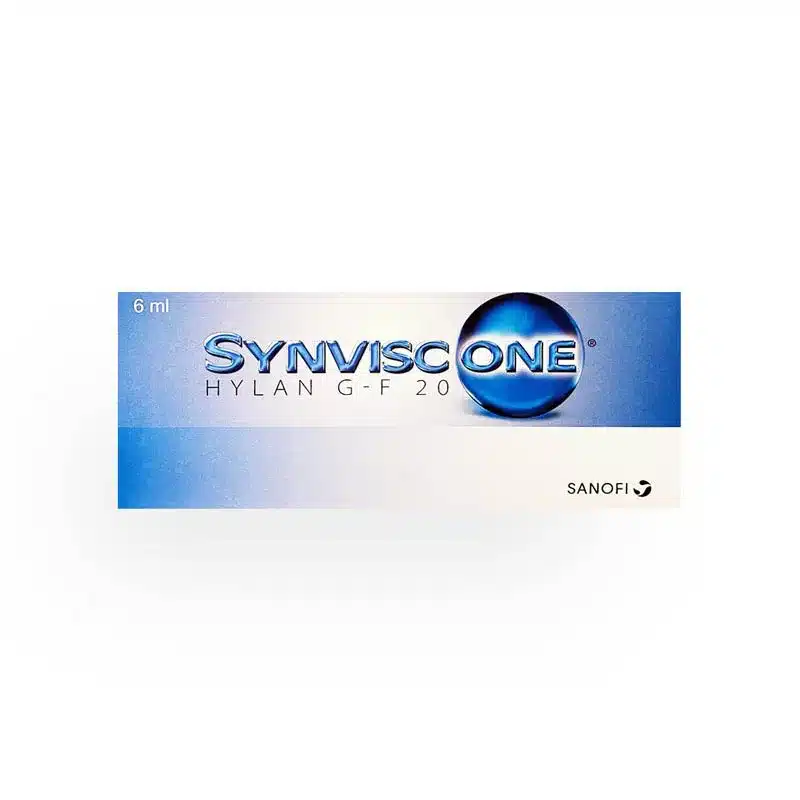
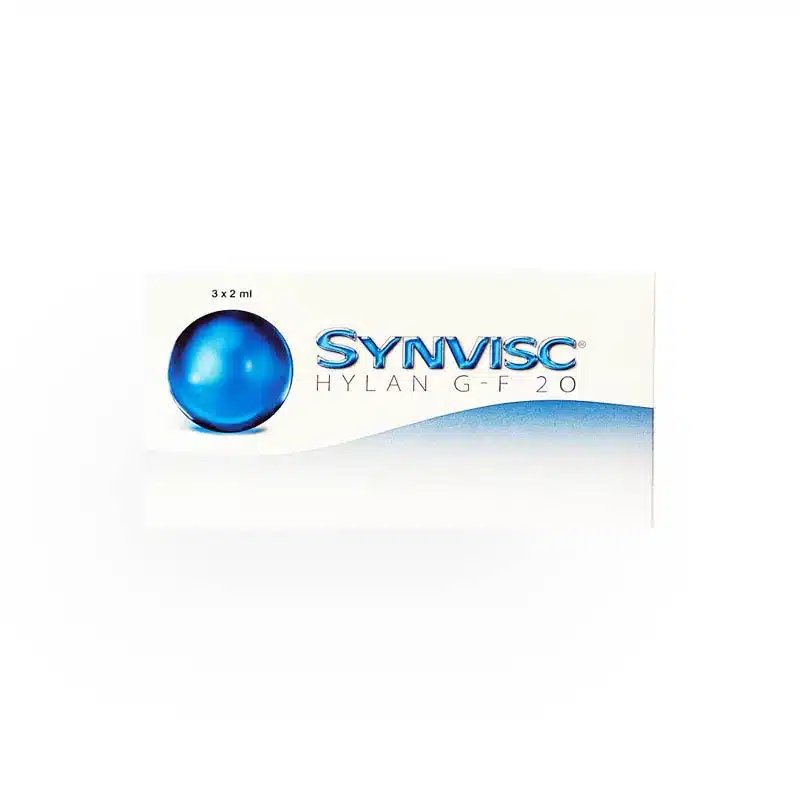
SYNVISC® products
Other information
Synvisc® — The Reference Viscosupplementation Product for Knee OA Pain
Synvisc® is one of the most extensively studied viscosupplementation products for knee osteoarthritis and serves as the benchmark against which many competing therapies are evaluated. Originally developed by Genzyme Biosurgery and now part of Sanofi, Synvisc® contains hylan G-F 20, a chemically cross-linked hyaluronan derived from chicken combs rather than conventional sodium hyaluronate. That cross-linking increases molecular weight, producing viscoelastic properties closely resembling healthy synovial fluid while extending residence time within the joint [5].
Clinical evidence spans decades. Following US approval in 1997, multiple trials demonstrated improvements in pain and joint function. A prospective study of 74 patients across 120 knees receiving three weekly injections reported pain improvement in 99% of patients after one month, with 91% maintaining benefits at one year [1]. A multicenter Canadian trial showed favorable pain relief and functional outcomes compared with continued NSAID therapy over 26 weeks [2]. That accumulated evidence is why Synvisc® functions as a reference point in both clinical and procurement comparisons.
Hylan G-F 20 — The Technology Practitioners Compare When Evaluating Synvisc®
The defining feature of Synvisc® is its active ingredient. Hylan G-F 20 is a chemically cross-linked form of hyaluronan, and unlike most viscosupplements, which contain non-cross-linked sodium hyaluronate, it consists of hylan A at an average molecular weight of approximately 6 million Daltons and hylan B, a hydrated gel suspended in buffered saline [5]. That structure produces viscoelastic properties closely resembling healthy synovial fluid, improving lubrication and shock absorption within the knee joint.
In osteoarthritis, natural hyaluronan becomes depleted and loses molecular weight, reducing the protective function of joint fluid. Supplementing synovial fluid with hylan G-F 20 helps restore joint cushioning, reduce pain, and improve mobility under load. The hylan B component is a hydrated gel, which is why Synvisc® gel injections behave differently in the joint from thinner non-cross-linked solutions and why the material stays in place longer. Research also suggests biological effects beyond lubrication, including reduced pain signaling and anti-inflammatory activity, though these mechanisms remain under investigation. The longer residence time is what allows a three-injection regimen where some non-cross-linked HA products require five.
Cross-linking is a shared technique across HA applications rather than something unique to viscosupplementation. Practitioners who buy hyaluronic acid dermal fillers will recognize the principle, since aesthetic fillers are cross-linked for the same reason: to slow degradation and extend how long the material stays where it was placed. What differs is the source and the target tissue, not the underlying chemistry.
Why Practitioners Buy Synvisc® in the Viscosupplementation Market
Synvisc® carries one of the most comprehensive bodies of research among intra-articular hyaluronic acid products, built from randomized controlled trials, long-term observational studies, and comparative research accumulated since 1997 [1][2]. That documentation is why practitioners evaluating newer viscosupplementation therapies so often benchmark against it rather than against each other.
Practitioners also like its format flexibility within a single active ingredient. The brand offers both a three-injection regimen and a single-injection option under one product family, with both formats using identical active ingredient and safety profile, and pilot data showing comparable efficacy and tolerability [3]. Practitioners can match the treatment schedule to patient circumstances without switching to a different underlying therapy.
Synvisc® vs ORTHOVISC®, EUFLEXXA®, and MONOVISC® — A Direct Clinical Comparison
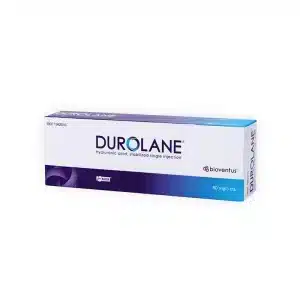
Source material, cross-linking status, and injection schedule are the variables practitioners weigh here. The same three apply when comparing Synvisc-One® against Durolane® and other single-injection alternatives, since Synvisc-One® competes directly in that format.
Synvisc® vs ORTHOVISC®
Clinics that buy ORTHOVISC® are working with non-cross-linked hyaluronan produced through bacterial fermentation, against Synvisc®’s cross-linked hylan G-F 20 derived from chicken combs. ORTHOVISC® runs three to four weekly injections and suits patients with avian protein hypersensitivity, which is a contraindication for Synvisc®. Molecular structure, cross-linking status, and source material are the variables guiding patient-level selection between them.
Synvisc® vs EUFLEXXA®
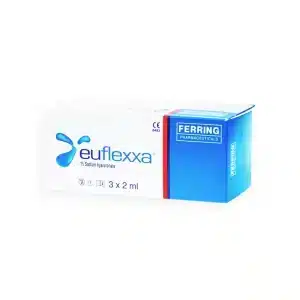
EUFLEXXA® contains non-avian, non-cross-linked sodium hyaluronate produced by bacterial fermentation, administered as three weekly intra-articular injections. Because it is not derived from chicken combs, it is appropriate for patients with avian protein hypersensitivity. Synvisc® is distinguished by cross-linked hylan G-F 20 technology, higher molecular weight, and a longer published record [1]. Where a non-avian viscosupplement better matches a patient’s clinical profile, practitioners can buy EUFLEXXA® instead.
Synvisc® vs MONOVISC®
MONOVISC® is a cross-linked, single-injection hyaluronan manufactured through bacterial fermentation. Like Synvisc-One®, it completes treatment in a single visit, but active ingredient, molecular structure, and source material all differ. Synvisc-One® contains hylan G-F 20 with decades of published research behind it; practitioners may buy MONOVISC® where contraindications or preferences favor a bacterial fermentation-derived single-injection product.
Best Synvisc® Products Compared
Synvisc® is supplied as a 2 mL prefilled syringe containing 16 mg of cross-linked hylan G-F 20, administered as three weekly intra-articular injections for a total dose of 48 mg [5]. Its high-molecular-weight hylan A and hylan B formulation closely resembles healthy synovial fluid, supporting lubrication and shock absorption within the joint. Synvisc® dosage across the three-visit course is the regimen evaluated in many of the product’s pivotal studies, and it suits practices running a scheduled multi-visit protocol [1].
Synvisc-One® injection delivers the same 48 mg total dose in a single 6 mL intra-articular administration. It contains the same active ingredient and formulation, differing only in administration schedule, so Synvisc-One® dosage is a single-visit equivalent rather than a reduced course. A pilot study comparing the two formats found the single injection similarly efficacious and well tolerated [3]. Because both share formulation, safety profile, and indications, clinics can stock either or both without introducing a different viscosupplement or changing established handling procedures.
Who Is a Candidate for Synvisc® or Synvisc-One® Viscosupplementation?
Synvisc® and Synvisc-One® are indicated for adults with symptomatic knee osteoarthritis who have not achieved adequate relief from conservative treatments including physical therapy, weight management, exercise, and simple analgesics such as acetaminophen [4]. They are commonly considered for patients with persistent chronic knee pain and functional limitations where surgery is not yet appropriate or is being postponed.
Before treatment, evaluate patients for contraindications. Synvisc® should not be used in individuals with hypersensitivity to hyaluronan products or to avian proteins, feathers, or eggs, since hylan G-F 20 is derived from chicken combs [5]. Treatment is also contraindicated where active infection or skin disease is present at the injection site. That avian derivation is worth noting for practices that also buy dermal fillers, since aesthetic HA products are bacterially fermented and carry no equivalent screening step, so the two workflows should not be assumed interchangeable.
Synvisc® Injection Protocols — Clinical Guidance for Practitioners Ordering Online
Selecting the correct formulation depends on the intended protocol. Synvisc® is supplied in 2 mL prefilled syringes containing 16 mg of hylan G-F 20, administered as three intra-articular knee injections at one-week intervals [5]. Synvisc-One® provides the same total dose in a single 6 mL injection, completing the course in one clinic visit.
Both should be injected using strict aseptic technique. Where joint effusion is present, aspirate before injection to optimize product distribution and reduce intra-articular pressure. Use a separate syringe for aspiration and take care to avoid intravascular injection. Skin preparation should not include quaternary ammonium salt-based disinfectants, as these may precipitate hyaluronan [5].
Following treatment, patients should avoid strenuous activity and prolonged weight-bearing for approximately 48 hours. For billing, intra-articular knee injections are generally reported using the Synvisc® CPT code 20610, with applicable J-codes and the Synvisc® NDC number verified against current CMS reimbursement guidelines before submission. Practitioners who purchase Synvisc® online should confirm the presentation matches the intended protocol.
Regulatory Approvals and Global Availability — What to Know Before Ordering Synvisc® Online
Synvisc® has one of the longest-established regulatory histories among viscosupplementation products. In the United States it received FDA Premarket Approval on August 8, 1997, under PMA number P940015, and Synvisc-One® received PMA supplement approval in February 2009 under P940015/S012 [4]. Both are classified as Class III medical devices, reflecting the FDA’s highest level of premarket review.
Internationally, Synvisc® is approved and distributed across the European Union, Canada, Australia, Japan, and additional countries across Latin America, Asia-Pacific, and the Middle East, with indications in some markets extending beyond the knee.
Where to Buy Synvisc® Wholesale — Online Access for Licensed Practitioners
Licensed healthcare professionals seeking to buy orthopedic injections can explore Synvisc® alongside other viscosupplements through Medical Spa Rx, with individual units and bulk quantities both available. When buying online, confirm which presentation you need before ordering. Synvisc® injection cost is quoted across three 2 mL syringes; Synvisc-One® injection price covers a single 6 mL unit that completes the course on its own.
Practices ordering regularly should check for wholesale buying options and volume-tier pricing, which apply differently across the two presentations. Shipping is confirmed at the point of order against the verified practice address, and clinics should inspect packaging on arrival before stock moves to the treatment room. Shipping arrangements for multi-site organizations can be consolidated under a single account.
Medical professionals interested in buying Synvisc® online can contact Medical Spa Rx representatives for guidance on availability and order options.
Sanofi and Genzyme — The Pharmaceutical Expertise Behind Synvisc®’s Consistency
Sanofi acquired Genzyme, the originating developer of Synvisc®, in 2011, integrating decades of biosurgery and orthopedic research into its broader manufacturing and regulatory infrastructure. Genzyme’s original development work on hylan G-F 20 established the clinical and manufacturing foundation Sanofi continues to maintain.
Practitioners comparing viscosupplements online are implicitly assessing who stands behind a product’s quality systems, regulatory submissions, and post-market surveillance, and for a device with nearly thirty years on market, the answer is well documented.
Synvisc® Safety Profile — Adverse Events, Contraindications, and Clinical Precautions
Synvisc® and Synvisc-One® have well-established safety profiles supported by clinical trials and post-marketing surveillance. Most adverse events are mild, localized, and resolve without intervention, most commonly arthralgia, injection-site pain, joint swelling, joint warmth, and joint effusion. Clinical studies involving 511 patients across 559 knees and 1,771 injections reported post-injection knee pain and swelling in approximately 7.2% of patients [5].
Cross-linked hylan G-F 20 may rarely cause pseudoseptic reactions, presenting with severe pain, swelling, and warmth within 24 to 72 hours after injection. Although non-infectious, these require prompt clinical evaluation to exclude septic arthritis. Synvisc® is contraindicated in patients with hypersensitivity to hyaluronan products, avian proteins, feathers, or eggs, and in those with active infection or skin disease at the injection site [5]. Rare hypersensitivity reactions including anaphylaxis and angioedema have been reported and should be managed per standard emergency protocols; rare systemic events include rash, fever, nausea, headache, dizziness, and peripheral edema [5]. Appropriate patient selection, aseptic technique, and post-treatment monitoring support safe clinical use.
FAQs
What is Synvisc® used for?
Synvisc® and Synvisc-One® are indicated for adults with knee osteoarthritis who have not achieved adequate relief from conservative treatments and simple analgesics [4]. Both contain hylan G-F 20, which supplements the joint’s natural synovial fluid to improve lubrication, reduce pain, and support mobility. Treatment relieves symptoms rather than reversing osteoarthritis progression.
What is the difference between Synvisc® and Synvisc-One®?
Both contain hylan G-F 20 and deliver the same total dose of 48 mg. The difference is administration: Synvisc® is given as three weekly 2 mL injections; Synvisc-One® delivers the entire dose in a single 6 mL injection. A pilot study found the two formats similarly efficacious and well tolerated [3].
How long does Synvisc® pain relief last?
Clinical studies show pain relief lasting up to six months for most patients [2]. In one 74-patient series, 91% maintained benefit at one year, though that cohort’s results should not be generalized [1]. Duration varies with disease severity, activity level, and individual response, and repeat treatment may be considered on clinical assessment.
What is Synvisc® made of?
Synvisc® contains hylan G-F 20, a cross-linked derivative of hyaluronan obtained from chicken combs, consisting of hylan A and hylan B suspended in buffered saline [5]. The cross-linked structure gives greater viscoelasticity and longer joint residence time than many non-cross-linked hyaluronic acid products, helping restore lubrication and shock absorption.
How is Synvisc® administered?
By intra-articular injection into the affected knee using aseptic technique. The standard Synvisc® injection procedure consists of three weekly 2 mL injections; Synvisc-One® is a single 6 mL injection [5]. Aspirate joint effusion before treatment where present. Patients should avoid strenuous activity and prolonged weight-bearing for approximately 48 hours after injection.
What are the side effects of Synvisc®?
The most common side effects of Synvisc® include joint pain, swelling, warmth, joint stiffness, effusion, and injection-site pain, typically mild and temporary [5]. Rarely, pseudoseptic or hypersensitivity reactions occur. It should not be used in patients with avian protein allergies, hyaluronan hypersensitivity, or active infection at the injection site.
Does Synvisc® cause weight gain?
Weight gain is not a documented adverse effect of Synvisc® or Synvisc-One® in the prescribing information or clinical literature [5]. Hylan G-F 20 acts locally within the joint space rather than systemically, and the recorded systemic events are limited to rare reactions such as rash, fever, nausea, and peripheral edema. Where patients raise the question, reduced activity during an osteoarthritis flare is the more likely explanation than the injection itself.
Can Synvisc® be used instead of knee replacement surgery?
No. Synvisc® is intended to relieve pain in patients with symptomatic knee osteoarthritis who have not responded to conservative treatment [4]. In some individuals it may improve function and delay surgery, but it does not repair damaged cartilage or halt disease progression, and it is not a substitute for knee replacement in patients who need it.
What do Synvisc® reviews say about outcomes?
Practitioner and patient reports vary, which is expected given that response depends on OA severity, joint condition, and activity level. The controlled data give the more reliable picture: randomized and multicenter trial evidence shows improvements in pain and function against comparators, with relief typically lasting up to six months [1][2]. Anecdotal accounts are worth reading in that context rather than in place of it.
How does Synvisc® compare to ORTHOVISC® and EUFLEXXA®?
All three treat knee osteoarthritis through viscosupplementation but differ in composition. Synvisc® contains cross-linked hylan G-F 20 derived from chicken combs; ORTHOVISC® and EUFLEXXA® contain non-avian, non-cross-linked hyaluronan produced by bacterial fermentation. Selection depends on patient allergies, molecular structure preference, and treatment protocol.
Trying to buy Synvisc® viscosupplementation online?
If you want to buy Synvisc® online, Medical Spa Rx representatives can help. Get in touch for guidance on availability, documentation, and ordering options, whether the requirement is a single unit or bulk procurement across multiple sites.
Resources
- Lee S, Park D, Chmell SJ. Viscosupplementation with hylan G-F 20 (Synvisc): pain and mobility observations from 74 consecutive patients. The Journal of Knee Surgery. 2004. https://pubmed.ncbi.nlm.nih.gov/15124659/
- Adams ME, Atkinson MH, Lussier AJ, et al. The role of viscosupplementation with hylan G-F 20 (Synvisc) in the treatment of osteoarthritis of the knee: a Canadian multicenter trial comparing hylan G-F 20 alone, hylan G-F 20 with non-steroidal anti-inflammatory drugs (NSAIDs) and NSAIDs alone. Osteoarthritis and Cartilage. 1995. https://pubmed.ncbi.nlm.nih.gov/8689457/
- Conrozier T, Jerosch J, Beks P, et al. Prospective, multi-centre, randomised evaluation of the safety and efficacy of five dosing regimens of viscosupplementation with hylan G-F 20 in patients with symptomatic tibio-femoral osteoarthritis: a pilot study. Archives of Orthopaedic and Trauma Surgery. 2009. https://pubmed.ncbi.nlm.nih.gov/18365224/
- S. Food and Drug Administration. Premarket Approval (PMA) — SYNVISC-ONE (hylan G-F 20), P940015/S012. FDA. Last Updated 06/29/2026. www.accessdata.fda.gov/scripts/cdrh/cfdocs/cfpma/pma.cfm?ID=P940015S012
- SYNVISC® Hylan G-F 20 Prescribing Information. https://products.sanofi.us/synvisc/synvisc.html
The page and all of its displayed contents are for medical professionals, designed to inform only, and not as a replacement for medical advice.
Written and reviewed by the Medical Spa Rx Editorial Team
All clinical and product claims on this page have been checked against peer-reviewed research, manufacturer data, and regulatory sources in accordance with our Editorial Policy .