




What Are The Purported Benefits Of ARA-290 (10mg)?
ARA‑290, also known as Cibinetide and PHBSP, is a short erythropoietin‑derived research peptide designed to capture the tissue‑protective and anti‑inflammatory signaling of EPO while avoiding red blood cell stimulation. It selectively engages the innate repair receptor (IRR), a heteromer of the erythropoietin receptor (EPOR) and βc (CD131), rather than the classical EPOR homodimer responsible for erythropoiesis.
By focusing on this non‑erythropoietic pathway, this healing and regenerative pepetide has been used in preclinical and early clinical research to explore:
- Neuropathic pain modulation and small fiber repair – In subjects with small fiber neuropathy (SFN) due to sarcoidosis or type 2 diabetes, ARA‑290 treatment has been associated with improvements in neuropathic pain scores and increased small nerve fiber abundance, measured by corneal confocal microscopy and skin nerve markers.
- Tissue protection under inflammatory and ischemic stress – In animal models of cerebral ischemia and traumatic injury, ARA‑290 reduces neuronal apoptosis, inflammatory cytokines, and infarct volume, with neuroprotection comparable to EPO but without erythropoiesis.
- Neuroimmune and metabolic signaling – Experimental work indicates modulation of cytokine profiles, macrophage/monocyte subsets, and pain‑related ion channels such as TRPV1, helping to normalize neuroinflammatory and nociceptive pathways.
Because it does not raise hemoglobin, hematocrit, or blood pressure in studied populations, ARA‑290 has attracted interest as a non‑erythropoietic EPO‑mimetic in research settings. Investigators who buy ARA‑290 typically focus on small fiber neuropathy, neuroinflammation, and tissue‑repair signaling, rather than using it as a general analgesic.
What Is The Chemical Makeup Of ARA-290 (10mg)?
ARA‑290 is a synthetic linear peptide of 11 amino acids, derived from the helix‑B surface peptide (pHBSP) domain of erythropoietin.
- Peptide Sequence: XEQLERALNSS
- Key identifiers and physicochemical data:
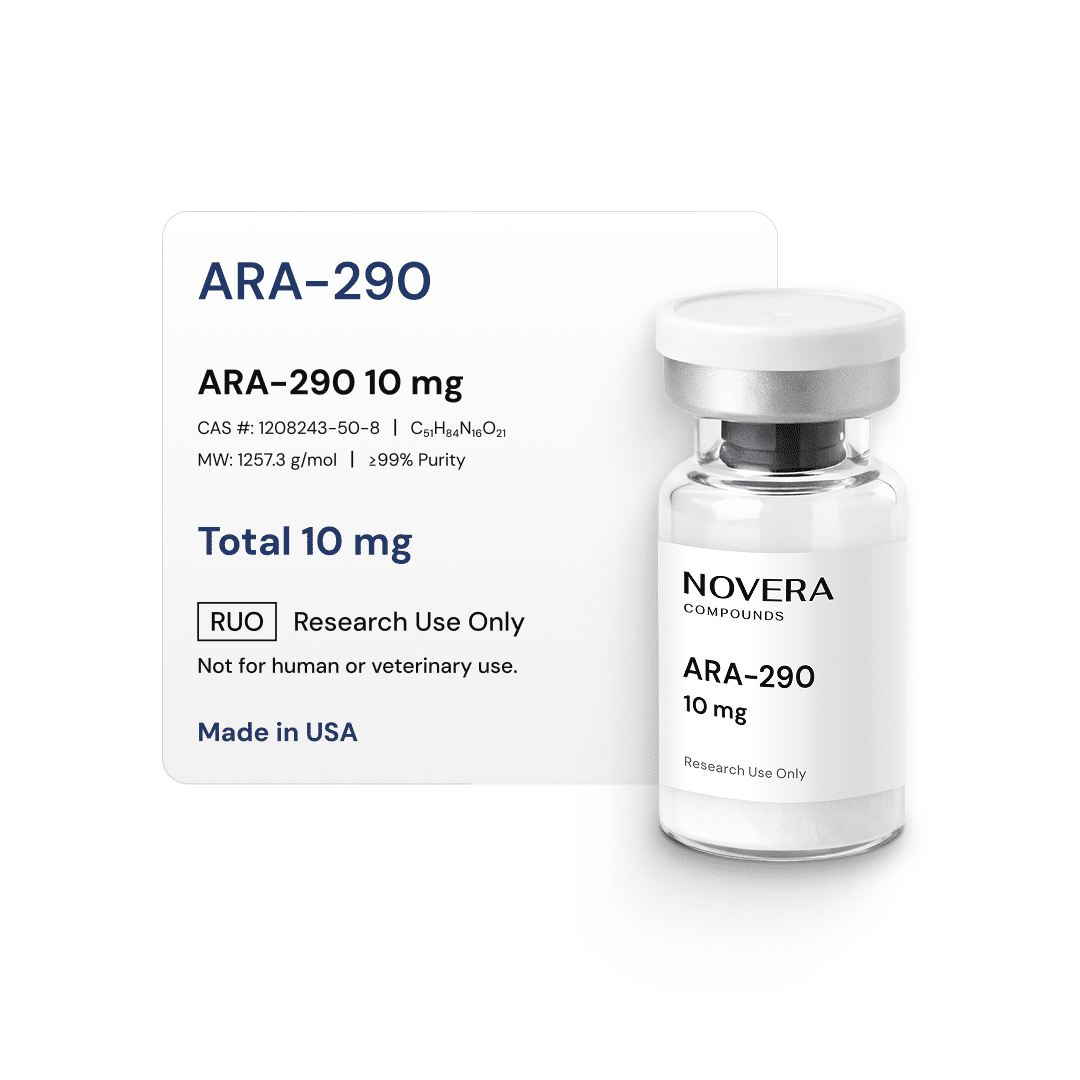
- CAS Number: 1208243-50-8
- Chemical Formula: C₅₁H₈₄N₁₆O₂₁
- Molecular Weight: 1257.3 g/mol
The N‑terminal pyroglutamate increases resistance to aminopeptidase cleavage and enhances peptide stability. At physiological pH, the sequence carries a net negative charge, influencing receptor binding and distribution.
ARA‑290 is produced via solid‑phase peptide synthesis (SPPS) and purified using reverse‑phase high‑performance liquid chromatography (HPLC), with research‑grade lots typically reaching ≥95–98% purity. It contains no glycosylation or phosphorylation, and its biological activity depends on preservation of the primary sequence and conformation. This makes it suitable for laboratories that order ARA‑290 for mechanistic, signaling, and translational research on IRR‑mediated pathways.
What Does Scientific Research Say About ARA-290 (10mg)?
A growing body of phase 2 clinical and preclinical data supports ARA‑290’s role as a tissue‑protective, disease‑modifying candidate in neuropathic and inflammatory contexts.
Neuropathic Pain and Small Fiber Neuropathy
- In sarcoidosis‑associated SFN, repeated ARA‑290 dosing in phase 2 trials led to:
- Clinically meaningful reductions in neuropathic pain scores, assessed by validated questionnaires.
- Increased corneal nerve fiber area and density, measured by corneal confocal microscopy, and improved sensory thresholds, consistent with structural small fiber regeneration.
- In type 2 diabetes with painful neuropathy, a 28‑day randomized trial of ARA‑290 (4 mg SC daily) showed:
- Significant improvement in PainDetect neuropathic symptom scores versus placebo.
- In subjects with baseline reduced corneal nerve fiber density, a significant increase in small nerve fiber density relative to placebo.
- Modest improvements in HbA1c and lipid profiles (improved cholesterol/HDL ratio and triglycerides), suggesting potential metabolic benefits alongside neuropathy effects.
These data support the interpretation that ARA‑290 acts as a disease‑modifying peptide targeting nerve structure and repair, rather than simply masking symptoms.
Neuroprotection and Neuroinflammation
In CNS models (e.g., cerebral ischemia, AD‑like pathology), ARA‑290:
- Reduces infarct size, neuronal apoptosis, and inflammatory cytokine levels, with neuroprotective efficacy comparable to EPO but without erythropoietic side effects.
- Modulates monocyte and microglial responses, favoring patrolling and reparative subsets and dampening chronic neuroinflammatory activation in AD‑like models.
Safety Profile
Across phase 2 clinical studies in sarcoidosis and type 2 diabetes, ARA‑290 has demonstrated:
- No clinically significant changes in hemoglobin, hematocrit, or blood pressure and no erythropoietic activity.
- Adverse event rates similar to placebo, with no consistent signal for thrombotic or immunogenic complications in these relatively short‑term trials.
ARA‑290 remains an investigational research peptide, not an approved therapy. Nevertheless, the convergence of symptom relief, objective nerve fiber regeneration, anti‑inflammatory effects, and a favorable short‑term safety profile supports continued evaluation in neuropathy and tissue‑protection research.
What Are The Storage Conditions For ARA-290 (10mg)?
ARA‑290 (10mg) is supplied as a lyophilized (freeze‑dried) powder to preserve peptide integrity during shipment and storage. Proper handling is important to maintain its biological activity:
Lyophilized (Unopened) Vials
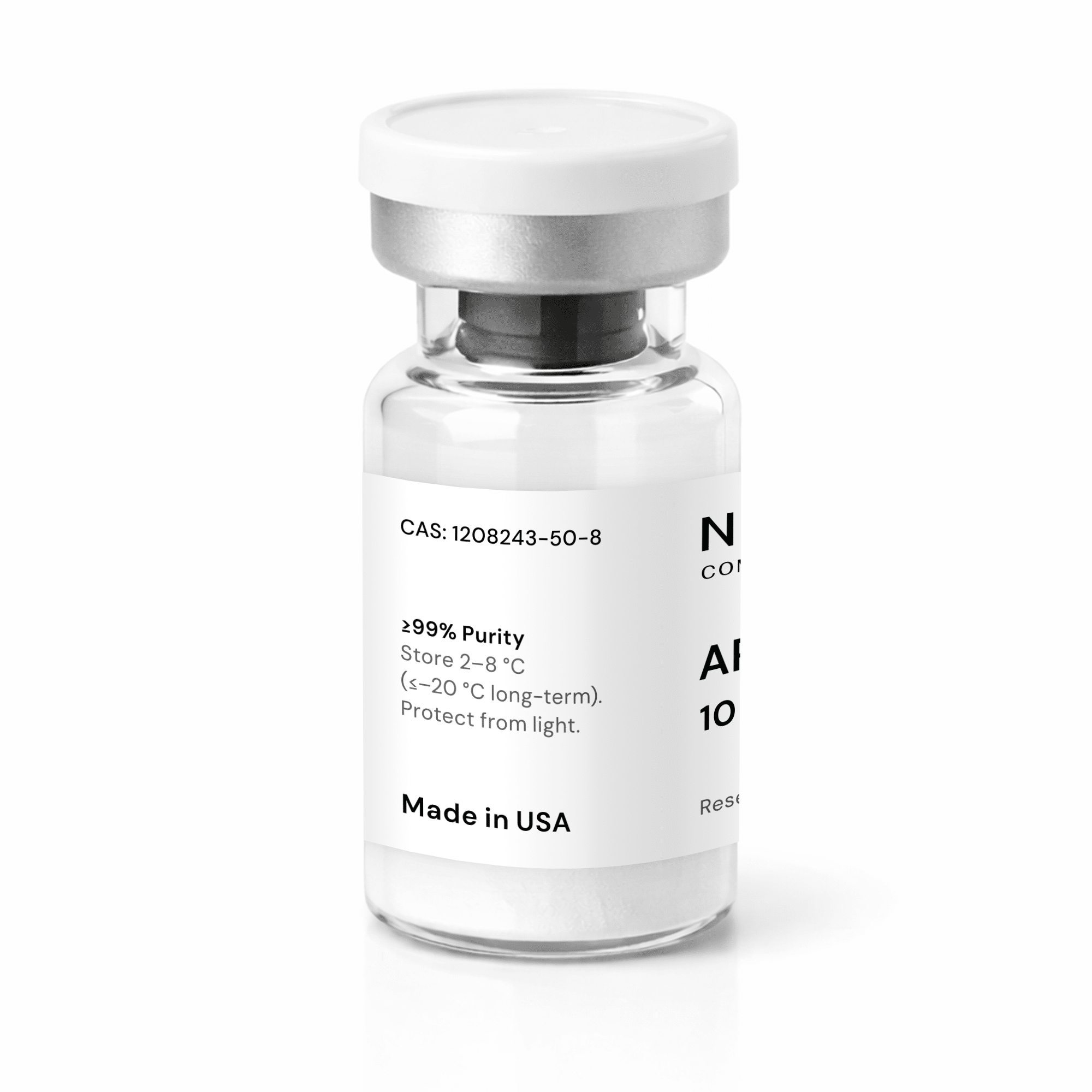
- For long‑term storage, keep vials at ≤ −20°C in a dry, light‑protected environment. Under these conditions, research peptides such as ARA‑290 are typically stable for a long period, and many suppliers reference stability windows of a longer duration.
- Short‑term storage at 2–8°C (36–46°F) is acceptable, especially for vials in active use.
- Brief exposure to room temperature during shipping is generally tolerated if vials remain sealed and protected from excessive heat and humidity.
Reconstituted Solutions
- Reconstitute ARA‑290 using sterile or bacteriostatic water or another appropriate research buffer under aseptic conditions.
- Store reconstituted solutions at 2–8°C, protected from light. In practice, many laboratories limit use to approximately 2–4 weeks to minimize degradation, although exact stability depends on diluent, concentration, and sterility.
- Avoid freezing reconstituted solutions, vigorous shaking, and repeated freeze–thaw cycles, all of which can disrupt peptide structure.
Because specific recommendations can vary, researchers who buy ARA‑290 or order ARA‑290 for experimental use should always follow the storage and stability guidance on the product’s certificate of analysis and safety documentation, along with institutional SOPs for peptide handling.
Are you looking to buy ARA-290 (10mg) online?
If you’re looking to order ARA-290 (10mg) online at wholesale prices, contact Medical Spa RX for guidance on how to do so.
This product is supplied strictly for laboratory research use only and is not approved for human or veterinary administration. It is not intended for diagnostic, therapeutic, or clinical applications. Any reference to biological activity or potential effects is based solely on preclinical or in-vitro findings and should not be interpreted as validated clinical outcomes. Researchers are responsible for ensuring proper handling, storage, and disposal in accordance with institutional, federal, and international guidelines. By purchasing or using this material, the buyer confirms that they are a qualified researcher and that the product will be used exclusively in controlled research settings compliant with all applicable regulations.
Sources
https://pubchem.ncbi.nlm.nih.gov/compound/Cibinetide
https://www.molnova.com/files/document/DATASHEET/DATASHEET_M10775.pdf
https://pubmed.ncbi.nlm.nih.gov/24555851
https://pmc.ncbi.nlm.nih.gov/articles/PMC5741312
https://scholarlypublications.universiteitleiden.nl/access/item:2891581/view
https://pmc.ncbi.nlm.nih.gov/articles/PMC3928087