




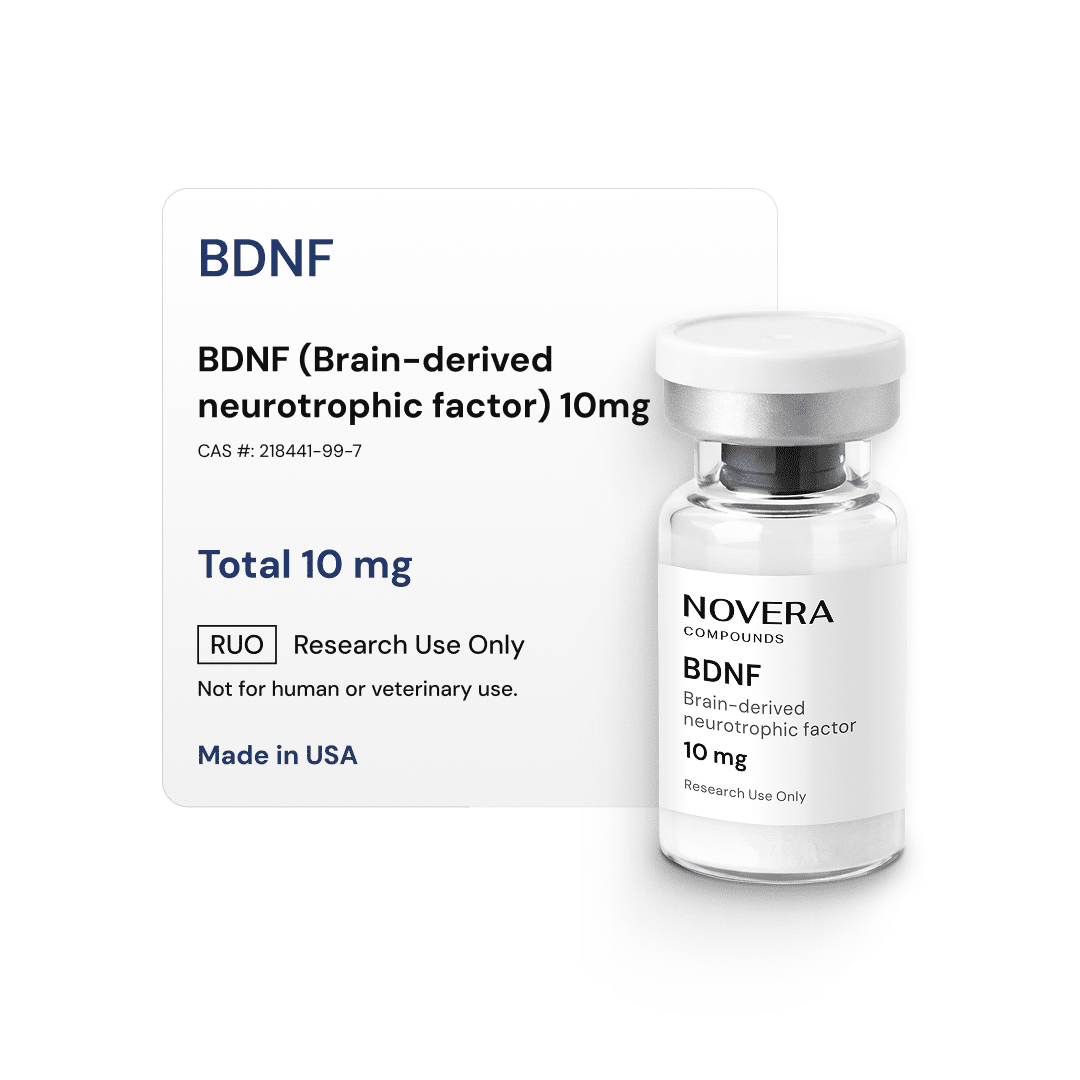
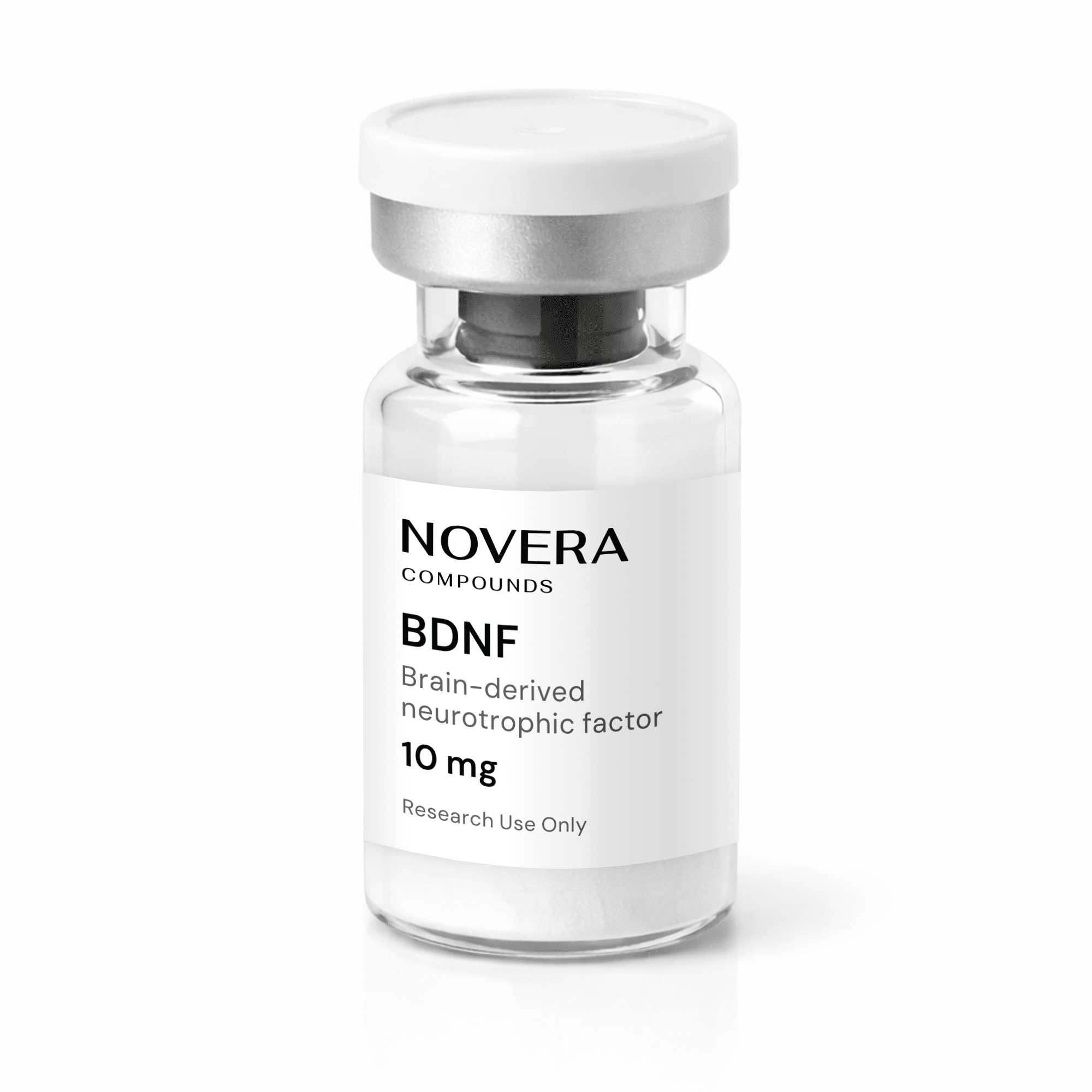
BDNF (Brain-derived neurotrophic factor) (10mg) About This Product
The BDNF peptide (Brain-derived neurotrophic factor) is a recombinant human neurotrophin used in controlled laboratory research. Laboratories may buy BDNF peptide materials or order BDNF peptide materials for experimental work in nervous system biology and cellular signaling. It is produced using prokaryotic expression systems (E. coli) and processed to obtain the biologically active mature form used in research environments.
The mature protein comprises 119 amino acids and forms a stable homodimer supported by three intramolecular disulfide bonds, often described as a cysteine-knot motif. Each monomer has an approximate molecular weight of 13.5 kDa, and the functional homodimer is approximately 27 kDa.
The 10 mg vial format supports extended in vitro and in vivo research workflows, including dose-response evaluations and comparative experimental designs. This material has been studied in laboratory models that examine neuronal development, synaptic function, and adaptive cellular responses in the central nervous system.
BDNF (Brain-derived neurotrophic factor) (10mg) Key Features and Benefits
- Purity: ≥95% (SDS-PAGE)
- Endotoxin: <0.10 EU/μg (LAL method)
- Manufactured using rigorous quality control procedures appropriate for research applications
- Activity characterization: ED₅₀ 0.2–2 ng/mL reported in cell-based assays; specific activity ~1.3 × 10³ units/μg (calibrated against WHO Standard NIBSC 96/534)
- Formulation: Lyophilized with carrier protein (BSA) in sodium citrate/NaCl buffer
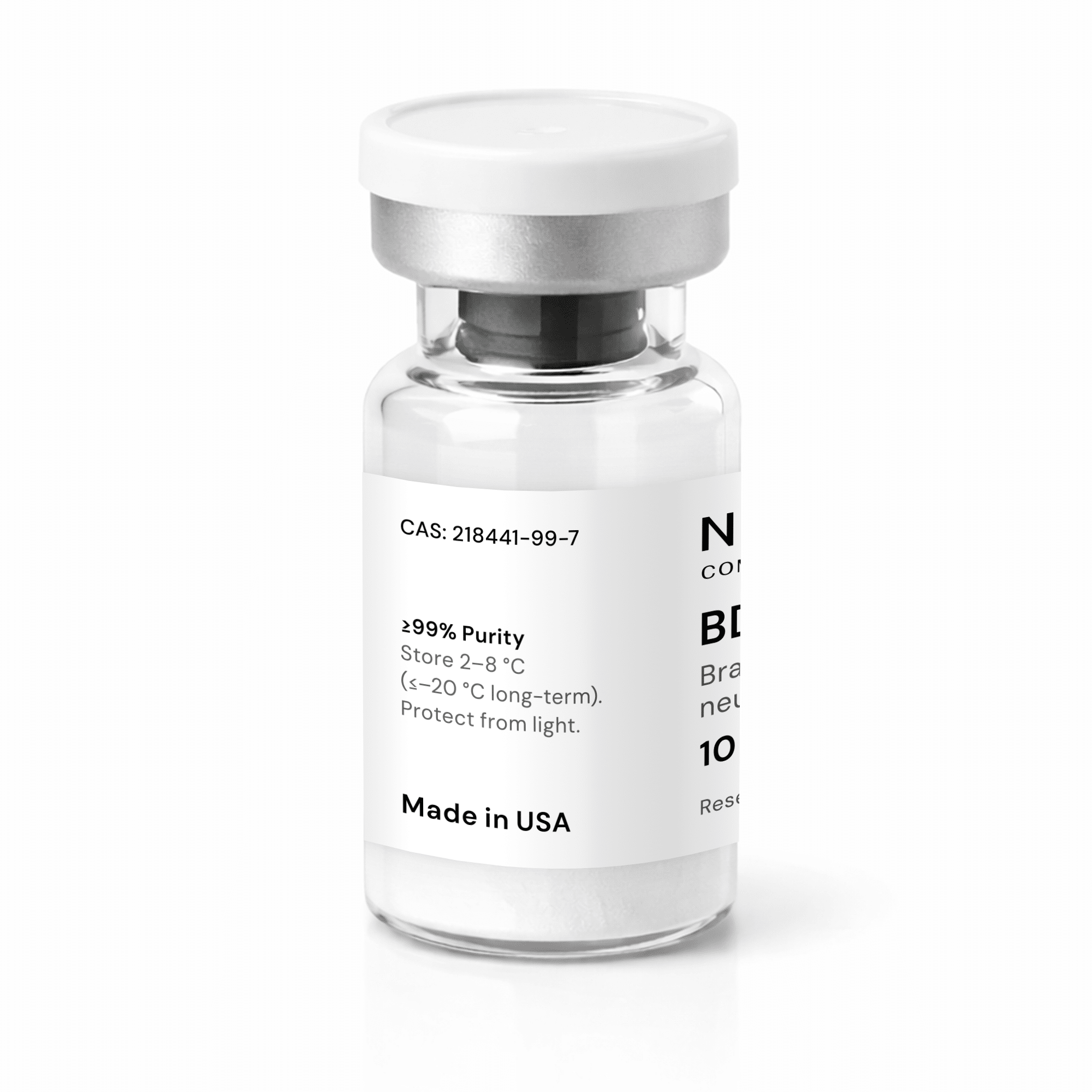
- Stability (unopened): up to 12 months at –20 to –70 °C, protected from light
- Research compatibility: suitable for in vitro, in vivo, and ex vivo protocols, including cellular assays and tissue studies
For laboratory research use only.
BDNF (Brain-derived neurotrophic factor) (10mg) Mechanism & Research Applications
BDNF is widely researched for its role in neuronal signaling and structural adaptation in experimental nervous system models. In laboratory settings, the protein interacts with cell-surface receptors that influence intracellular processes related to neuronal survival, synaptic communication, and cellular differentiation. BDNF primarily signals through the tropomyosin receptor kinase B (TrkB) receptor and, with lower affinity, through the p75 neurotrophin receptor (p75NTR).
Research applications commonly include:
- Synaptic plasticity studies: experimental systems evaluating changes in synaptic strength and connectivity
- Neuronal viability research: models examining cellular responses under controlled oxidative or excitatory stress conditions
- Neurogenesis research: studies of neural progenitor cell proliferation and differentiation in developmental and adult tissue models
- Structural remodeling analysis: dendritic and axonal growth within controlled neural network experiments
- Disease model research: preclinical models designed to study altered synaptic function and neuronal integrity
BDNF (Brain-derived neurotrophic factor) (10mg) Dosing & Observed Effects in Research
Published research describes a range of experimental concentrations based on model design and study objectives. In vitro assays frequently report biologic activity at concentrations between 0.2 and 2 ng/mL. Broader screening studies may assess picomolar to nanomolar ranges to define dose-response relationships.
In preclinical research models, dosing strategies vary by route of administration and study duration. Microgram-level quantities are commonly reported in localized delivery experiments, whereas systemic approaches use carefully controlled protocols.
Observed findings in research settings include changes in cellular signaling markers, synaptic protein expression, and functional assay readouts. These observations are reported strictly within experimental contexts and do not imply therapeutic application.
BDNF (Brain-derived neurotrophic factor) (10mg) Storage, Safety & References
- Store unopened vials at –20 °C to –70 °C, protected from light
- Reconstitute using sterile buffers containing carrier protein (≥0.1% BSA)
- Store reconstituted solutions at 2–8 °C for short-term use (up to 1 week), or aliquot and store at –20 °C to –80 °C for longer-term storage
- Avoid repeated freeze-thaw cycles
- Use appropriate personal protective equipment (PPE) during handling
This recombinant protein should be handled using standard laboratory biosafety procedures. Dispose of unused material according to institutional and regulatory guidelines.
References
https://pubmed.ncbi.nlm.nih.gov/15518235
https://pubmed.ncbi.nlm.nih.gov/19927149
https://pubmed.ncbi.nlm.nih.gov/27752996
https://pubmed.ncbi.nlm.nih.gov/18309046
https://pubmed.ncbi.nlm.nih.gov/23055503
https://pubmed.ncbi.nlm.nih.gov/15374669
Compliance Notice
This product is intended for laboratory research use only and is not approved for human or veterinary use.