



BPC 157 — About This Product
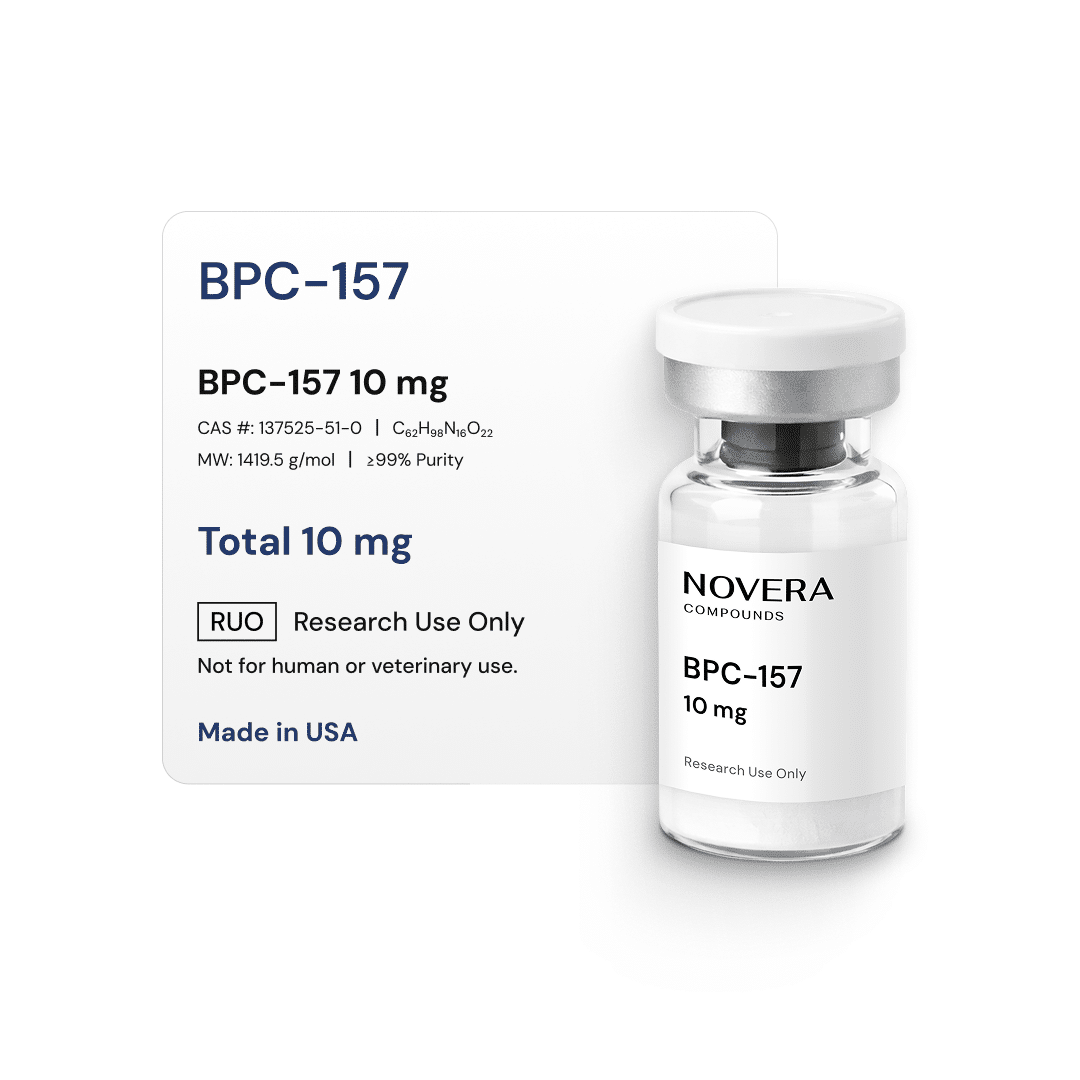
BPC 157 peptide is a synthetic fragment derived from the naturally occurring Body Protection Compound (BPC), which is found in human gastric juice. This peptide is composed of 15 amino acids (Gly-Glu-Pro-Pro-Pro-Gly-Lys-Pro-Ala-Asp-Asp-Ala-Gly-Leu-Val) and has a molecular weight of approximately 1,419 Da. It has been studied for its role in tissue repair, angiogenesis (the formation of new blood vessels), and inflammatory modulation.
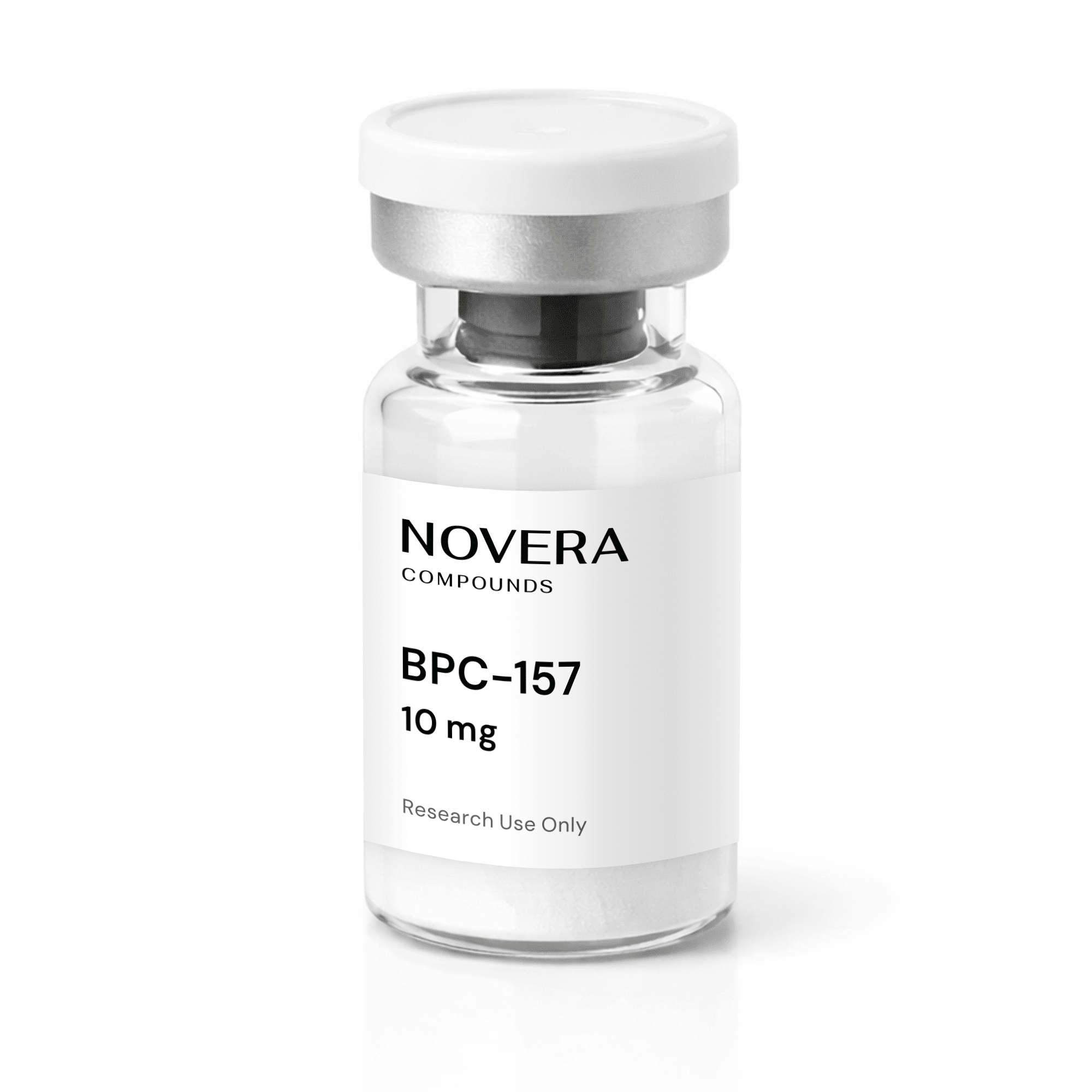
BPC 157 is provided as a 10 mg vial of lyophilized powder with a purity of ≥98%, making it ideal for use in controlled laboratory and preclinical research. It is primarily investigated for its biological effects on muscle, tendon, gastrointestinal, and vascular tissues.
BPC 157 — Key Features and Benefits
- High Purity: ≥98% purity, verified through analytical testing
- Convenient Format: Supplied in a 10 mg vial, ensuring standardized quantities for precise research
- Research Applications: Studied for its role in lipid metabolism, tissue healing, and cellular protection
- Stable Formulation: Lyophilized powder for easy reconstitution with sterile solvent
BPC 157 — Mechanism & Research Applications
BPC 157 has been studied for its effects on biological repair mechanisms, particularly in promoting angiogenesis, cell migration, and extracellular matrix remodeling, which are vital for tissue recovery and regeneration. In animal models, BPC 157 has been investigated for its potential to support musculoskeletal health, especially in cases of injury or inflammation, as well as its role in gastrointestinal repair.
Research continues to explore its ability to interact with growth factors and influence vascular functions, aiming to better understand its potential in tissue protection and regenerative processes.
BPC 157 — Dosing & Observed Effects in Research
In animal studies, BPC 157 has been tested at dosages ranging from 10 µg/kg to 1 mg/kg, depending on the research model and specific study objectives. Various administration routes have been used, including oral, subcutaneous, intraperitoneal, and topical, to assess absorption, distribution, and biological responses.
Research has reported stable bioactivity and minimal toxicity, with BPC 157 showing influence on angiogenesis and protective pathways, although these findings remain confined to preclinical environments.
BPC 157 — Storage, Safety & References
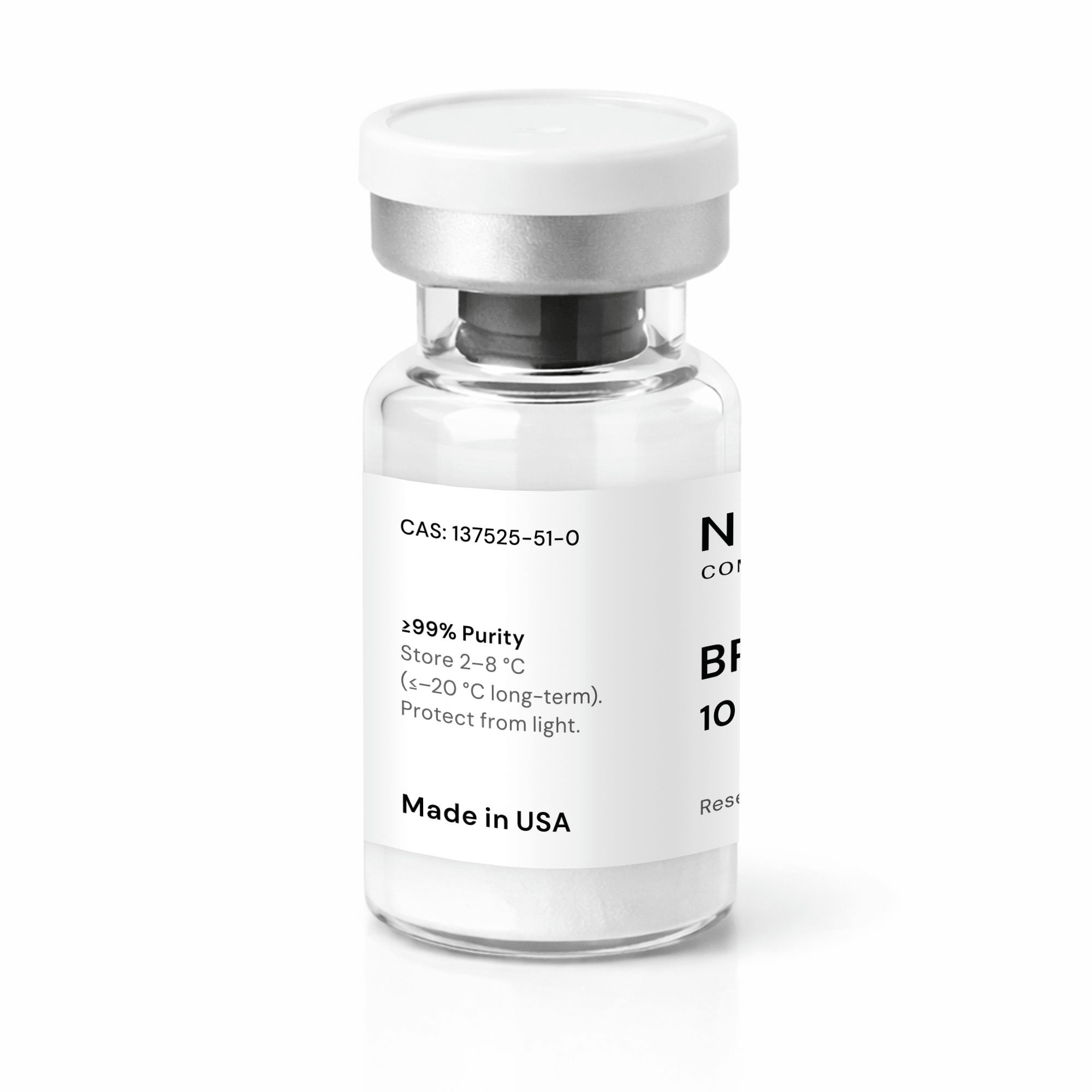
- Storage: Store lyophilized BPC 157 at -20°C in a cool, dry, light-protected environment.
- Reconstitution: After reconstitution with sterile, pyrogen-free solvent, store the solution at 2–8°C and use it within 5-7 days.
- Handling: Avoid freeze-thaw cycles to maintain peptide stability. Follow standard aseptic laboratory techniques and biosafety protocols when handling the product.
References
https://pmc.ncbi.nlm.nih.gov/articles/PMC7096228
https://journals.physiology.org/doi/full/10.1152/japplphysiol.00945.2010
https://pubmed.ncbi.nlm.nih.gov/27847966
https://journals.plos.org/plosone/article?id=10.1371%2Fjournal.pone.0123454
https://pmc.ncbi.nlm.nih.gov/articles/PMC8504390
Compliance Notice
This product is intended for laboratory research use only and is not approved for human or veterinary use.