




BPC-157 (15mg) About This Product
The BPC-157 peptide is a synthetic pentadecapeptide composed of 15 amino acids arranged in the sequence Gly-Glu-Pro-Pro-Pro-Gly-Lys-Pro-Ala-Asp-Asp-Ala-Gly-Leu-Val. Laboratories that buy BPC-157 peptide or order BPC-157 peptide materials reference this compound for controlled laboratory research on peptide stability and cellular response models. The peptide was originally identified as a fragment derived from human gastric juice and is classified as a body protection compound (BPC).
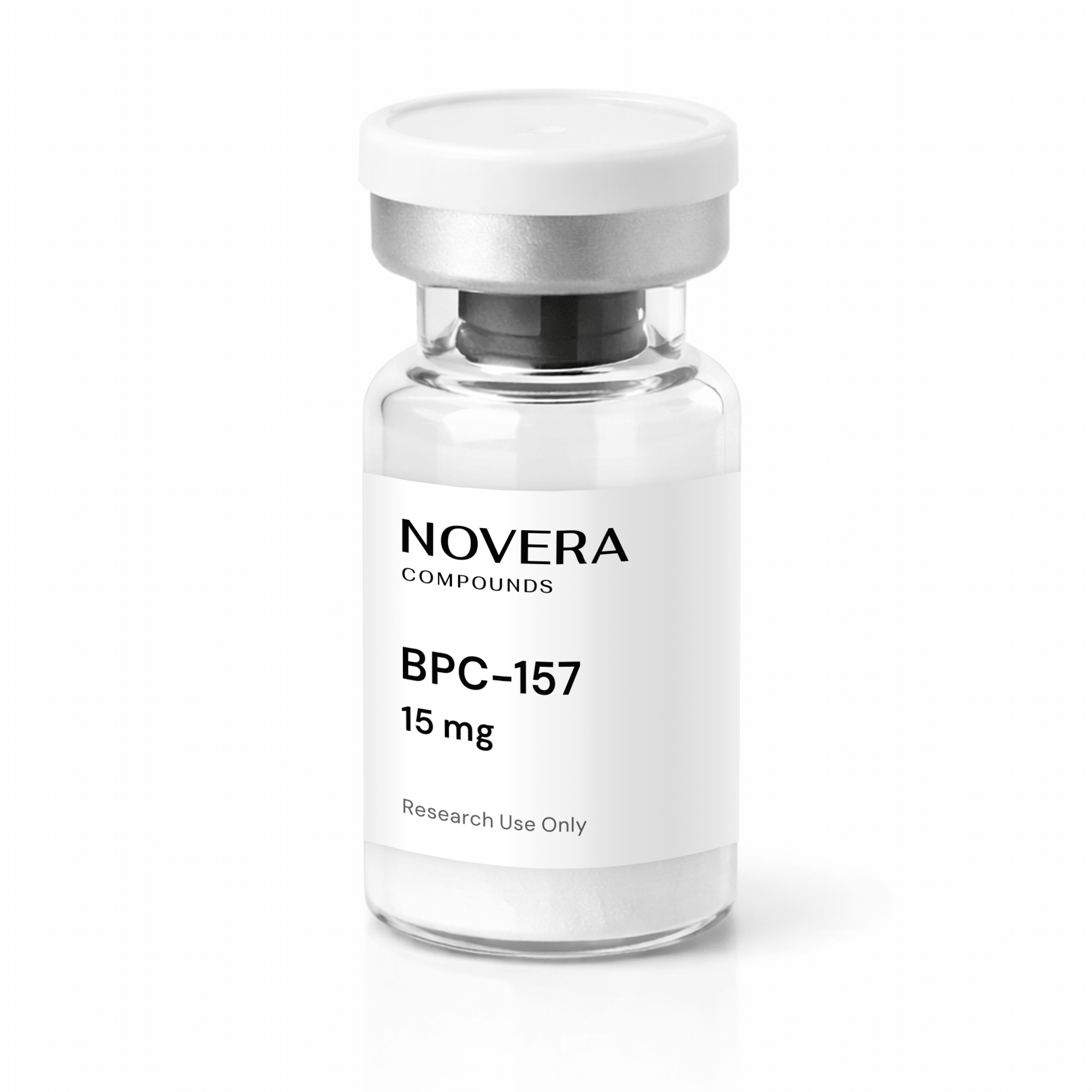
BPC-157 (15 mg) is supplied as a lyophilized (freeze-dried) powder in sterile glass vials and is commonly manufactured at ≥95–99% purity, verified using analytical techniques such as RP-HPLC and mass spectrometry. In laboratory settings, the peptide has been studied in preclinical models examining cellular integrity, signaling activity, and experimental responses across multiple tissue systems.
One characteristic frequently evaluated in research is its stability under acidic conditions, which distinguishes it from many short-chain peptides and supports its use in controlled experimental environments.
BPC-157 (15mg) Key Features and Benefits
- Molecular profile: Pentadecapeptide consisting of 15 amino acids
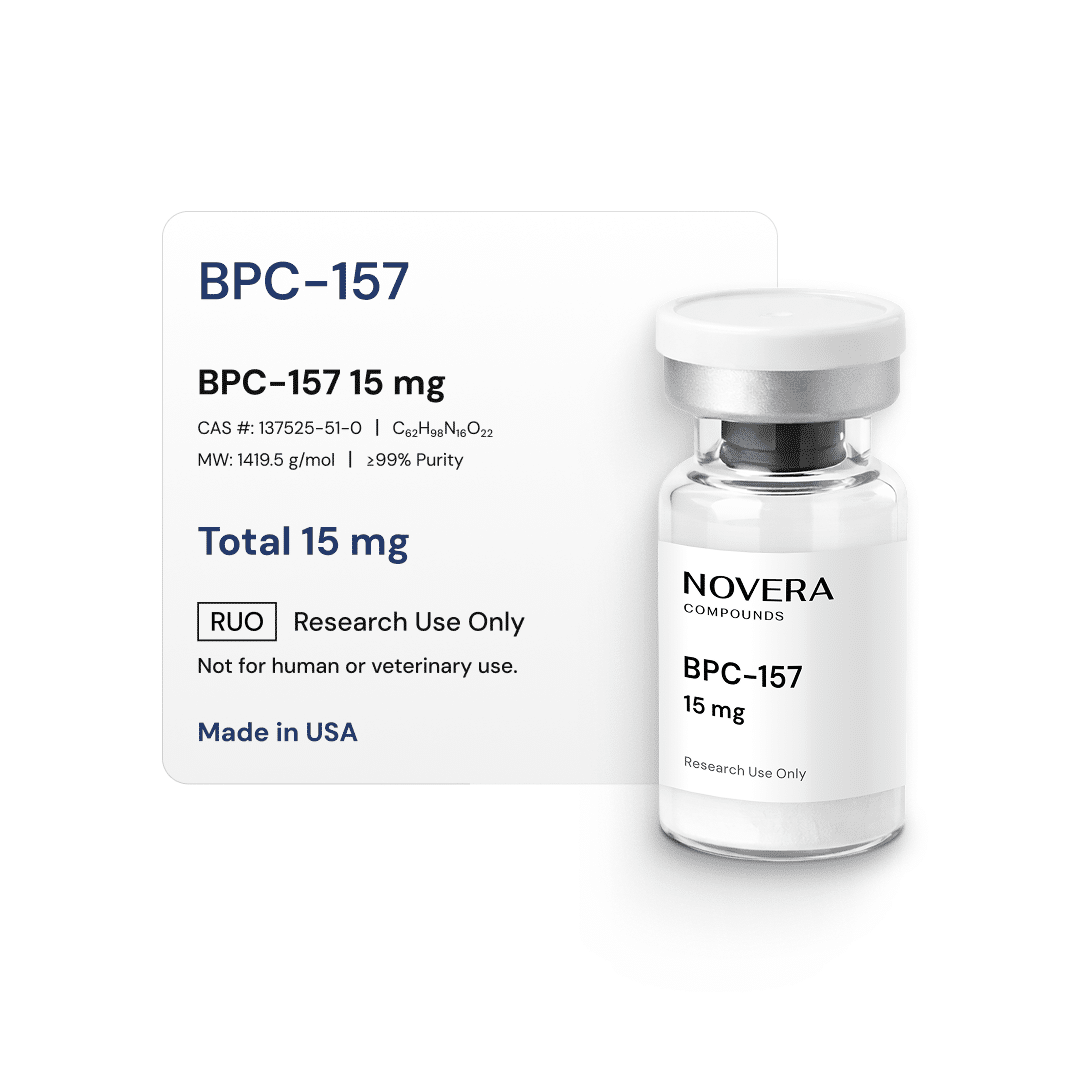
- Molecular weight: 1,419.5 g/mol; molecular formula C₆₂H₉₈N₁₆O₂₂
- Purity: Commonly produced at ≥95–99%, with batch verification by RP-HPLC and mass spectrometry
- Format: Supplied as a lyophilized powder in sealed sterile vials
- Stability: Suitable for extended storage when maintained under recommended conditions
- Research scope: Studied in laboratory models related to cellular signaling, tissue structure assessment, and experimental stress response
For laboratory research use only.
BPC-157 (15mg) Mechanism & Research Applications
BPC-157 has been evaluated in preclinical research for its broad biological activity across multiple experimental tissue systems. Rather than acting through a single defined target, it has been examined in studies that explore how peptides interact with interconnected cellular processes involved in tissue maintenance and signaling.
Research applications include:
- Cellular integrity studies under controlled experimental stress conditions
- Tissue model investigations examining structural organization and signaling activity
- Gastrointestinal research models evaluating peptide stability and cellular interaction
- Musculoskeletal and connective tissue models used for experimental observation
- Neurological and neuromuscular research systems assessing cellular response patterns
All applications described reflect controlled laboratory research contexts and do not imply clinical or therapeutic use.
BPC-157 (15mg) Dosing & Observed Effects in Research
In animal and in vitro studies, BPC-157 has been evaluated at a wide range of doses, most commonly at investigational concentrations of 10 μg/kg or higher, depending on study design and experimental objectives. Research protocols have used multiple administration routes, including intraperitoneal, subcutaneous, intramuscular, intravenous, and oral delivery, strictly within preclinical research settings.
Reported observations in laboratory studies include measurable changes in cellular signaling markers, structural protein organization, and other assay-specific experimental endpoints. These findings are reported solely within research contexts and do not establish safety, efficacy, or therapeutic relevance.=
BPC-157 (15mg) Storage, Safety & References
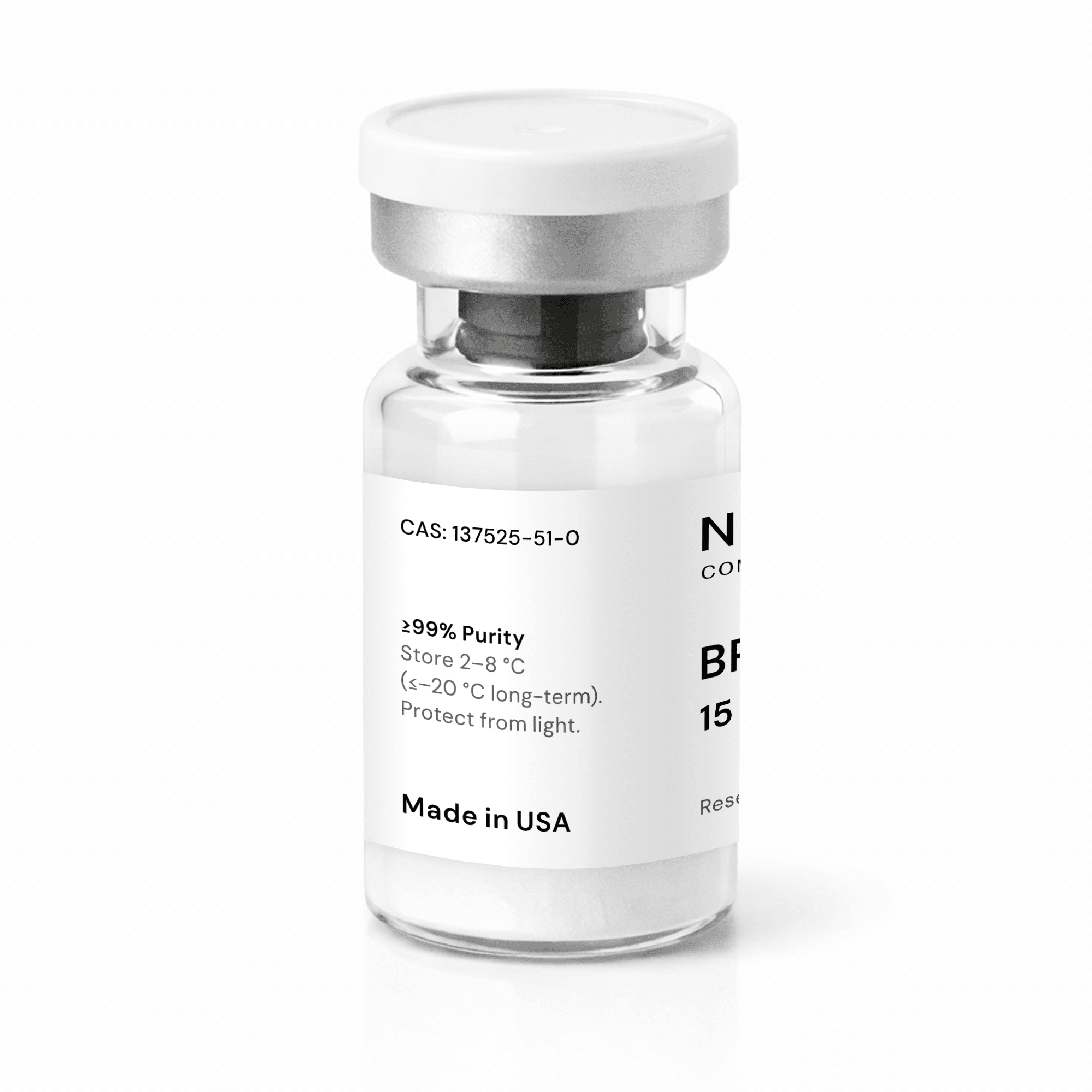
- Store lyophilized vials at –20 °C or colder for long-term stability
- Short-term storage at 2–8 °C is acceptable when necessary
- Keep vials dry, protected from light, and properly sealed
- After reconstitution with a suitable laboratory diluent, refrigerate and use according to established research protocols
- Mix gently to preserve peptide integrity
Dispose of unused material in accordance with institutional and regulatory laboratory guidelines.
References
https://pubmed.ncbi.nlm.nih.gov/27138887
https://pmc.ncbi.nlm.nih.gov/articles/PMC9794587
https://pubmed.ncbi.nlm.nih.gov/16583442
https://pubmed.ncbi.nlm.nih.gov/29998800
https://pubmed.ncbi.nlm.nih.gov/27847966
Compliance Notice
This product is intended for laboratory research use only and is not approved for human or veterinary use.