



Cagrilintide (10mg) About This Product
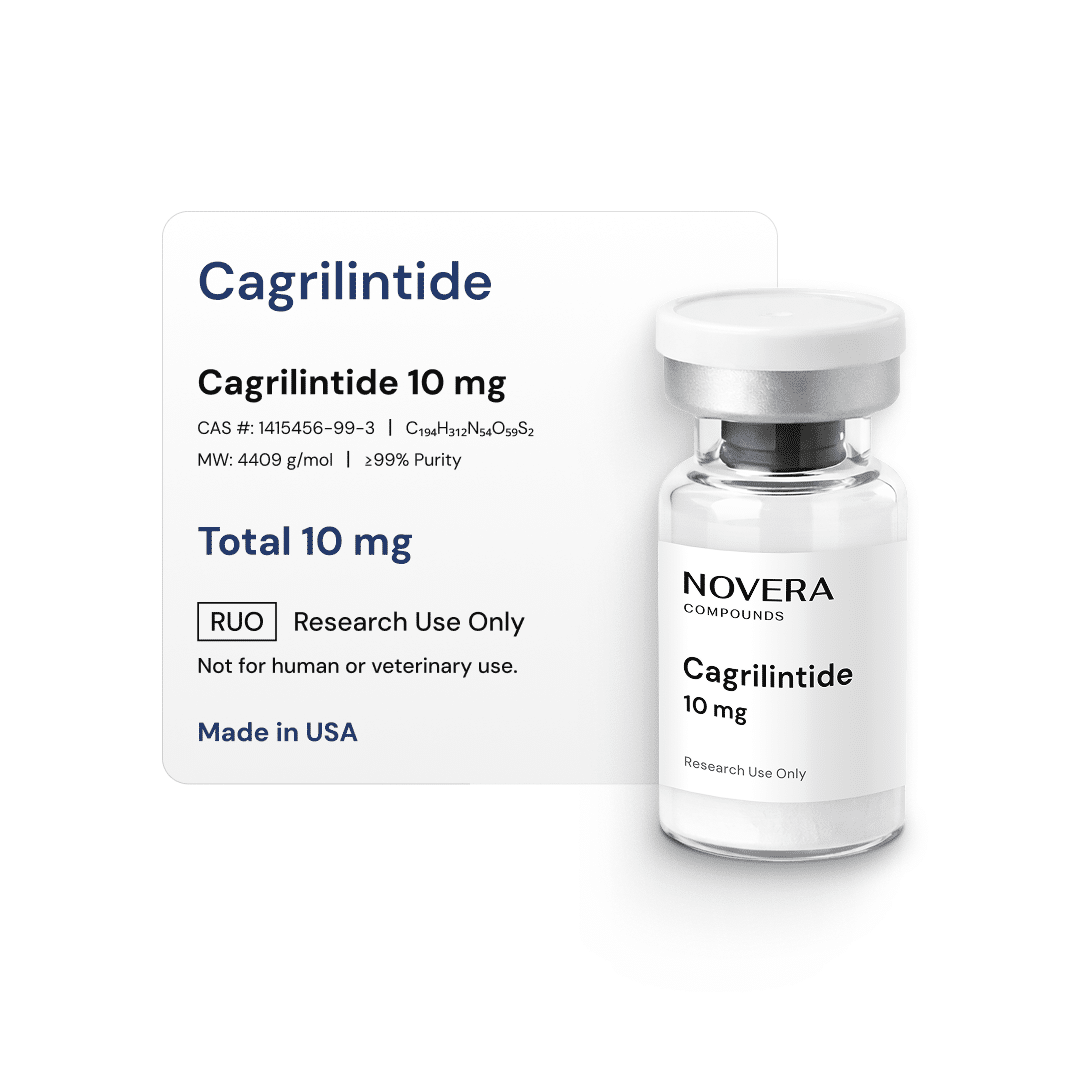
Cagrilintide (10 mg) is a synthetic peptide developed as a long-acting analogue of the naturally occurring hormone amylin. The cagrilintide peptide has a molecular weight of 4409.01 Da and CAS Number 1415456-99-3. It has been examined in laboratory and clinical research models related to metabolic regulation, energy balance, and feeding behavior.
Cagrilintide contains N-terminal acylation with a C20 fatty diacid (eicosanedioic acid) linked via a γ-glutamic acid spacer, along with an intramolecular disulfide bond between Cys3 and Cys8. These structural features improve peptide stability, extend half-life, and reduce amyloid fibril formation relative to native amylin, supporting sustained activity in experimental systems.
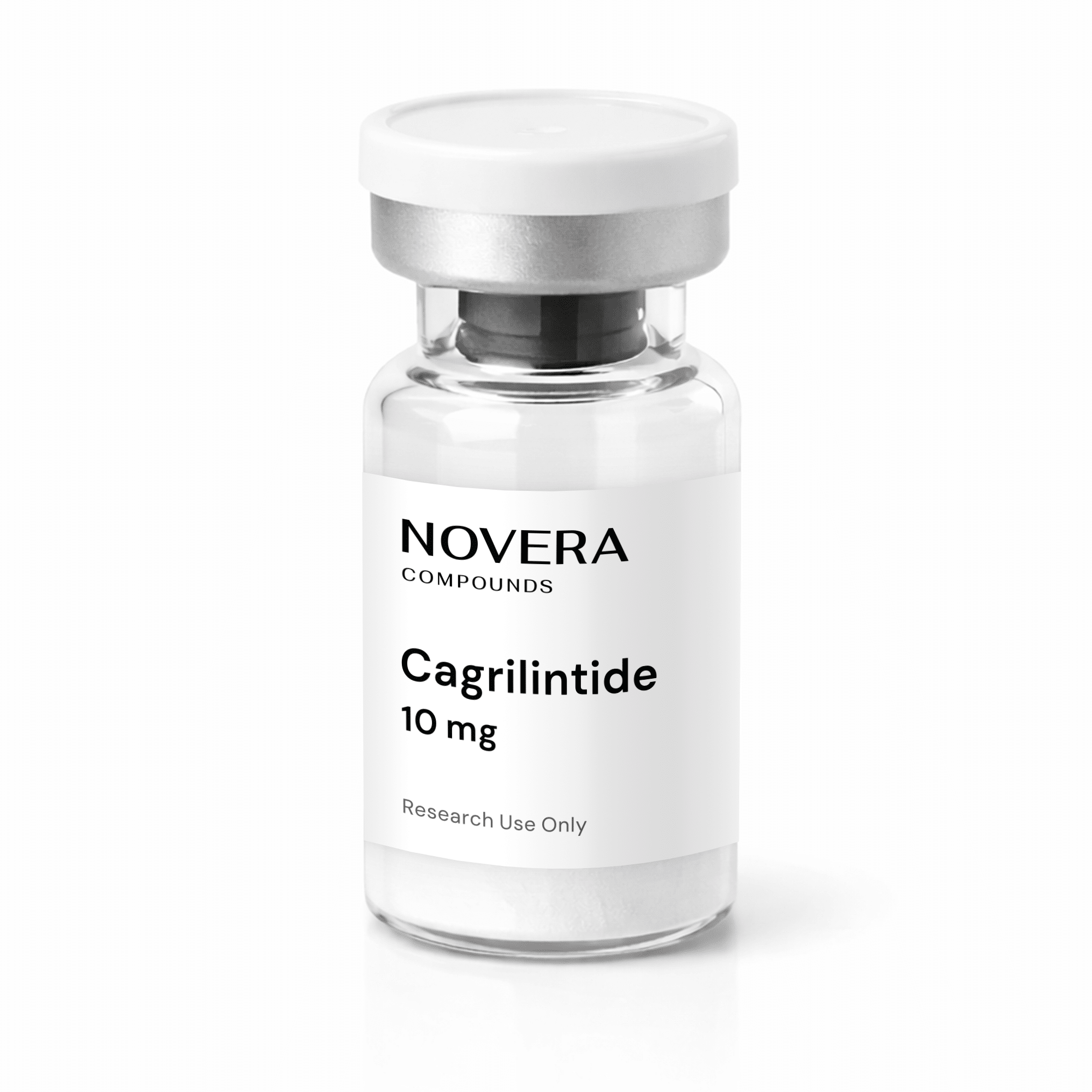
This product is supplied as a sterile, lyophilized powder manufactured at ≥99% purity, verified by reverse-phase HPLC, and packaged in a sealed research-grade vial. Laboratories that buy cagrilintide peptide commonly use this format for comparative peptide research, pharmacokinetic modeling, and metabolic signaling studies.
Cagrilintide (10mg) Key Features and Benefits
- Synthetic Amylin Analogue: Studied in metabolic and endocrine research models
- Dual Amylin and Calcitonin Receptor Agonist: With extended activity profile
- High Purity (≥99%): Verified by reverse-phase HPLC
- White to Off-White Lyophilized Powder: Reconstitutes in aqueous buffers
(solubility ≥50 mg/mL at 25 °C; gentle sonication may aid dissolution) - Defined Molecular Weight: 4409.01 Da
- CAS Number: 1415456-99-3
- Sealed Research Vials: These support traceability and reproducibility
Cagrilintide (10mg) Mechanism & Research Applications
Cagrilintide functions as a dual agonist of amylin and calcitonin receptors. Through activation of both receptor classes, cagrilintide has been shown in research models to promote satiety, delay gastric emptying, reduce post-prandial glucagon secretion, and support energy homeostasis. This dual-receptor activity distinguishes cagrilintide from single-receptor agonists examined in metabolic research.
Specific Mechanistic Effects
Laboratory studies have documented cagrilintide-associated effects, including:
- Satiety-promoting signaling linked to reduced food intake
- Delayed gastric emptying, reflected by slowed gastric transit
- Reduced post-prandial glucagon secretion
- Enhanced regulation of energy balance
- Modulation of hypothalamic appetite centers and feeding-behavior circuits
These effects arise from activation of the amylin and calcitonin receptors in appetite-regulating brain regions and peripheral metabolic tissues.
Research Applications
Cagrilintide has been employed in the following laboratory research contexts:
- Obesity and Metabolic Research: In vitro assays and rodent models examining amylin-receptor pharmacology, energy homeostasis, and adipose tissue signaling
- Glycemic Control Models: Studies of post-prandial glucose dynamics and glucagon secretion in pancreatic islet and hepatocyte systems
- Combination-Peptide Research: Exploratory studies assessing synergistic or comparative effects with incretin peptides, including GLP-1 receptor agonists
- Feeding-Behavior Studies: Assessment of meal patterns, appetite-related hormones, and hypothalamic gene expression in controlled feeding assays
- Pharmacokinetics and Formulation Development: Analytical validation of extended half-life, peptide stability, and delivery-vehicle performance
Institutions that order cagrilintide peptide commonly use it for mechanistic and comparative research rather than therapeutic evaluation.
Cagrilintide (10mg) Dosing & Observed Effects in Research
Published research reports microgram- to low-milligram-range dosing, with administration schedules tailored to experimental design, species, and study duration. No standardized dosing protocols exist outside research settings.
Observed outcomes are described as biological, pharmacodynamic, or pharmacokinetic responses, measured under controlled laboratory conditions. All findings remain model-specific and non-clinical.
Cagrilintide (10mg) Storage, Safety & References
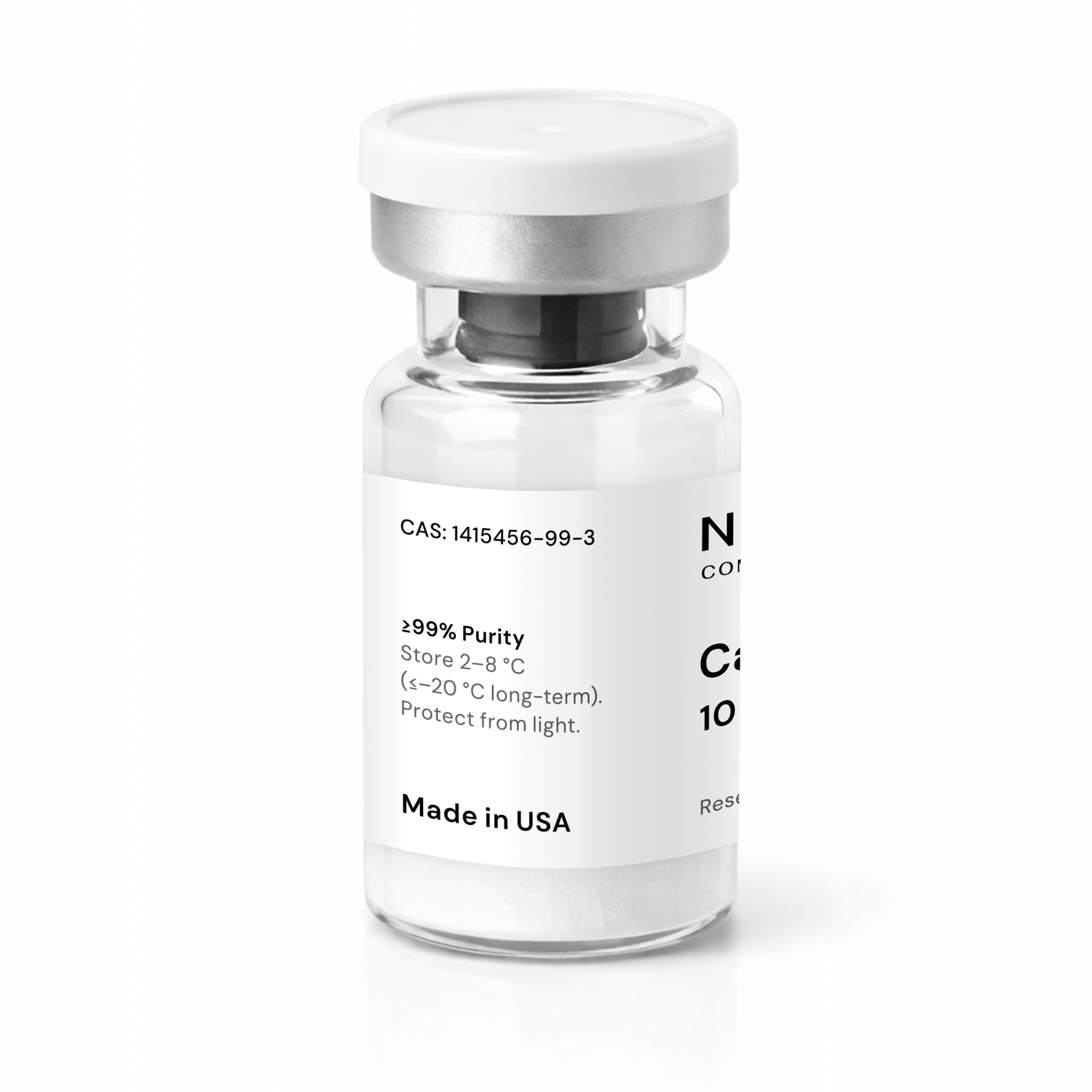
Store Cagrilintide (10 mg) as a lyophilized powder at −20 °C, protected from light and moisture, to maintain stability for ≥2 years. For short-term research use of up to 6 months, storage at 2–8 °C is acceptable.
- Reconstitution Considerations: Due to N-terminal lipidation, complete dissolution may require gentle vortexing or brief sonication. Peptide concentration should be verified after reconstitution using appropriate analytical methods. Avoid repeated freeze–thaw cycles.
References
https://www.nature.com/articles/s41467-025-58680-y
https://pmc.ncbi.nlm.nih.gov/articles/PMC11642503
https://pubmed.ncbi.nlm.nih.gov/40609154
https://pubmed.ncbi.nlm.nih.gov/34798060
https://pubs.acs.org/doi/10.1021/acs.jmedchem.1c00565
Compliance Notice
This product is intended for laboratory research use only and is not approved for human or veterinary use.