




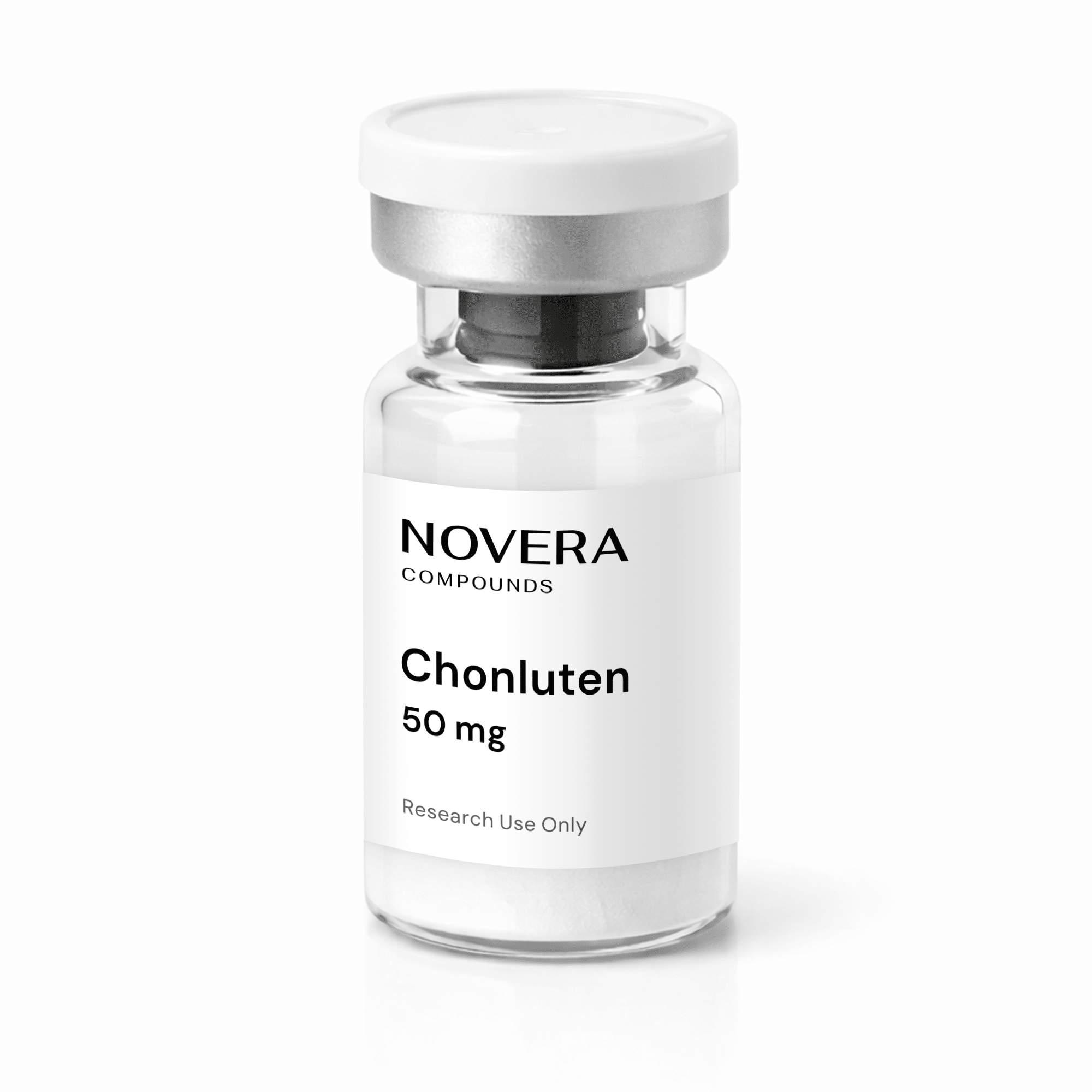


Chonluten (50mg) About This Product
The Chonluten peptide is a synthetic tripeptide bioregulator composed of the amino acid sequence Glu–Asp–Gly (EDG), also referred to as T-34. Laboratories that buy Chonluten peptide or order Chonluten peptide materials reference this compound for controlled laboratory research involving peptide–cell interactions and tissue-associated experimental models. The peptide was originally identified from bronchial epithelial tissue and has been examined in research programs focused on peptide-based cellular regulation.
Structurally, Chonluten consists of three low-molecular-weight amino acids (glutamic acid, aspartic acid, and glycine). In laboratory models, it has been examined for intracellular localization and interaction with nuclear regulatory components, without reliance on membrane receptor signaling.
The product is supplied as a lyophilized powder in 50 mg sealed glass vials, commonly verified to ≥98% purity by HPLC, and intended exclusively for controlled laboratory research.
Product Specifications
- Molecular weight: 319.27 g/mol
- Molecular formula: C₁₁H₁₇N₃O₈
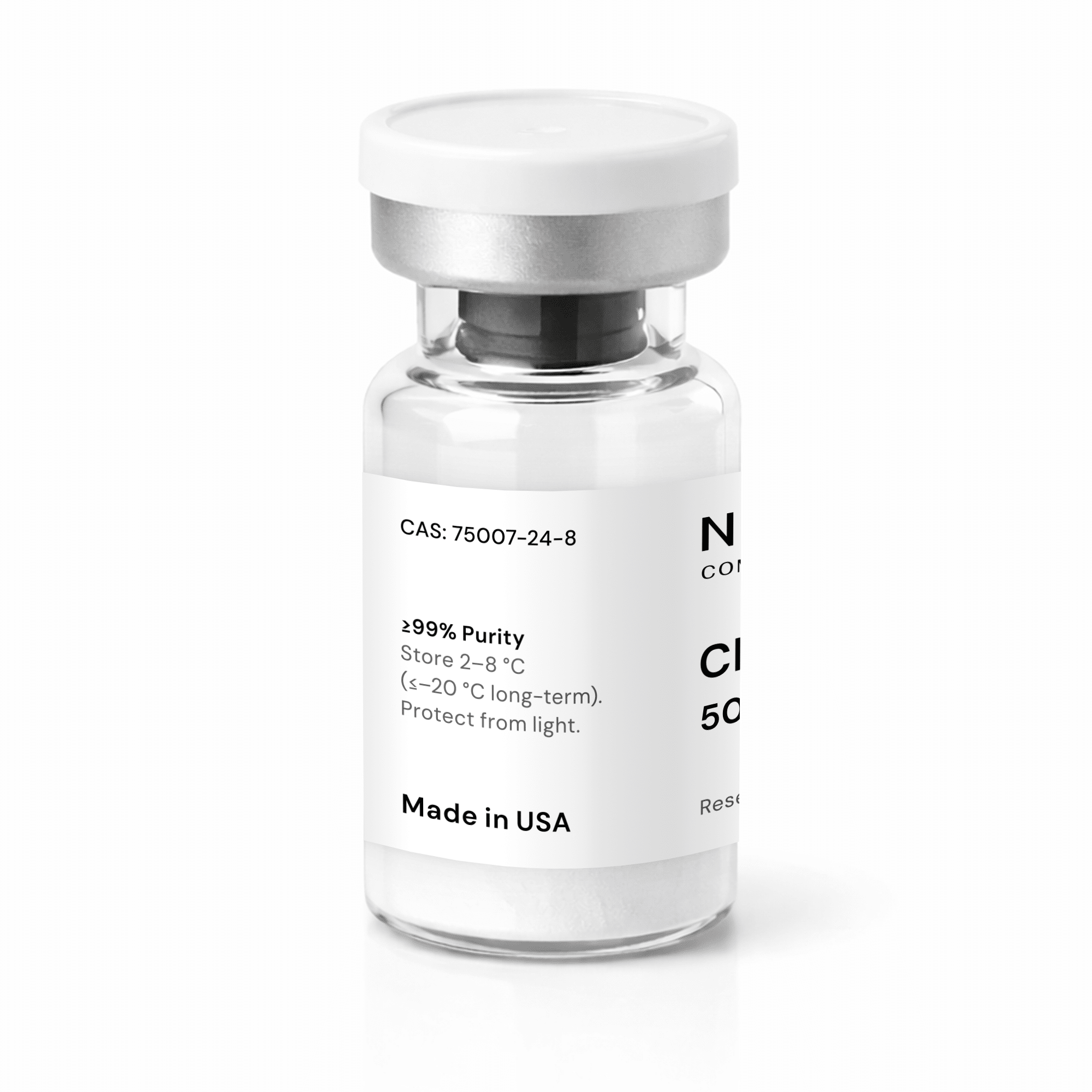
- CAS number: 75007-24-8
Chonluten (50mg) Key Features and Benefits
- Chemical identity: Tripeptide (EDG) composed of three amino acids
- Purity: Commonly produced at ≥98%, verified by HPLC
- Non-hormonal profile: Evaluated without involvement of endocrine signaling pathways
- Research focus: Studied in laboratory models involving respiratory and epithelial cell cultures
- Cellular research scope: Examined in experimental systems related to transcriptional regulation and cellular stress response
- Format: Supplied as a lyophilized powder for laboratory handling and storage
For laboratory research use only.
Chonluten (50mg) Mechanism & Research Applications
Chonluten has been studied in laboratory research as a tissue-associated peptide examined for its interaction with intracellular regulatory processes in cell culture systems. Rather than acting through surface receptors, it has been evaluated in experimental models exploring peptide influence on nuclear and transcription-related activity.
Research applications include:
- Immune cell culture studies examining transcriptional responses under controlled stimulation
- Respiratory epithelial research models focused on cellular regulation in vitro
- Cellular stress response investigations assessing experimental signaling behavior
- Comparative epithelial tissue studies involving bronchial and gastrointestinal cell cultures
All applications described reflect controlled laboratory research contexts and do not imply clinical or therapeutic use.
Chonluten (50mg) Dosing & Observed Effects in Research
Experimental dosing of Chonluten varies by study design and assay type. In vitro research commonly evaluates concentrations ranging from 50 to 200 ng/mL, with exposure durations adjusted according to experimental endpoints.
Animal research data remain limited and are primarily derived from early exploratory studies with variable reporting standards. Contemporary research focuses mainly on in vitro experimental models.
Reported laboratory observations include changes in gene expression profiles, cell signaling markers, and other assay-specific molecular readouts. These findings are derived exclusively from controlled research environments and do not indicate safety, efficacy, or clinical relevance.
Chonluten (50mg) Storage, Safety & References
- Store lyophilized vials at ≤ –20 °C
- Recommended long-term storage at –80 °C
- Keep vials sealed, dry, and protected from light
- Allow vials to equilibrate to room temperature before opening
- Reconstitute only with bacteriostatic water using sterile technique
- Store reconstituted solutions at 2–8 °C and avoid repeated freeze-thaw cycles
Dispose of unused material according to institutional laboratory guidelines.
References
https://pmc.ncbi.nlm.nih.gov/articles/PMC8619776
https://pubmed.ncbi.nlm.nih.gov/22803148
https://pubmed.ncbi.nlm.nih.gov/19830585
https://pubmed.ncbi.nlm.nih.gov/24003726
Compliance Notice
This product is intended for laboratory research use only and is not approved for human or veterinary use.