






Cortagen (50mg) About This Product
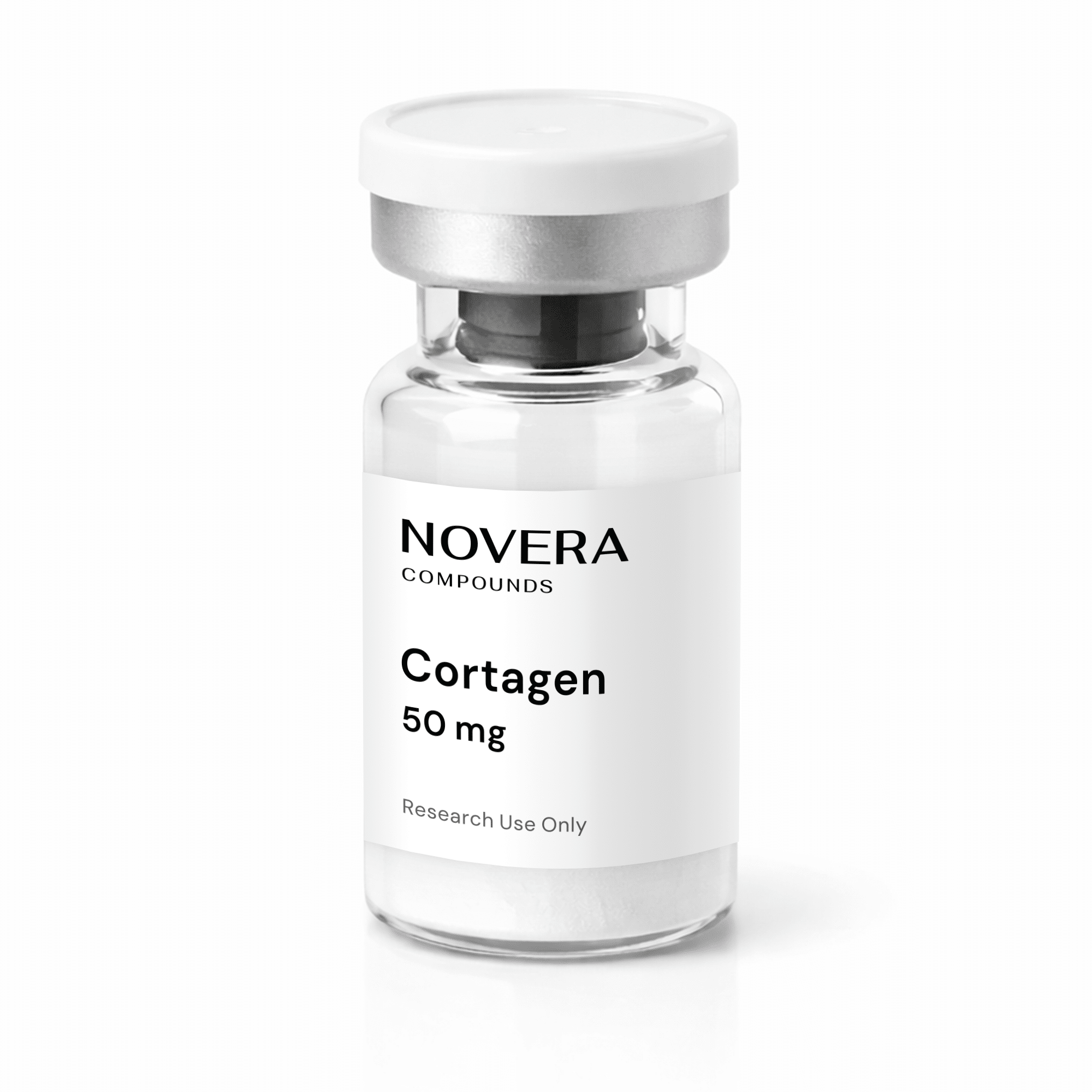
The Cortagen peptide is a synthetic tetrapeptide bioregulator composed of the amino acid sequence Ala–Glu–Asp–Pro. Laboratories that buy Cortagen peptide or order Cortagen peptide materials reference this compound for controlled laboratory research involving short-chain peptide behavior and tissue-associated cellular regulation models. Cortagen was developed through directed peptide synthesis based on structural fragments identified in Cortexin, a naturally occurring peptide complex derived from brain cortex tissue.
Cortagen belongs to the Khavinson peptide bioregulator family, a group of short regulatory peptides that have been studied in research settings for tissue-specific cellular activity. The peptide has a molecular formula C₁₇H₂₇N₅O₈ and a molecular weight of 430.4 g/mol.
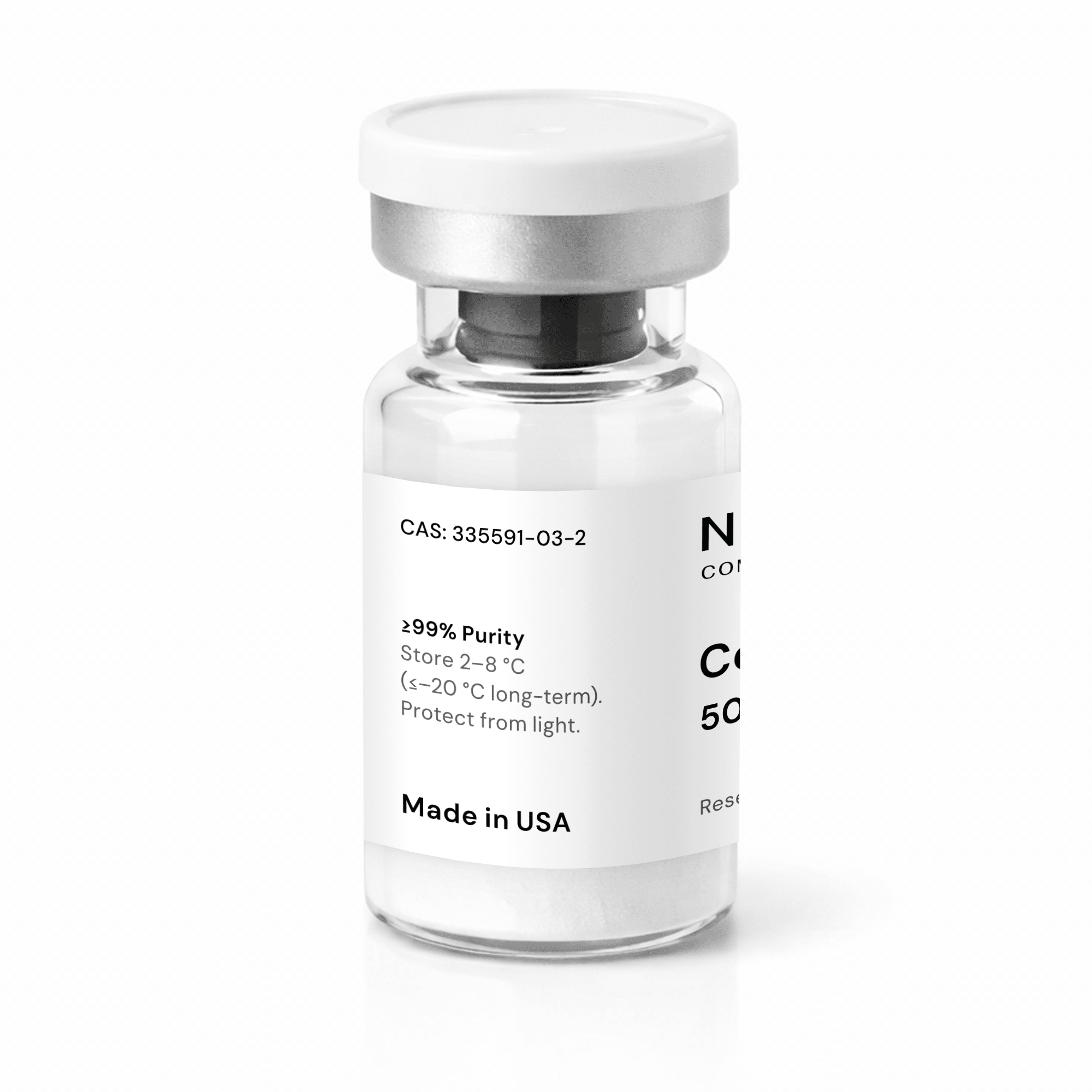
The product is supplied as a white to off-white lyophilized powder in 50 mg glass vials, commonly verified to 98–99% purity by HPLC analysis, and intended exclusively for laboratory research use.
Cortagen (50mg) Key Features and Benefits
- Chemical identity: Tetrapeptide (Ala–Glu–Asp–Pro)
- Molecular weight: 430.4 g/mol
- Molecular formula: C₁₇H₂₇N₅O₈
- Purity: Commonly produced at 98–99%, verified by HPLC
- Format: Supplied as a lyophilized powder in sealed glass vials
- Research scope: Studied in laboratory models examining gene-expression-related cellular responses
- Handling compatibility: Soluble in water-based laboratory buffers, including PBS
For laboratory research use only.
Cortagen (50mg) Mechanism & Research Applications
Cortagen has been examined in laboratory research as a short regulatory peptide evaluated for its influence on intracellular processes associated with gene-expression activity. Rather than acting through membrane receptors, it has been studied in experimental systems exploring peptide interaction with nuclear and transcription-related components.
Research applications include:
- Neural cell culture studies examining transcriptional activity under controlled conditions
- Cellular stress response models focused on experimental gene-expression markers
- Comparative tissue studies involving neural, cardiac, and metabolic cell cultures
- Peptide bioregulation research evaluating short-chain peptide signaling behavior in vitro
All applications described reflect controlled laboratory research contexts and do not imply clinical or therapeutic use.
Cortagen (50mg) Dosing & Observed Effects in Research
Experimental dosing of Cortagen varies across study designs and model systems. Preclinical research has reported evaluation of low-microgram to milligram-per-kilogram ranges in animal models, with protocols adjusted according to experimental objectives and duration.
In vitro research commonly evaluates Cortagen at concentrations ranging from 10 to 100 μM, depending on assay design and analytical endpoints.
Reported laboratory observations include changes in gene-expression profiles, cellular signaling markers, and other assay-specific molecular readouts. These findings are derived exclusively from controlled laboratory and preclinical research environments and do not establish safety, efficacy, or clinical relevance.
Cortagen (50mg) Storage, Safety & References
- Store lyophilized vials at –20 °C or colder
- Long-term storage at –80 °C is recommended
- Keep vials sealed, dry, and protected from light
- Allow frozen vials to equilibrate to room temperature before opening
- Reconstitute only with sterile or bacteriostatic water using aseptic technique
- Store reconstituted solutions at 2–8 °C and use within 21 days
- Aliquot when necessary and avoid repeated freeze–thaw cycles
Dispose of unused material according to institutional laboratory guidelines.
References
https://pubmed.ncbi.nlm.nih.gov/12170291
https://pubmed.ncbi.nlm.nih.gov/12374906
https://pubmed.ncbi.nlm.nih.gov/12447482
https://pubmed.ncbi.nlm.nih.gov/22117547
https://pubmed.ncbi.nlm.nih.gov/11276314
Compliance Notice
This product is intended for laboratory research use only and is not approved for human or veterinary use.