



What Are The Purported Benefits Of GHK-Cu (100mg)?
The GHK-Cu peptide (Copper Tripeptide-1) is widely researched as a regenerative signaling molecule involved in tissue repair and cellular renewal. Originally identified in human plasma, this peptide–copper complex functions as a biological repair signal that supports healthier cellular activity patterns.
One of the most documented research areas is skin remodeling. Studies have examined GHK-Cu with the strength of 100mg for its effects on the production of collagen I and III, elastin, and glycosaminoglycans (GAGs), which are associated with skin elasticity, firmness, and density. These properties account for its extensive investigation in dermatology and wound-healing models.
This healing and regenerative peptide has also been studied in wound repair, where it appears to support angiogenesis (new blood vessel formation) and the recruitment of immune cells such as macrophages to damaged tissue. In hair research, the peptide is investigated for its effects on follicle size and growth cycles, partly through reducing follicle sensitivity to dihydrotestosterone (DHT) and enhancing scalp circulation and dermal papilla cell activation.
Additional research highlights anti-inflammatory and antioxidant signaling, including observed reductions in TNF-α alongside support for stem cell viability. These combined properties continue to drive interest among laboratories that buy GHK-Cu peptide for regenerative and cellular research
What Is The Chemical Makeup Of GHK-Cu (100mg)?
GHK-Cu is a non-hormonal tripeptide complex, classified as a matrikine — a compound naturally released during tissue injury to signal repair processes.
- Peptide Sequence: Its sequence is Gly-His-Lys(Cu2+). In its active form, the peptide binds divalent copper ions (Cu²⁺), with the histidine residue serving as the primary coordination site. The histidine imidazole ring, glycine amino groups, and deprotonated amide nitrogens coordinate the copper ion, creating a stable chelation complex.
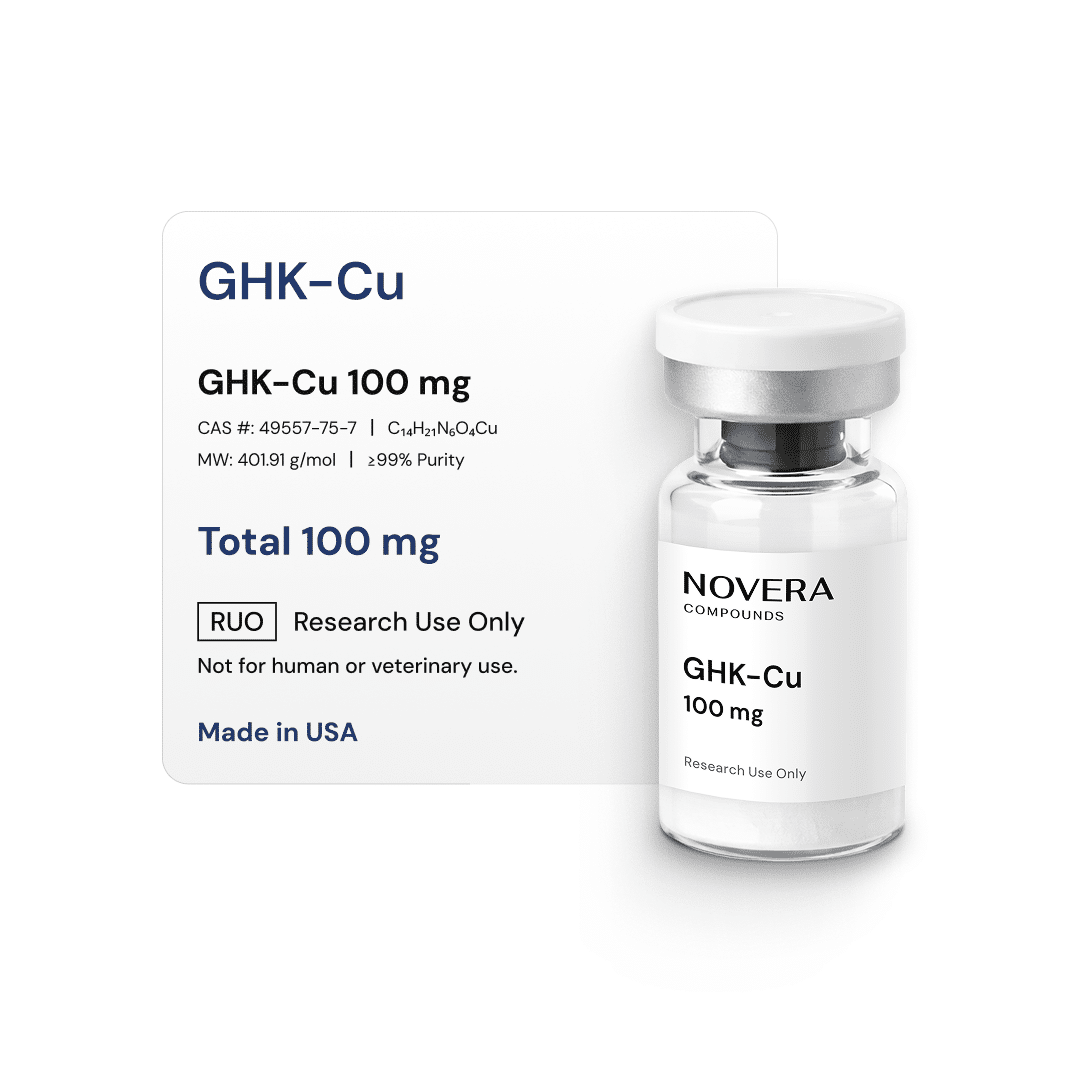
- Molecular Formula: C₁₄H₂₁N₆O₄Cu
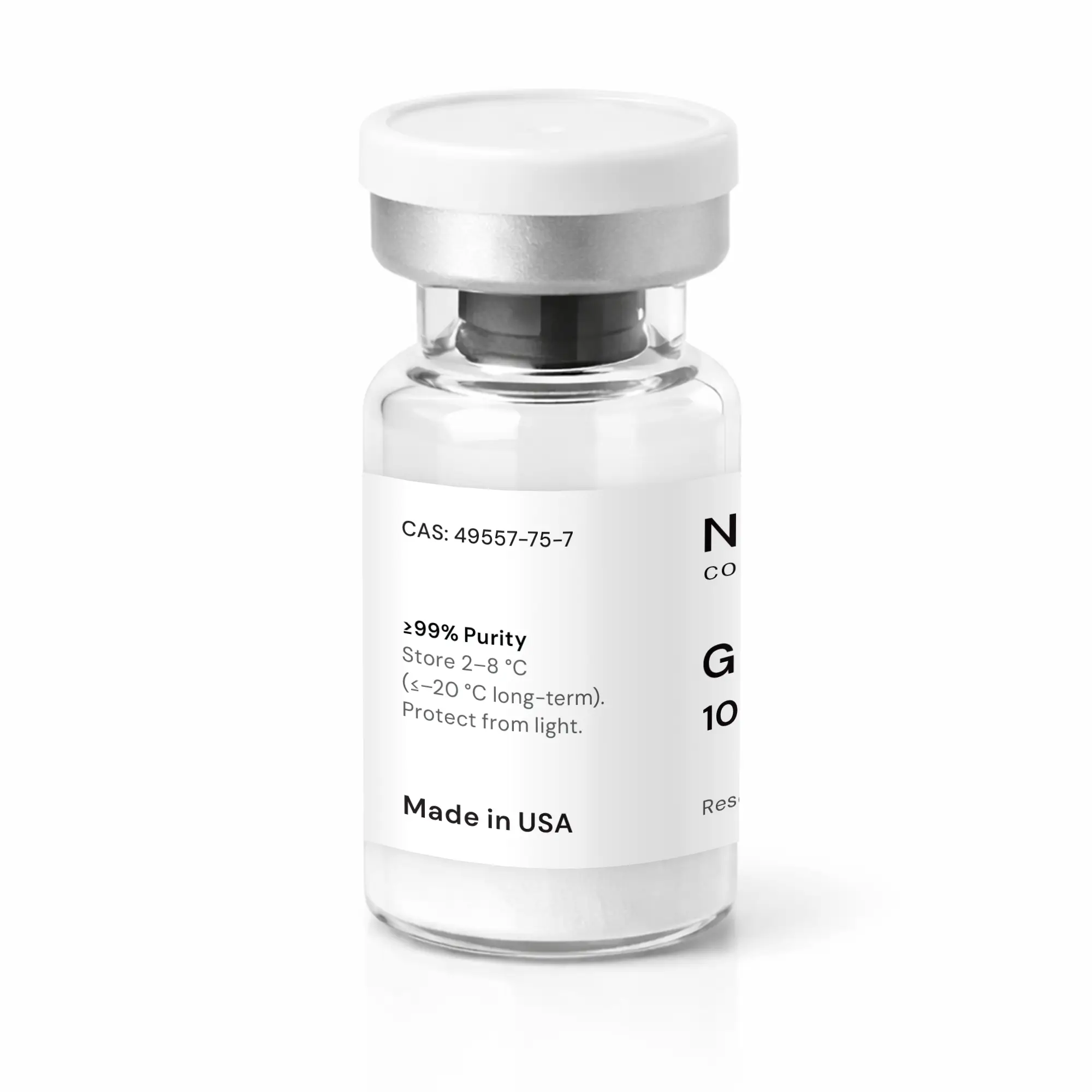
- CAS Number: 49557-75-7
In the absence of copper, the peptide exists as GHK, which exhibits substantially reduced biological activity.
The copper-bound complex delivers Cu²⁺ to copper-dependent enzymes such as lysyl oxidase, which catalyzes collagen and elastin cross-linking. This enzymatic interaction underlies many of the peptide’s regenerative research applications.
- GHK-Cu is identifiable by its distinct deep blue color, both as a lyophilized powder and in solution — a visual indicator that copper is properly complexed with the peptide. Chemically, the peptide has a molecular weight of 401.91 g/mol.
The 100 mg format represents a bulk research quantity, commonly selected when laboratories order GHK-Cu peptide for extended or high-volume studies
What Does Scientific Research Say About GHK-Cu (100mg)?
Genomic analysis using the Broad Institute’s Connectivity Map showed that GHK-Cu can influence the expression of numerous human genes. These include pathways related to DNA repair, antioxidant defense, and tissue regeneration, as well as reduced expression of genes associated with inflammation and matrix degradation. These findings support ongoing investigation into age-related cellular signaling.
Preclinical Research Findings
In animal models, including diabetic and ischemic wound studies, GHK-Cu has been associated with:
- Faster wound contraction and improved healing rates (64.5% reduction in wound size vs. 28.2% in controls)
- Improved collagen organization and increased deposition
- Enhanced glutathione levels and antioxidant enzyme activity
- Increased angiogenesis through VEGF and FGF-2 stimulation
- Reduced pro-inflammatory markers (TNF-α, IL-6) with decreased NF-κB signaling
- Fibroblast migration stimulation and extracellular matrix remodeling
GHK-Cu research consistently demonstrates that the peptide is biologically active at very low concentrations in the nanomolar range (1–10 nM). This extreme potency distinguishes GHK-Cu from many other bioactive peptides and contributes to its therapeutic potential.
Hair Growth & Follicular Health
Recent investigations indicate that GHK-Cu:
- Activates dermal papilla cells, the specialized cells at the base of hair follicles controlling growth phase (anagen) entry
- Reduces follicle sensitivity to DHT (dihydrotestosterone), the hormone primarily responsible for androgenetic alopecia
- Promotes angiogenesis to the scalp, increasing oxygen and nutrient delivery to follicles
- Suppresses inflammatory cytokines that contribute to follicle miniaturization
- Enhances hair density and thickness through collagen synthesis and follicular cell proliferation
Safety Considerations
The safety profile is well documented. GHK-Cu is endogenous to the human body (found naturally in plasma, saliva, and urine), and its concentration naturally declines with age. However, because excessive copper exposure can be harmful, research protocols monitor total copper levels, especially in systemic studies. Long-term and short-term animal studies have reported no consistent evidence of organ toxicity or reproductive disruption under controlled laboratory conditions.
What Are The Storage Conditions For GHK-Cu (100mg)?
In lyophilized powder form, GHK-Cu should be stored at –20 °C. When kept frozen, dry, and protected from light, stability may extend for a longer duration. Brief room-temperature exposure is only acceptable during shipping if vials remain sealed and dry.
Because copper complexes are photosensitive and hygroscopic (moisture-absorbing), vials must be:
- Shielded from light (both UV and visible light accelerate copper reduction)
- Tightly sealed to prevent air and moisture exposure
- Stored in dark, airtight containers
- Protected from repeated temperature fluctuations
Reconstituted Solutions
Once reconstituted with bacteriostatic water, the solution should appear clear and deep blue. Discoloration changes indicate degradation:
- Cloudiness = peptide precipitation or contamination
- Green or pink discoloration = copper reduction (Cu²⁺ → Cu⁺)
- Colorless = complete copper dissociation
Reconstituted solutions should be stored at 2–8 °C. Do not freeze reconstituted solutions without proper stabilization.
Best Practices for Extended Research
To reduce waste and preserve integrity, researchers often:
- Aliquot solutions into sterile vials and freeze unused portions at −80 °C
- Use fresh aliquots for each experiment to minimize repeated opening
- Minimize light exposure and air contact during handling
- Monitor color retention — fading from deep blue indicates degradation
This practice is especially relevant for laboratories that order GHK-Cu peptide for long-term research protocols requiring consistent potency and reproducibility
Are you looking to buy GHK-Cu (100mg) online?
If you’re looking to order GHK-Cu (100mg) online at wholesale prices, contact Medical Spa RX for guidance on how to do so.
This product is supplied strictly for laboratory research use only and is not approved for human or veterinary administration. It is not intended for diagnostic, therapeutic, or clinical applications. Any reference to biological activity or potential effects is based solely on preclinical or in-vitro findings and should not be interpreted as validated clinical outcomes. Researchers are responsible for ensuring proper handling, storage, and disposal in accordance with institutional, federal, and international guidelines. By purchasing or using this material, the buyer confirms that they are a qualified researcher and that the product will be used exclusively in controlled research settings compliant with all applicable regulations.
Sources
https://pmc.ncbi.nlm.nih.gov/articles/PMC6073405
https://pmc.ncbi.nlm.nih.gov/articles/PMC8789089
https://pmc.ncbi.nlm.nih.gov/articles/PMC4508379
https://pmc.ncbi.nlm.nih.gov/articles/PMC8789089