




GHK-Cu (50mg) About This Product
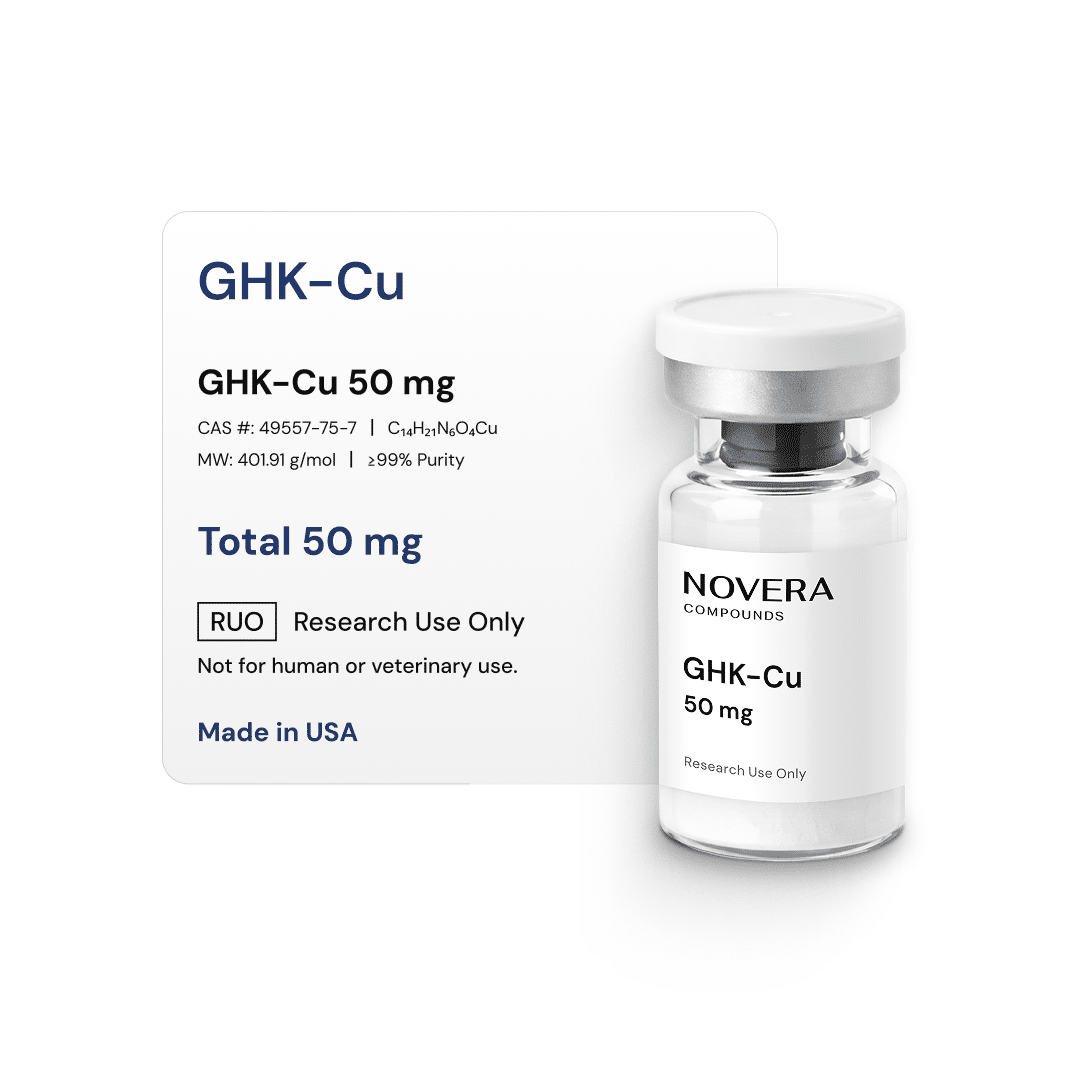
GHK-Cu (50mg) is a copper-binding tripeptide composed of glycine–histidine–lysine (GHK) complexed with copper (II). The GHK-Cu peptide occurs naturally in human plasma, saliva, and urine and has been synthesized for laboratory research applications. The copper–peptide complex has a molecular weight of approximately 401 g/mol and a molecular formula of C₁₄H₂₄N₆O₄Cu, supporting precise analytical handling in experimental systems.
In research settings, GHK-Cu has been studied for its involvement in copper-dependent cellular signaling, extracellular matrix regulation, and gene-expression modulation. Research also explores GHK-Cu’s role in cellular copper homeostasis, examining how the peptide’s copper-binding properties influence trace-metal bioavailability and the function of intracellular copper-dependent enzymes.
This product is supplied as a sterile, lyophilized powder with ≥98% purity, packaged in a sealed, research-grade vial. It serves as a model compound for investigating peptide-driven cellular responses, copper-mediated biological signaling, metalloprotein interactions, and tissue-remodeling biochemistry under controlled experimental conditions. It is intended strictly for non-clinical laboratory research.
GHK-Cu (50mg) Key Features and Benefits
- Copper-Bound Tripeptide Complex: Glycine–histidine–lysine coordinated with Cu²⁺ for copper-dependent signaling research
- High Research Purity (≥98%): Verified by analytical methods such as HPLC
- Low Molecular Weight (~401 g/mol): Supports precise handling in controlled experimental models
- Lyophilized Powder Format: Enhances stability and flexible reconstitution
- Well-Characterized Research Tool: Extensively studied across multiple cell types and tissue contexts, including dermal fibroblasts, vascular tissues, immune cell populations, and neuronal systems
- Sealed Research Vial: Ensures traceability and contamination control
Researchers who buy GHK-Cu peptide products commonly use this format for reproducible peptide–metal interaction studies.
GHK-Cu (50mg) Mechanism & Research Applications
GHK-Cu has been investigated as a bioregulatory copper–peptide complex that influences biological activity through copper-dependent and peptide-mediated signaling pathways. Preclinical research emphasizes effects on dermal fibroblasts, vascular endothelial cells, immune cell populations, keratinocytes, and neuronal tissue models, reflecting the peptide’s broad experimental utility.
Expanded Mechanistic Pathways Studied
Laboratory studies have examined GHK-Cu–associated activity across several distinct mechanistic domains:
- Extracellular matrix regulation: Modulation of collagen and elastin synthesis and extracellular-matrix organization
- Matrix metalloproteinase (MMP) regulation: Influence on ECM turnover and remodeling dynamics
- Integrin-mediated cell adhesion and migration signaling: Investigation of fibroblast and keratinocyte movement, attachment, and tissue-organization processes
- Growth-factor regulation networks: Examination of transforming growth factor-β (TGF-β)–associated signaling involved in tissue repair and remodeling
- Pro-inflammatory cytokine suppression: Modulation of inflammatory mediator expression in immune-cell and tissue models
- Antioxidant response elements (ARE): Activation of transcriptional pathways associated with cellular antioxidant defenses
- Copper sequestration and homeostasis mechanisms: Chelation of copper ions by GHK to limit metal-catalyzed oxidative stress and regulate intracellular copper availability
- Redox-sensitive signaling pathways: Coordination of oxidative balance through copper-dependent enzymatic activity
Research Applications
Tissue-Specific Research Models
- Fibroblast migration studies: Investigation of directed cell movement and wound-edge repopulation dynamics
- Keratinocyte differentiation and epithelial barrier function models
- Endothelial cell cultures and angiogenic signaling investigations
- Neuronal regeneration and neuroprotection assays in nervous-system research models
Molecular and Cellular Process Studies
- Immune-cell recruitment and inflammatory mediator modulation
- Oxidative-stress resistance and antioxidant pathway investigations
- Stem-cell-associated signaling and differentiation marker studies
- Antimicrobial peptide interaction and synergistic effect assays
Comparative and Mechanistic Studies
- Comparative analysis of copper-free GHK versus copper-bound GHK-Cu
- Peptide-mediated trace-metal delivery and metalloprotein interaction studies
Laboratories that order GHK-Cu peptide often integrate it into multi-pathway investigations examining endogenous regulatory peptides and metal-binding biomolecules.
GHK-Cu (50mg) Dosing & Observed Effects in Research
In published laboratory research, GHK-Cu has been applied at low concentrations appropriate for peptide and trace-metal studies, with experimental parameters adjusted according to model system and assay design.
Observed outcomes include specific cellular and molecular endpoints such as:
- Enhanced fibroblast migration capacity
- Increased collagen and elastin deposition
- Modulation of pro-inflammatory and antioxidant mediators
- Altered transcriptional profiles related to tissue homeostasis, repair signaling, and stress response
All reported observations derive exclusively from preclinical laboratory and animal studies and remain model-specific. No therapeutic, diagnostic, or clinical conclusions should be inferred.
GHK-Cu (50mg) Storage, Safety & References
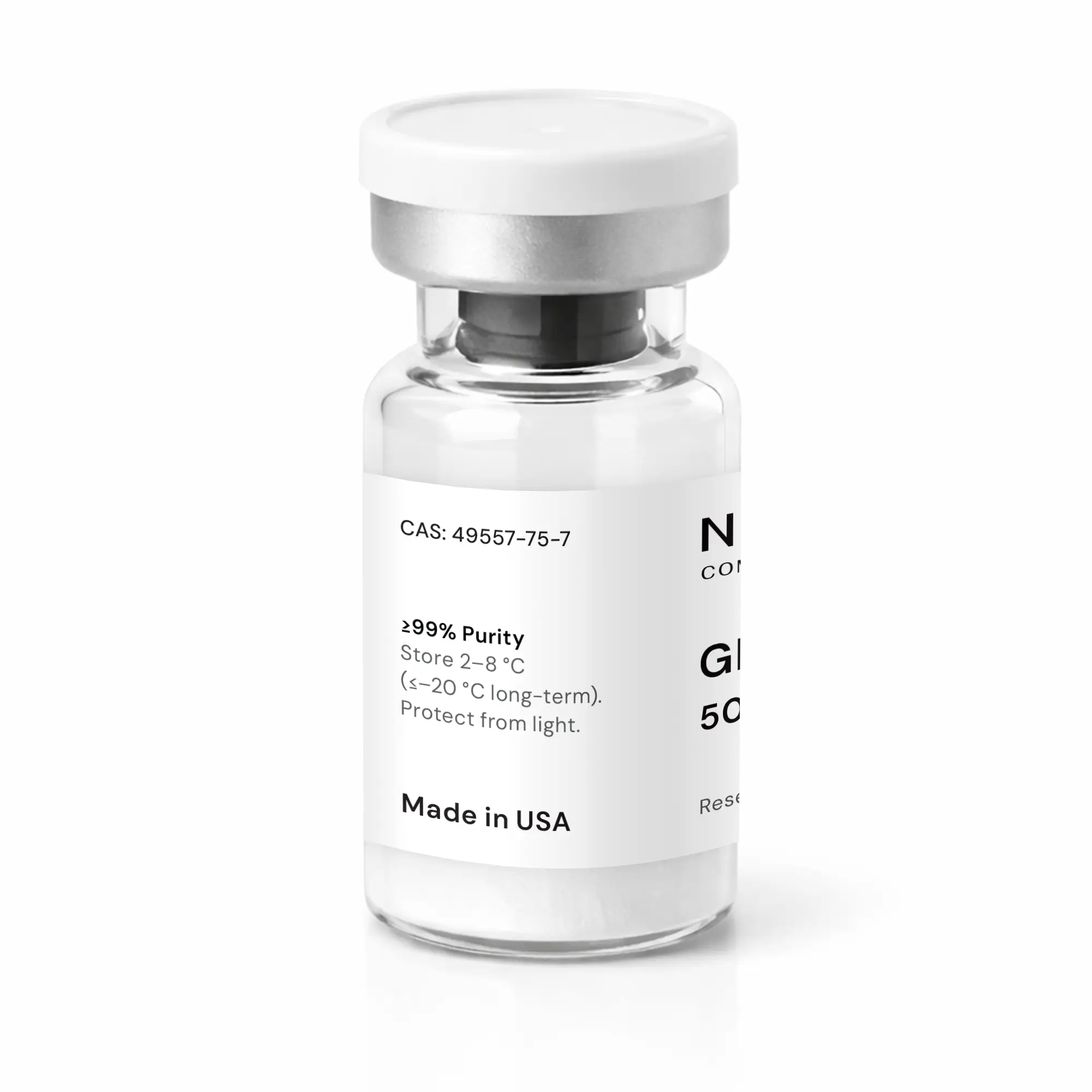
Store GHK-Cu (50mg) as a lyophilized powder protected from light and moisture.
- Short-term storage (days to weeks): 2–8 °C
- Long-term storage: −20 °C or lower (−80 °C preferred)
Avoid repeated freeze–thaw cycles to preserve peptide integrity and copper coordination. Reconstitution should be performed using sterile, laboratory-grade solvents under aseptic conditions. Storage duration after reconstitution depends on solvent composition and study design.
References
https://pmc.ncbi.nlm.nih.gov/articles/PMC6073405
https://pmc.ncbi.nlm.nih.gov/articles/PMC3359723
https://onlinelibrary.wiley.com/doi/10.1155/2015/648108
https://pmc.ncbi.nlm.nih.gov/articles/PMC5332963
https://www.frontiersin.org/journals/pharmacology/articles/10.3389/fphar.2025.1551843/full
Compliance Notice
This product is intended for laboratory research use only and is not approved for human or veterinary use.