




GHRP-6 (10mg) About This Product
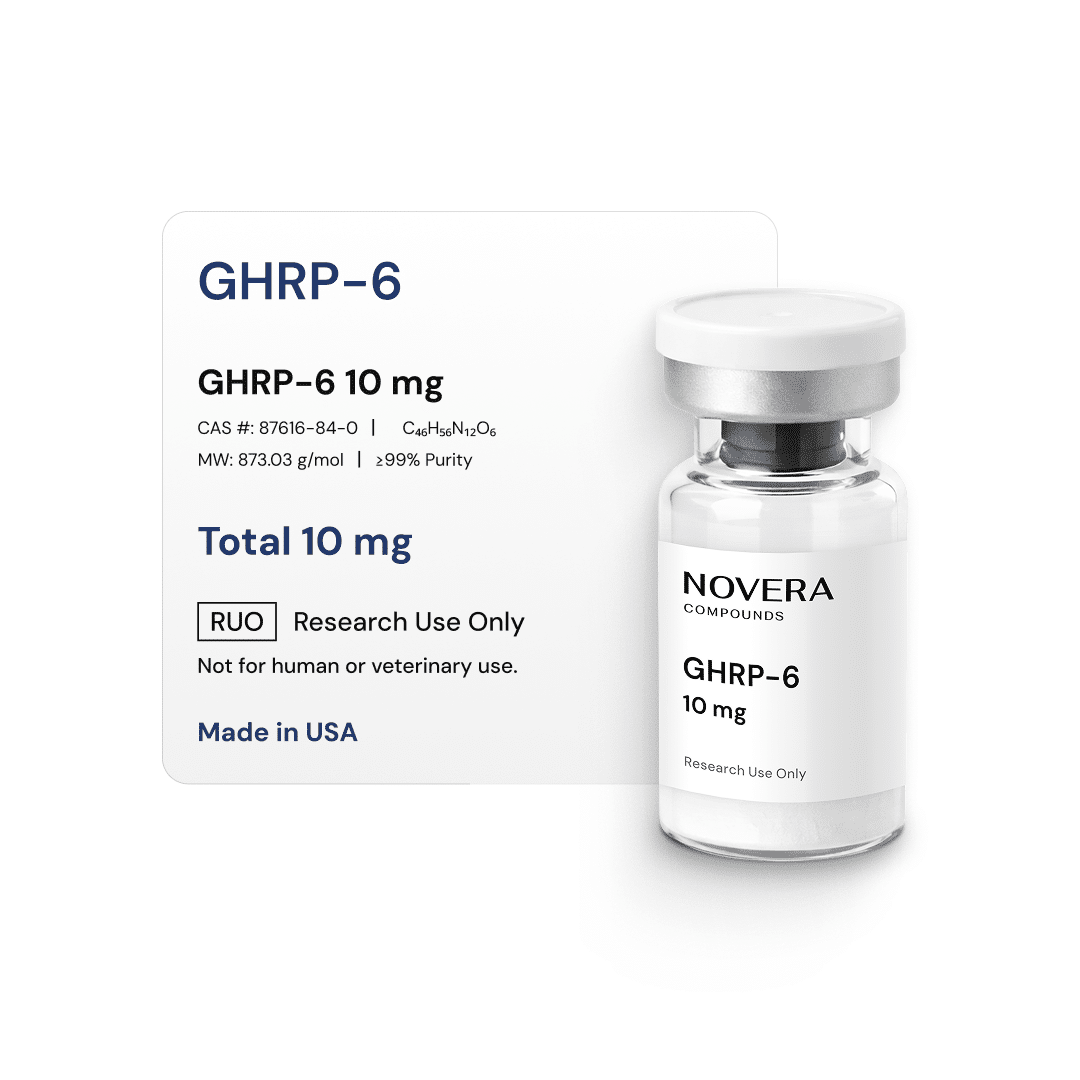
GHRP-6 is a synthetic growth hormone–releasing hexapeptide with a molecular weight of approximately 840 Da. The GHRP-6 peptide incorporates both L- and D-amino acid residues, a structural feature that reduces proteolytic susceptibility and alters receptor-interaction profiles, enhancing stability and utility in experimental environments.
GHRP-6 has been examined in laboratory and preclinical research settings for its role as a synthetic agonist of the growth hormone secretagogue receptor 1a (GHS-R1a), also known as the ghrelin receptor. Activation of GHS-R1a initiates Gq/phospholipase C (PLC) signaling and calcium-dependent intracellular cascades that regulate growth hormone release and hypothalamic–pituitary axis feedback under controlled experimental conditions.
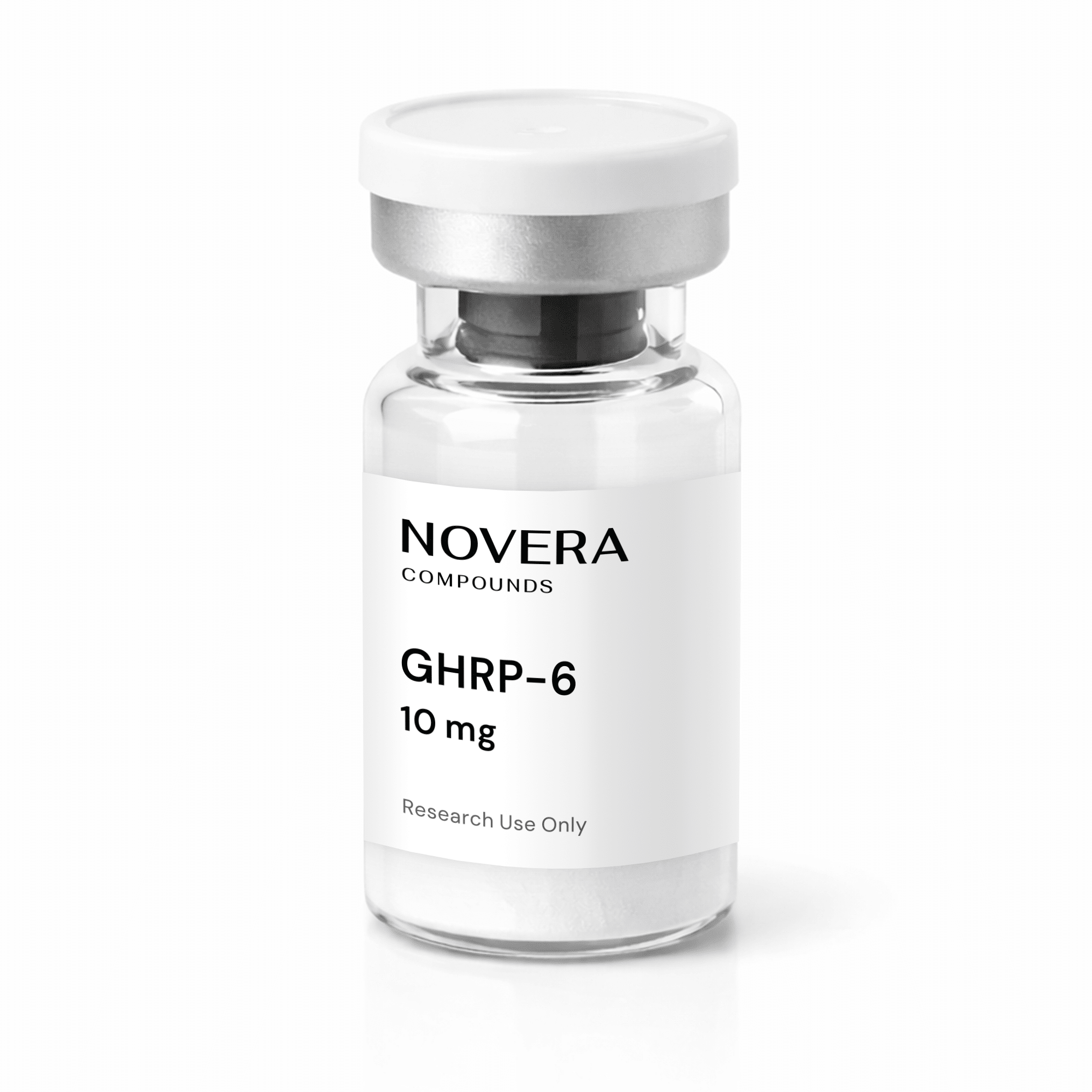
This product is supplied as a sterile, lyophilized powder with a reported purity ≥98%, packaged in a sealed, research-grade vial. Laboratories that buy GHRP-6 peptide commonly use this format for non-clinical investigations involving endocrine signaling, metabolic regulation, and receptor-mediated pathway analysis.
GHRP-6 (10mg) Key Features and Benefits
GHRP-6 (10mg) is formatted to support consistent handling, stability, and traceability in research environments.
- GHS-R1a (Ghrelin Receptor) Agonist: Enables targeted studies of ghrelin-receptor pharmacology and downstream signaling
- D-Amino Acid Composition: Enhances enzymatic resistance and conformational stability in experimental systems
- Short-Chain Synthetic Hexapeptide: Suitable for structure–activity and receptor-kinetics studies
- Purity ≥98%: Verified for analytical and experimental research
- Lyophilized Powder Format: Supports long-term storage and controlled reconstitution
- Sealed Vial Packaging: Ensures laboratory traceability and contamination control
GHRP-6 (10mg) Mechanism & Research Applications
GHRP-6 functions as a synthetic agonist of GHS-R1a, a G protein-coupled receptor (GPCR) expressed in the pituitary gland, hypothalamus, and distributed across the central nervous system and select peripheral tissues. Upon receptor binding, GHRP-6 activates Gq/PLC signaling, resulting in inositol triphosphate (IP₃) generation, intracellular calcium mobilization, and G protein–mediated kinase activation.
These signaling cascades regulate growth hormone secretion, modulate neuroendocrine circuits, influence metabolic sensing, and activate gene-expression programs associated with cellular stress response, inflammatory signaling, and apoptosis-related pathways. In research contexts, GHRP-6 is used to interrogate GHS-R1a activation kinetics, tissue-specific receptor expression, and downstream signal-transduction networks.
Primary Research Domains
- Receptor Pharmacology: Ligand–response profiling, second-messenger assays, and structure–activity relationship analysis of GHS-R1a signaling
- Neuroscience Research: Studies of learning and memory, synaptic plasticity, and dopaminergic system involvement
- Ischemia & Cellular Stress Models: Evaluation of apoptosis markers, neuroinflammatory mediators, and cell-survival signaling
- Tissue Remodeling & Extracellular Matrix Biology: Analysis of cell migration, collagen expression, and matrix-organization dynamics
- Cardiac Cell Stress Paradigms: Investigation of oxidative cytotoxicity, necrosis markers, and myocardial injury responses
- Motivation & Reward Circuitry: Behavioral studies examining reward-seeking outputs, site-dependent GHS-R activation, and neurobehavioral modulation
Preclinical Research Summary
- Neural Plasticity & Memory Paradigms: Rodent studies have examined GHS-R signaling in extinction learning, amygdala-associated long-term depression, and memory encoding processes.
- Ischemic Brain Injury Models: Preclinical models assess apoptosis-associated markers and neuroinflammatory signaling following GHRP-6-mediated receptor activation.
- Dopaminergic System Mapping: Research has characterized GHS-R expression in the substantia nigra, linking receptor dynamics to motor-function phenotypes.
- Extracellular Matrix Remodeling: Wound-healing models evaluate collagen deposition, proteome-level changes, and matrix organization during tissue repair.
- Myocardial Injury & Oxidative Stress: Large-animal studies quantify oxidative injury indices, necrosis-related markers, and biochemical stress endpoints.
- Motivation & Reward-Seeking Behavior: Behavioral paradigms investigate central GHS-R stimulation and its region-specific influence on motivated behavior.
GHRP-6 (10mg) Dosing & Observed Effects in Research
Published studies report microgram- to milligram-level dosing, adjusted according to experimental model, study duration, and research objective. Investigations span cell-based assays, tissue explants, rodent and murine models, and large-animal preclinical studies.
Commonly reported research endpoints include:
- Growth hormone elevation
- Learning- and memory-related behavioral changes
- Alterations in apoptosis and necrosis signaling
- Modulation of inflammatory mediators and cytokine expression
- Changes in oxidative-stress and antioxidant pathways
- Shifts in extracellular-matrix protein expression
- Dopaminergic neuron response modulation
- Reward-seeking and motivation-related behavioral outputs
All findings derive exclusively from preclinical research systems.
GHRP-6 (10mg) Storage, Safety & References
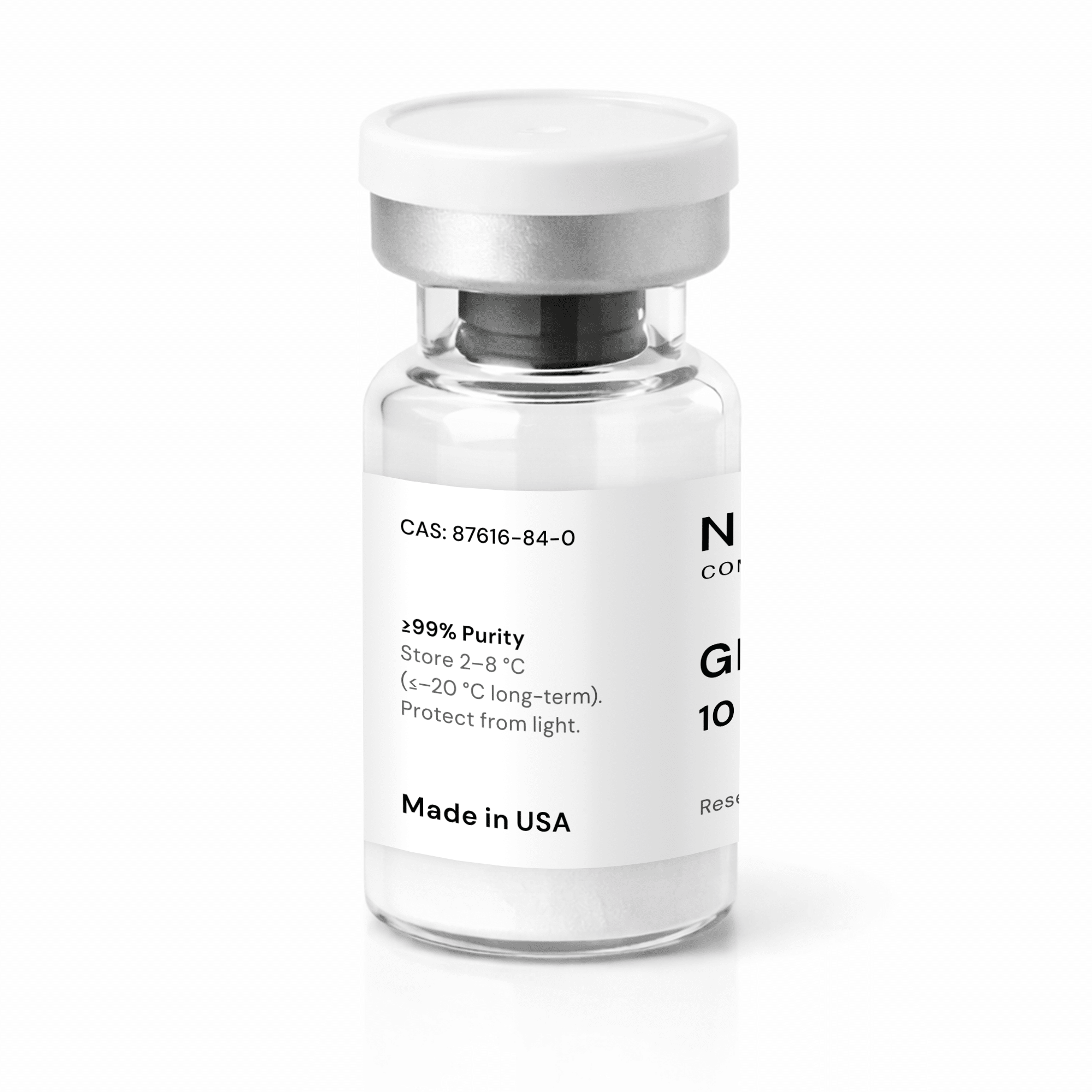
Store GHRP-6 (10mg) as a lyophilized powder protected from light and moisture.
- Short-term storage: 2–8 °C (days to weeks)
- Long-term storage: −20 °C or lower (−80 °C preferred)
After reconstitution, storage conditions depend on the diluent and study protocol. Avoid repeated freeze–thaw cycles. Standard laboratory safety procedures, aseptic handling, and proper labeling must be followed. Laboratories that order GHRP-6 peptide are responsible for regulatory compliance.
References
https://pubmed.ncbi.nlm.nih.gov/8903947
https://pmc.ncbi.nlm.nih.gov/articles/PMC40592
https://pubmed.ncbi.nlm.nih.gov/9543138
https://www.pnas.org/doi/10.1073/pnas.1313798111
https://pubmed.ncbi.nlm.nih.gov/16989643
https://onlinelibrary.wiley.com/doi/10.1155/2016/4361702
Compliance Notice
This product is intended for laboratory research use only and is not approved for human or veterinary use.