




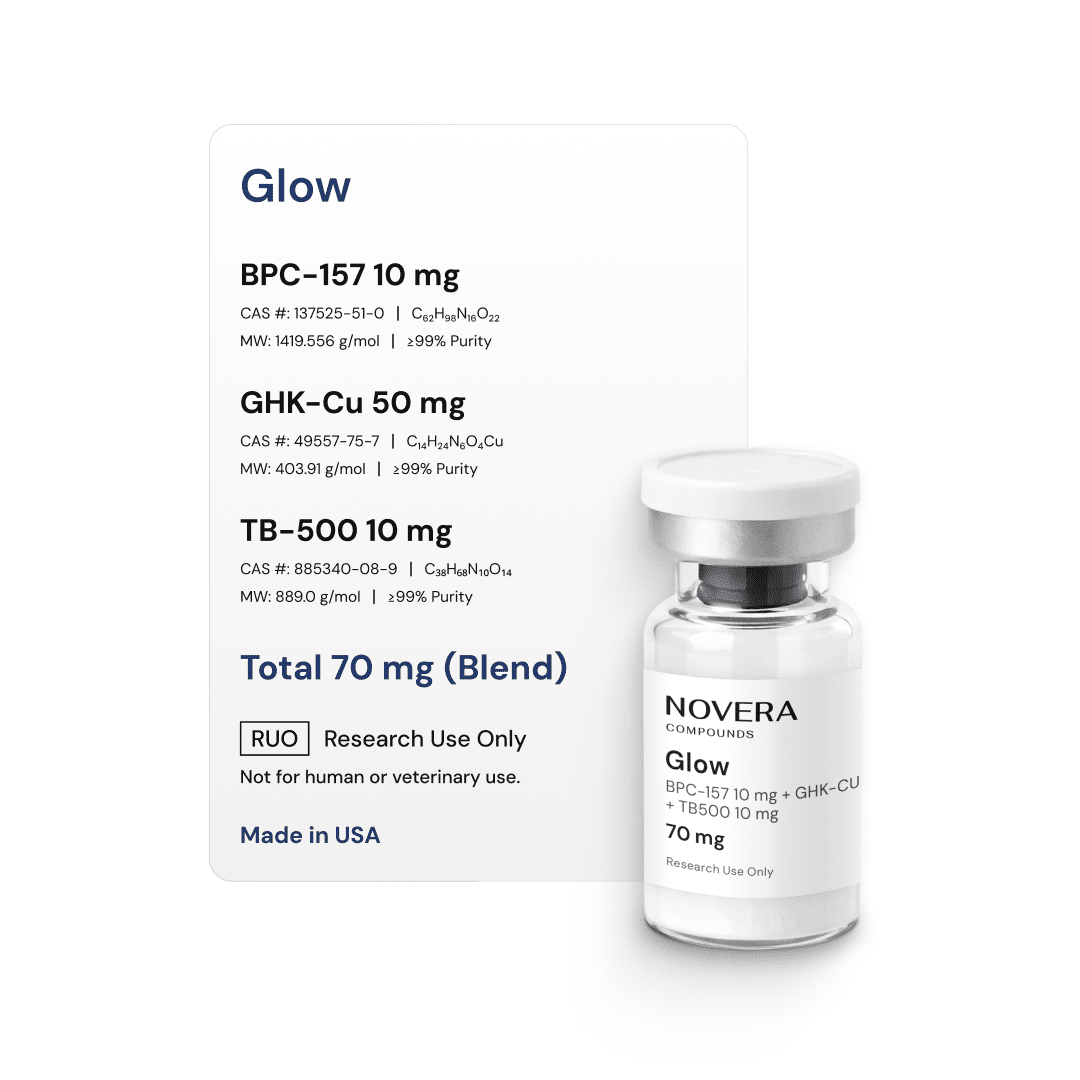
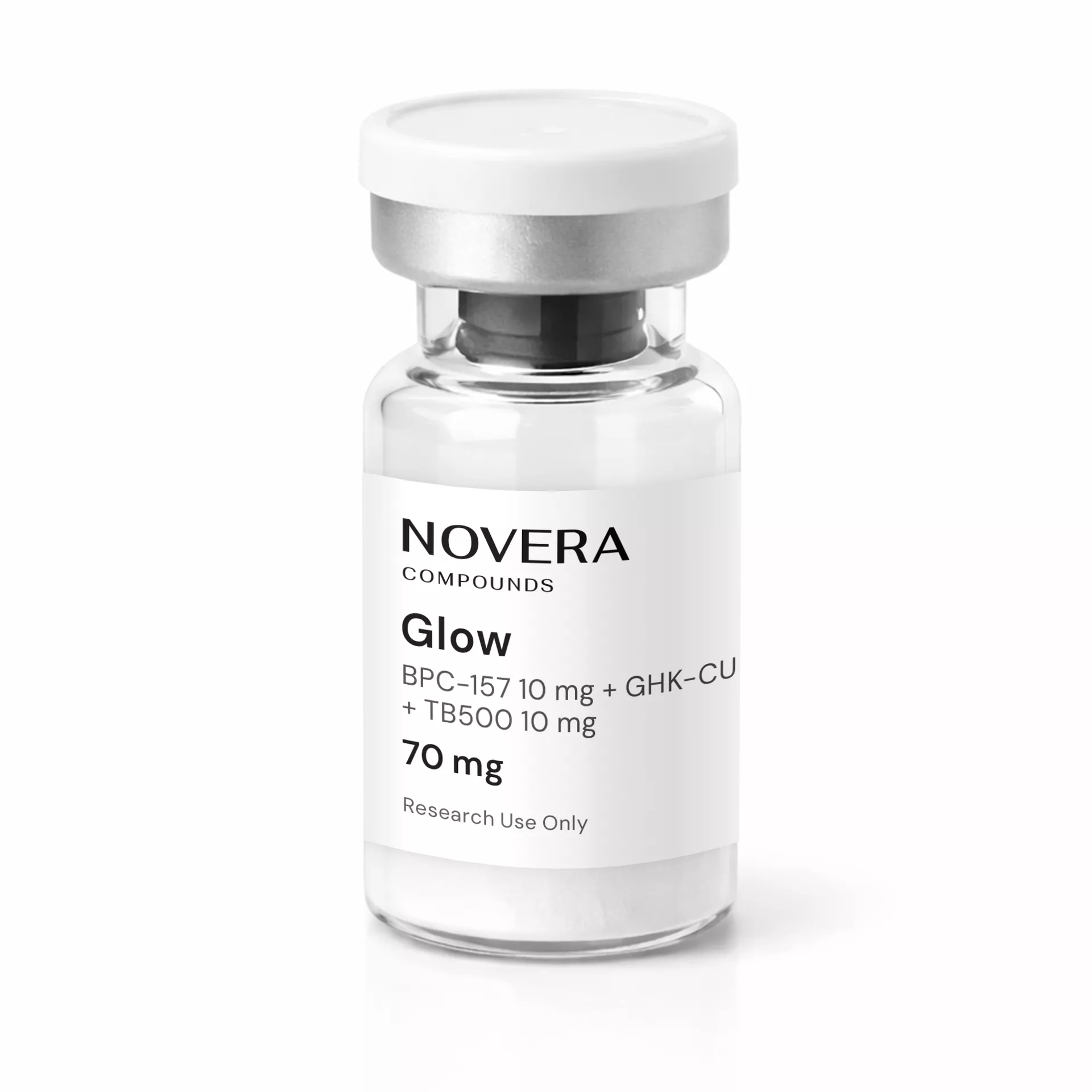
“Glow” BPC 157 10mg + GHK-CU 50mg + TB500 10mg – About This Product
The BPC 157 peptide formulation known as “Glow” is a research-grade composite blend combining three bioactive peptides: BPC 157, GHK-CU peptide, and TB500 peptide. Each component has been independently studied in preclinical research for its proposed role in cellular repair, tissue responses, and molecular signaling.
- BPC 157 is a synthetic pentadecapeptide (15 amino acids) derived from gastric tissue sequences.
- GHK-CU is a naturally occurring copper-complexed tripeptide (Gly-His-Lys).
- TB500 is a synthetic heptapeptide (7 amino acids) derived from the actin-binding region of thymosin beta-4.
The formulation is supplied as a lyophilized powder in sterile, sealed vials at research-grade purity, designed for use in controlled laboratory settings investigating multi-pathway cellular and tissue responses. This blend has been developed to support experimental designs examining the combined activity of three distinct bioactive compounds, each with separate molecular targets and intracellular signaling pathways.
“Glow” BPC 157 10mg + GHK-CU 50mg + TB500 10mg – Key Features and Benefits
- Multi-Peptide Research Formulation: Combines BPC 157 peptide, GHK-CU peptide, and TB500 peptide for investigation of complementary signaling mechanisms in controlled laboratory systems
- Research-Grade Composition: Supplied as lyophilized powder verified for identity and purity using high-performance liquid chromatography (HPLC) and mass spectrometry (MS)
- Convenient Laboratory Format: Provided in sterile vials requiring reconstitution with sterile diluent for easy integration into preclinical research protocols
- Distinct Signaling Pathways: Each component peptide operates through separate molecular targets, allowing researchers to evaluate parallel and divergent signaling effects without parallel administration
- Multiple Research Applications: Suitable for in vitro cell culture systems, ex vivo tissue models, and animal studies examining coordinated tissue responses
- Stable Storage Profile: Lyophilized format maintains peptide integrity at standard refrigeration temperatures with minimal degradation over time
- Quality Documentation: Each batch includes analytical verification and can be supplied with certificates of analysis upon request
- For Laboratory Research Use Only: Intended exclusively for regulated research environments and qualified investigators conducting preclinical studies
“Glow” BPC 157 10mg + GHK-CU 50mg + TB500 10mg – Mechanism & Research Applications
The BPC 157 peptide, GHK-CU peptide, and TB500 peptide formulation has been studied for its proposed effects across multiple biological systems. BPC 157 has been investigated for its potential role in modulating nitric oxide signaling and vascular growth factor pathways. GHK-CU has been studied for its involvement in redox regulation and extracellular matrix remodeling through copper-dependent mechanisms. TB500 has been evaluated for its proposed influence on cytoskeletal organization and cellular migration processes.
In preclinical research, this combination formulation is being examined for coordinated effects on inflammation regulation, angiogenesis, fibroblast activity, and cellular stress responses. Researchers have used this blend to investigate multi-pathway signaling coordination in controlled models of tissue repair, wound response, and cellular regeneration. The convergence of nitric oxide modulation, actin dynamics, and oxidative stress management supports investigation into layered signaling systems involved in cellular and tissue responses.
The formulation allows researchers to evaluate how these three peptides interact within experimental systems without requiring separate administration protocols, facilitating analysis of overlapping and distinct mechanistic effects.
“Glow” BPC 157 10mg + GHK-CU 50mg + TB500 10mg – Dosing & Observed Effects in Research
In preclinical animal models, BPC 157 has been studied at doses ranging from 6 to 50 µg/kg body weight using intraperitoneal, intramuscular, or oral routes. A recent human pilot study (Lee et al., 2024) examined intravesical BPC 157 injection at 10 mg in patients with interstitial cystitis, with observation of symptom improvements in 12 subjects. This study represents preliminary pilot-level evidence with a small sample size.
TB500 has been evaluated in animal models, typically at doses of 250–500 mcg per injection or 6 mg/kg body weight, administered multiple times weekly. GHK-CU research concentrations vary by application, with tissue culture studies employing concentrations around 0.3 mg/mL in specific experimental contexts.
Preclinical observations in animal and cell culture studies have included enhanced cellular migration, increased markers of angiogenesis, and enhanced collagen deposition. However, all observed effects derive from animal models and in vitro research systems.
Notably, human clinical data are limited to a single pilot study of BPC 157 for one specific condition, and no human studies exist for TB500 peptide or the combined formulation. Important note: human safe dosing has not been established for any of these compounds.
“Glow” BPC 157 10mg + GHK-CU 50mg + TB500 10mg – Storage, Safety & References
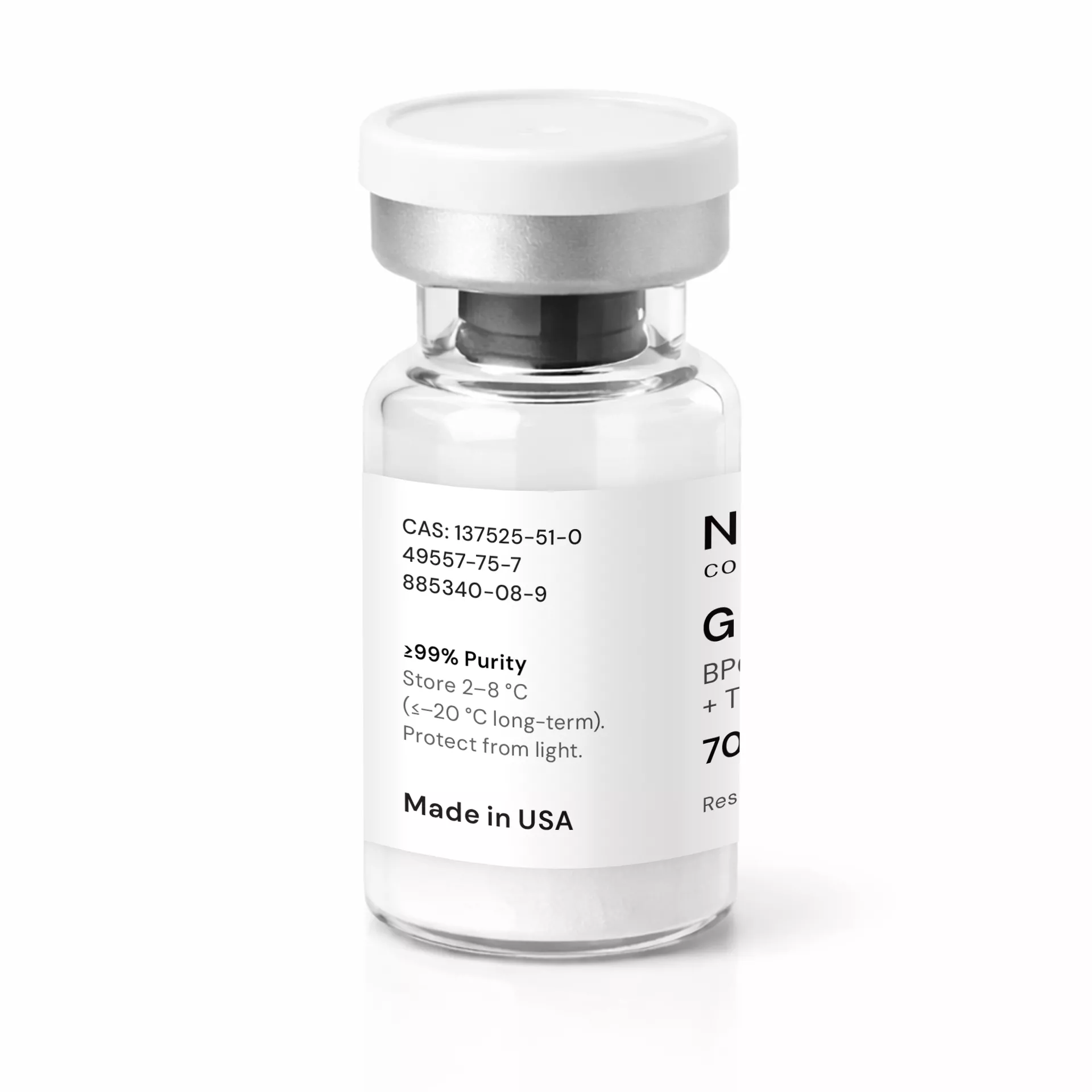
Store the lyophilized peptide formulation at 2–8°C in a dry, protected location away from light and moisture. Avoid freeze-thaw cycles to preserve peptide integrity. Once reconstituted with sterile diluent, refrigerate the solution and use within two weeks. Furthermore, shelf life may vary depending on the diluent type and storage conditions—consult the product-specific documentation.
Request certificates of analysis from suppliers confirming identity (HPLC/MS), purity (target >95%), sterility, absence of endotoxins, and absence of contaminants. The research peptide supply chain is largely unregulated; third-party testing is recommended for critical applications.
Moreover, preclinical studies of individual peptides have not reported significant acute toxicity. However, human safety profiles are unknown, as these compounds have not undergone comprehensive clinical evaluation.
- TB500 peptide and injectable GHK-CU formulations are prohibited for compounding under current FDA regulations due to identified safety risks and insufficient human safety data. BPC 157 is not FDA-approved and is subject to FDA warning letters against marketing for human use. No long-term safety data exists for any of these compounds in humans.
References
https://www.frontiersin.org/journals/pharmacology/articles/10.3389/fphar.2022.1026182/full
https://www.mdpi.com/1424-8247/18/2/185
https://www.alternative-therapies.com/oa/pdf/11423.pdf
https://www.frontiersin.org/journals/endocrinology/articles/10.3389/fendo.2021.767785/full
https://pubmed.ncbi.nlm.nih.gov/18644225
https://pubmed.ncbi.nlm.nih.gov/29879879
Compliance Notice
This product is intended for laboratory research use only and is not approved for human or veterinary use.