




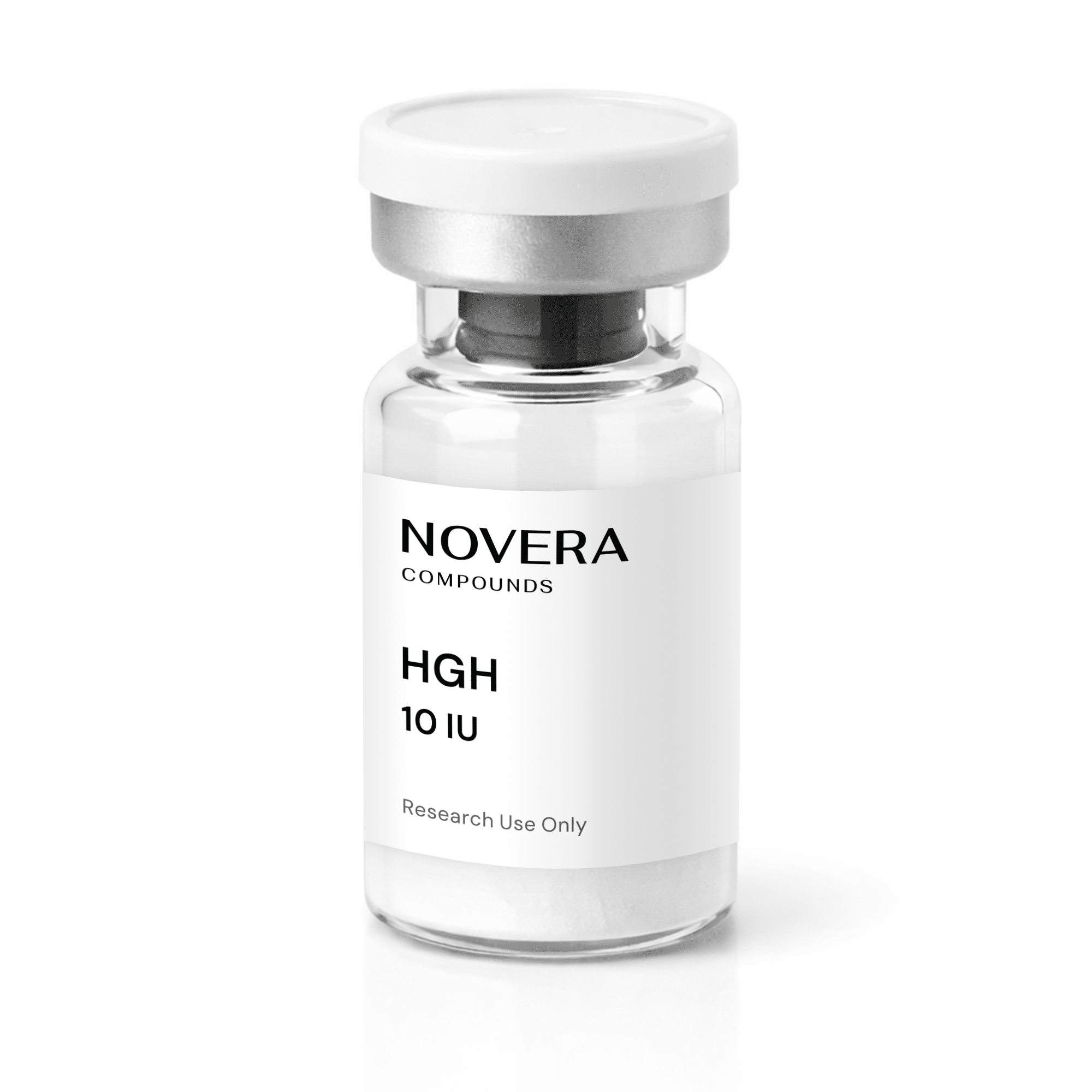
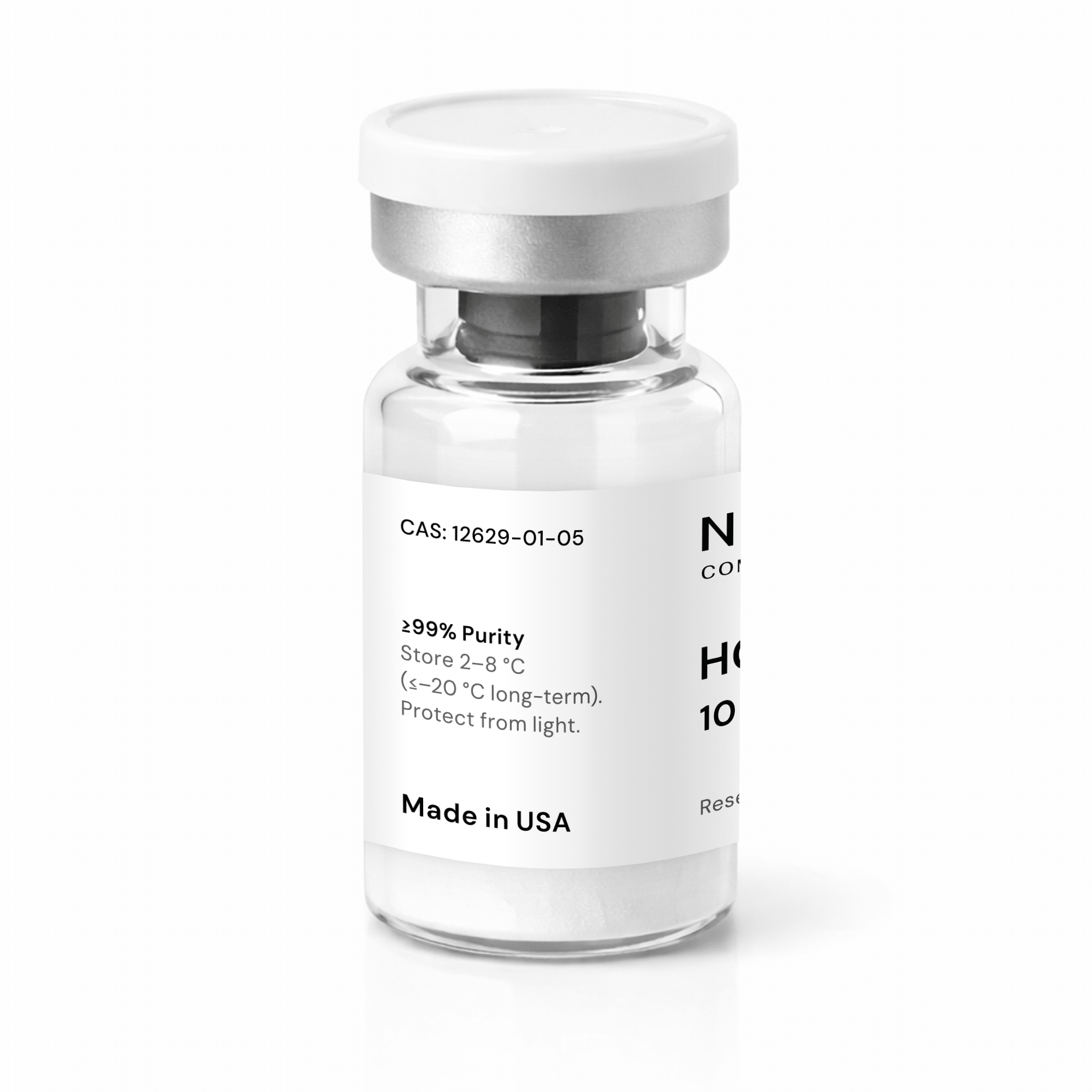


HGH (10iu) About This Product
The HGH peptide, also referred to as human growth hormone (somatotropin), is a naturally occurring polypeptide hormone composed of 191 amino acids arranged as a single-chain, non-glycosylated protein. Laboratories that buy HGH peptide or order HGH peptide materials reference this compound for controlled laboratory research examining growth-hormone signaling behavior and protein hormone structure in experimental systems. The predominant circulating form has a molecular weight of approximately 22 kDa and contains two internal disulfide bonds, which are required for proper folding.
The HGH (10 IU) formulation is produced using recombinant DNA technology, yielding a molecule structurally identical to endogenous human growth hormone. It is supplied as a sterile, lyophilized white powder with reported purity exceeding 95%, as determined by analytical testing. Each vial contains 10 International Units (IU), corresponding to approximately 3.33 mg of recombinant human growth hormone.
In laboratory research, HGH has been used as a reference protein in experimental models examining growth hormone–related signaling pathways and downstream molecular markers. All investigations are limited to controlled research environments.
HGH (10iu) Key Features and Benefits
- Chemical identity: Recombinant human growth hormone
- Amino acid length: 191 amino acids
- Molecular weight: ~22 kDa
- Structural features: Two disulfide bonds supporting correct protein folding
- Purity: Commonly reported at >95%, verified by analytical testing
- Format: Supplied as a lyophilized powder in sterile vials
- Research scope: Used in laboratory studies examining growth-hormone–axis signaling and protein hormone behavior
For laboratory research use only.
HGH (10iu) Mechanism & Research Applications
HGH has been examined in laboratory research for its interaction with the growth hormone receptor (GHR) in experimental cell and tissue models. In controlled systems, receptor engagement is used to study downstream signaling activity associated with growth-hormone–related molecular pathways.
One area of research involves evaluating the GH–IGF-1 axis, in which growth hormone signaling is examined alongside downstream transcriptional and metabolic markers. These studies focus on signaling behavior and molecular responses rather than therapeutic outcomes.
Research applications include:
- Growth-hormone–axis signaling studies in cell and animal models
- Protein metabolism and turnover investigations
- Experimental metabolic regulation models
- Bone and connective tissue research systems used for molecular observation
All applications described reflect controlled laboratory research contexts and do not imply clinical or therapeutic use.
HGH (10iu) Dosing & Observed Effects in Research
The research literature describes a range of experimental dosing protocols for recombinant human growth hormone, depending on study design, species, and analytical endpoints. Laboratory and preclinical studies evaluate HGH across weight-adjusted and fixed-dose protocols to assess signaling dynamics and downstream molecular markers.
Reported laboratory observations include changes in IGF-1–associated signaling markers, metabolic pathway readouts, and other assay-specific molecular measurements. These findings are derived exclusively from controlled research environments and do not establish safety, efficacy, or clinical relevance.
Researchers who order HGH peptide materials are expected to define dosing parameters appropriate to their specific experimental systems.
HGH (10iu) Storage, Safety & References
- Store lyophilized vials at ≤ –18 °C in a dry, light-protected environment
- Short-term room-temperature exposure is acceptable during handling
- Reconstitute only with sterile or bacteriostatic water using aseptic technique
- Introduce diluent slowly and gently swirl to dissolve
- Store reconstituted solutions at 2–8 °C and use within 2–7 days
- Avoid repeated freeze–thaw cycles to preserve protein structure
Handle materials according to institutional laboratory biosafety protocols. Review the Certificate of Analysis (CoA) and Safety Data Sheet (SDS) prior to use.
References
https://pmc.ncbi.nlm.nih.gov/articles/PMC5816795
https://pmc.ncbi.nlm.nih.gov/articles/PMC3374394
https://academic.oup.com/edrv/article-abstract/30/2/152/2355062
https://pmc.ncbi.nlm.nih.gov/articles/PMC9202689
Compliance Notice
This product is intended for laboratory research use only and is not approved for human or veterinary use.