




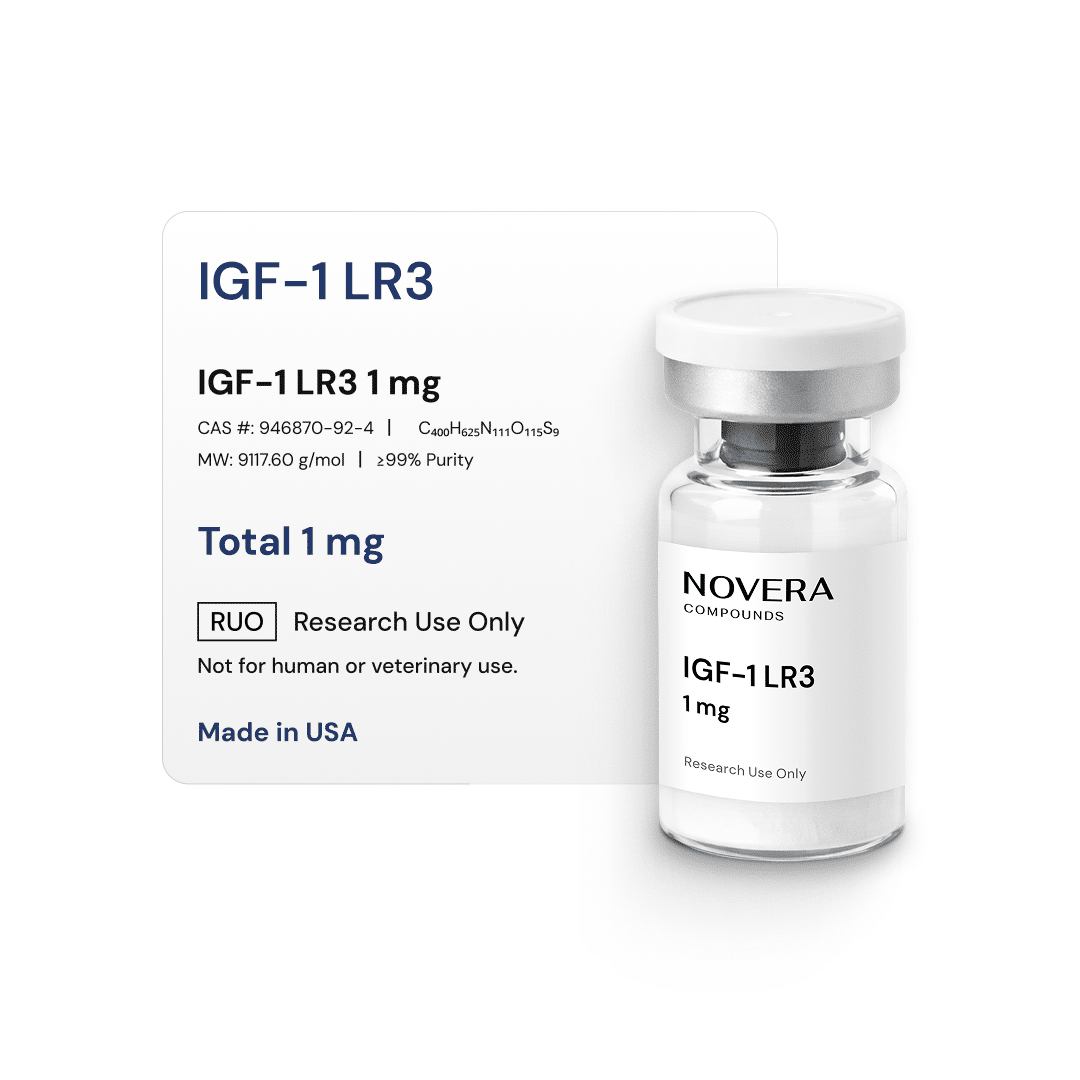
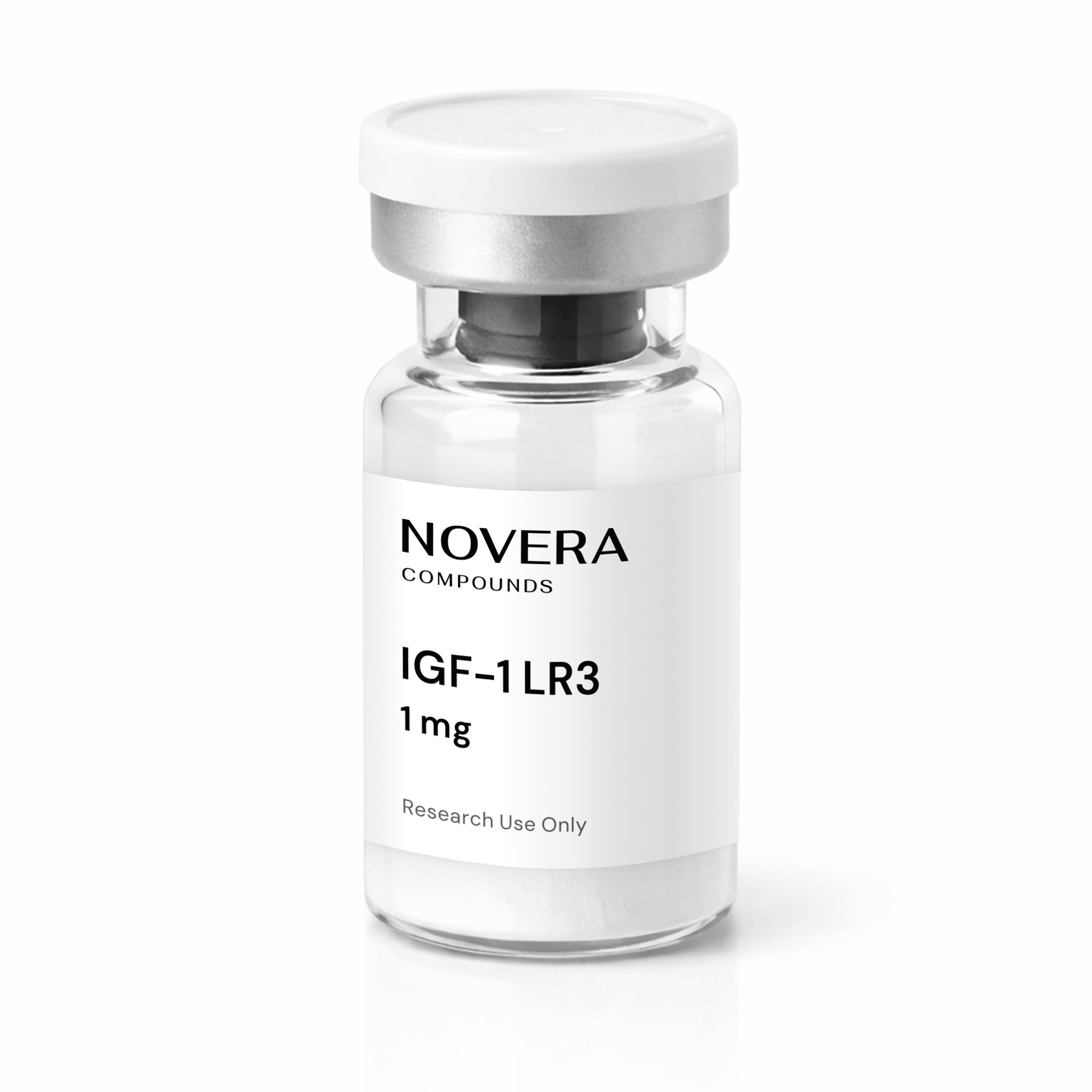
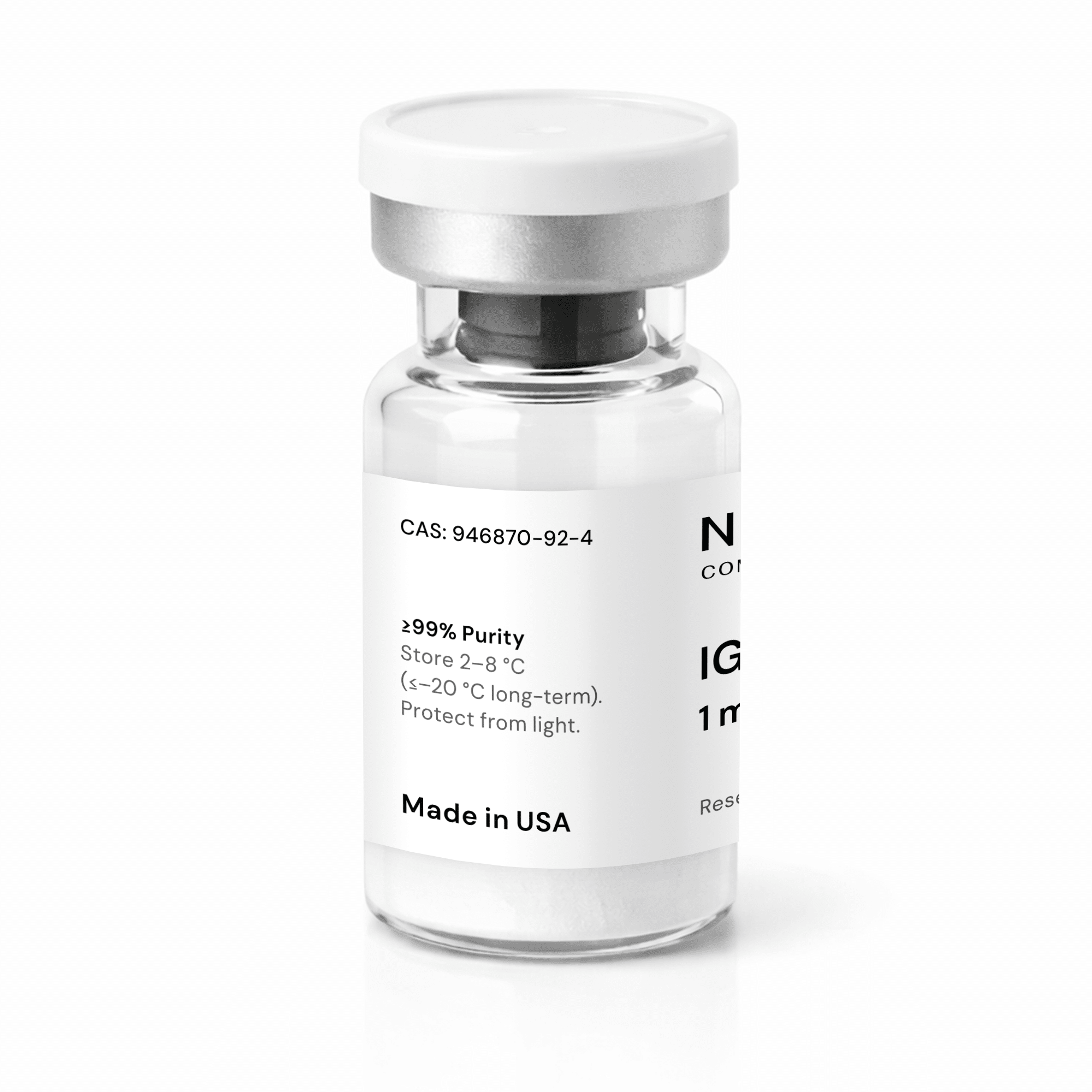
IGF-1 LR3 (1mg) About This Product
The IGF-1 peptide, specifically IGF-1 LR3 (Long Arg³ insulin-like growth factor-1), is a synthetic analogue of native human insulin-like growth factor-1 developed for controlled laboratory research. Laboratories that buy IGF-1 peptide or order IGF-1 peptide materials reference IGF-1 LR3 for experimental studies examining IGF signaling behavior and binding-protein interactions in research systems.
IGF-1 LR3 consists of 83 amino acids and has a molecular weight of approximately 9,117.5 g/mol. Compared with endogenous IGF-1, which contains 70 amino acids, this analogue includes a 13-amino-acid N-terminal extension and a single amino acid substitution at position 3. These structural modifications reduce interaction with insulin-like growth factor binding proteins (IGFBPs), particularly IGFBP-3, a property examined in comparative laboratory studies.
The product is supplied as a lyophilized powder in 1 mg glass vials, commonly produced at ≥95–99% purity as verified by analytical testing, and intended exclusively for laboratory research use.
IGF-1 LR3 (1mg) Key Features and Benefits
- Chemical identity: Modified IGF-1 analogue (IGF-1 LR3)
- Amino acid length: 83 amino acids
- Molecular weight: ~9,117.5 g/mol
- Purity: Commonly reported at ≥95–99%, verified by analytical methods
- Format: Supplied as a lyophilized powder in sterile glass vials
- Binding characteristics: Reduced interaction with IGF binding proteins compared with native IGF-1
- Research scope: Studied in laboratory models examining IGF receptor signaling and cellular response patterns
For laboratory research use only.
IGF-1 LR3 (1mg) Mechanism & Research Applications
IGF-1 LR3 has been examined in laboratory research as a modified IGF-1 variant evaluated for its interaction with the IGF-1 receptor under controlled experimental conditions. Due to reduced IGFBP binding, the peptide is used in research systems to explore IGF signaling behavior with altered binding-protein modulation.
Research applications include:
- IGF receptor signaling studies in cell culture models
- Comparative binding investigations assessing IGF-1 variants and IGFBP interactions
- Muscle, adipocyte, and developmental cell systems used for experimental signaling analysis
- Preclinical growth-factor research models evaluating short-term cellular response markers
All applications described reflect controlled laboratory research contexts and do not imply clinical or therapeutic use.
IGF-1 LR3 (1mg) Dosing & Observed Effects in Research
Reported research use of IGF-1 LR3 varies across experimental designs, model systems, and analytical endpoints. In in vitro studies, the peptide is typically evaluated at nanogram-per-milliliter concentrations, with working ranges adjusted based on cell type and assay requirements.
Preclinical animal research has explored experimental infusion and exposure protocols to assess IGF-related signaling markers, cellular response patterns, and other assay-specific molecular readouts. These observations are derived exclusively from controlled laboratory and animal research environments and do not establish safety, efficacy, or clinical relevance.
Researchers who order IGF-1 peptide materials are expected to define experimental parameters appropriate to their specific model systems.
IGF-1 LR3 (1mg) Storage, Safety & References
- Store lyophilized vials at –18 °C to –20 °C, protected from light and moisture
- Maintain vials in a desiccated environment when not in use
- Reconstitute only with sterile water, PBS, or appropriate laboratory media using aseptic technique
- Store reconstituted solutions at 2–8 °C for short-term use
- For extended storage, aliquot and freeze at –20 °C or –80 °C
- Avoid repeated freeze–thaw cycles
Handle materials according to institutional laboratory biosafety protocols.
References
https://pubmed.ncbi.nlm.nih.gov/22682628
https://academic.oup.com/edrv/article/44/5/753/7090400
https://pubmed.ncbi.nlm.nih.gov/11181549
https://pmc.ncbi.nlm.nih.gov/articles/PMC2409634
https://pmc.ncbi.nlm.nih.gov/articles/PMC2121039
Compliance Notice
This product is intended for laboratory research use only and is not approved for human or veterinary use.