





What Are the Purported Benefits of Ipamorelin?
Ipamorelin peptide, also known as Ipamorelin Acetate, is a selective Growth Hormone Releasing Peptide (GHRP) that mimics the body’s natural GH pulses. It promotes a “clean” release of growth hormone, unlike older GHRPs, which may cause spikes in cortisol and prolactin levels.
Researchers investigating Ipamorelin for research purposes often highlight its potential to support lean body composition, aid in muscle recovery, and improve deep sleep quality. Unlike older GHRPs that elevate cortisol and prolactin, Ipamorelin’s selective action on growth hormone release – without significant endocrine axis disruption – makes it a valuable research compound for physiological GH modeling.
Ipamorelin has a plasma half-life of approximately 2–3 hours at standard research doses (increasing to 5–6 hours at higher doses ≥4 mg), enabling researchers to design pulsatile GH dosing regimens that replicate natural GH release patterns.
What Is the Chemical Makeup of Ipamorelin?
Ipamorelin is a synthetic peptide studied for its interaction with growth hormone–related signaling pathways in research settings.
Chemical Makeup (Specifications)
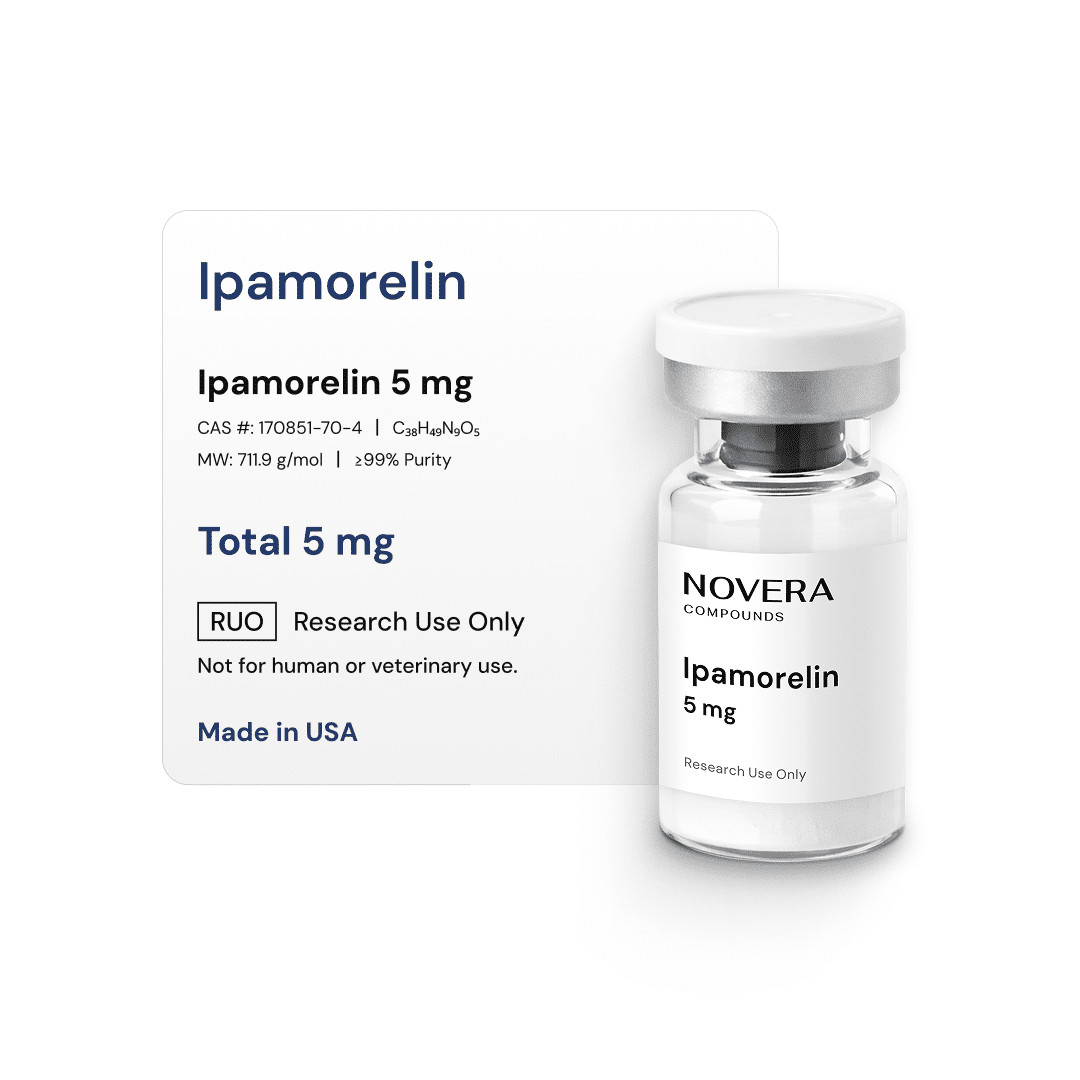
- CAS Number: 170851-70-4
- Chemical Formula: C₃₈H₄₉N₉O₅
- Molecular Weight: 711.9 g/mol
- Peptide Sequence: Aib–His-D-2Nal-D-Phe-Lys
What Does Scientific Research Say About Ipamorelin?
The Ipamorelin GH-releasing peptide is highly valued in research due to its selective interaction with the ghrelin receptor (GHS-R1a). This receptor activates G protein–coupled receptor pathways (Gs and Gq), initiating calcium mobilization and adenylate cyclase modulation, which results in GH secretion. Studies have shown that Ipamorelin reduces side effects, such as increases in cortisol or prolactin, compared with older GHRPs.
Key Research Highlights
- Receptor Selectivity & Signaling: Ipamorelin binds with high selectivity to GHS-R1a, activating intracellular pathways that drive GH release without significantly impacting other endocrine systems.
- Clinical Development & Outcomes: Ipamorelin was initially explored in Phase 2 clinical trials for post-operative ileus in patients undergoing bowel resection. While the compound demonstrated a favorable safety and tolerability profile consistent with preclinical findings (no elevation of cortisol or prolactin), the trial did not achieve statistically significant improvements in primary efficacy endpoints.
Preclinical studies in rodent models demonstrated robust GH elevation and improvements in gastric motility without hormonal side effects, supporting its continued evaluation for research and translational applications. - Synergistic Potential with CJC-1295: When paired with CJC-1295, Ipamorelin can enhance GH pulsatility by activating both GHRH receptors (via CJC-1295) and ghrelin receptors (via Ipamorelin), providing a powerful tool for modeling physiological GH release.
- Research Applications: Ipamorelin is used for various research purposes, including GHS-R1a binding assays, cAMP and calcium signaling, and endocrine axis modeling.
What Are the Storage Conditions for Ipamorelin?
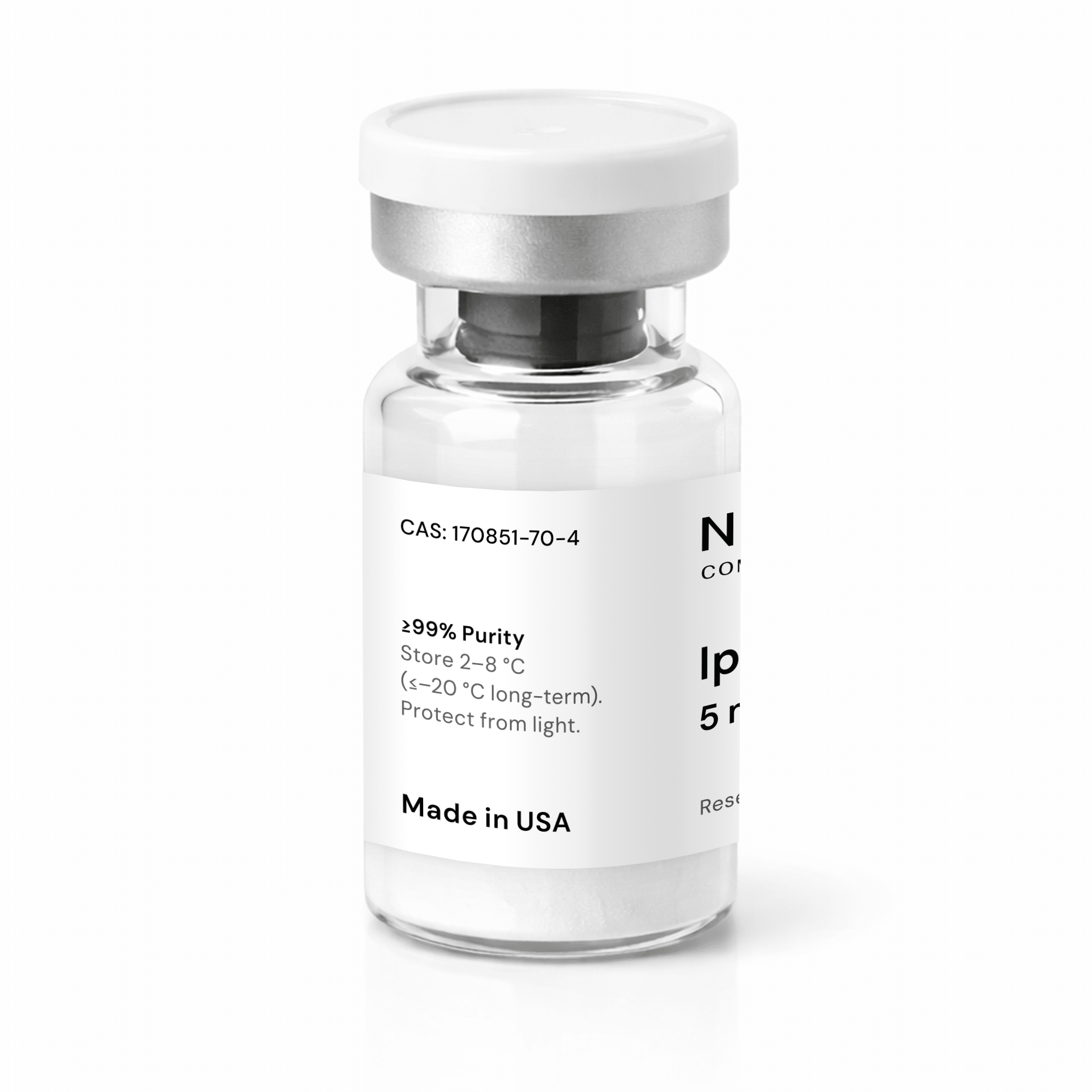
Proper storage is essential to preserve the structural integrity and stability of the Ipamorelin peptide for research use. In its lyophilized form, Ipamorelin should be stored at –20°C or lower, protected from light and moisture.
Under these conditions, peptides of this class are typically stable for 2+ years, per supplier Certificate of Analysis (CoA). Once reconstituted with bacteriostatic water (BAC), the solution should be stored refrigerated at 2–8°C and used within 1–2 weeks under sterile handling conditions.
For extended storage, reconstituted solutions may be aliquoted and frozen for up to 6 months, per supplier CoA. Repeated freeze–thaw cycles should be avoided, as they may compromise peptide stability.
Are you looking to buy Ipamorelin online?
If you’re looking to order Ipamorelin online at wholesale prices, contact Medical Spa RX for guidance on how to do so.
This product is supplied strictly for laboratory research use only and is not approved for human or veterinary administration. It is not intended for diagnostic, therapeutic, or clinical applications. Any reference to biological activity or potential effects is based solely on preclinical or in vitro findings and should not be interpreted as validated clinical outcomes. Researchers are responsible for ensuring proper handling, storage, and disposal in accordance with institutional, federal, and international guidelines. By purchasing or using this material, the buyer confirms that they are a qualified researcher and that the product will be used exclusively in controlled research settings compliant with all applicable regulations.
Sources
https://pmc.ncbi.nlm.nih.gov/articles/PMC7299083
https://pubmed.ncbi.nlm.nih.gov/25331030