




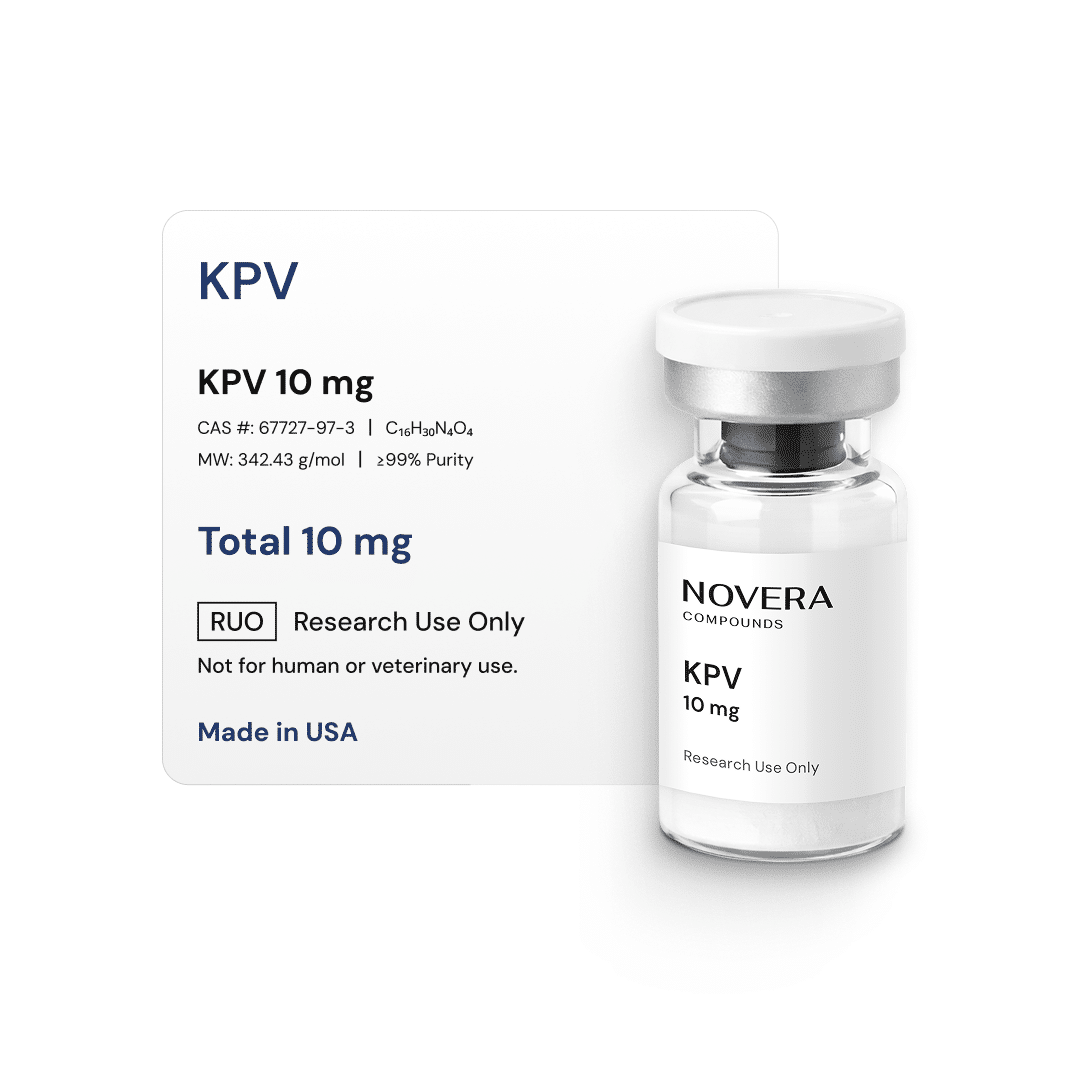
What Are The Purported Benefits Of KPV (10mg)?
KPV (10 mg) x 30 Tablets is a research peptide that has attracted attention for its potential anti-inflammatory and antimicrobial activity in preclinical and experimental settings. As a tripeptide fragment corresponding to the C-terminal sequence of alpha-melanocyte-stimulating hormone (α-MSH), it is being studied for its potential to regulate inflammatory responses without acting like traditional steroid-based compounds.
Current research and clinical observations have explored KPV in several areas:
- Gastrointestinal Research: KPV is being studied in models of inflammatory bowel conditions, including ulcerative colitis and Crohn’s disease, with research focusing on its potential to reduce localized intestinal inflammation.
- Skin Research: Experimental use has examined KPV in psoriasis, eczema, and acne models, where it is being investigated for its potential to reduce visible irritation and support skin barrier recovery.
- Antimicrobial Activity: Research suggests KPV may exhibit activity against certain pathogens, including Staphylococcus aureus and Candida albicans, and is also being studied for its anti-inflammatory effects.
- Systemic Inflammation Models: KPV is also under investigation in broader inflammatory research, including pathways involving pro-inflammatory cytokines such as TNF-α and IL-6.
While these findings are promising, KPV (10 mg) remains a research-use peptide, and its effects are still being explored in laboratory and preclinical settings.
What Is The Chemical Makeup Of KPV (10mg)?
KPV is a tripeptide, meaning it consists of exactly three amino acids. The name “KPV” comes directly from its amino acid sequence:
- K = Lysine
- P = Proline
- V = Valine
Technical Data
- Category: Peptide
- Subcategory: Healing & Regenerative Peptides
- Sequence: Lys-Pro-Val
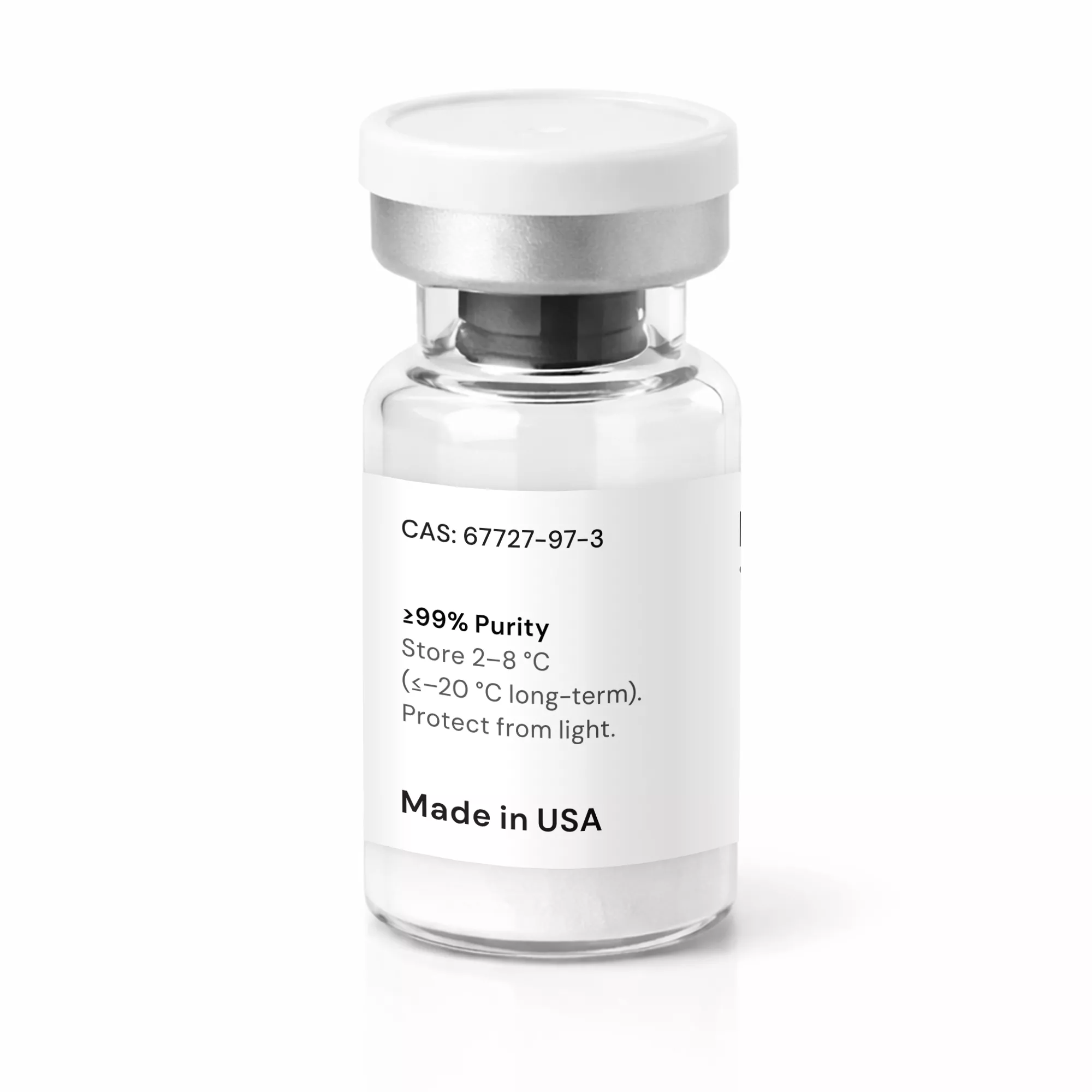
- CAS Number: 67727-97-3
- Molecular Formula: C₁₆H₃₀N₄O₄
- Molar Mass / Molecular Weight: 342.43 g/mol
- Structural Origin: C-terminal fragment of α-MSH
Because of its small size, KPV is often highlighted in research for its structural simplicity and stability profile compared to larger peptide molecules. Its compact tripeptide structure also makes it a useful candidate for studying peptide transport and intracellular signaling pathways.
What Does Scientific Research Say About KPV (10mg)?
Scientific literature describes KPV as a promising peptide for inflammatory research due to its potential multi-pathway activity. Rather than acting through a single mechanism, KPV is being studied for how it may influence inflammatory signaling, immune responses, and epithelial barrier function.
Key Research Findings
- NF-κB Signaling Pathway: Studies suggest KPV may enter cells through the PepT1 transporter and then influence the NF-κB pathway, a central regulator of inflammatory gene expression.
- Nuclear Activity: Experimental findings indicate KPV may accumulate in the nucleus and interfere with protein interactions involved in inflammatory signaling.
- Animal Model Data: In murine models of colitis, KPV administration has been associated with improvements in inflammatory markers and recovery-related outcomes.
- Biocompatibility Research: KPV has been described as non-toxic and biocompatible in tested models, supporting continued interest in its potential as a peptide for inflammation-focused investigation.
Overall, the scientific evidence positions KPV (10 mg) as a peptide of interest in gastrointestinal, dermatologic, and immunologic research, though ongoing studies are needed to further clarify its mechanisms and broader applications.
What Are The Storage Conditions For KPV (10mg)?
Proper storage is important for maintaining the stability and integrity of KPV (10 mg), especially in lyophilized form. Like many peptides, KPV is sensitive to heat, light, and moisture, so controlled storage conditions are recommended.
Recommended Storage Guidelines
- Lyophilized Powder (Unreconstituted)
- Room Temperature (15°C to 25°C): Best for short-term handling.
- Refrigerated (2°C to 8°C): For optimal stability.
- Frozen (-20°C): For long-term storage.
- Reconstituted Solution (Liquid)
- Refrigerated (2°C to 8°C): Typically recommended for short-term use.
For best results, store KPV (10 mg) in a dry, light-protected environment and minimize repeated temperature fluctuations. Always follow supplier-specific storage guidance if provided, as formulation and packaging may affect stability.
Are you looking to buy KPV (10mg) online?
If you’re looking to order KPV (10mg) online at wholesale prices, contact Medical Spa RX for guidance on how to do so.
This product is supplied strictly for laboratory research use only and is not approved for human or veterinary administration. It is not intended for diagnostic, therapeutic, or clinical applications. Any reference to biological activity or potential effects is based solely on preclinical or in-vitro findings and should not be interpreted as validated clinical outcomes. Researchers are responsible for ensuring proper handling, storage, and disposal in accordance with institutional, federal, and international guidelines. By purchasing or using this material, the buyer confirms that they are a qualified researcher and that the product will be used exclusively in controlled research settings compliant with all applicable regulations.
References
- Sung J, Ju SY, Park S, Jung WK, Je JY, Lee SJ. Lysine-Proline-Valine peptide mitigates fine dust-induced keratinocyte apoptosis and inflammation by regulating oxidative stress and modulating the MAPK/NF-κB pathway. Tissue and Cell. 2025;95:102837. doi:10.1016/j.tice.2025.102837
- Xiao B, Xu Z, Viennois E, et al. Orally Targeted Delivery of Tripeptide KPV via Hyaluronic Acid-Functionalized Nanoparticles Efficiently Alleviates Ulcerative Colitis. Mol Ther. 2017;25(7):1628-1640. doi:10.1016/j.ymthe.2016.11.020
- Land SC. Inhibition of cellular and systemic inflammation cues in human bronchial epithelial cells by melanocortin-related peptides: mechanism of KPV action and a role for MC3R agonists. Int J Physiol Pathophysiol Pharmacol. 2012;4(2):59-73.
- Dalmasso G, Charrier-Hisamuddin L, Nguyen HT, Yan Y, Sitaraman S, Merlin D. PepT1-mediated tripeptide KPV uptake reduces intestinal inflammation. Gastroenterology. 2008;134(1):166-178. doi:10.1053/j.gastro.2007.10.026
- Hiltz ME, Lipton JM. Antiinflammatory activity of a COOH-terminal fragment of the neuropeptide alpha-MSH. FASEB J. 1989;3(11):2282-2284.