




What Are the Purported Benefits of Mazdutide (10mg)?
Mazdutide, also known as IBI-362 (or IBI362), LY-3305677 (or LY3305677), is an advanced dual-agonist incretin peptide designed to activate both the glucagon-like peptide-1 receptor (GLP-1R) and the glucagon receptor (GCGR). This dual mechanism distinguishes the mazdutide peptide from GLP-1–only agents and underpins its broader metabolic profile.
Clinical research of the weight loss and metabolic peptides have primarily focused on the following areas:
- Weight management: By combining central appetite suppression (via GLP-1R signaling in the hypothalamus) with increased energy expenditure and hepatic fat oxidation (via GCGR activation), Mazdutide promotes weight reduction through both reduced caloric intake and enhanced caloric utilization. Clinical trials report mean body-weight reductions approaching 18–20% at higher doses over extended study periods.
- Glycemic control: GLP-1R activation enhances glucose-dependent insulin secretion, suppresses inappropriate glucagon release, and slows gastric emptying. Balanced GCGR agonism appears to preserve metabolic flexibility without excessive hyperglycemia, resulting in clinically meaningful HbA1c reductions in individuals with type 2 diabetes.
- Cardiometabolic markers: Studies also report favorable changes in waist circumference, triglycerides, LDL cholesterol, blood pressure, and serum uric acid, collectively suggesting improvements in overall cardiometabolic risk profiles.
A particularly active area of investigation is metabolic dysfunction–associated fatty liver disease (MAFLD). Through GCGR-mediated enhancement of hepatic lipolysis and suppression of lipogenesis, Mazdutide has demonstrated substantial reductions in liver fat content, with some participants achieving normalization. These findings help explain the growing interest among researchers who buy Mazdutide peptide for advanced metabolic and hepatic studies.
What Is the Chemical Makeup of Mazdutide (10mg)?
Mazdutide (also known as IBI-362 or LY-3305677) is a synthetic oxyntomodulin analog, engineered to overcome the short half-life and rapid enzymatic degradation of native oxyntomodulin.
- Peptide Sequence: His-{Aib}-Gln-Gly-Thr-Phe-Thr-Ser-Asp-Tyr-Ser-Lys-Tyr-Leu-Asp-Glu-Lys-Lys-Ala-Lys-{AEEA-AEEA-γGlu-Nonadecanoic acid}-Glu-Phe-Val-Glu-Trp-Leu-Leu-Glu-Gly-Gly-Pro-Ser-Ser-Gly-NH2
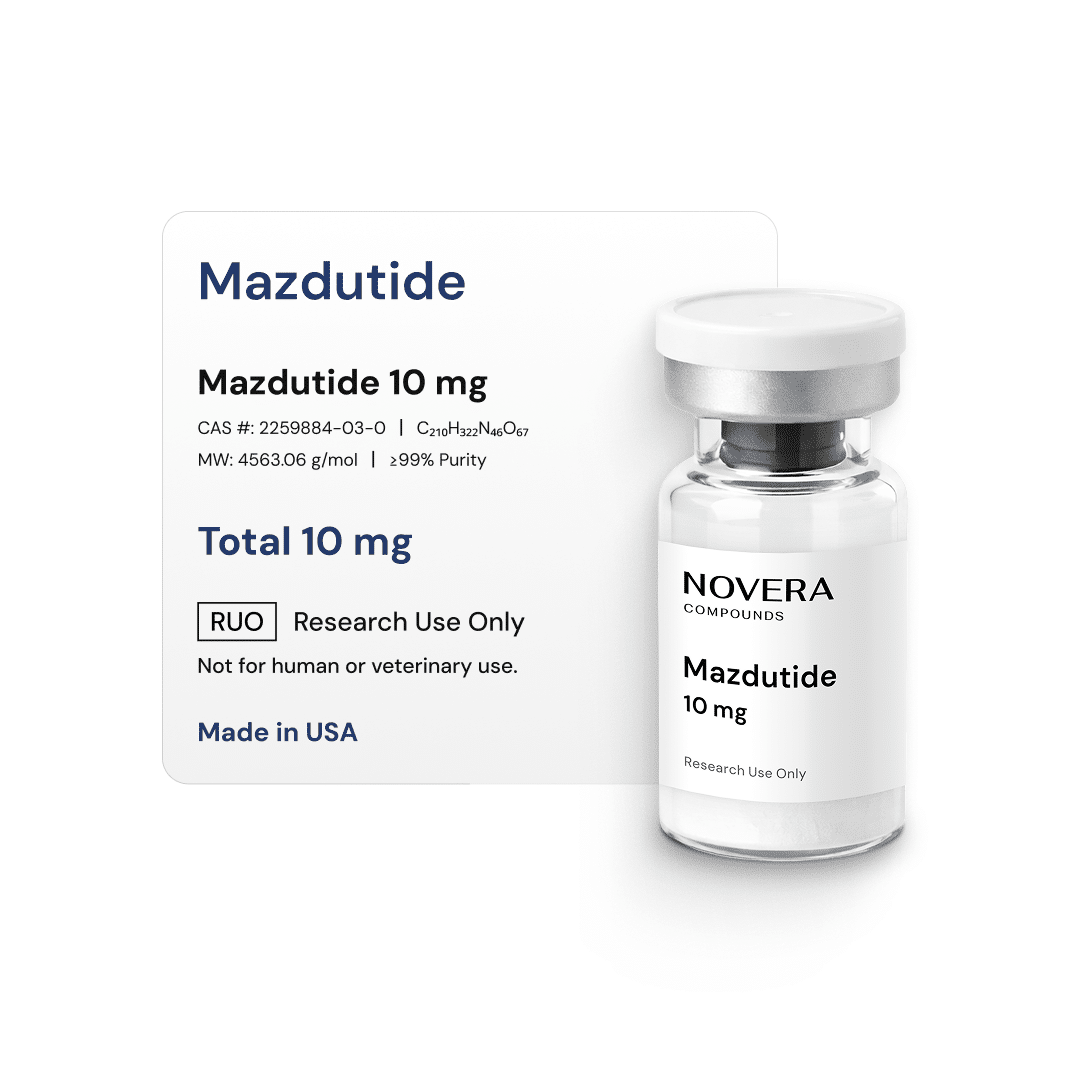
- Molecular Formula: C₂₁₀H₃₂₂N₄₆O₆₇
- Molecular Weight: 4563.06 g/mol
- Peptide Class: Dual GLP-1R / GCGR agonist
- Parent Hormone: Oxyntomodulin (OXM)
- CAS number: 2259884-03-0
Structurally, Mazdutide is a complex polypeptide engineered for dual-receptor engagement. Strategic molecular modifications enhance proteolytic resistance and pharmacokinetic stability, supporting once-weekly subcutaneous dosing in clinical research settings. This dual-pathway design represents a next-generation approach in incretin pharmacology compared with mono-agonist peptides.
What Does Scientific Research Say About Mazdutide (10mg)?
An expanding body of preclinical and clinical evidence supports the use of the Mazdutide peptide. Early Phase 1b and Phase 2 trials established safety, tolerability, and dose-dependent metabolic effects, with sustained weight loss observed over time.
Subsequent Phase 3 randomized controlled trials in individuals with obesity and type 2 diabetes confirmed these findings, demonstrating:
- Greater reductions in body weight and HbA1c compared with placebo
- A high proportion of participants achieving ≥10% weight loss alongside glycemic targets
- Consistent metabolic benefits without early weight-loss plateaus
Research has also highlighted Mazdutide’s pronounced effects on hepatic steatosis. Imaging-based assessments report reductions exceeding 65–70% in liver fat content, with many participants reaching normalization thresholds. Preclinical animal models further support improvements in body composition, hepatic lipid handling, and glycemic stability.
Overall, current evidence positions Mazdutide as a clinically validated dual-agonist peptide with potential advantages over single-receptor therapies. As a result, interest continues to grow among investigators who order Mazdutide peptide for metabolic, hepatic, and obesity-focused research programs.
What Are the Storage Conditions for Mazdutide (10mg)?
Proper storage is essential to preserve the structural integrity and biological activity of Mazdutide.
Lyophilized (Freeze-Dried) Powder
- Short-term: May tolerate brief room-temperature exposure during transport if sealed and protected from moisture
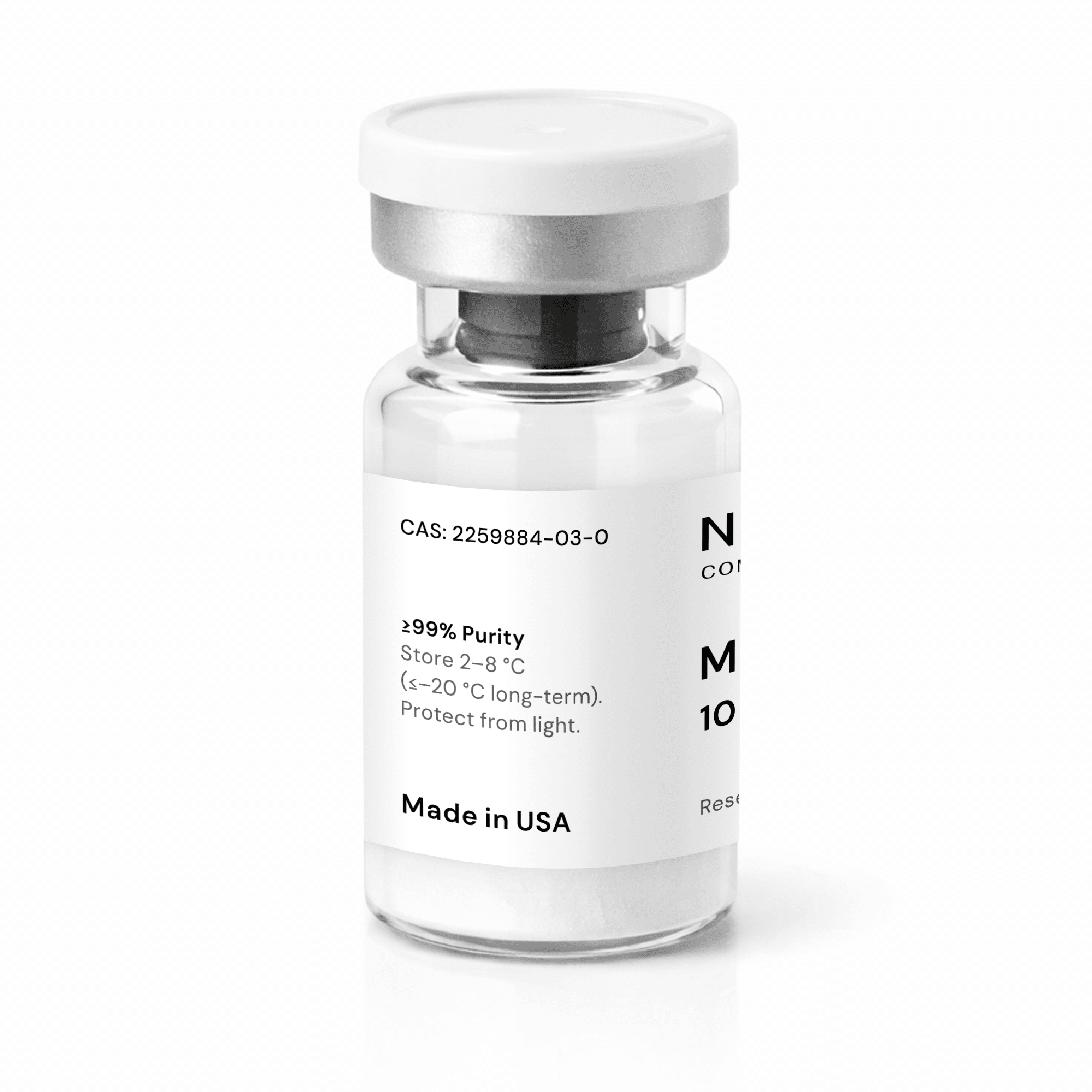
- Routine storage: 2–8 °C (refrigerated)
- Long-term storage: −20 °C acceptable; −80 °C preferred for maximal stability
Lyophilized vials should remain tightly sealed with desiccant protection and shielded from light and humidity.
Reconstituted Solution
- Store at 2–8 °C
- Typically used within up to 30 days, depending on solvent and handling conditions
- Freezing reconstituted solutions is not recommended due to potential peptide denaturation
Strict cold-chain handling and controlled storage are essential for laboratories planning to buy Mazdutide peptide to ensure consistency and reproducibility in research applications.
Are you looking to buy Mazdutide (10mg) online?
If you’re looking to order Mazdutide (10mg) online at wholesale prices, contact Medical Spa RX for guidance on how to do so.
This product is supplied strictly for laboratory research use only and is not approved for human or veterinary administration. It is not intended for diagnostic, therapeutic, or clinical applications. Any reference to biological activity or potential effects is based solely on preclinical or in-vitro findings and should not be interpreted as validated clinical outcomes. Researchers are responsible for ensuring proper handling, storage, and disposal in accordance with institutional, federal, and international guidelines. By purchasing or using this material, the buyer confirms that they are a qualified researcher and that the product will be used exclusively in controlled research settings compliant with all applicable regulations.
Sources
https://www.frontiersin.org/journals/endocrinology/articles/10.3389/fendo.2025.1654506/full
https://www.frontiersin.org/journals/endocrinology/articles/10.3389/fendo.2024.1309118/full