




MOTS-c About This Product
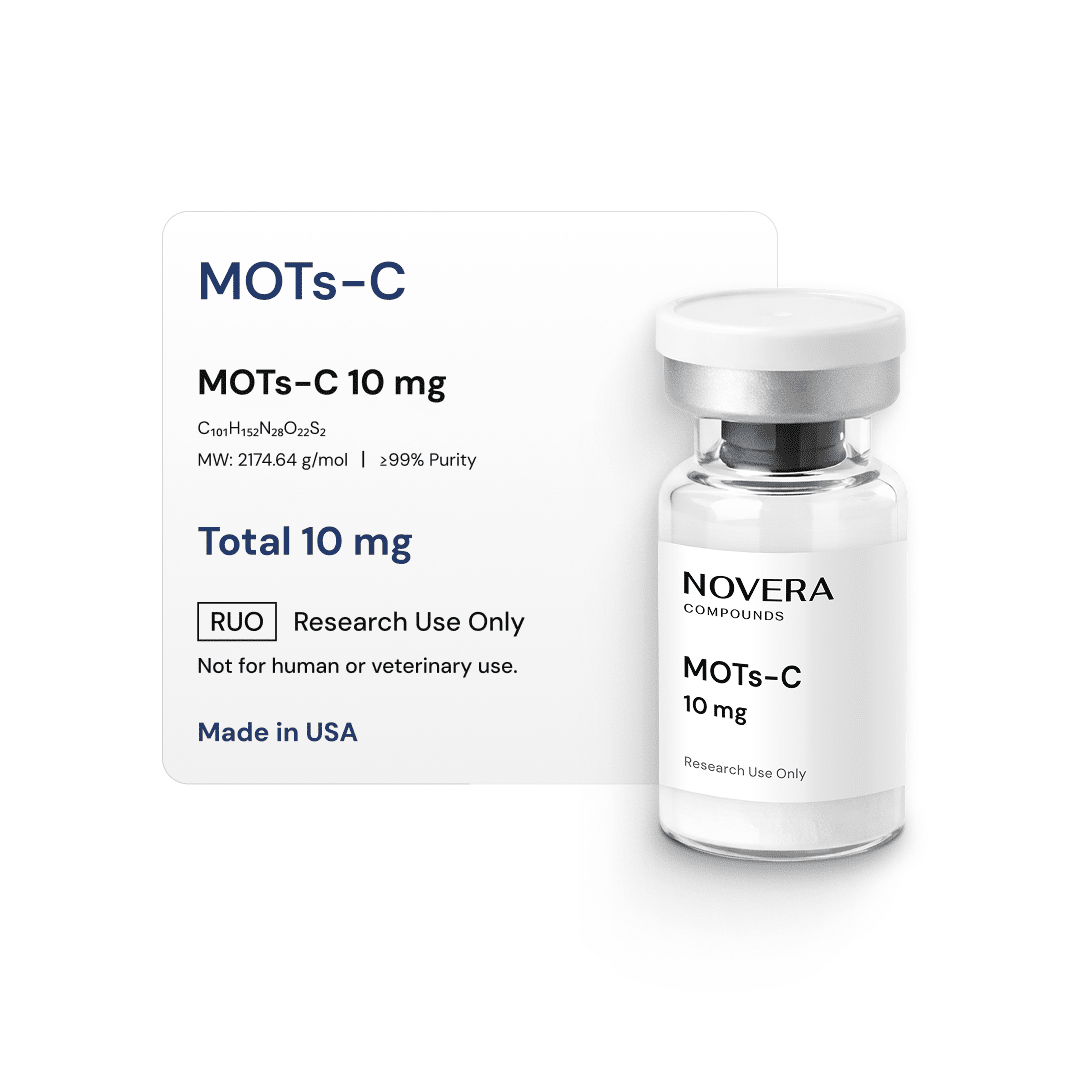
MOTS-c peptide is a synthetic peptide derived from the mitochondria, composed of 16 amino acids and has a molecular weight of approximately 2.17 kDa (2174.59 Da). This peptide is part of a group of peptides that are involved in regulating energy production within cells. MOTS-c has been studied for its role in metabolism and the body’s response to stress.
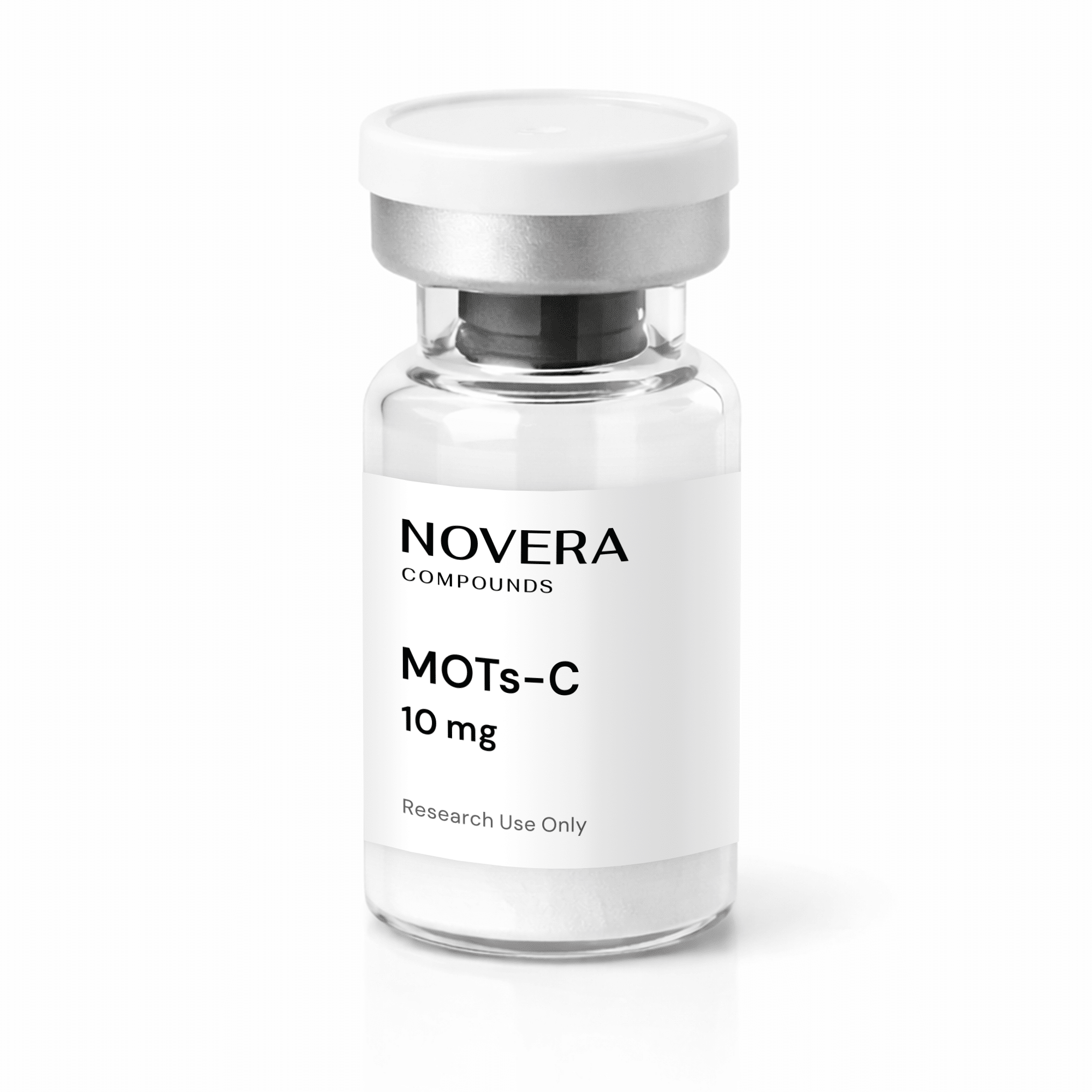
The MOTS-c research peptide is supplied in lyophilized powder form with high purity, making it ideal for use in controlled laboratory settings. Researchers who buy MOTS-c often focus on its effects on mitochondrial function and energy regulation, specifically in cell metabolism and stress responses.
MOTS-c Key Features and Benefits
- High Purity: ≥98% purity, ensuring reliable and consistent results in research.
- Lyophilized Form: Stable powder format for easy storage and handling.
- Mitochondrial Origin: Derived from the mitochondria, essential for studying energy production and metabolism.
- Research Applications: Ideal for studying metabolism, stress responses, and mitochondrial health.
- Simple Reconstitution: Easily reconstituted with standard laboratory buffers.
MOTS-c Mechanism & Research Applications
MOTS-c is being researched for its ability to influence metabolism and energy regulation within cells. This peptide is particularly studied for its role in mitochondrial function and its ability to help cells respond to metabolic stress, such as exercise or nutrient changes.
Studies focus on how MOTS-c impacts glucose metabolism, fat processing, and how it might help cells adapt to stress. Researchers are also interested in how MOTS-c helps mitochondria communicate with other parts of the cell, an emerging area of interest in cell biology.
MOTS-c Dosing & Observed Effects in Research
Preclinical studies have employed various dosing protocols depending on the research model:
In vivo rodent models:
- Metabolic studies: 5 mg/kg intraperitoneal injection (mice)
- Cardiac repair: 0.5 mg/kg/day intraperitoneal injection for 8 weeks (rats)
- Infection/sepsis models: 20–50 mg/kg intraperitoneal injection (mice)
In vitro cellular assays: Concentration-dependent effects typically observed in the nanomolar to micromolar range (100 nM – 10 µM)
Reported Research Findings
- Enhanced glucose utilization and improved insulin sensitivity
- Increased fatty acid oxidation and reduced lipid accumulation
- Mitochondrial functional improvement and biogenesis
- Protection against metabolic dysfunction
- Enhanced survival and immune function in infection models
These results provide valuable insights into mitochondrial signaling and metabolic regulation. These findings are strictly research-based and are not meant to guide clinical use.
MOTS-c Storage, Safety & References
Proper storage and handling are critical to maintaining the stability of MOTS-c. Follow these guidelines:
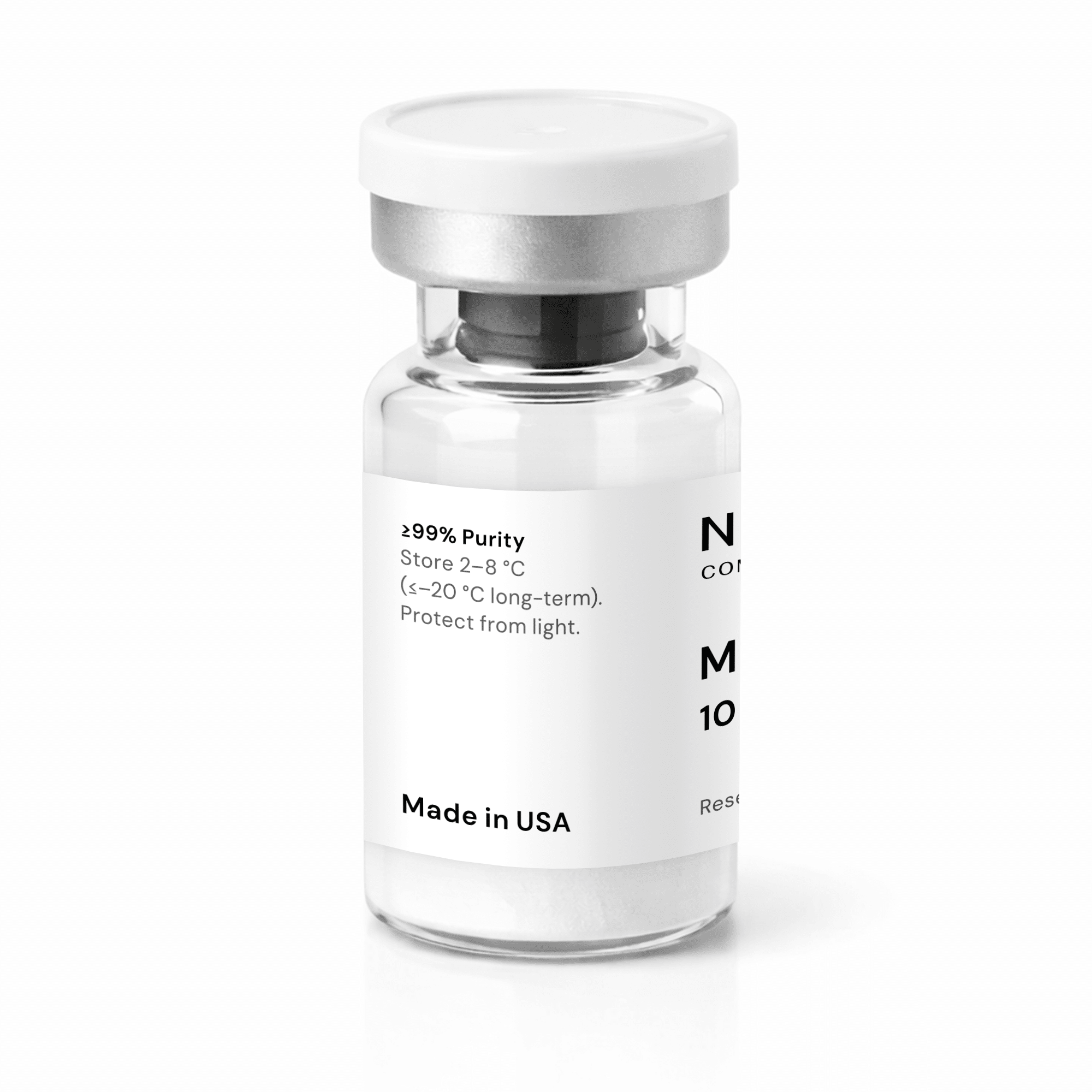
- Storage (Lyophilized): For optimal stability, store lyophilized MOTS-c at -20°C or lower. Avoid exposure to high temperatures, light, and humidity, which can degrade the peptide.
- Reconstituted Solution: After reconstitution, store at 2–8°C and use within 7–14 days. For extended use, adding 0.1% HSA or BSA (albumin) as a carrier protein can help maintain stability.
- Avoid Freeze-Thaw Cycles: Repeated freeze-thaw cycles can degrade the peptide.
- Sterile Handling: Always use sterile techniques and aseptic methods when reconstituting or handling the peptide.
- Safety: Wear PPE (personal protective equipment) such as gloves, lab coat, and goggles during handling.
References
https://www.nature.com/articles/s41467-020-20790-0
https://pubmed.ncbi.nlm.nih.gov/33722744
https://pmc.ncbi.nlm.nih.gov/articles/PMC9905433
https://pubmed.ncbi.nlm.nih.gov/40855115
Compliance Notice
This product is intended for laboratory research use only and is not approved for human or veterinary use.