




What Are The Purported Benefits Of MT-1?
MT-1 peptide, also known as the melanotan 1 peptide, is a synthetic analog of the natural hormone α-melanocyte-stimulating hormone (α-MSH). It plays a key role in stimulating melanin production, supporting sunless tanning, and offering photoprotection. By targeting the MC1 receptor, MT-1 enhances eumelanin synthesis and protects the skin against UV-induced damage.
Clinically, MT-1 (branded as Scenesse) is FDA-approved for the treatment of Erythropoietic Protoporphyria (EPP), a disorder that causes extreme sun sensitivity. Compared with MT-2, MT-1 has a more favorable side-effect profile, making it an ideal choice for researchers seeking targeted skin pigmentation without significant adverse reactions. Researchers who buy MT-1 for research purposes often investigate its potential for both cosmetic tanning and skin protection.
What Is the Chemical Makeup of MT-1?
MT-1 is a 13–amino acid synthetic peptide derived from the endogenous hormone α-melanocyte-stimulating hormone (α-MSH). It incorporates specific amino acid substitutions and terminal modifications designed to enhance molecular stability and receptor selectivity in experimental settings.
Amino Acid Sequence
Ac-Ser-Tyr-Ser-Nle-Glu-His-D-Phe-Arg-Trp-Gly-Lys-Pro-Val-NH₂
Key Structural Modifications
- Norleucine (Nle) substitution to reduce oxidative degradation
- D-Phenylalanine (D-Phe) to improve receptor interaction
- N-terminal acetylation and C-terminal amidation to enhance stability
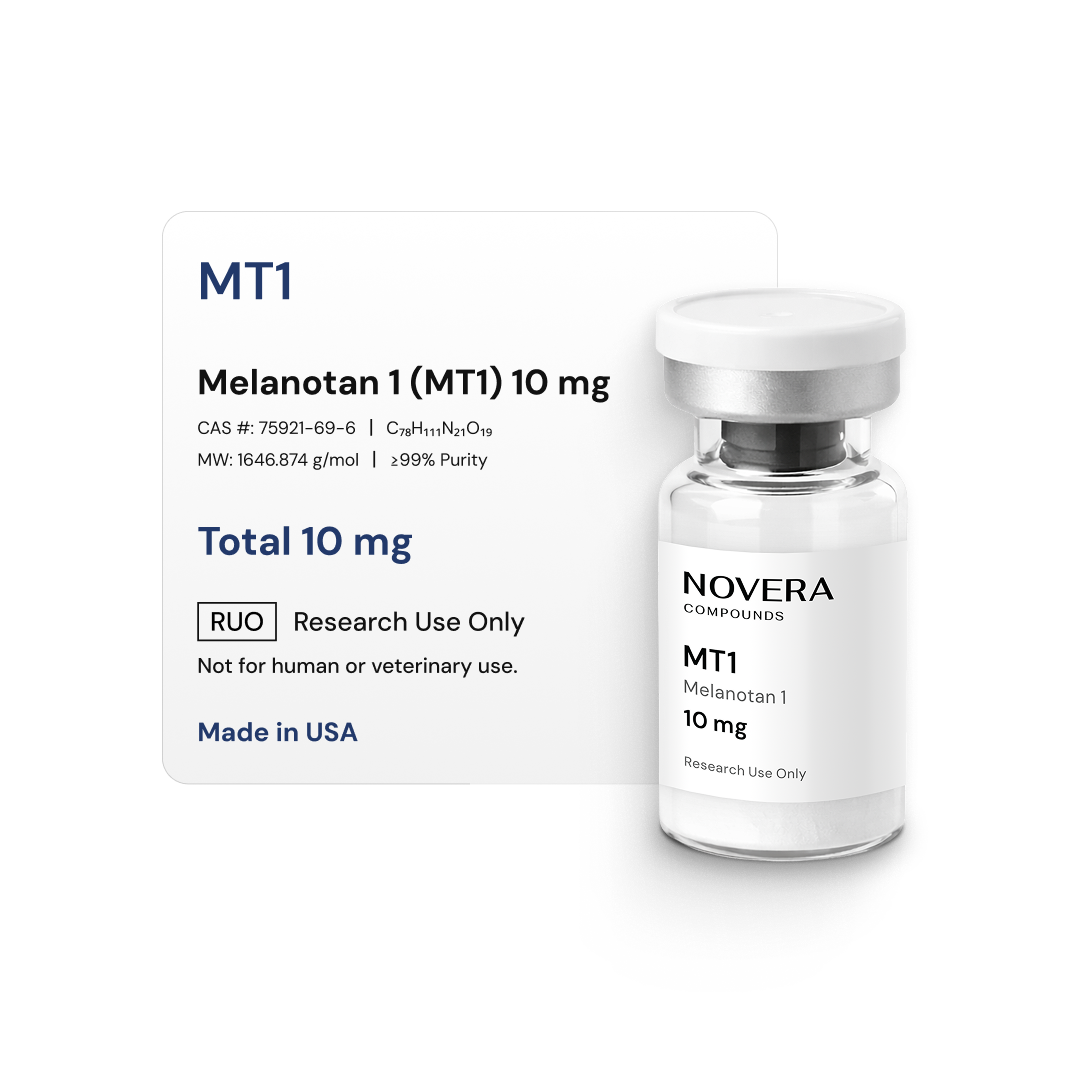
- Molecular Formula: C₇₈H₁₁₁N₂₁O₁₉
- Molecular Weight: 1646.874 g/mol
- CAS Number: 75921-69-6
- Sequence: Ac-Ser-Tyr-Ser-Met-Glu-His-Phe-Arg-Trp-Gly-Lys-Pro-Val-NH₂
What Does Scientific Research Examine About MT-1?
MT-1 has been investigated in both preclinical and clinical studies for its interactions with melanocortin receptors, particularly MC1R. Experimental findings indicate that MT-1 is a potent melanocortin receptor agonist, commonly used to study melanocyte signaling, pigment-related pathways, and receptor-mediated cellular responses.
Pharmacokinetic evaluations in humans report an approximate half-life of ~1 hour following subcutaneous administration, reflecting greater stability than native α-MSH while remaining suitable for controlled research observation.
Regulatory Context: Afamelanotide (marketed as Scenesse) is FDA-approved for the treatment of erythropoietic protoporphyria (EPP). Note: The MT-1 material described here is supplied strictly for laboratory research use only and is not intended for human administration.
What Are the Storage Conditions for MT-1?
Proper storage is essential to preserve peptide integrity and reproducibility in research applications.
- Lyophilized Form: Store at –20°C or lower in a dry, light-protected environment. Under these conditions, MT-1 is typically stable for 2+ years, per supplier Certificate of Analysis (CoA).
- Reconstituted Solution: After reconstitution with bacteriostatic water, store at 2–8°C and use within 7–14 days under sterile conditions. Avoid agitation and repeated handling to minimize degradation.
Following these guidelines supports consistent peptide performance across experimental studies.
Are you looking to buy MT-1 online?
If you’re looking to order MT-1 online at wholesale prices, contact Medical Spa RX for guidance on how to do so.
This product is supplied strictly for laboratory research use only and is not approved for human or veterinary administration. It is not intended for diagnostic, therapeutic, or clinical applications. Any reference to biological activity or potential effects is based solely on preclinical or in-vitro findings and should not be interpreted as validated clinical outcomes. Researchers are responsible for ensuring proper handling, storage, and disposal in accordance with institutional, federal, and international guidelines. By purchasing or using this material, the buyer confirms that they are a qualified researcher and that the product will be used exclusively in controlled research settings compliant with all applicable regulations.
Sources
https://pmc.ncbi.nlm.nih.gov/articles/PMC10418475
https://pubmed.ncbi.nlm.nih.gov/9113347
https://go.drugbank.com/drugs/DB04931
https://ec.europa.eu/health/documents/community-register/2014/20141222130241/anx_130241_en.pdf