



NAD+ – About This Product
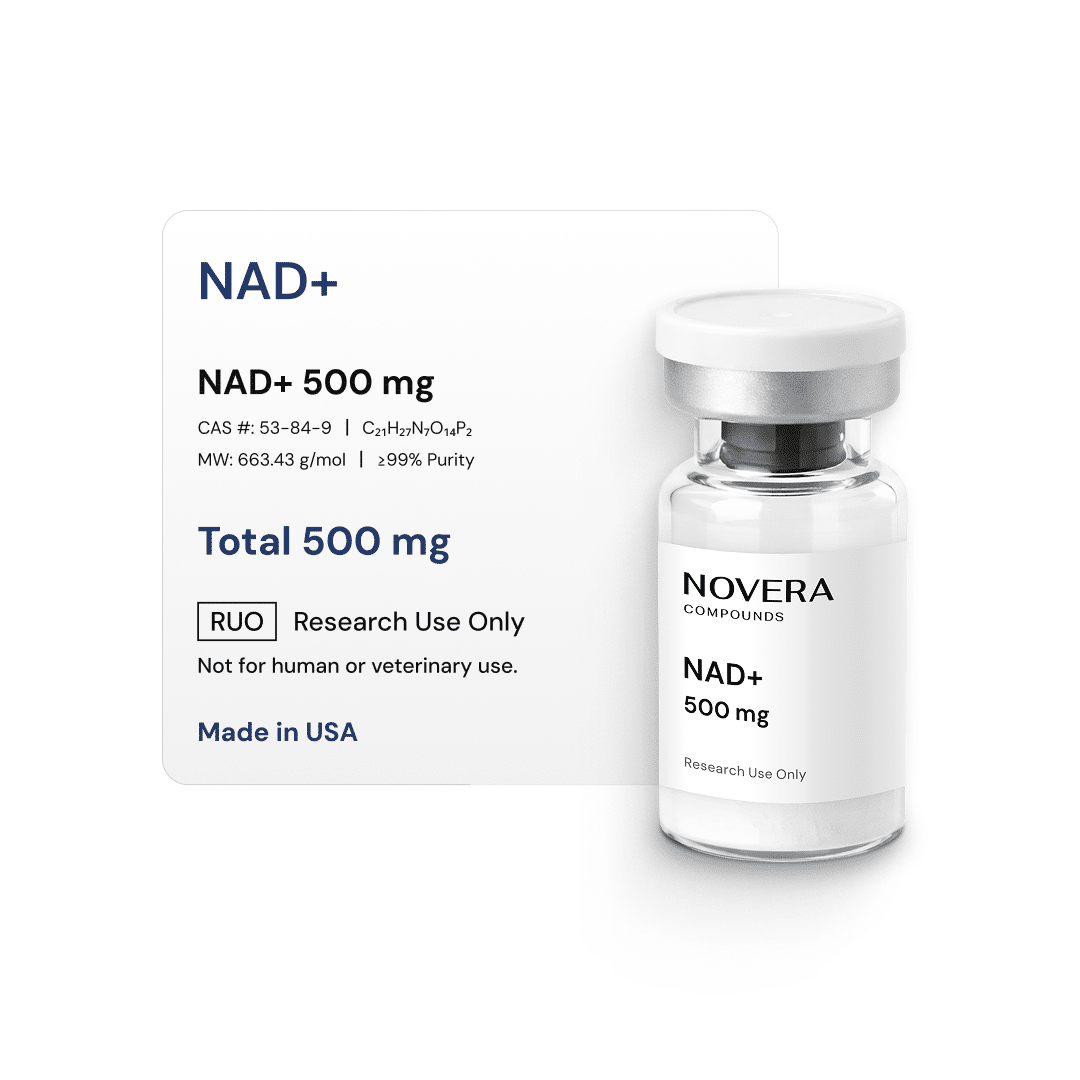
NAD+ (nicotinamide adenine dinucleotide) is an essential cellular coenzyme involved in redox metabolism and energy production across all living systems. As a pyridine nucleotide cofactor, NAD+ consists of two nucleotides—adenine and nicotinamide—joined through their phosphate groups. It has a molecular formula of C21H27N7O14P2and a molecular weight of approximately 663.4 Da.
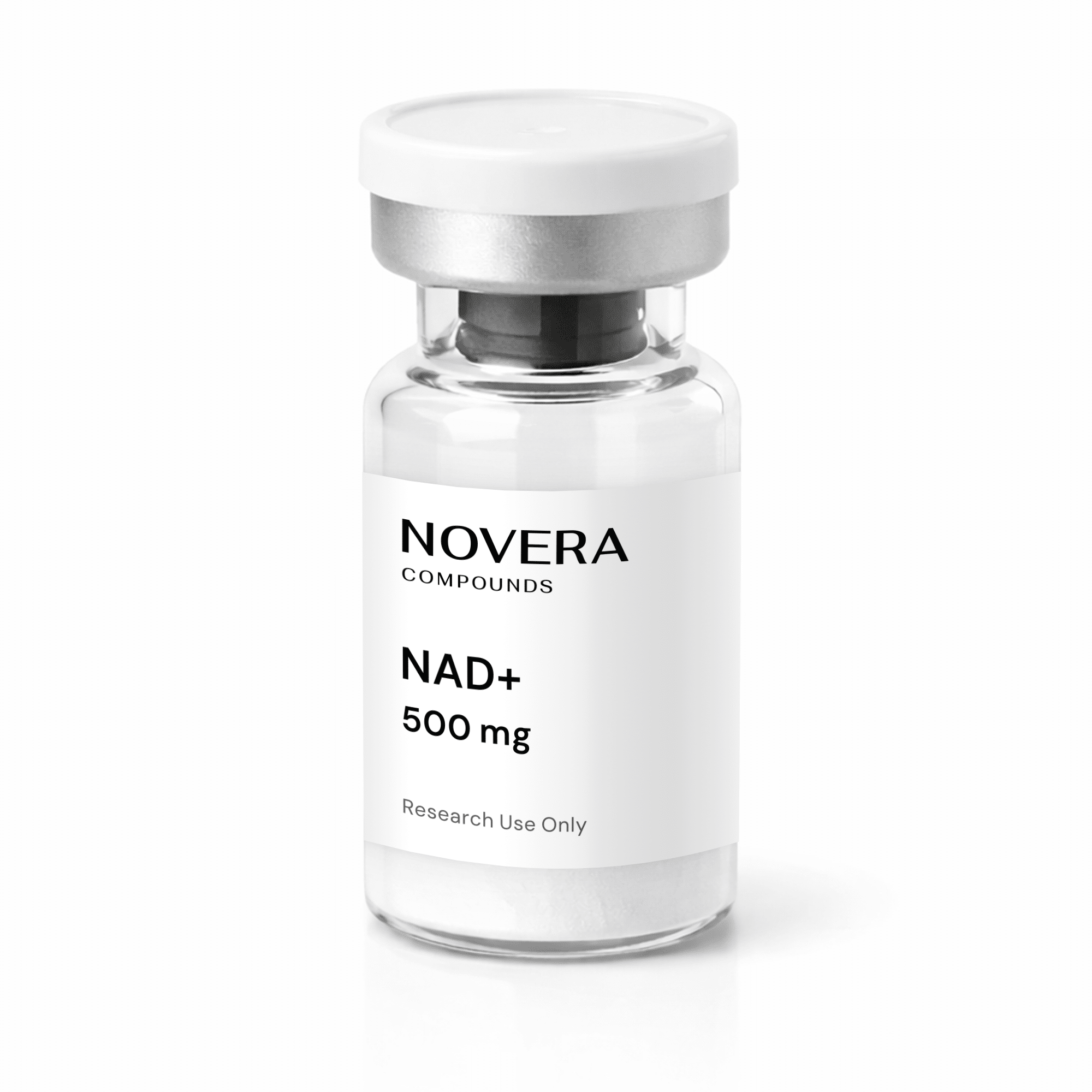
NAD+ functions as a critical electron carrier by cycling between its oxidized (NAD+) and reduced (NADH) states, enabling mitochondrial oxidative phosphorylationand glycolytic energy transfer in experimental models. This cofactor is supplied as a high-purity lyophilized powder at ≥99% purity in convenient vial formats. It is used primarily in laboratory research to investigate cellular energy metabolism, DNA repair mechanisms, and aging-related processes.
NAD+ – Key Features and Benefits
- High Purity: ≥99% purity, verified by HPLC and mass-based analysis, ensuring consistent and reliable results in research
- Water-Soluble: Easily reconstituted in aqueous solutions for in vitro assays and enzyme activity measurements
- Multi-System Research Applications: Studied for its role in redox biochemistry, mitochondrial metabolism, and enzyme cofactor functions
- DNA Repair & Cellular Stress: Investigated as a substrate for sirtuins and poly(ADP-ribose) polymerases (PARPs), enzymes critical for DNA repair and cellular stress responses
- Metabolic Investigations: Used to explore glycolysis, oxidative phosphorylation, and mitochondrial energy production pathways
- Aging-Associated Research: Researchers examined the NAD+ anti-aging peptide in model systems, exploring age-related changes in gene expression and metabolic regulation
- Laboratory Research Use Only: Those who wish to buy NAD+ should know that it is intended strictly for controlled in vitro and preclinical research environments
NAD+ – Mechanism & Research Applications
Researchers use NAD+ as an essential cofactor and experimental variable in multiple research contexts. NAD+ functions as a redox-active molecule capable of accepting and donating electrons in enzymatic reactions. It serves as a vital substrate for two major enzyme families involved in cellular regulation: sirtuins and poly(ADP-ribose) polymerases (PARPs).
Sirtuinsuse NAD+ to remove acetyl groups from protein lysine residues, influencing chromatin structure, gene expression, and DNA repair processes. PARPsuse NAD+ to create ADP-ribose chains during DNA damage response, enabling the base excision repair pathway. These NAD+-dependent enzymes are central to maintaining genomic stability and managing cellular stress responses.
Key research applications include:
- Cellular Energy: NAD+ cellular energy helps cells generate ATP, which is critical for various cellular functions.
- Oxidative Stress Regulation: NAD+ participates in reactions that help neutralize free radicals, promoting cellular health.
- DNA Repair & Cellular Aging: NAD+ is studied for its impact on sirtuins and poly(ADP-ribose) polymerases (PARPs), enzymes involved in DNA repair and aging processes.
- Metabolic Regulation: NAD+ is under investigation for its role in metabolism, energy homeostasis, and immune system regulation.
All research is conducted in in vitroand preclinicalmodels. NAD+ is not intended for clinical use or human applications.
NAD+ Dosing & Observed Effects in Research
NAD+ is typically used in laboratory research through multiple experimental approaches, each with distinct dosing parameters. In in vitro studies, researchers typically work with NAD+ concentrations ranging from 1–100 μMin cell-based assaysto investigate enzyme activity, redox reactions, and metabolic readouts.
Meanwhile, preclinical animal studies show that NAD+ is generally administered at doses dependenton the research model and route of administration. Direct NAD+ administration in animal models uses varying doses (typically 10–300 mg/kg), while NAD+ precursor compounds follow different protocols.
NAD+ Precursor Studies (NR and NMN): Clinical research on NAD+ precursors reports distinct dosage ranges:
- Nicotinamide Riboside (NR): 100–1000 mg daily, with most studies using 250–500 mg per day
- Nicotinamide Mononucleotide (NMN): 150–1200 mg daily, with studies showing efficacy at 250–900 mg per day
Moreover, key observations from these research contexts include:
- Activation of NAD+-dependent enzyme systems: Sirtuins and PARPs show increased activity with adequate NAD+ substrate availability
- Improvements in mitochondrial function markers: Studies report associations between NAD+ availability and oxidative phosphorylation capacity
- Shifts in gene expression profiles: Transcriptomic analyses describe differential expression patterns in NAD+-modulated experimental conditions
These findings remain within controlled experimental settings and are presented as research observations rather than clinical outcomes.
NAD+ Storage, Safety & References
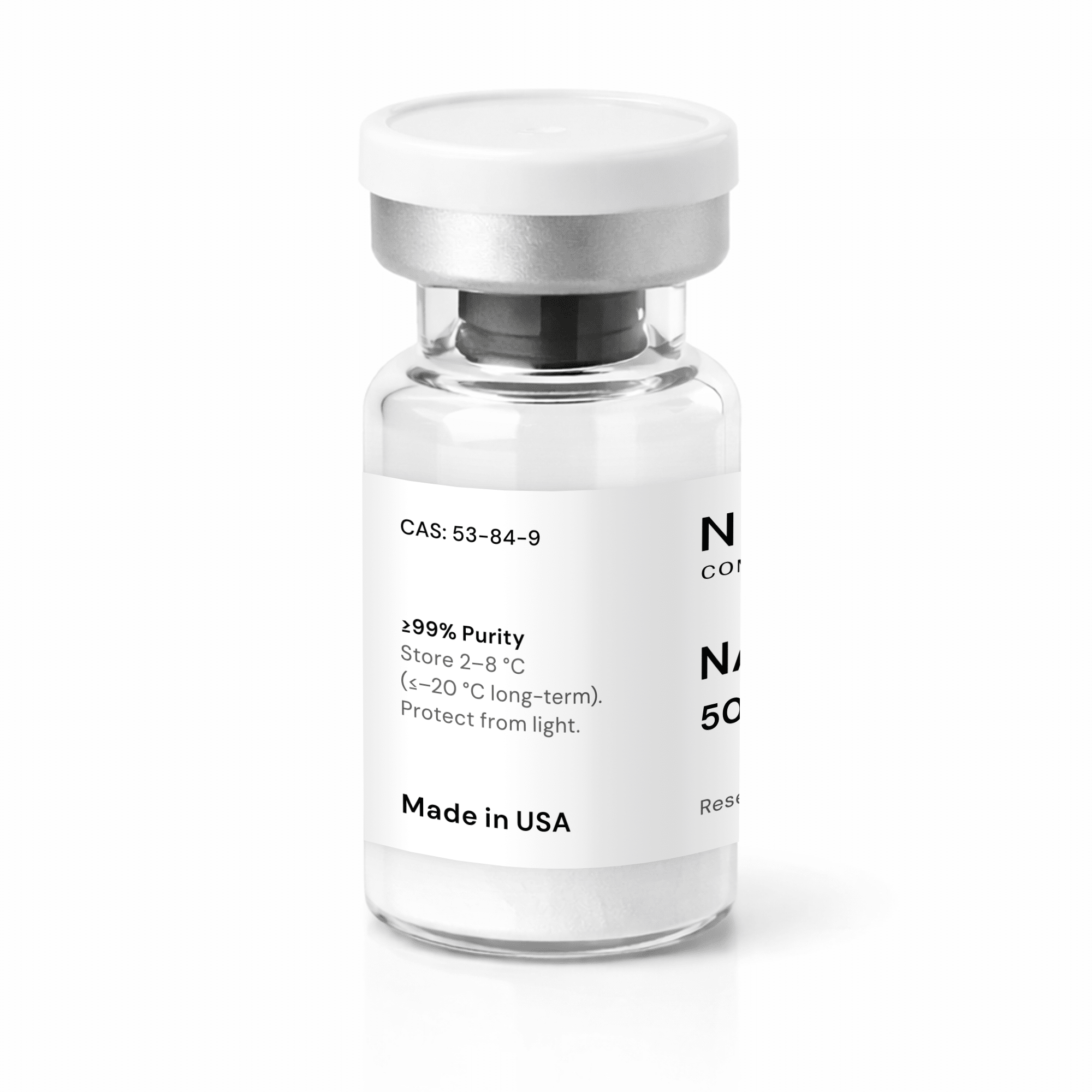
Store lyophilized NAD+ at –20°C or lowerin sealed, light-protected containers. Reconstituted solutions should be stored at 2–8°Cand used within 7 daysto maintain biochemical activity. Avoid repeated freeze-thaw cycles to preserve integrity.
Follow standard laboratory safety protocolsat all times. Use appropriate personal protective equipment, including gloves, a lab coat, and eye protection. Avoid exposure to light, moisture, and extreme temperatures. The product is for laboratory research use only and should not be administered to humans or animals outside authorized clinical research settings.
- Disposal: Refer to institutional guidelines and dispose of all unused material in accordance with local and environmental regulations.
References
https://pubchem.ncbi.nlm.nih.gov/compound/Nadide
https://www.cell.com/ajhg/abstract/S0968-0004(06)00323-9
https://pmc.ncbi.nlm.nih.gov/articles/PMC7494058
https://www.nature.com/articles/s41580-020-00313-x
https://pmc.ncbi.nlm.nih.gov/articles/PMC5737637
https://pmc.ncbi.nlm.nih.gov/articles/PMC9512238
https://www.biorxiv.org/content/10.1101/2023.05.19.541320v1.full.pdf
https://pmc.ncbi.nlm.nih.gov/articles/PMC9036060
https://pmc.ncbi.nlm.nih.gov/articles/PMC12727671
https://www.nature.com/articles/s41514-023-00134-0
https://pmc.ncbi.nlm.nih.gov/articles/PMC10692436
Compliance Notice
This product is intended for laboratory research use only and is not approved for human or veterinary use.