




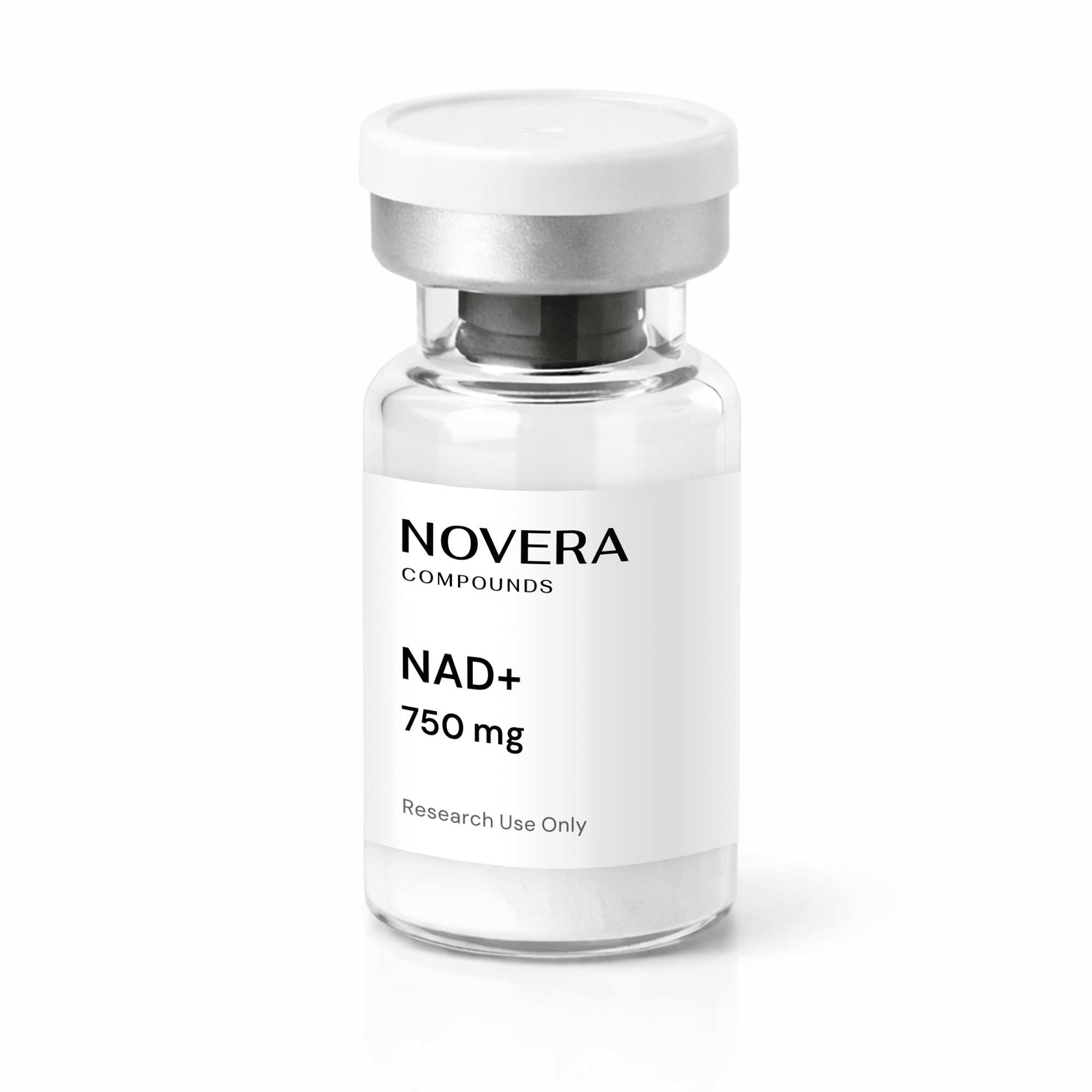
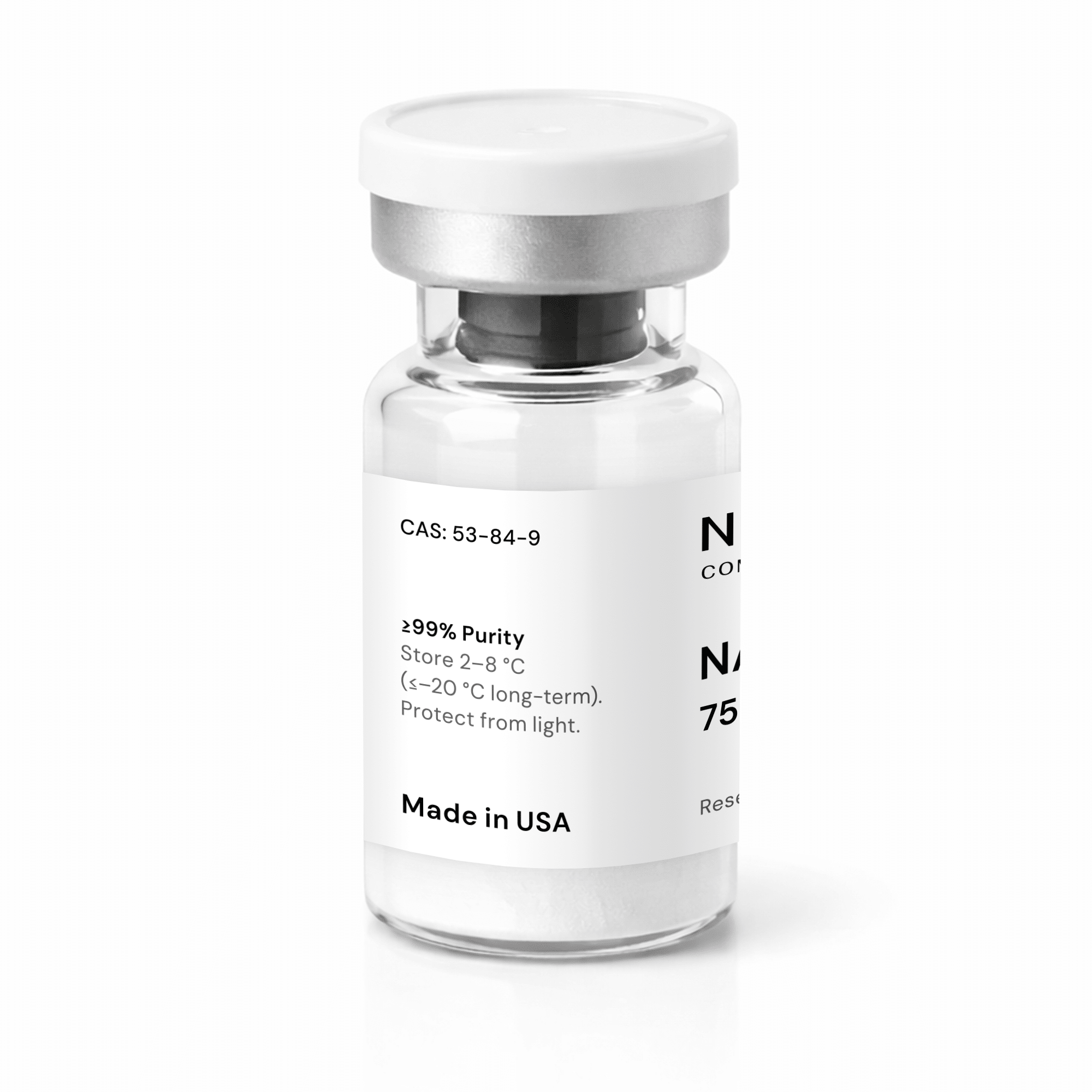


NAD+ (750mg) About This Product
NAD+ (nicotinamide adenine dinucleotide) is an essential cellular coenzyme involved in redox metabolism and energy production across living systems. It functions as an electron carrier by cycling between its oxidized (NAD+) and reduced (NADH) states, supporting mitochondrial oxidative phosphorylation and glycolysis in experimental models. Beyond metabolism, NAD+ serves as a required substrate for sirtuins and poly(ADP-ribose) polymerases (PARPs), enzymes studied in DNA repair, gene expression regulation, and cellular stress responses.
Chemically, NAD+ has a molecular formula of C₂₁H₂₇N₇O₁₄P₂ and a molecular weight of 663.43 g/mol. It exists in oxidized (NAD+) and reduced (NADH) forms, supporting redox balance and enzymatic metabolism across multiple cellular systems.
NAD+ (750mg) is supplied as a lyophilized powder, commonly produced to ≥98% purity. In laboratory research, NAD+ has been studied for its role in cellular energy metabolism, mitochondrial function, DNA repair processes, and age-associated metabolic changes. Research teams that buy NAD+ or order NAD+ in larger formats, such as the 750 mg vial, often use it for extended in vitro studies, biochemical assays, and controlled research models.
NAD+ (750mg) Key Features and Benefits
- High Purity Standard: Typically ≥95–98% purity, verified by HPLC (UV 260 nm)
- Lyophilized Format: Supports stability during storage and controlled reconstitution
- Essential Cellular Cofactor: Central to oxidative phosphorylation, glycolysis, and ATP production
- Enzymatic Substrate Role: Substrate for sirtuins, PARPs, and NAD+-dependent dehydrogenases in research settings
- Redox Cofactor Function: Accepts and donates electrons in enzymatic reactions used in metabolic flux studies
- High-Mass Research Supply: 750 mg vials support extended laboratory protocols and repeated experimental use
NAD+ (750mg) Mechanism & Research Applications
NAD+ functions as a central metabolic cofactor rather than a receptor-binding signaling molecule. It participates in electron transfer reactions critical to cellular metabolism and serves as a substrate for NAD+-dependent enzymes involved in cellular maintenance and stress responses.
In laboratory research, NAD+ is used as a reference compound or experimental variable in:
- Redox biochemistry and mitochondrial metabolism assays
- Enzyme activity measurements involving sirtuins, PARPs, and dehydrogenases
- Transcriptomic and metabolomic profiling studies reporting NAD+-associated expression patterns
- Cellular stress and aging-associated model systems
- DNA damage response research and enzymatic DNA repair pathways
- Extracellular signaling experiments measuring nucleotide release and receptor-linked responses
These investigations focus on fundamental biochemical and cellular processes rather than therapeutic outcomes. All applications are limited to controlled in vitro or animal-model research environments.
NAD+ (750mg) Dosing & Observed Effects in Research
Reported research use of NAD+ varies widely across study designs, experimental objectives, and applications. In controlled research settings, the 750 mg format has been utilized in biochemical investigations, enzyme kinetics studies, cell-based assays, and metabolic research to observe NAD+-dependent enzymatic activity, metabolic flux, and cellular response patterns under defined conditions.
Observed outcomes in laboratory research contexts have included:
- Measurable changes in NAD+/NADH ratios reflecting redox state
- Enzyme activity modulation consistent with known NAD+-dependent pathways
- Gene expression changes in sirtuins, PARPs, and metabolic regulators
- Altered mitochondrial function markers under NAD+ availability conditions
- Concentration-dependent effects on cellular stress response and metabolic signaling
- Time-dependent NAD+ consumption in enzyme assays reflecting enzymatic turnover
No standardized dosing regimens exist. Experimental concentration ranges, incubation times, and observation endpoints are determined by individual research protocols and specific study objectives. Findings should be interpreted strictly within experimental contexts and do not represent approved or recommended use for any clinical application.
NAD+ (750mg) Storage, Safety & References
For lyophilized powder form:
- Store at –20 °C, protected from light and moisture
- Maintain vials in a desiccated environment when not in use
- Brief storage at 4 °C acceptable during preparation
After reconstitution:
- Reconstitute only with sterile water, PBS, or appropriate laboratory media using aseptic technique
- Use reconstituted solutions promptly for best stability
- For extended storage, aliquot and freeze at –20 °C or –80 °C
- Store reconstituted solutions at 2–8 °C for short-term use
General Handling
- Avoid repeated freeze–thaw cycles to preserve compound integrity
- Handle materials according to institutional laboratory biosafety protocols
- Maintain aseptic technique during all handling procedures
References
https://www.nature.com/articles/s41392-020-00311-7
https://pmc.ncbi.nlm.nih.gov/articles/PMC9454445
https://pmc.ncbi.nlm.nih.gov/articles/PMC5737637
https://pmc.ncbi.nlm.nih.gov/articles/PMC4112140
https://www.science.org/doi/10.1126/science.aaf2693
Compliance Notice
This product is intended for laboratory research use only and is not approved for human or veterinary use.