




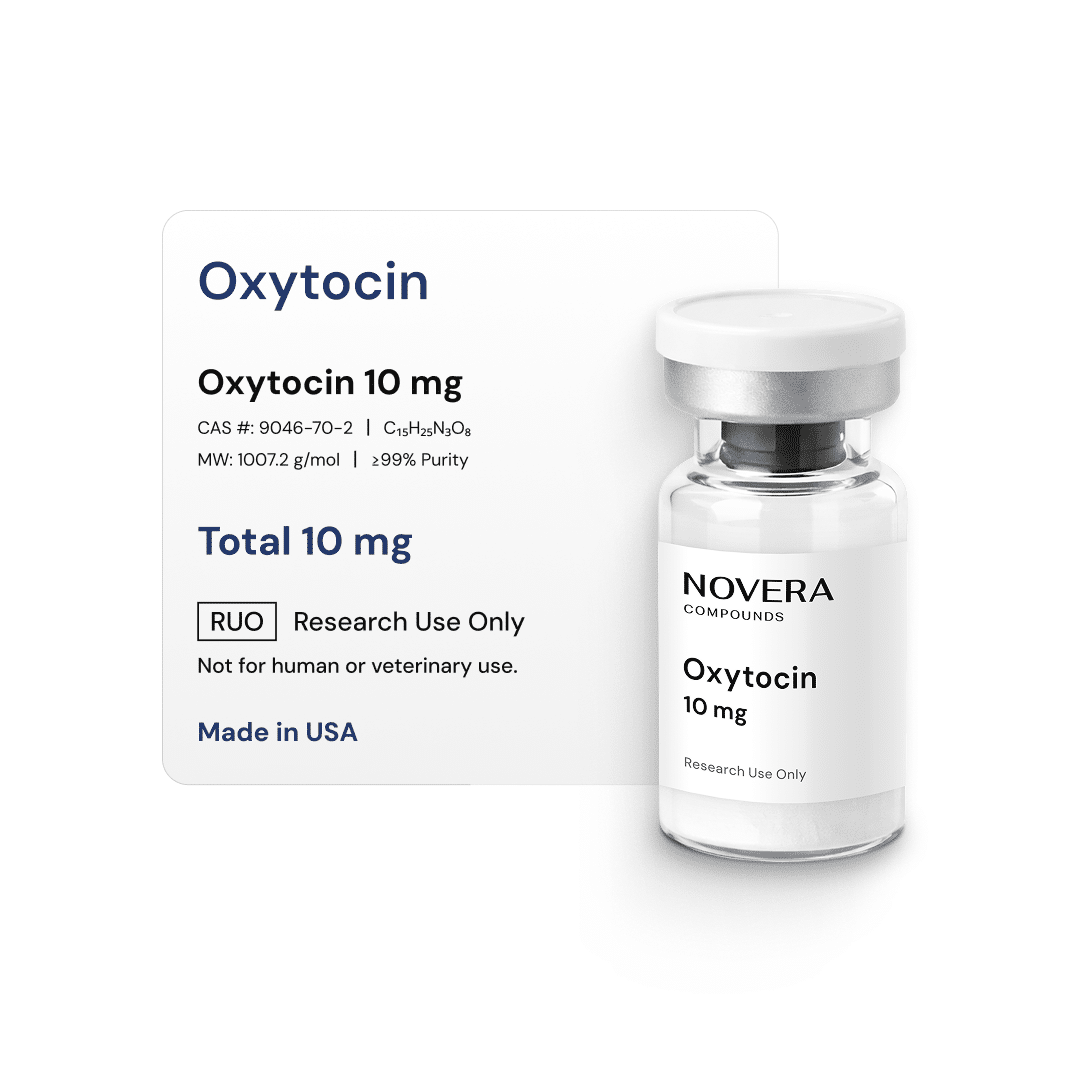
Oxytocin (10mg) Mechanism & Research Applications
Oxytocin is researched as a neuropeptide hormone involved in communication between the central nervous system and peripheral tissues. In laboratory models, it has been examined how peptide signaling contributes to coordinated physiological responses rather than isolated molecular pathways.
Reported research applications include:
- Neuroendocrine Signaling Studies: Examined for involvement in hypothalamic–pituitary communication and hormone release regulation
- Behavioral and Cognitive Research: Studied in experimental models assessing social interaction, stress response, and emotional processing
- Metabolic Regulation Research: Investigated for associations with appetite regulation, glucose handling, and energy balance
- Cardiovascular and Vascular Studies: Examined in models evaluating vascular tone and stress-related cardiac responses
- Smooth Muscle and Reproductive Research: Used to study smooth muscle signaling and reproductive physiology mechanisms
- Inflammation and Immune Modulation: Explored in controlled models assessing cytokine signaling and inflammatory responses
These applications pertain only to controlled research contexts and do not imply therapeutic use.
Oxytocin (10mg) Dosing & Observed Effects in Research
Oxytocin dosing in research varies based on study design, species, and route of administration. Published literature reports the following experimental ranges:
- Human Research (Intranasal): Single-dose studies commonly use 8–40 IU. Repeated-dose protocols have examined 12–72 IU per day, administered in divided doses
- Animal Research Models: Subcutaneous or intraperitoneal dosing typically ranges from 0.1–1.0 mg/kg
- Central Administration Models: Intracerebroventricular infusion studies report doses as low as 1–100 ng/hour delivered continuously
- Localized Research Applications: Doses between 100–600 IU have been explored in models assessing localized tissue responses
Reported research observations include dose- and context-dependent changes in neurobehavioral markers, stress-related responses, and metabolic parameters. All dosing information pertains only to controlled research settings, and no standardized dosing exists for use outside the laboratory.
Oxytocin (10mg) Storage, Safety & References
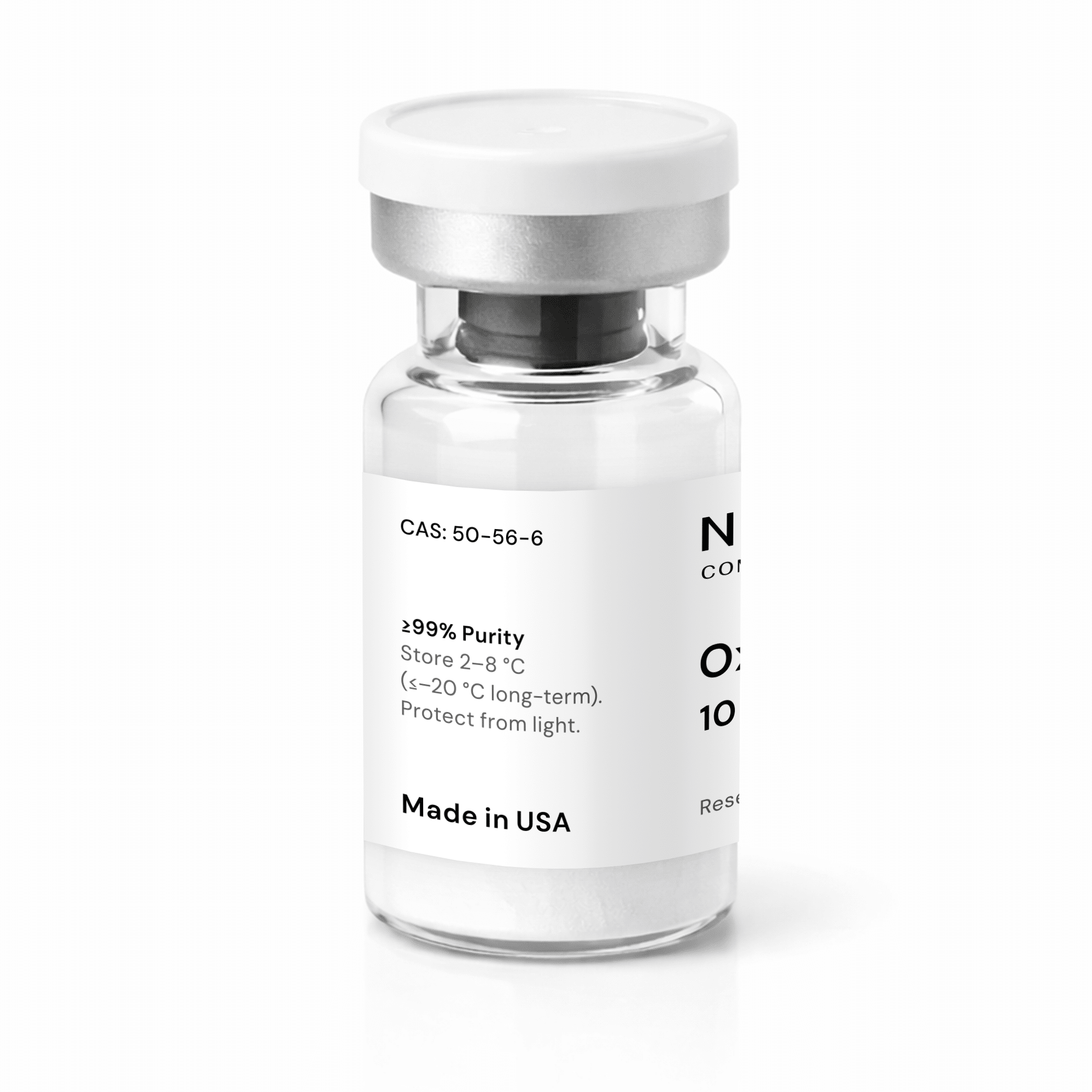
Store lyophilized oxytocin at –20°C, protected from light and moisture. Short-term storage at 2–8°C is acceptable for limited periods. Avoid prolonged exposure to temperatures above 25°C.
After reconstitution, minimize freeze–thaw cycles by preparing aliquots. Handle materials using standard laboratory safety and aseptic procedures.
References
https://pubchem.ncbi.nlm.nih.gov/compound/Oxytocin#section=Depositor-Supplied-Synonyms
https://pmc.ncbi.nlm.nih.gov/articles/PMC6949379
https://www.frontiersin.org/journals/endocrinology/articles/10.3389/fendo.2025.1708807/full
https://pmc.ncbi.nlm.nih.gov/articles/PMC5573563
https://pmc.ncbi.nlm.nih.gov/articles/PMC11225698
https://pmc.ncbi.nlm.nih.gov/articles/PMC9687803
https://pmc.ncbi.nlm.nih.gov/articles/PMC5734372
Compliance Notice
This product is intended for laboratory research use only and is not approved for human or veterinary use.