




Oxytocin (5mg) About This Product
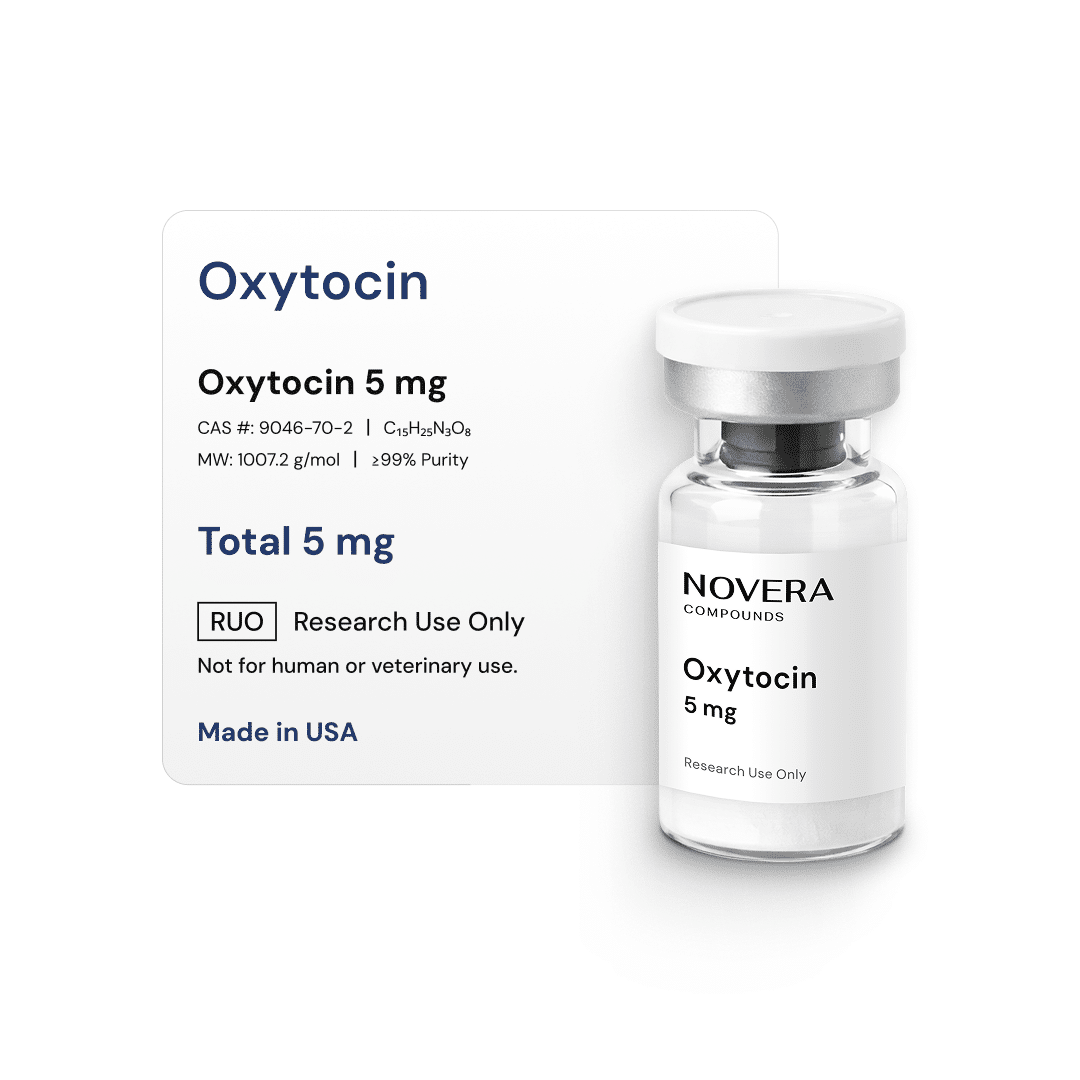
Oxytocin peptide is a synthetic version of a naturally occurring neuropeptide hormone composed of nine amino acids arranged in a cyclic configuration stabilized by a disulfide bond between two cysteine residues. Its amino acid sequence is cysteine–tyrosine–isoleucine–glutamine–asparagine–cysteine–proline–leucine–glycine (CYIQNCPLG). Oxytocin has a molecular weight of 1,007.19 Daltons and a molecular formula of C₄₃H₆₆N₁₂O₁₂S₂.
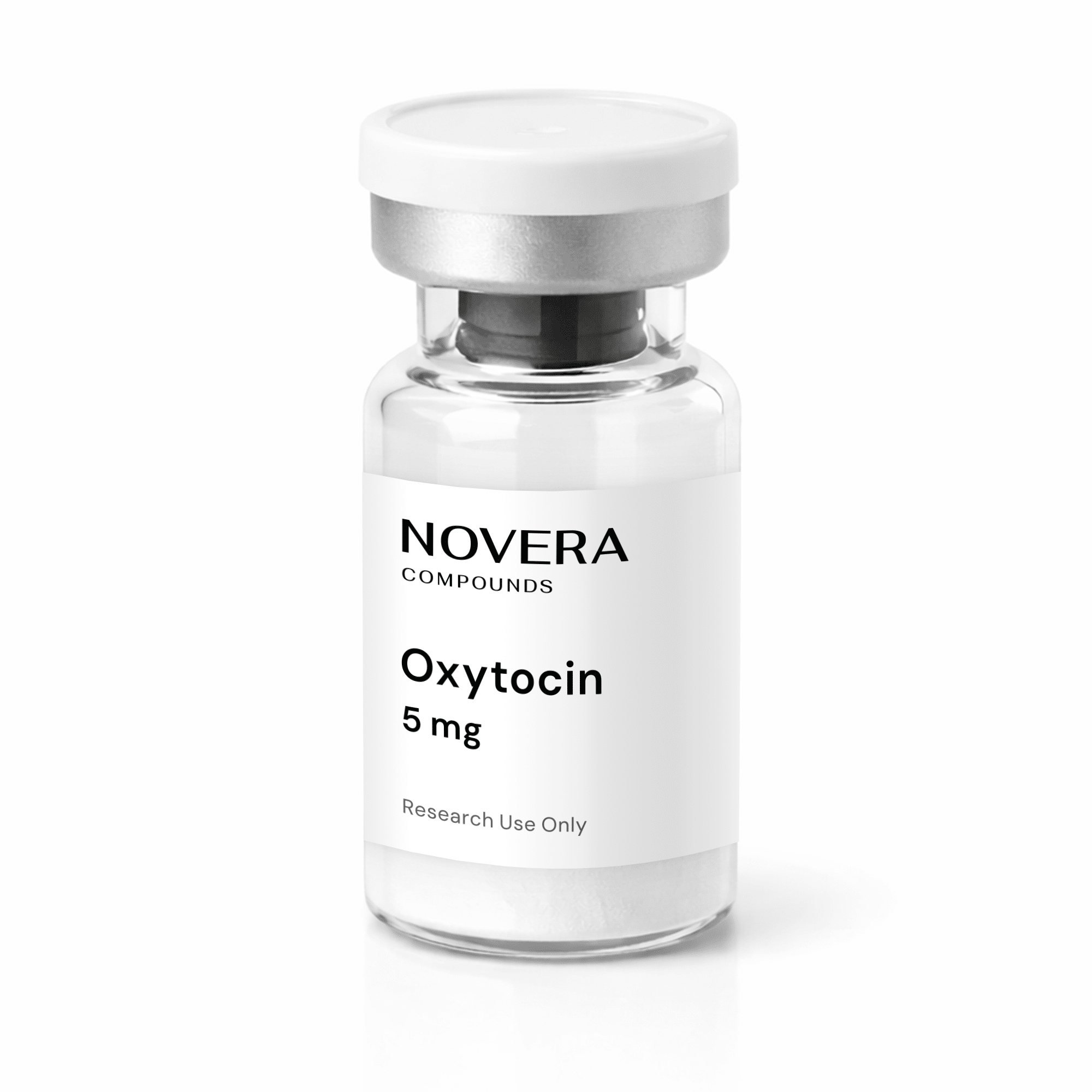
Oxytocin is synthesized in the hypothalamus and released into the central and peripheral circulation, where it functions as a neurohypophysial hormone and neuromodulator. This 5 mg lyophilized powder is supplied in a sealed 3 mL glass vial and is manufactured to research-grade standards, with typical purity levels of ≥99%.
Laboratories that buy oxytocin peptide commonly use this lower-mass vial format for exploratory and comparative studies involving neuroendocrine signaling, metabolic regulation, and peptide stability under controlled experimental conditions. Oxytocin has been studied across multiple physiological systems, including behavioral neuroscience, metabolism, cardiovascular biology, immune signaling, and neuropsychiatric research.
Oxytocin (5mg) Key Features and Benefits
- High Purity Verification: Tested to ≥99% purity by HPLC with analytical confirmation
- Lyophilized Research Format: Supplied as a 5 mg freeze-dried powder in a sealed glass vial for precise reconstitution
- Defined Molecular Identity: Nine-amino-acid cyclic peptide with a stable disulfide bond and known molecular weight
- Established Research Utility: Studied in neuropsychiatric, metabolic, cardiovascular, inflammatory, and neuroendocrine models
- Flexible Study Scale: Lower total peptide mass supports pilot studies, short-term experiments, and dose-ranging protocols
- Controlled Storage Profile: Maintains stability under frozen, light-protected conditions when handled according to specifications
For laboratory research use only. Laboratories that order oxytocin peptide should restrict use to controlled experimental settings.
Oxytocin (5mg) Mechanism & Research Applications
Oxytocin is researched as a neuropeptide hormone involved in communication between the brain and peripheral organs. In experimental models, it acts through oxytocin receptors distributed throughout the central nervous system and peripheral tissues, supporting coordinated physiological signaling rather than isolated molecular effects.
Documented research applications include:
- Neuroendocrine and Behavioral Research: Studied in models examining social cognition, emotional processing, stress modulation, and hypothalamic–pituitary signaling
- Metabolic and Appetite Studies: Investigated for associations with appetite regulation, energy balance, glucose handling, and adipose tissue signaling
- Cardiovascular Research Models: Examined in studies evaluating vascular tone regulation, inflammatory signaling, and stress-related cardiac responses
- Inflammation and Immune Modulation: Researched for influences on cytokine production and immune cell communication
- Reproductive and Smooth Muscle Studies: Used to examine smooth muscle signaling, reproductive physiology, and lactation-related mechanisms
- Bone and Musculoskeletal Research: Investigated in experimental models evaluating bone metabolism, osteoblast activity, and muscle maintenance
These applications reflect oxytocin’s role as a multi-system signaling peptide under controlled laboratory conditions.
Oxytocin (5mg) Dosing & Observed Effects in Research
Oxytocin dosing in research varies depending on administration route, study duration, and experimental model. Published literature reports the following experimental ranges:
Human Intranasal Research
- Single-dose studies commonly use 8–40 IU
- Repeated-dose protocols examine 12–72 IU per day, administered in divided doses
Animal Research Models
- Subcutaneous or intraperitoneal dosing commonly ranges from 0.1–1.0 mg/kg
- Central infusion studies report doses as low as 1–100 ng/hour delivered continuously
Metabolic and Behavioral Study Designs
- Chronic protocols using 24 IU administered multiple times daily
- Acute behavioral studies using single doses within the 8–40 IU range
Observed research findings include dose- and context-dependent changes in neurobehavioral markers, stress-related responses, and metabolic parameters. All reported dosing reflects controlled research protocols only, and no standardized dosing exists outside laboratory research settings.
Oxytocin (5mg) Storage, Safety & References
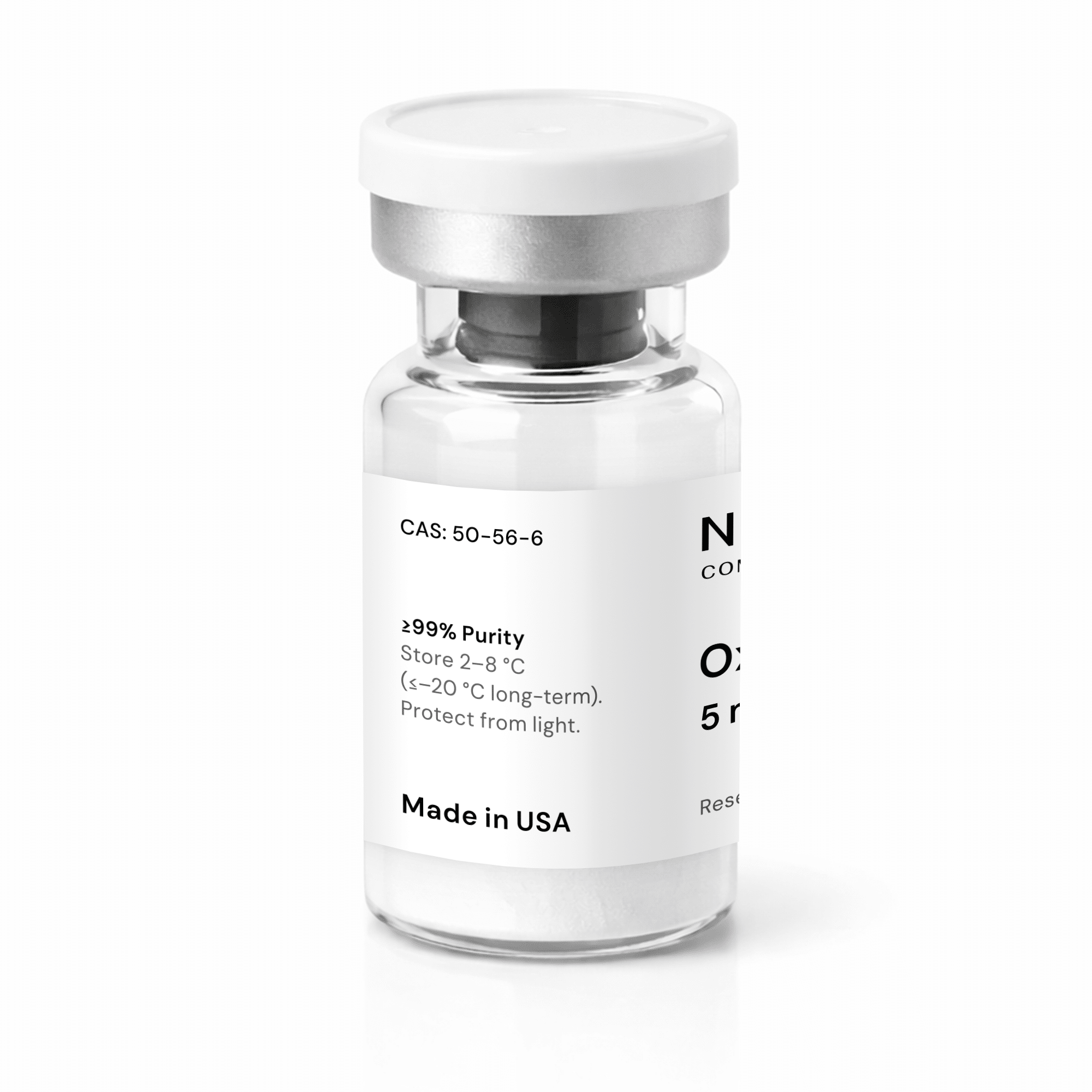
Store lyophilized oxytocin at –20°C, protected from light and moisture, to preserve structural integrity. Short-term storage at 2–8°C is acceptable for limited periods. Avoid prolonged exposure to temperatures above 25°C.
After reconstitution, minimize freeze–thaw cycles by preparing aliquots. Reconstitution should be performed using appropriate research-grade solvents and aseptic technique. Handle all materials in accordance with institutional laboratory safety procedures.
References
https://www.frontiersin.org/journals/psychiatry/articles/10.3389/fpsyt.2024.1477076/full
https://pubmed.ncbi.nlm.nih.gov/39985439
https://www.ncbi.nlm.nih.gov/books/NBK507848
https://www.frontiersin.org/journals/pharmacology/articles/10.3389/fphar.2024.1361953/full
https://pubchem.ncbi.nlm.nih.gov/compound/Oxytocin
https://bmjopen.bmj.com/content/9/7/e029083
https://onlinelibrary.wiley.com/doi/10.1111/obr.12757
Compliance Notice
This product is intended for laboratory research use only and is not approved for human or veterinary use.