




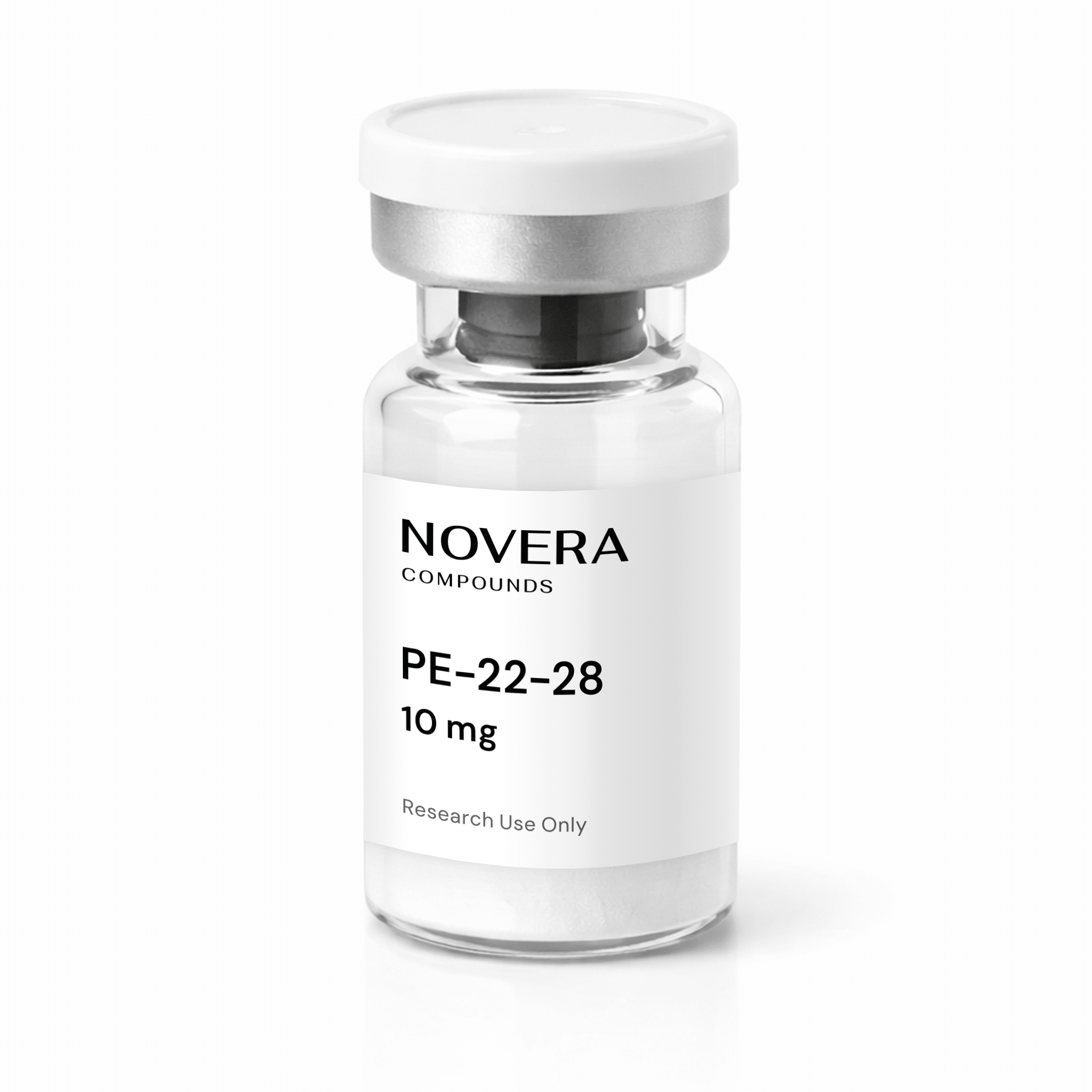
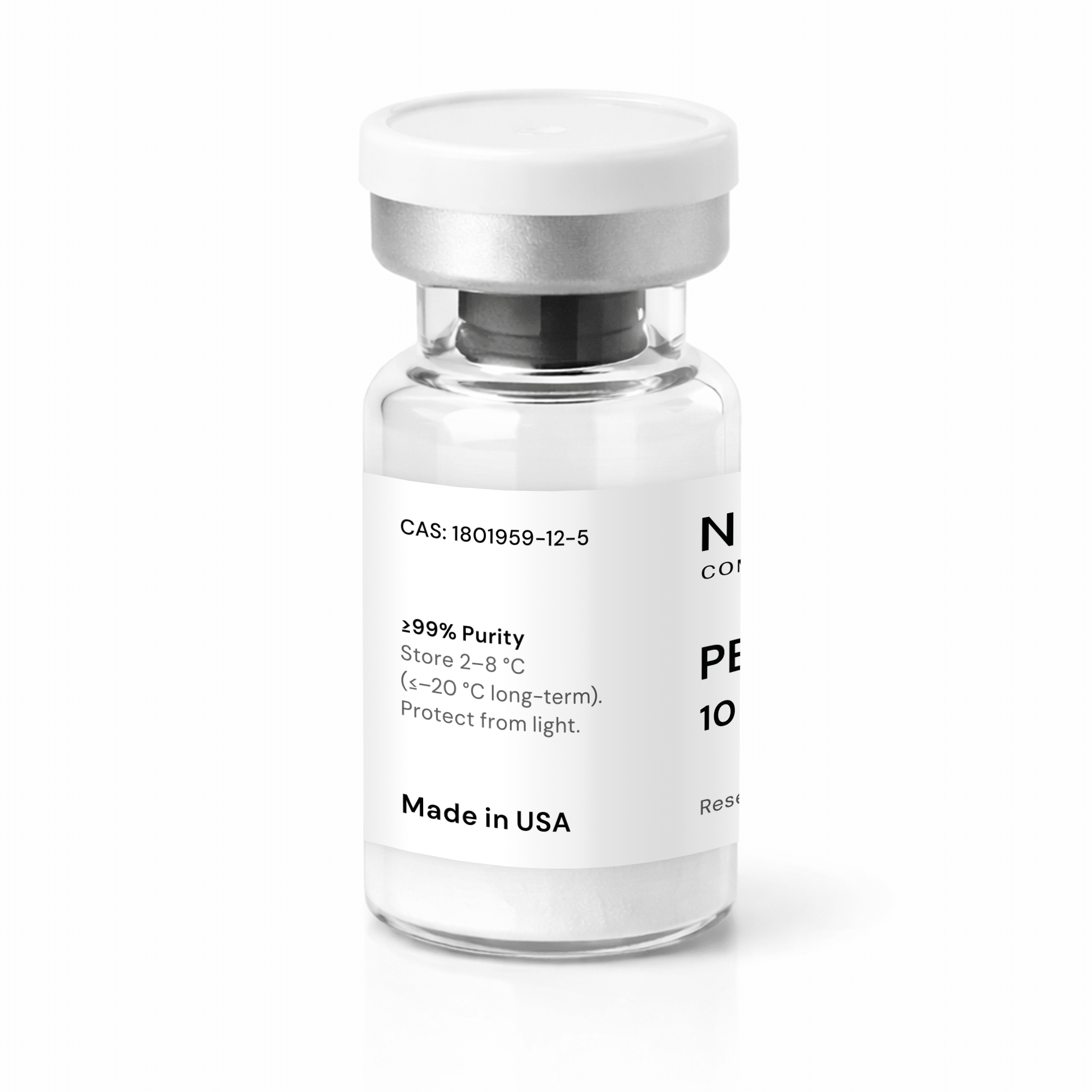
PE-22-28 (10mg) About This Product
PE-22-28 (10mg) is a synthetic peptide derived from truncated sequences of the endogenous sortilin-associated peptide spadin, consisting of the 7-amino acid sequence GVSWGLR examined in neuropeptide research. The PE-22-28 peptide represents a shortened, more potent analog of the parent peptide spadin (18 amino acids, molecular weight 2012.35 g/mol). It has a molecular weight of 773.89 g/mol and molecular formula C₃₅H₅₅N₁₁O₉, supporting stability and consistency under controlled laboratory conditions.
This product is supplied as a high-purity, lyophilized powder in a sealed research vial to support precise handling and reproducible experimental use. PE-22-28 has been studied in neurobiological research models that examine ion channel modulation, neuronal signaling behavior, and downstream cellular responses under laboratory conditions.
PE-22-28 (10mg) Key Features and Benefits
- High-purity peptide suitable for laboratory research applications
- Supplied as a 10 mg lyophilized powder for controlled reconstitution
- Studied in research examining potassium channel modulation and neuronal signaling
- Short peptide structure supports consistent handling and repeatable experimental use
- Suitable for in vitro and preclinical research environments
- Secure vial packaging designed to protect peptide integrity
- Frequently selected by laboratories that need to buy PE-22-28 peptide
- For laboratory research use only
PE-22-28 (10mg) Mechanism & Research Applications
PE-22-28 is being investigated as a TREK-1 (TWIK-related potassium channel-1) inhibitor used to study modulation of two-pore potassium channels and their role in regulating neuronal membrane excitability. In laboratory models, PE-22-28 binds TREK-1 and alters channel gating behavior, reducing potassium efflux and increasing neuronal depolarization probability. This enables a mechanistic investigation of potassium channel modulation on neuronal excitability and synaptic transmission.
Research applications often focus on electrophysiological recordings, calcium imaging, synaptic density analysis, and transcriptional profiling to evaluate TREK-1 channel inhibition, potassium conductance modulation, and downstream effects on neuronal firing dynamics. Downstream pathway analyses examine CREB phosphorylation, synaptic protein expression, and cellular proliferation markers, assessed through biochemical assays, immunohistochemistry, and gene expression profiling.
Additional investigations explore TREK-1 involvement in seizure susceptibility, neuroprotection against excitotoxic stress, and mechanosensitive signaling pathways.
PE-22-28 (10mg) Dosing & Observed Effects in Research
Published research on PE-22-28 describes a range of experimental dosing approaches that vary by study design and model selection. Doses are selected to evaluate peptide stability, channel interaction, and signaling behavior under controlled laboratory conditions. Experimental outcomes are measured using BrdU incorporation assays, electrophysiological recordings, and regional protein expression analyses.
Observed effects in research include measurable changes in hippocampal cell proliferation, synaptic density, neuronal firing patterns, and markers of neuroplasticity, including neuronal proliferation, synapse formation, and transcription factor activation. Laboratories that order PE-22-28 peptide reference these findings to support comparative peptide analysis and refinement of experimental protocols.
PE-22-28 (10mg) Storage, Safety & References
PE-22-28 (10mg) should be stored in its lyophilized form at 2–8°C and protected from light and moisture to maintain peptide integrity. Reconstituted solutions should be prepared using sterile laboratory techniques and handled in accordance with institutional storage guidelines, with care taken to minimize repeated freeze–thaw cycles. Identity and purity are commonly confirmed using analytical techniques such as HPLC and mass spectrometry.
This product is intended for use by trained professionals in controlled research environments and should be handled in accordance with standard laboratory safety procedures.
References
https://pmc.ncbi.nlm.nih.gov/articles/PMC2854129
https://pmc.ncbi.nlm.nih.gov/articles/PMC5601071
https://pmc.ncbi.nlm.nih.gov/articles/PMC6470294
https://pubmed.ncbi.nlm.nih.gov/25598009
https://pubmed.ncbi.nlm.nih.gov/11750177
https://pubmed.ncbi.nlm.nih.gov/15638755
Compliance Notice
This product is intended for laboratory research use only and is not approved for human or veterinary use.