




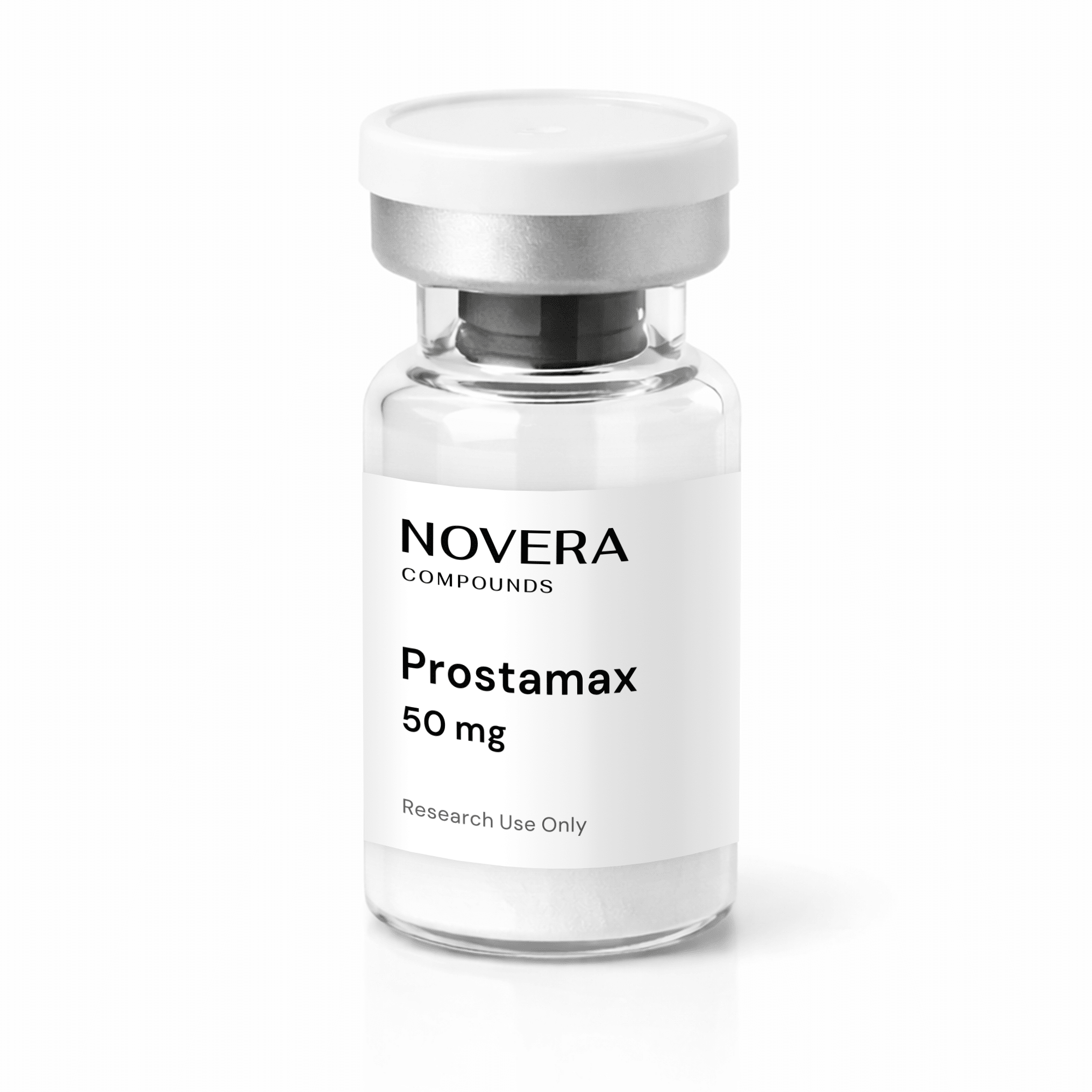
Prostamax (50mg) About This Product
Prostamax (50mg) is a tissue-associated peptide bioregulator designed for laboratory research involving prostate-related and immune-associated biological systems. It is a synthetic tetrapeptide composed of four amino acids: Lys-Glu-Asp-Pro (KEDP), with a molecular weight of 487.5 g/mol and molecular formula C₂₀H₃₃N₅O₉. The Prostamax peptide originates from peptide research programs examining short regulatory sequences involved in epigenetic and transcriptional regulation.
This product is supplied as a high-purity, lyophilized powder in a sealed research vial. Preclinical investigations examine Prostamax in experimental systems focused on chromatin organization, changes in cellular composition, and age-associated biological regulation, conducted exclusively in non-clinical laboratory settings. Identity and purity are typically confirmed using chromatographic techniques such as HPLC or UPLC, alongside mass spectrometry for molecular mass verification.
Researchers should refer to lot-specific certificates of analysis for detailed specifications.
Prostamax (50mg) Key Features and Benefits
- High-purity synthetic peptide suitable for controlled laboratory research
- Supplied as a 50 mg lyophilized powder in a sealed vial
- Defined tetrapeptide sequence (Lys-Glu-Asp-Pro, KEDP) with documented molecular specifications
- Classified as a tissue-associated peptide bioregulator
- Suitable for in vitro and preclinical research protocols
- Stable under recommended frozen storage conditions
- For laboratory research use only
Prostamax (50mg) Mechanism & Research Applications
Prostamax is an epigenetically active peptide investigated for its ability to modulate chromatin organization, transcriptional accessibility, and ribosomal activity in specialized cellular systems. Research focuses on how the peptide influences higher-order chromatin structure, particularly through heterochromatin decondensation, resulting in increased accessibility of genes typically repressed under condensed chromatin conditions.
Mechanistic studies characterize Prostamax as an agent capable of facilitating heterochromatin decondensation and enhanced transcriptional accessibility to previously inaccessible genomic regions. This chromatin remodeling is associated with downstream alterations in transcriptional output and ribosomal-associated protein synthesis.
Experimental work employs multiple research models, including organotypic tissue cultures that preserve three-dimensional tissue architecture, lymphocyte-based cell culture assays for immune-cell studies, and in-vivo rodent models used to evaluate molecular and epigenetic endpoints under controlled laboratory conditions. Research applications include investigation of peptide effects in prostate-derived epithelial and stromal cell cultures, lymphocyte populations, and immune-derived cellular systems.
Studies also examine how Prostamax influences ribosomal biogenesis and ribosomal density modulation, particularly in lymphocyte populations where chromatin accessibility changes correlate with altered transcriptional and translational capacity. Experimental inflammatory models and induced stress conditions are used to assess peptide-mediated effects on chromatin regulation, transcriptional readiness, and immune-cell responsiveness.
These findings are presented as mechanistic observations within defined experimental frameworks and do not imply translational, clinical, or applied outcomes.
Prostamax (50mg) Dosing & Observed Effects in Research
Research on Prostamax describes varied experimental dosing approaches depending on study design, model type, and exposure duration. Dosages are typically expressed in microgram or milligram ranges and applied in controlled laboratory or preclinical settings.
Observed effects in research are reported as changes in chromatin condensation patterns, transcriptional activity, ribosomal density, cellular proliferation markers, and immune-cell transcriptional readiness, measured under experimentally controlled conditions. These observations guide subsequent experimental design in laboratories that buy Prostamax peptide for controlled comparative analysis and do not represent clinical or therapeutic outcomes.
Prostamax (50mg) Storage, Safety & References
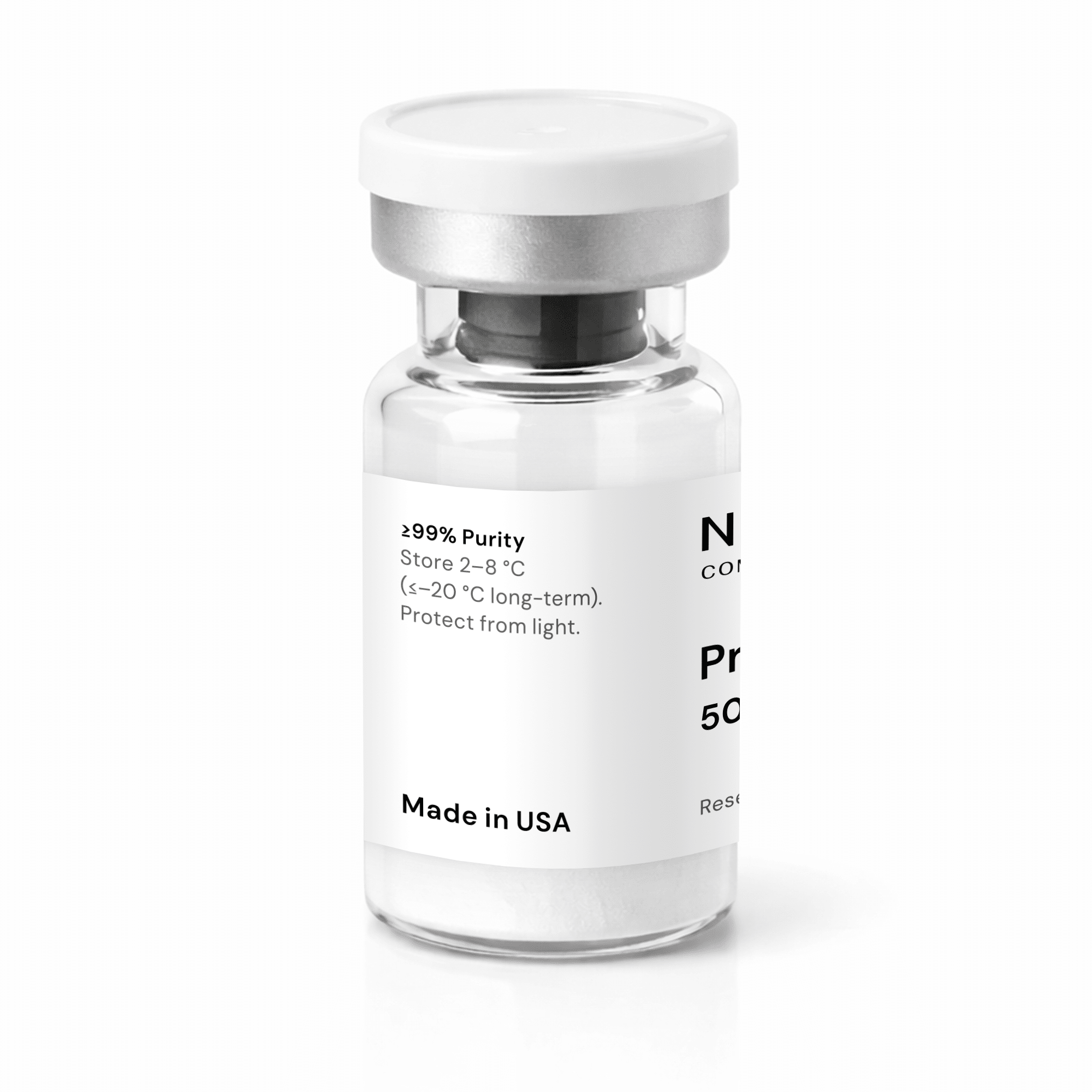
Prostamax (50mg) should be stored in its lyophilized form at –20°C or lower, protected from light and moisture. After reconstitution, solutions should be prepared using sterile laboratory techniques and stored according to institutional research protocols, with care taken to avoid repeated freeze–thaw cycles.
This product is provided strictly as a laboratory research reagent for use by qualified personnel in controlled experimental systems. Laboratories that order Prostamax peptide should follow all applicable safety, handling, and regulatory guidelines.
References
https://pubmed.ncbi.nlm.nih.gov/19830585
https://pubmed.ncbi.nlm.nih.gov/12374906
https://pmc.ncbi.nlm.nih.gov/articles/PMC7716987
Compliance Notice
This product is intended for laboratory research use only and is not approved for human or veterinary use.