




What Are The Purported Benefits Of Retatrutide 20mg?
Retatrutide (also called as Retatrutide acetate, LY3437943) is a next-generation metabolic peptide distinguished by its triple-agonist mechanism targeting GLP-1, GIP, and glucagon receptors simultaneously. This multi-receptor activation differentiates retatrutide from monotherapy and dual-agonist compounds, positioning it as a significant research tool for investigating metabolic disorders.
- Weight Loss. As a weight loss and metabolic peptides, clinical trials demonstrate substantial and sustained results. The Phase 3 TRIUMPH-4 trial (68 weeks) achieved average weight reductions of 28.7% at the 12 mg dose. Phase 2 data showed comparable efficacy, with participants receiving 12 mg losing approximately 24% of baseline body weight over 48 weeks. These outcomes persist across populations with and without type 2 diabetes.
- Metabolic Improvements. Retatrutide shows marked enhancements in insulin sensitivity markers. Fasting insulin levels decreased by up to 71%, while hemoglobin A1c (HbA1c) reductions reached 2.2% in type 2 diabetes participants. Triglycerides fell 40–50 mg/dL, and systolic blood pressure declined 5–8 mm Hg across treatment groups.
- Liver Health. Research indicates profound reductions in hepatic steatosis. In Phase 2 studies, more than 85% of participants receiving 8 mg or 12 mg doses achieved normalization of liver fat (<5% content) by week 48. Mean relative liver fat reduction reached 82.4% at 24 weeks, suggesting potential disease-modifying effects for metabolic dysfunction-associated steatotic liver disease (MASLD).
- Cardiometabolic Benefits. Beyond weight reduction, retatrutide demonstrated improvements in cardiovascular risk markers. In Phase 2 trials, 30–41% of participants discontinued antihypertensive medications during treatment. Total cholesterol decreased 20–34 mg/dL, while low-density lipoprotein (LDL) cholesterol fell 11–24 mg/dL dose-dependently.
- Emerging Cancer Research. Preclinical studies suggest retatrutide may modulate cancer-related metabolic pathways. In mouse models of pancreatic and lung cancer, retatrutide reduced tumor engraftment rates and suppressed tumor growth through immune reprogramming mechanisms. These findings remain investigational.
What Is The Chemical Makeup Of Retatrutide 20mg?
Retatrutide is a synthetic 39-amino acid peptide engineered to activate GLP-1, GIP, and glucagon receptors with a distinctive binding profile.
Molecular Specifications:
- Molecular Weight: 4845.444 g/mol
- Molecular Formula: C₂₂₇H₃₅₄N₄₈O₆₉
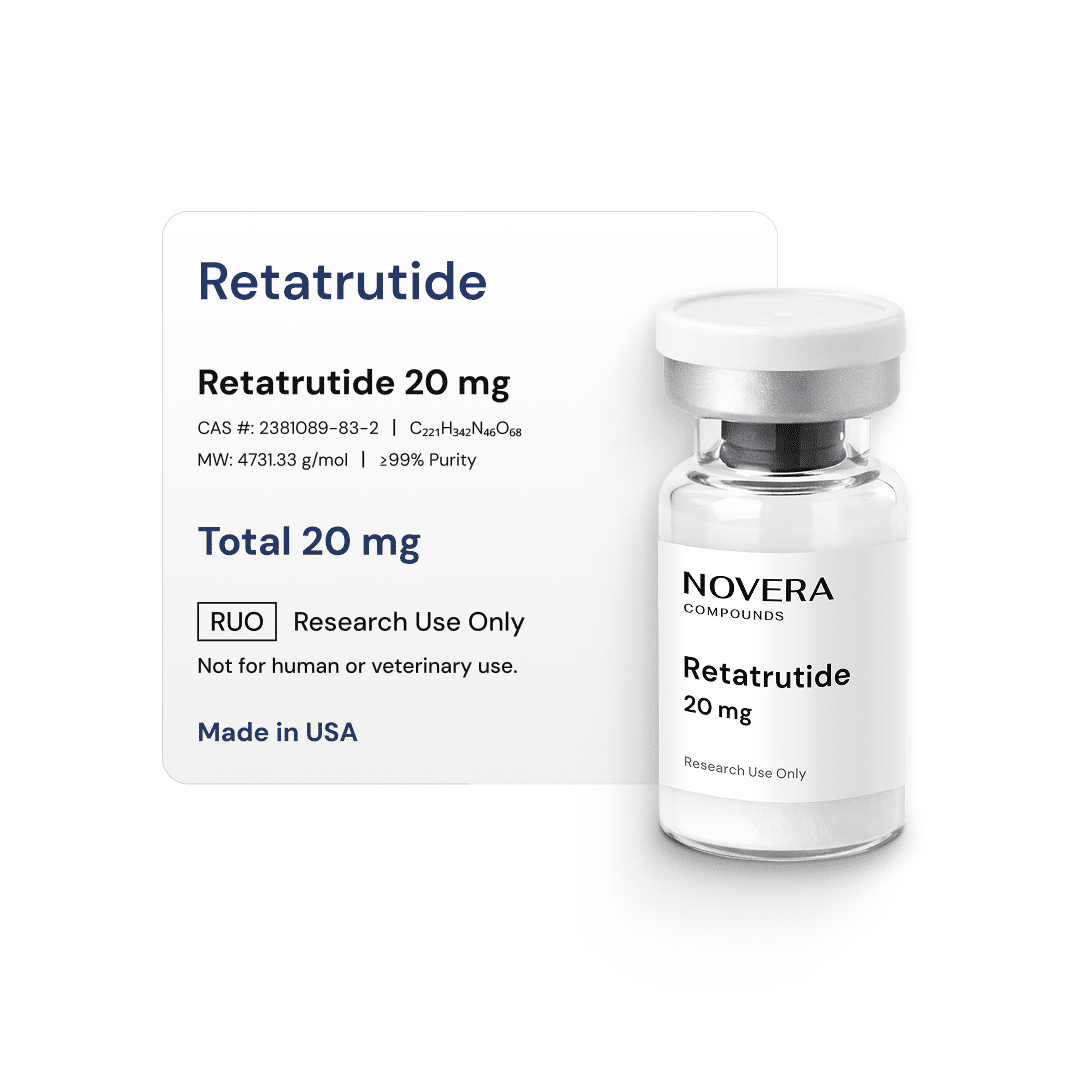
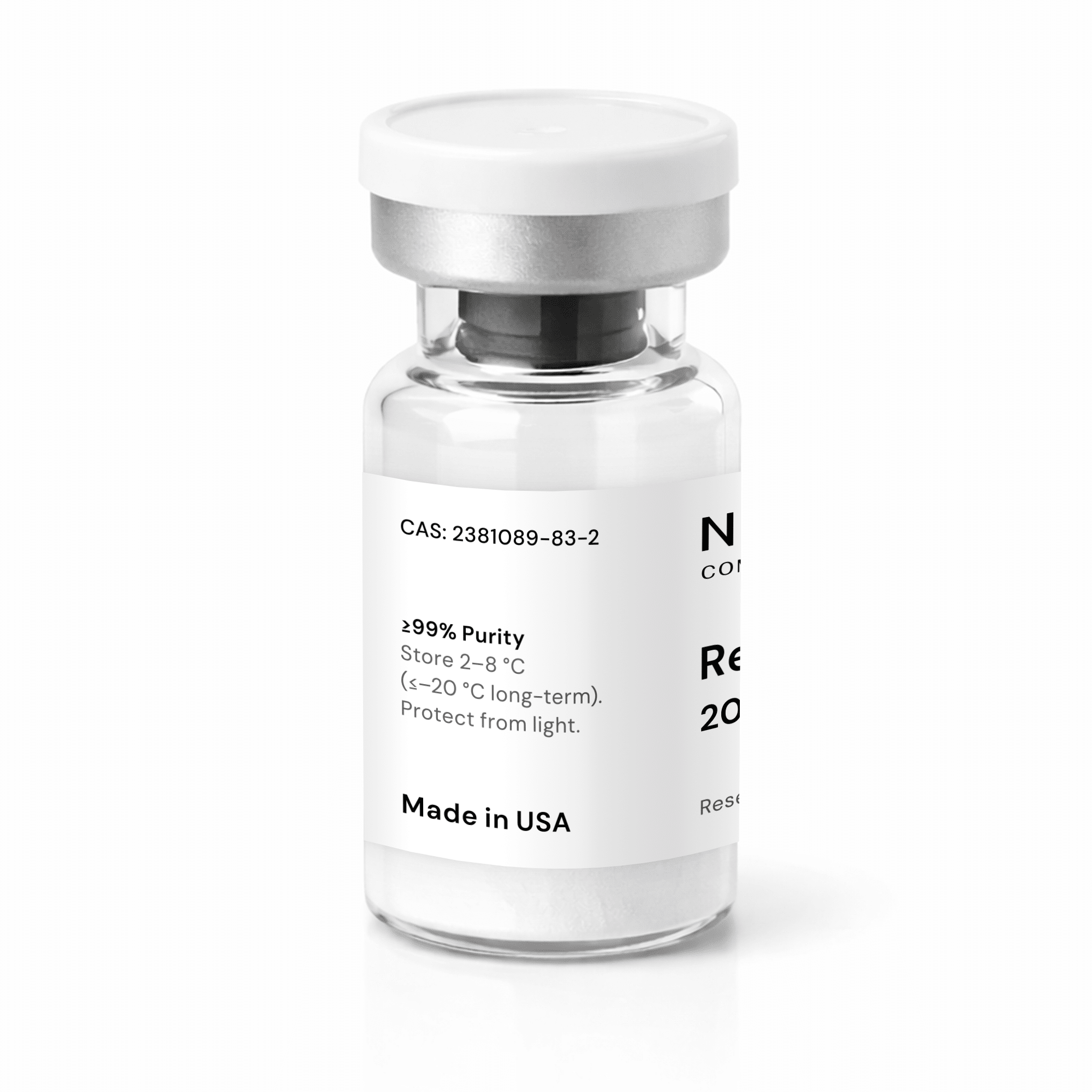
- CAS Number: 2381089-83-2
- Peptide Sequence: H-Tyr-Aib-Glu-Gly-Thr-Phe-Thr-Ser-Asp-Tyr-Ser-Ile-Aib-Leu-Asp-Val-Ile-Ala-Gln-Val-Glu-Leu-Leu-Leu-Trp-Leu-Val-Ile-Ser-Gly-Leu-Gln-Arg-Leu-Gly-Gly-Gly-Pro-Pro-Pro-Ser-NH2
- Structure: Single peptide conjugated to a C20 fatty diacid moiety for extended half-life (approximately 6 days), enabling once-weekly administration
Receptor Potency Profile. Retatrutide exhibits highest potency at the GIP receptor (8.9-fold greater than endogenous GIP), with moderate activation of the GLP-1 receptor (0.4-fold) and lower, yet functional, glucagon receptor activity (0.3-fold). This calibrated potency pattern differentiates retatrutide from GLP-1 monotherapies and GLP-1/GIP dual agonists, contributing to its broad metabolic effects.
Solubility: Retatrutide peptide demonstrates high aqueous solubility at physiological pH, rendering it suitable for injectable research formulations.
What Does Scientific Research Say About Retatrutide 20mg?
Those who plan ot buy retatrutide should know that it has progressed through rigorous clinical development with consistent, dose-dependent efficacy.
Phase 3 Trials (TRIUMPH-4). The 68-week, randomized, double-blind trial enrolled 445 adults with obesity or overweight and knee osteoarthritis. Participants receiving 9 mg and 12 mg doses met all primary and key secondary endpoints. Average weight loss reached 28.7% at 12 mg, with significant improvements in physical function and joint pain (75% reduction on the WOMAC pain scale).
Liver Health. Phase 2 MASLD substudy data demonstrated that retatrutide reduced mean relative liver fat by 82.4% at 24 weeks (12 mg dose). Resolution of steatosis (<5% liver fat) was achieved by 86% of participants at 12 mg by week 48, substantially exceeding placebo (0% normalization).
Mechanism of Action. Retatrutide activates three distinct G-protein coupled receptors, triggering cAMP-mediated signaling that enhances postprandial insulin secretion, improves glucose-dependent nutrient sensing, and increases hepatic fatty acid oxidation. The glucagon component stimulates hepatic lipid metabolism, explaining superior liver fat reductions compared to GLP-1 or GLP-1/GIP monotherapies.
Safety and Tolerability. The most common adverse events are transient gastrointestinal disturbances (nausea, diarrhea, constipation, vomiting) occurring predominantly during dose escalation. Discontinuation rates due to adverse events were 12.2–18.2% across retatrutide groups versus 4% placebo. A dose-dependent dysesthesia signal emerged (8.8% at 9 mg; 20.9% at 12 mg versus 0.7% placebo), characterized by mild, transient abnormal sensations. Serious adverse events were rare.
Regulatory Status. As of January 2026, retatrutide for research remains investigational, undergoing Phase 3 trials. Seven additional Phase 3 readouts evaluating doses including a 4 mg maintenance formulation are expected through 2026.
What Are The Storage Conditions For Retatrutide 20mg?
Proper storage is critical to maintaining the peptide’s biological activity and peptide integrity, including the retatrutide 10 mg vial.
Lyophilized (Powder) Form:
- Long-term Storage: −20°C or lower; −80°C preferred for extended storage
- Short-term Storage: 2–8°C acceptable in sealed, desiccated vials
- Room Temperature: During transport only; potency declines to ~60% by day 35 at 20–25°C
- Store in amber or opaque vials to protect from light
Reconstituted Solutions:
- Refrigerated Storage: 2–8°C for 1–2 weeks; maintain approximately 98–100% potency through day 42
- Freezing: Not recommended; repeated freeze-thaw cycles compromise peptide structural integrity
General Handling:
- Maintain dry conditions; protect from moisture and light exposure
- Avoid room temperature storage for extended periods
- Use aseptic technique with reconstituted solutions
- Inspect visually before use; discard if cloudiness or discoloration is present
- For retatrutide peptide research applications, proper cold-chain management ensures consistent, reproducible results
Are you looking to buy Retatrutide online?
If you’re looking to order retatrutide online at wholesale prices, contact Medical Spa RX for guidance on how to do so.
This product is supplied strictly for laboratory research use only and is not approved for human or veterinary administration. It is not intended for diagnostic, therapeutic, or clinical applications. Any reference to biological activity or potential effects is based solely on preclinical or in-vitro findings and should not be interpreted as validated clinical outcomes. Researchers are responsible for ensuring proper handling, storage, and disposal in accordance with institutional, federal, and international guidelines. By purchasing or using this material, the buyer confirms that they are a qualified researcher and that the product will be used exclusively in controlled research settings compliant with all applicable regulations.
Sources
https://www.sciencedirect.com/science/article/abs/pii/S0014299924007854
https://www.nature.com/articles/s41591-024-03018-2
https://www.sciencedirect.com/science/article/abs/pii/S0014299924007854
https://pmc.ncbi.nlm.nih.gov/articles/PMC11536522
https://www.tctmd.com/news/dramatic-weight-loss-cardiometabolic-improvement-retatrutide