




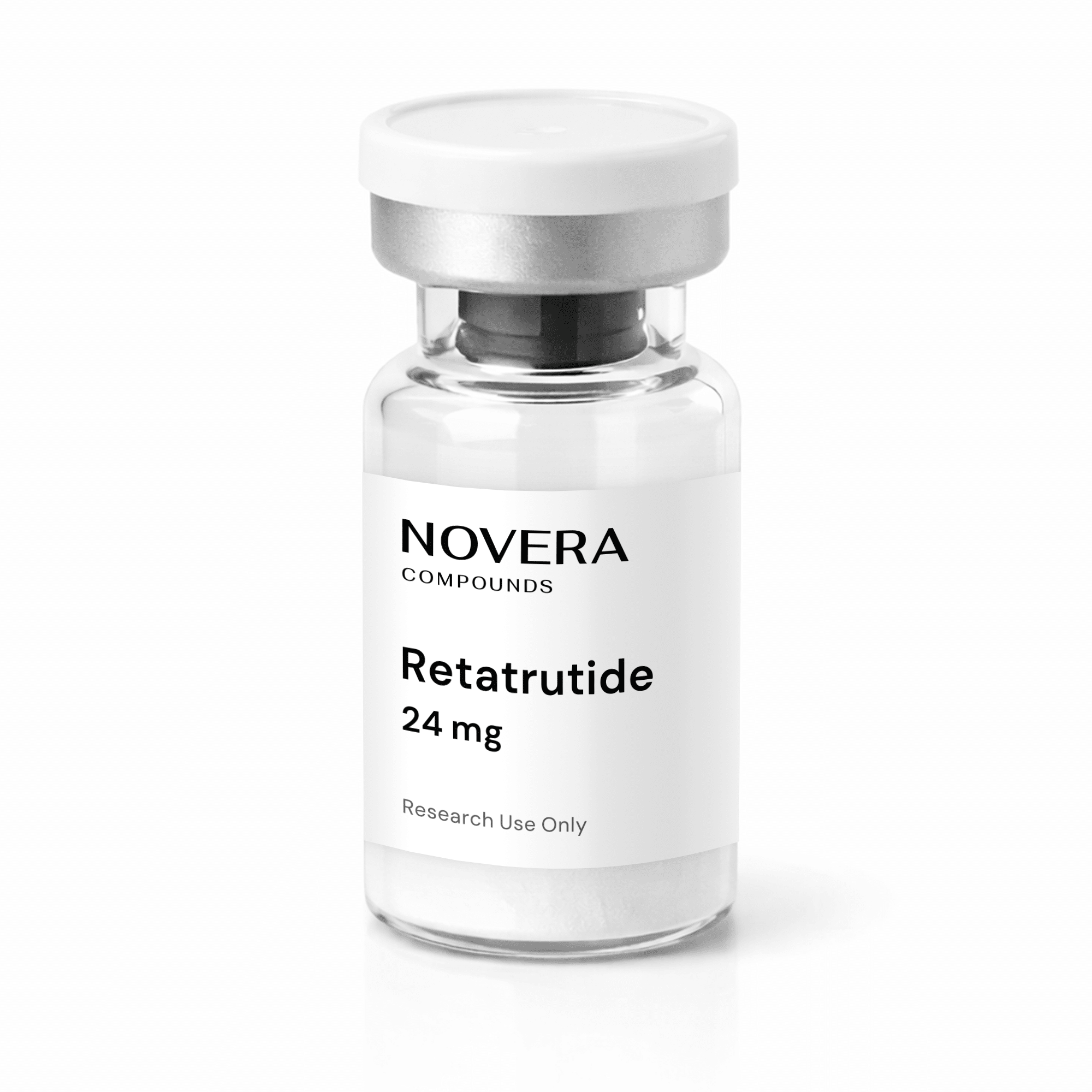
What Are the Purported Benefits of Retatrutide (24 mg)?
Retatrutide is an investigational peptide developed by Eli Lilly and currently undergoing Phase 3 clinical trials. It has attracted attention for its “triple-agonist” mechanism that targets GLP-1, GIP, and glucagon receptors simultaneously. This multi-pathway approach positions retatrutide peptide as a next-generation compound in metabolic health research.
Note: Phase 2 clinical trials tested doses up to 12 mg, achieving up to 24.2% average weight loss. The 24 mg dose referenced in some materials is investigational only and not yet supported by published data.
Potential benefits observed in clinical studies include:
- Significant Weight Reduction: In Phase 2 trials, the highest tested dose (12 mg) was associated with average weight loss of up to 24.2% over 48 weeks.
- Improved Metabolic And Liver Health: Reported substantial reductions in liver fat, with many participants reaching normal hepatic fat levels.
- Enhanced Glycemic Control: Demonstrated glucose-lowering effects and improved insulin sensitivity, supporting ongoing research in type 2 diabetes.
- Appetite Regulation And Energy Balance: Glucagon activity may increase energy expenditure, while GLP-1 and GIP signaling may slow digestion and reduce appetite.
What Is the Chemical Makeup of Retatrutide (24 mg)?
The Retatrutide peptide, also known by the development code LY3437943, is a long-acting synthetic peptide engineered for sustained receptor activation and once-weekly administration.
- Chemical formula: C₂₂₇H₃₅₄N₄₈O₆₉
- Molecular weight: 4845.444 g/mol
- Amino acid length: 39 residues
- Peptide sequence: H-Tyr-Aib-Glu-Gly-Thr-Phe-Thr-Ser-Asp-Tyr-Ser-Ile-Aib-Leu-Asp-Val-Ile-Ala-Gln-Val-Glu-Leu-Leu-Leu-Trp-Leu-Val-Ile-Ser-Gly-Leu-Gln-Arg-Leu-Gly-Gly-Gly-Pro-Pro-Pro-Ser-NH2
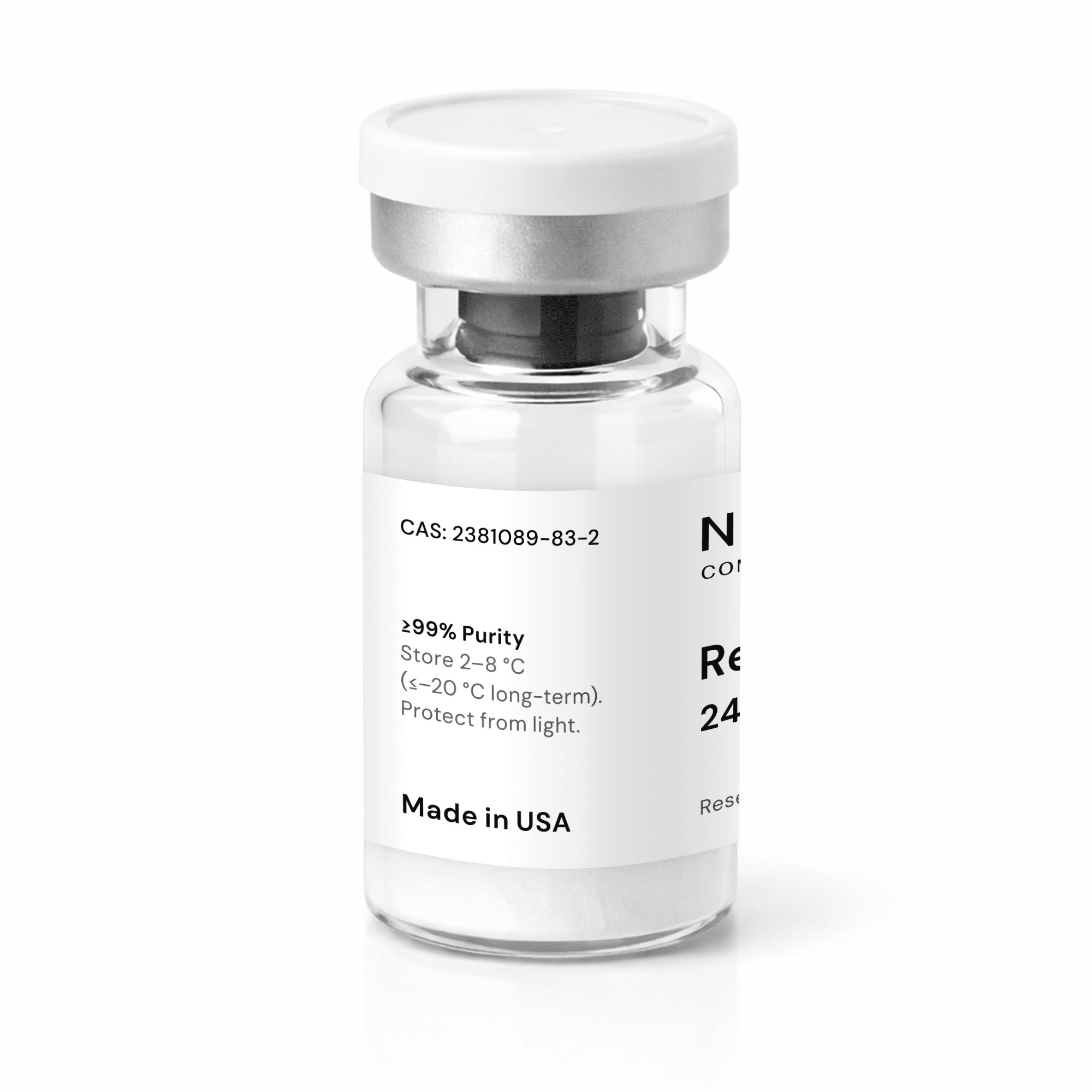
- CAS Number: 2381089-83-2
Mechanism of Action
Retatrutide functions as a triple hormone receptor agonist, activating:
- GLP-1 (glucagon-like peptide-1)
- GIP (glucose-dependent insulinotropic polypeptide)
- GCGR (glucagon receptor)
This combination is being studied for its effects on body weight, glucose control, and resting energy expenditure.
What Does Scientific Research Say About Retatrutide (24 mg)?
The most impactful findings to date come from the Phase 2 obesity trial (NCT04881760), published in The New England Journal of Medicine in June 2023. The TRIUMPH Phase 3 program, which includes TRIUMPH-1, TRIUMPH-2, TRIUMPH-3, and TRIUMPH-4, is currently evaluating long-term cardiometabolic outcomes.
Key Research Insights
- Efficacy: Participants receiving 12 mg of retatrutide achieved an average weight loss of up to 24.2%, approaching bariatric surgery benchmarks.
- Safety Profile: Reported side effects were mostly gastrointestinal (nausea, vomiting, diarrhea), consistent with other incretin therapies.
- Cardiometabolic Monitoring: A mild, transient increase in resting heart rate (5–10 bpm) was observed, peaking around week 24, likely due to glucagon receptor activation and elevated energy expenditure.
- Ongoing Research: Phase 3 trials aim to assess cardiovascular and renal endpoints, including risk reduction for stroke, myocardial infarction, and chronic kidney disease.
Researchers interested to order retatrutide peptide should reference these findings and observe appropriate regulatory protocols.
What Are the Storage Conditions for Retatrutide (24 mg)?
For routine handling, keep vials at 2–8 °C and return them promptly to refrigerated storage after each use to minimize cumulative room-temperature exposure. For long-term retention, store at <=–20 °C and avoid unnecessary temperature cycling (repeated warming/cooling), which can accelerate degradation in some peptide preparations. Protect from light during storage and handling (for example, keep vials in original packaging or a light-blocking container) to reduce light-driven degradation risk.
Are you looking to buy Retatrutide (24 mg) online?
If you’re looking to order Retatrutide (24 mg) online at wholesale prices, contact Medical Spa RX for guidance on how to do so.
This product is supplied strictly for laboratory research use only and is not approved for human or veterinary administration. It is not intended for diagnostic, therapeutic, or clinical applications. Any reference to biological activity or potential effects is based solely on preclinical or in-vitro findings and should not be interpreted as validated clinical outcomes. Researchers are responsible for ensuring proper handling, storage, and disposal in accordance with institutional, federal, and international guidelines. By purchasing or using this material, the buyer confirms that they are a qualified researcher and that the product will be used exclusively in controlled research settings compliant with all applicable regulations.
Sources
https://pubmed.ncbi.nlm.nih.gov/37366315
https://www.nature.com/articles/s41591-024-03018-2
https://pubmed.ncbi.nlm.nih.gov/37385280