




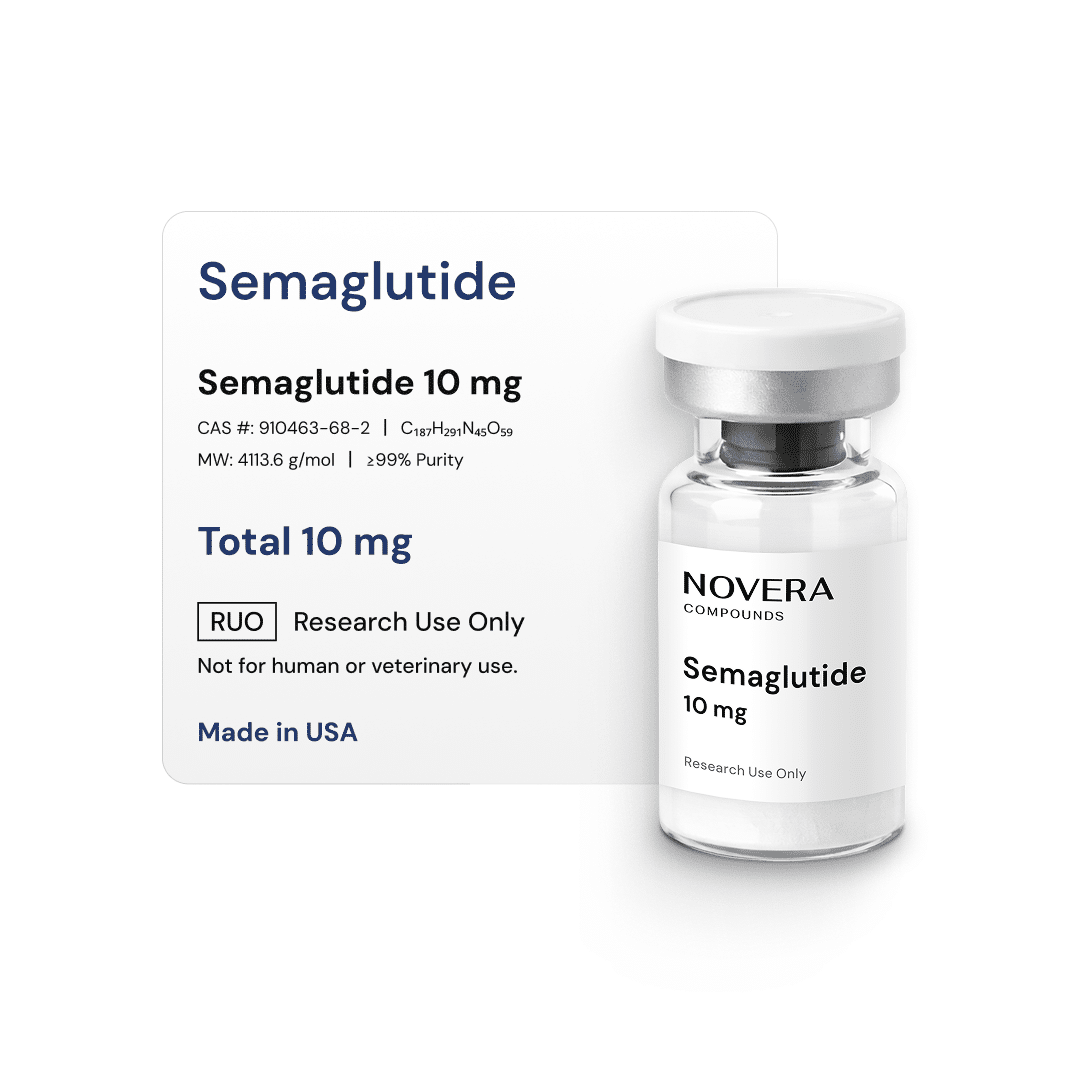
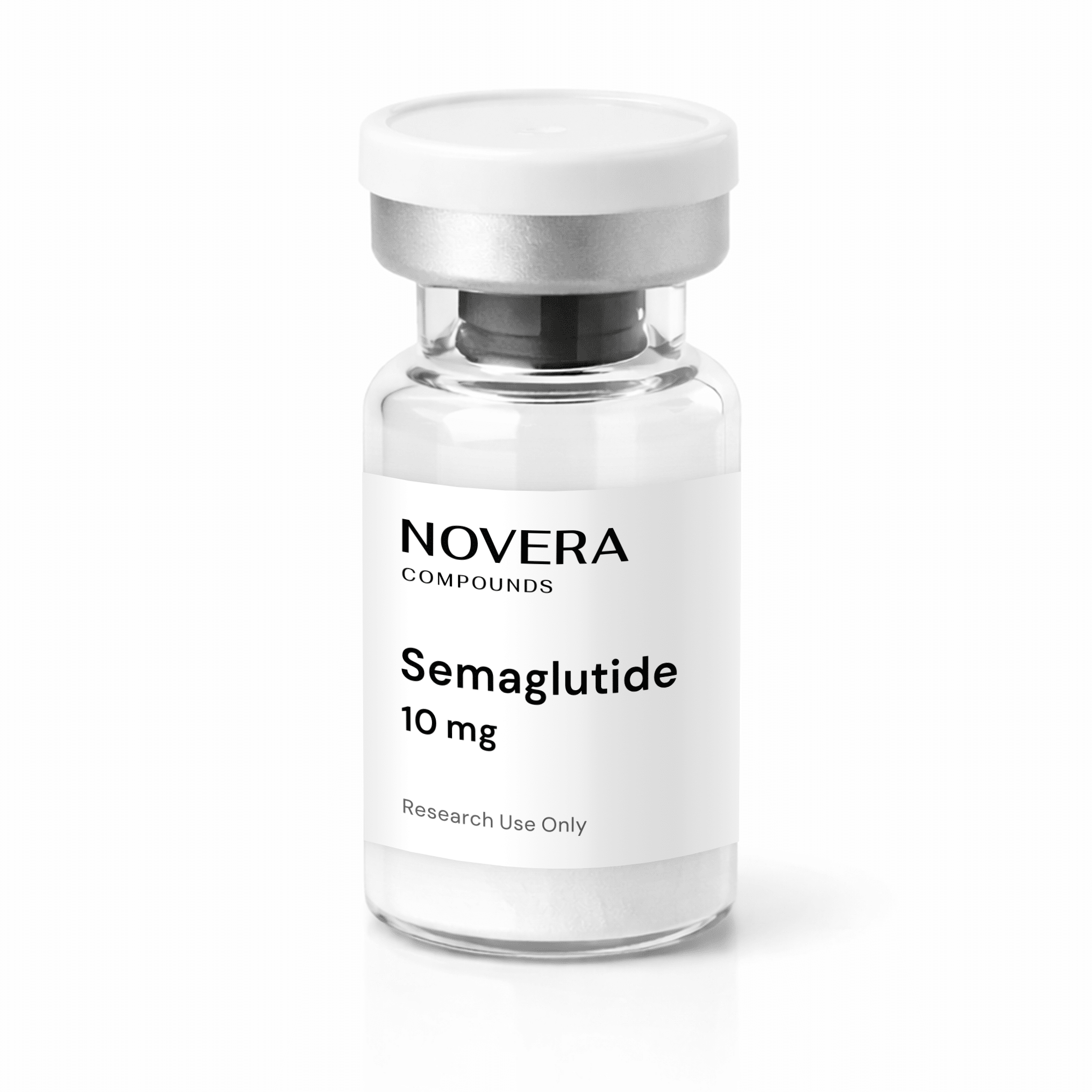
Semaglutide 10mg – About This Product
Semaglutide is a synthetic GLP-1 peptideproduced using recombinant peptide synthesis techniques and designed to structurally mimic native human glucagon-like peptide-1(GLP-1). It shares approximately 94% sequence homology with endogenous GLP-1 and incorporates targeted amino acid modifications that enhance molecular stability and prolong biological activity.
These include the substitution of aminoisobutyric acid (Aib) at position 8 to reduce enzymatic degradation and site-specific acylation at lysine 26 with a C18 fatty diacid chainto promote albumin binding. The semaglutide GLP-1 peptide has a molecular weight of approximately 4113.6 g/mol and is supplied as a lyophilized, white to off-white powder with >95% purity as confirmed by high-performance liquid chromatography (HPLC).
Furthermore, this formulation is commonly referenced in research literature as the semaglutide peptide and is supplied in sealed vial format for controlled laboratory use. Semaglutide 10mg has been studied in experimental settings for its role in metabolic regulation, gastrointestinal signaling, and neuroendocrine research pathways.
Semaglutide 10mg – Key Features and Benefits
This semaglutide 10 mg peptide is designed for consistent laboratory use across metabolic, endocrine, and neurobiological studies.
- High Purity: >95% purity verified by HPLC, ensuring reproducible results across research applications.
- Hygroscopic Formulation: Supplied as a white to off-white hygroscopic powder requiring appropriate storage conditions, with verified stability under controlled temperature and humidity protocols.
- Dose-Escalation Flexibility: The 10mg vial format reduces the need to combine multiple lower-dose vials in studies requiring larger quantities or stepwise dose escalation protocols.
- Enhanced Stability: The dual modifications—DPP-4 resistance via Aib8 and C18 albumin-binding via Lys26 acylation—confer resistance to enzymatic breakdown and extend circulating half-life.
- Research Applications: Studied for effects on glucose-dependent insulin secretion, glucagon regulation, appetite signaling, gastric motility, and hypothalamic appetite-regulatory pathways.
- Batch Consistency: Synthetic peptide production ensures reliable batch-to-batch consistency for standardized research protocols.
- For Laboratory Research Use Only: Researchers looking to buy semaglutide may use the 10mg version for expanded dose-range experiments.
Semaglutide 10mg – Mechanism & Research Applications
Semaglutide is a long-acting GLP-1 analogthat has been investigated across multiple biological systems relevant to metabolic research. In laboratory and controlled research environments, semaglutide for research has been examined for the following applications:
- Metabolic Regulation: Studied for its influence on glucose-dependent insulin secretion and glucagon suppression in experimental models
- Appetite and Energy Balance: Investigated for effects on central appetite signaling pathways involved in satiety and caloric intake
- Gastrointestinal Function: Evaluated for its impact on gastric emptying rates and postprandial nutrient absorption
- Neuroendocrine Signaling: Explored for interactions between peripheral metabolic signals and central nervous system regulation
- Lipid and Energy Metabolism: Assessed in studies examining postprandial lipid handling and overall energy homeostasis
These research applications are based on controlled experimental models and do not represent approved therapeutic indications.
Semaglutide 10mg – Dosing & Observed Effects in Research
Dosing information for semaglutide in research settings is derived from published preclinical and clinical investigation protocols.
- In animal studies, semaglutide has been administered at doses ranging from 1 to 100 nmol/kg, most commonly via subcutaneous or intraperitoneal routes, to evaluate metabolic and neuroendocrine endpoints. These studies focus on dose-dependent biological responses rather than treatment outcomes.
- In controlled human research protocols, semaglutide has been evaluated using gradual dose-escalation designs. Oral and injectable formulations have included intermediate investigational levels such as 10mg when assessing tolerability, pharmacokinetics, and physiological response trends.
Notably, reported observations in research contexts include changes inglucose handling, delayed gastric emptying during early postprandial phases, andmodulation of appetite-related biomarkers. All findings remain limited to structured research environments and are not indicative of approved clinical use.
Semaglutide 10mg – Storage, Safety & References
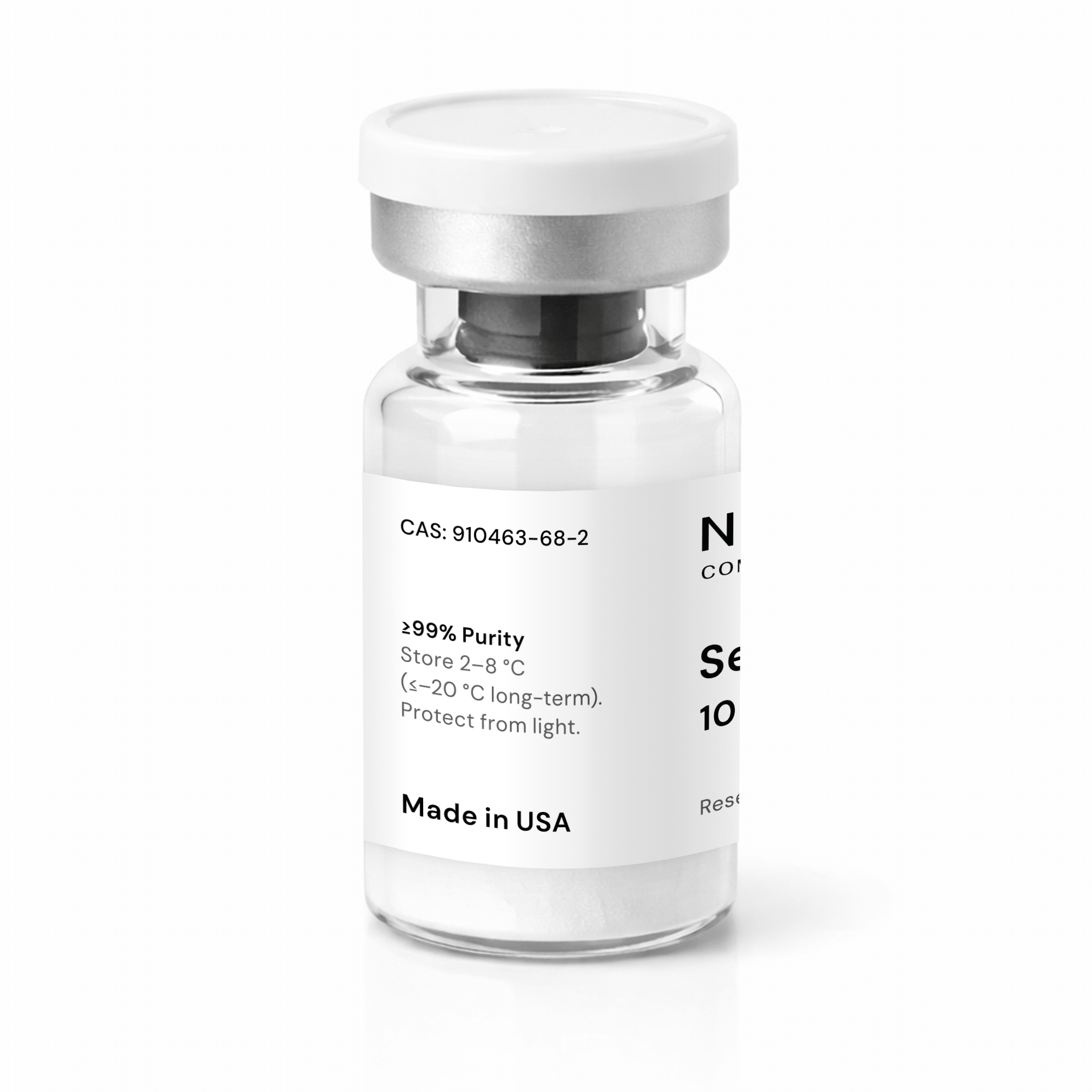
Semaglutide 10mg should be stored in its original, sealed vial at 2–8°C, protected from light and moisture to preserve peptide integrity. Due to its hygroscopic nature, exposure to ambient humidity should be minimized during handling. For long-term preservation, storage at –20°C is acceptable when consistent temperature control is maintained.
Once reconstituted, solutions should be kept refrigerated at 2–8°C and used within the stability period defined by the research protocol. Repeated freeze–thaw cycles should be avoided, as they may compromise peptide structure.
Moreover, standard laboratory personal protective equipment, including gloves and eye protection, should be used when handling the material. Disposal of unused peptide or materials should follow institutional biosafety procedures and local regulatory requirements.
References
https://d-nb.info/1240995695/34
https://pmc.ncbi.nlm.nih.gov/articles/PMC11215664
https://www.mdpi.com/2076-3271/13/4/265
https://pubmed.ncbi.nlm.nih.gov/40279144
https://pdb101.rcsb.org/global-health/diabetes-mellitus/drugs/incretins/drug/semaglutide/semaglutide
https://www.utsouthwestern.edu/newsroom/articles/year-2025/sept-semaglutide.html
https://jamanetwork.com/journals/jama/fullarticle/2657376
https://pmc.ncbi.nlm.nih.gov/articles/PMC11674233
Compliance Notice
This product is intended for laboratory research use only and is not approved for human or veterinary use.