



Semaglutide (20 mg) About This Product
The Semaglutide peptide is a synthetic, long-acting analog of human glucagon-like peptide-1 (GLP-1) supplied as a lyophilized powder for laboratory and preclinical research. It is a 31-amino-acid linear peptide engineered with targeted substitutions and a C18 fatty diacid side chain conjugated to the ε-amino group of Lys26, a modification studied for its role in enhancing metabolic stability and prolonging systemic persistence in research models. The lipid moiety is attached via a γ-glutamic acid spacer and two 8-amino-3,6-dioxaoctanoic acid (Ado) linkers, enabling reversible albumin binding in experimental systems.
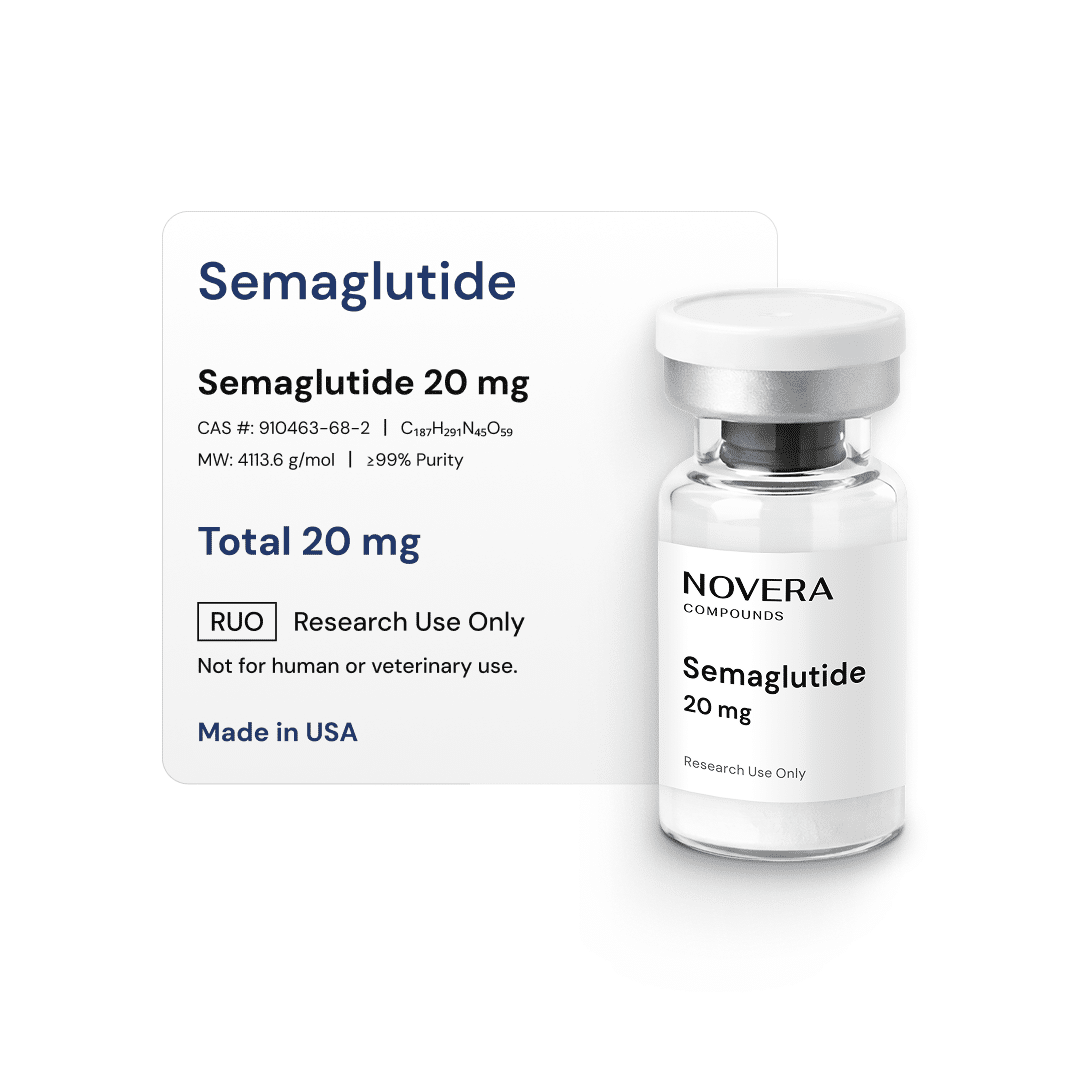
Semaglutide has an empirical formula of C₁₈₇H₂₉₁N₄₅O₅₉ and an average molecular weight of approximately 4,113.6 g/mol. Research-grade material is typically manufactured to ≥98% purity (HPLC), with identity confirmed by LC-MS and peptide mapping.
The peptide incorporates two key structural modifications: (i) substitution of alanine with 2-aminoisobutyric acid (Aib) at position 8, which confers resistance to dipeptidyl peptidase-4 (DPP-4) degradation and extends peptide stability in vivo; and (ii) substitution of lysine with arginine at position 34, a modification associated with semi-recombinant manufacturing strategies used in advanced peptide production.
Across nonclinical investigations and clinical development programs, semaglutide has been studied for its effects on glucose regulation, appetite signaling, body-weight dynamics, and cardiometabolic biomarkers in experimental models of metabolic disease. Laboratories that buy semaglutide peptide commonly select the 20 mg vial format to support preparation of a wide range of experimental concentrations for in vitro assays and animal studies.
Semaglutide (20 mg) Key Features and Benefits
- Defined GLP-1 analog structure: Synthetic 31-amino-acid GLP-1 receptor agonist with Lys26 acylation via γ-glutamic acid and Ado linkers
- High analytical quality: Typically ≥98% purity verified by HPLC, with structural confirmation by LC-MS
- 20 mg research vial: Supports dose-ranging, formulation, and comparative pharmacology studies
- Consistent physicochemical profile: Molecular weight, sequence, and lipid side-chain architecture align with materials used in nonclinical and clinical research
- Broad research relevance: Studied in glucose homeostasis, appetite regulation, gastric motility, and body-weight models
- Stable lyophilized format: Freeze-dried presentation supports controlled storage and transport
- Research-focused supply: Frequently selected by institutions that order semaglutide peptide for metabolism and pharmacology research
For laboratory research use only. Not approved or intended for human or veterinary administration.
Semaglutide (20 mg) Mechanism & Research Applications
Semaglutide is a selective GLP-1 receptor agonist, designed to mimic and extend the activity of endogenous GLP-1, an incretin hormone involved in metabolic signaling. In experimental systems, it has been examined for its influence on multiple physiological processes relevant to energy balance:
- Glucose regulation: Studied for glucose-dependent stimulation of insulin secretion and suppression of glucagon release
- Gastrointestinal function: Investigated for delayed gastric emptying and altered gastrointestinal motility
- Energy intake and body weight: Evaluated in large phase 2 and 3 research programs, including the STEP (SemaglutidE Treatment Effect in People with obesity) trial series
- Cardiometabolic markers: Examined for changes in blood pressure, lipid parameters, and inflammatory biomarkers
- Renal and hepatic endpoints: Explored as secondary or exploratory outcomes in selected studies
Within laboratory environments, Semaglutide (20 mg) is commonly used for:
- In vitro GLP-1 receptor signaling assays
- Pancreatic islet and β-cell biology studies
- Preclinical models of food intake and body-weight regulation
- Formulation, stability, and delivery-technology research
All applications remain investigational and are conducted under controlled research conditions.
Semaglutide (20 mg) Dosing & Observed Effects in Research
The following information summarizes published research protocols and clinical development data and is provided strictly for scientific context.
Injectable Semaglutide (Once-Weekly)
- Initiation at 0.25 mg weekly, with stepwise escalation to 0.5 mg, 1.0 mg, 2.0 mg, and up to 2.4 mg in obesity studies
- Dose-dependent changes in glycemic markers and body weight were observed, with increased gastrointestinal events at higher exposures
Oral Semaglutide (Once-Daily)
- Programs evaluated 3 mg, 7 mg, and 14 mg daily doses
- Escalation strategies studied to improve gastrointestinal tolerability
Higher Oral Dose Exploration
- Phase 2 dose-escalation studies examined oral semaglutide with maximum doses reaching 40 mg daily using variable escalation strategies (slow, standard, and fast). These studies characterized dose-dependent efficacy and tolerability trends.
- The 20 mg dose served as a mid-to-high exposure level within these escalation protocols, supporting subsequent phase 3 PIONEER trial development focusing on fixed 3, 7, and 14 mg maintenance doses.
Nonclinical Observations
- Repeat-dose animal studies reported reduced food intake and body-weight changes consistent with GLP-1 receptor agonism
- Rodent studies identified dose-dependent thyroid C-cell hyperplasia and embryo-fetal toxicity at relevant exposures, informing laboratory hazard assessments. Notably, the human relevance of thyroid C-cell proliferation observed in rodents remains undetermined. To date, no thyroid C-cell malignancies or increased thyroid cancer incidence have been reported in human clinical populations receiving semaglutide across multiple randomized controlled trials.
No standardized dosing exists outside controlled research settings.
Semaglutide (20 mg) Storage, Safety & References
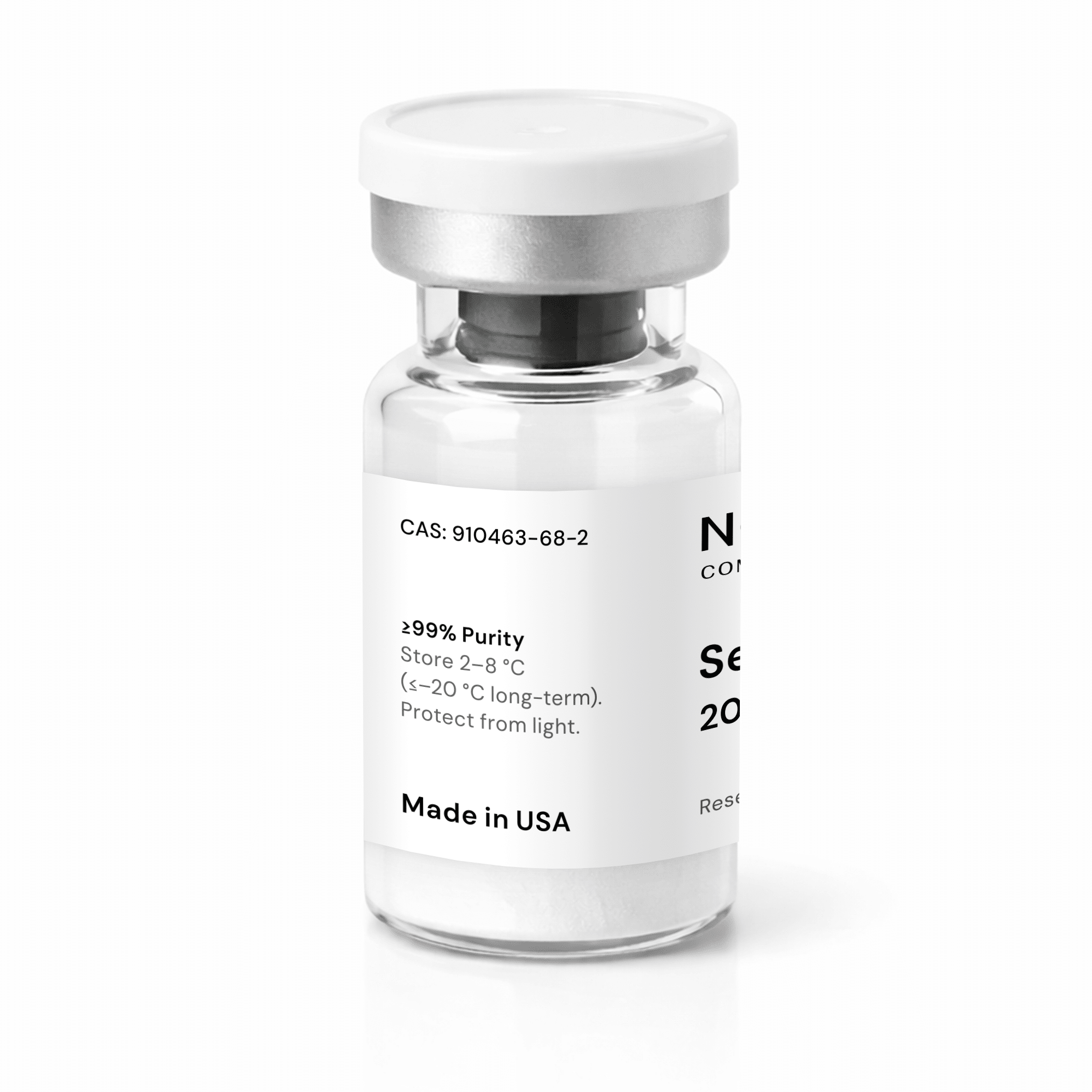
- Store unreconstituted lyophilized powder at ≤ –20°C, protected from light and moisture
- Short room-temperature exposure during handling is acceptable if humidity is minimized
After reconstitution:
- Store solutions at 2–8°C, protected from light
- Reconstituted semaglutide is typically stable for up to 28 days when prepared with bacteriostatic water, or up to 24 hours when prepared with sterile water
- Researchers should consult lot-specific stability data and follow protocol-defined requirements for their specific applications
- Avoid repeated freeze–thaw cycles to preserve peptide integrity
Semaglutide is a potent bioactive research compound. Appropriate personal protective equipment and institutional biosafety procedures should be followed during handling, use, and disposal.
References
https://pmc.ncbi.nlm.nih.gov/articles/PMC8736331
https://www.frontiersin.org/journals/endocrinology/articles/10.3389/fendo.2019.00155/full
https://www.nature.com/articles/s41591-022-02026-4
https://pmc.ncbi.nlm.nih.gov/articles/PMC12642005
https://www.frontiersin.org/journals/nutrition/articles/10.3389/fnut.2024.1398059/full
https://pmc.ncbi.nlm.nih.gov/articles/PMC6388990
Compliance Notice
This product is intended for laboratory research use only and is not approved for human or veterinary use.