




What Are The Purported Benefits Of Semaglutide 2mg?
Semaglutide 2mg (also known as NN9535) is an established GLP-1 receptor agonist with an extensive clinical evidence base supporting its efficacy in managing type 2 diabetes, weight management, and cardiovascular risk reduction. As a long-acting semaglutide GLP-1 peptide, it delivers metabolic benefits beyond appetite suppression, making it a comprehensive metabolic therapy.
- Glycemic Control. Semaglutide improves insulin secretion while suppressing glucagon, resulting in consistent reductions in fasting and postprandial glucose levels. Clinical trials demonstrate HbA1c reductions of 1.5–1.8%, with the majority of participants achieving glycemic targets below 7% without hypoglycemia or weight gain.
- Weight Loss. As a weight loss and metabolic peptides, clinical evidence from the STEP trials (68 weeks, non-diabetic populations) demonstrated substantial weight loss ranging from 14.9–17.4% at the 2.4 mg dose. Diabetic populations showed similar or slightly lower weight reductions, with weight loss sustained beyond one year. These results position semaglutide peptide as a valuable research candidate for obesity management.
- Cardiovascular Protection. The SUSTAIN-6 and PIONEER-6 cardiovascular outcome trials demonstrated that semaglutide reduces major adverse cardiovascular events (MACE) by 24% compared to placebo. Benefits included reduced risk of non-fatal stroke and improvements in lipid profiles and blood pressure. These cardioprotective effects occur alongside metabolic improvements.
- Liver Health. Meta-analyses confirm that semaglutide significantly reduces hepatic steatosis in metabolic-associated fatty liver disease (MAFLD). Over 80% of participants achieved ≥30% reductions in liver fat content, with significant resolution of steatosis and improved liver enzymes. The FDA approved semaglutide for metabolic-associated steatohepatitis (MASH) in August 2025.
- Cognitive and Neuroprotective Effects. Recent observational studies link semaglutide use to a 40–70% lower risk of Alzheimer’s disease diagnosis compared with other antidiabetic medications. Preclinical evidence demonstrates reduced amyloid-beta plaques and neuroinflammation. Two Phase 3 clinical trials evaluating semaglutide for cognitive outcomes are currently ongoing.
What Is The Chemical Makeup Of Semaglutide 2mg?
Semaglutide is a synthetic 31-amino acid polypeptide engineered as a structural analog of endogenous GLP-1 with high potency at GLP-1 receptors. The peptide exhibits 94% sequence homology with native GLP-1 while incorporating critical modifications that enhance stability and extend half-life.
Molecular Specifications:
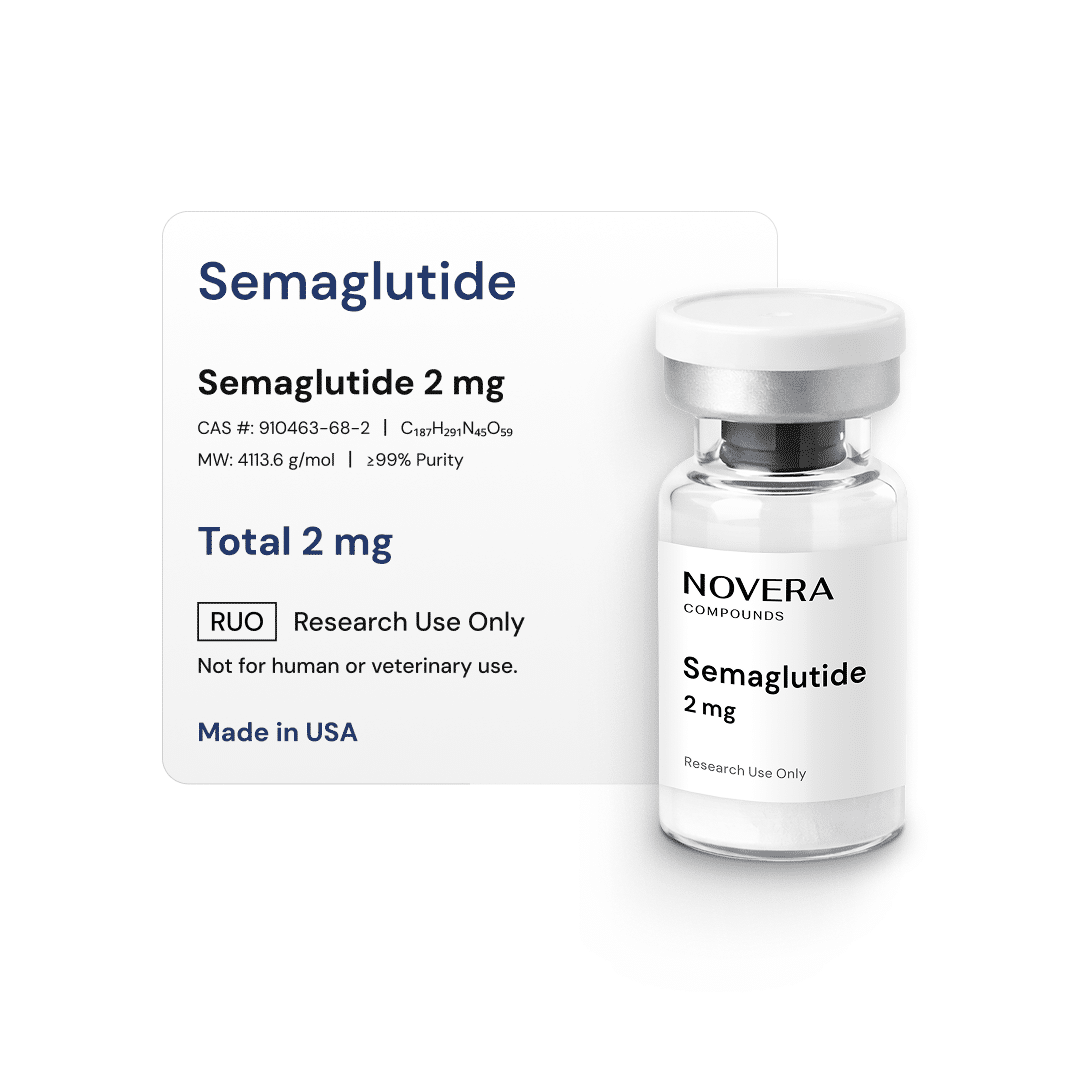
- Molecular Weight: 4113.6 g/mol
- Molecular Formula: C₁₈₇H₂₉₁N₄₅O₅₉
- CAS Number: 910463-68-2
- Peptide Sequence: H-His-Aib-Glu-Gly-Thr-Phe-Thr-Ser-Asp-Val-Ser-Ser-Tyr-Leu-Glu-Gly-Gln-Ala-Ala-Lys(AEEAc-AEEAc-γ-Glu-17-carboxyheptadecanoyl)-Glu-Phe-Ile-Ala-Trp-Leu-Val-Arg-Gly-OH
- Structure: Modified 31-amino acid GLP-1 analog with albumin-binding modifications for extended half-life
- Half-Life: Approximately 7 days, enabling once-weekly dosing
Stability Mechanisms. Semaglutide incorporates two critical amino acid substitutions: alanine to α-aminoisobutyric acid (Aib) at position 8 (protecting against DPP-4 degradation) and lysine to arginine at position 34. These modifications, combined with fatty acid conjugation, enable plasma protein binding (>99%) and proteolytic stability, achieving a functional half-life substantially longer than native GLP-1.
Solubility and Bioavailability. Semaglutide demonstrates high aqueous solubility and subcutaneous bioavailability, making it suitable for both clinical therapeutics and research formulations, including buy semaglutide and semaglutide 5 mg peptide vials designed for research applications.
What Does Scientific Research Say About Semaglutide 2mg?
Semaglutide has accumulated one of the most extensive clinical evidence bases among metabolic peptides, with consistent findings across multiple Phase 3 trials and real-world analyses.
- Glycemic Control. PIONEER series trials demonstrated that semaglutide reduced HbA1c by 1.5–1.8% with improvements in both fasting and postprandial glucose levels. The PIONEER PLUS trial showed dose-dependent responses, with over 50% of participants receiving 50 mg daily achieving HbA1c ≤6.5%. Hypoglycemia rates remained low.
- Weight Management. The STEP trial series (68 weeks) demonstrated mean weight loss of 14.9–17.4% in participants without diabetes at the 2.4 mg dose. Weight loss was durable, with 79% of continued-treatment participants achieving ≥10% weight reduction. Upon discontinuation, gradual weight regain occurred, confirming treatment dependency.
- Cardiovascular Outcomes. Pooled analysis of SUSTAIN-6 and PIONEER-6 showed semaglutide reduced MACE by 24% versus placebo (HR 0.76). The benefit was primarily driven by reductions in non-fatal stroke (HR 0.65). Secondary analyses confirmed consistent cardiovascular benefits across subgroups regardless of baseline cardiovascular disease status.
- Hepatic Benefits. Meta-analysis of three randomized controlled trials (n=458) demonstrated that semaglutide increased NASH resolution 3.18-fold and improved steatosis odds by 2.83-fold compared to placebo. Mean relative liver fat reduction reached 40–50% at 48 weeks. The FDA approved semaglutide for MASH treatment in 2025 based on these hepatic benefits.
Notably, Semaglutide activates GLP-1 receptors, triggering increased insulin secretion in a glucose-dependent manner, suppressing glucagon secretion, and enhancing satiety signaling. Enhanced mitochondrial efficiency and improved glucose utilization in peripheral tissues contribute to sustained metabolic improvements.
Furthermore, the most frequent adverse effects are transient gastrointestinal disturbances (nausea, vomiting, constipation), typically occurring during dose escalation and resolving over time. Discontinuation rates due to adverse events range from 2.3–7.4%. Mild heart rate increases (1–3 bpm) have been observed, but overall cardiovascular risk markers improve during treatment.
What Are The Storage Conditions For Semaglutide 2mg?
Proper storage is essential to maintain semaglutide’s peptide integrity and therapeutic efficacy in research applications.
Lyophilized (Powder) Form:
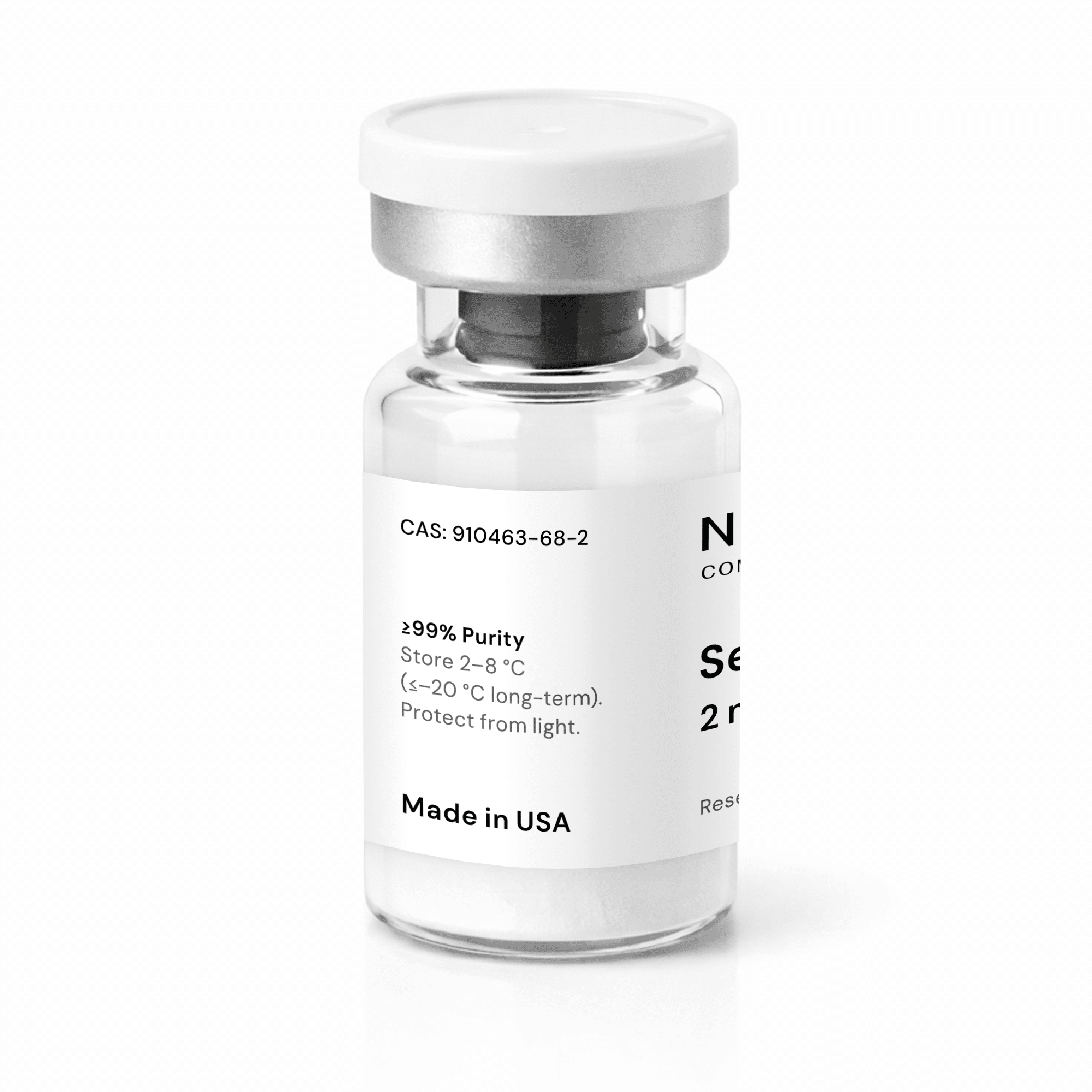
- Long-term Storage: Store at −20°C or below
- Short-term Storage: 2–8°C is acceptable in sealed, desiccated vials
- Only room temperature during trannsport is acceptable.
- Store in amber or opaque vials shielded from light
Reconstituted Solutions:
- Refrigerated Storage: 2–8°C for 1–2 weeks; maintains ~98% potency through day 14
- Freezing: Not recommended; freeze-thaw cycles compromise peptide integrity and must be avoided
- Aliquot reconstituted solutions before freezing if extended storage is necessary
General Handling:
- Protect from light and moisture exposure
- Maintain dry storage conditions
- Visually inspect reconstituted solutions for clarity and absence of particles before use
- Discard if cloudiness or discoloration is present
- Use aseptic technique with all reconstituted samples
When purchasing semaglutide for research, adherence to cold-chain management and supplier-specific storage guidelines ensures consistent, reproducible results in experimental settings and maximizes the utility of semaglutide for research applications.
Are you looking to buy Semaglutide 2mg online?
If you’re looking to order semaglutide 2mg online at wholesale prices, contact Medical Spa RX for guidance on how to do so.
This product is supplied strictly for laboratory research use only and is not approved for human or veterinary administration. It is not intended for diagnostic, therapeutic, or clinical applications. Any reference to biological activity or potential effects is based solely on preclinical or in-vitro findings and should not be interpreted as validated clinical outcomes. Researchers are responsible for ensuring proper handling, storage, and disposal in accordance with institutional, federal, and international guidelines. By purchasing or using this material, the buyer confirms that they are a qualified researcher and that the product will be used exclusively in controlled research settings compliant with all applicable regulations.
Sources
https://academic.oup.com/eurheartj/article/45/15/1371/7615664
https://pmc.ncbi.nlm.nih.gov/articles/PMC12689029
https://pmc.ncbi.nlm.nih.gov/articles/PMC8736331
https://pmc.ncbi.nlm.nih.gov/articles/PMC10600803
https://jamanetwork.com/journals/jama/fullarticle/2777886https://pdb101.rcsb.org/global-health/diabetes-mellitus/drugs/incretins/drug/semaglutide/semaglutide