




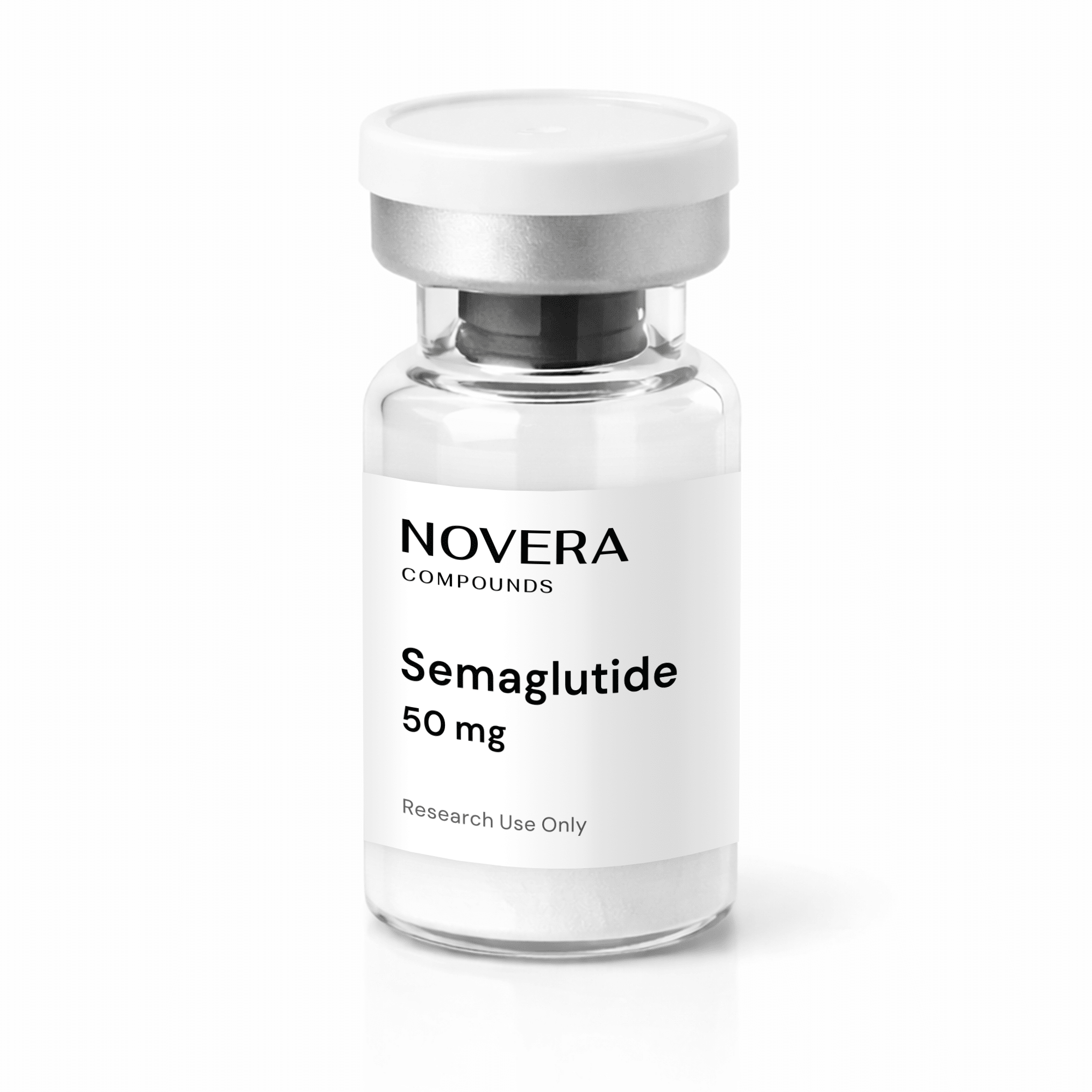
Semaglutide (50 mg) About This Product
The Semaglutide peptide is a synthetic, long-acting analog of human glucagon-like peptide-1 (GLP-1) supplied as a lyophilized powder for controlled laboratory and preclinical research use. It is engineered as a 31-amino-acid linear peptide with targeted amino-acid substitutions and a C18 fatty diacid side chain conjugated to the ε-amino group of Lys26, a modification that enhances albumin binding and slows enzymatic degradation in research models.
The peptide incorporates two key structural modifications:
- substitution of alanine with 2-aminoisobutyric acid (Aib) at position 8, conferring resistance to dipeptidyl peptidase-4 (DPP-4) degradation; and
- (ii) substitution of lysine with arginine at position 34, supporting semi-recombinant manufacturing strategies used in research production.
Semaglutide has the molecular formula C₁₈₇H₂₉₁N₄₅O₅₉ and an approximate molecular weight of 4,113.6 g/mol. Research-grade material is typically manufactured to ≥98% purity, with identity verified by LC-MS and peptide mapping. Laboratories that buy Semaglutide peptide commonly select the 50 mg vial format for studies requiring extended dosing windows or higher-concentration preparations.
Semaglutide (50 mg) Key Features and Benefits
- Defined GLP-1 analog structure: Synthetic 31-amino-acid peptide with Lys26 acylation and stabilizing substitutions
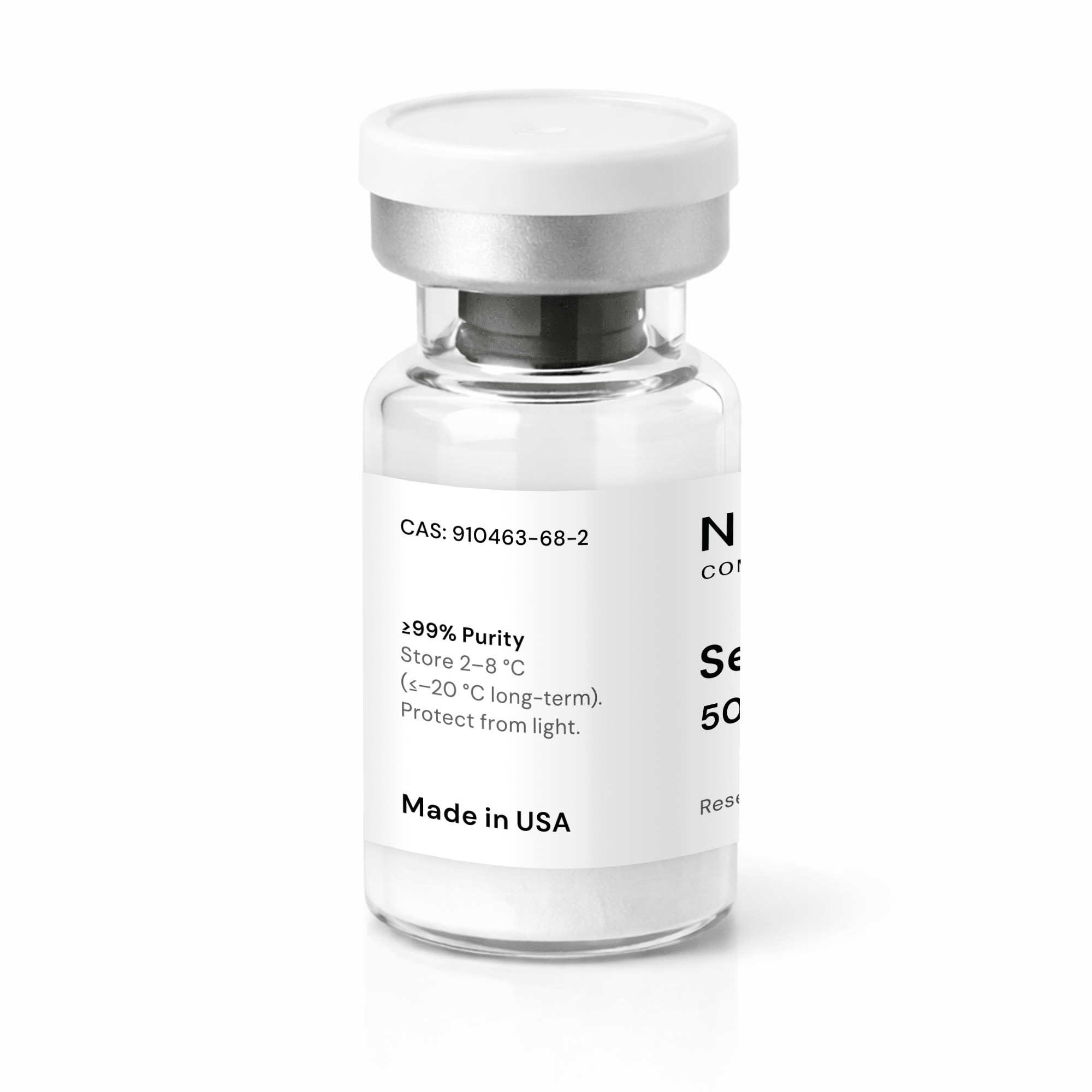
- High analytical quality: Typically manufactured to ≥98% purity, characterized by HPLC and LC-MS
- 50 mg lyophilized vial: Higher-mass format supports extended or dose-ranging research protocols
- Clinically referenced dose level: Aligns with the highest oral semaglutide dose evaluated in late-phase research programs
- Broad metabolic research relevance: Studied for effects on glucose homeostasis, gastric emptying, appetite signaling, and body-weight regulation
- Stable dry presentation: Lyophilized form supports cold storage and controlled reconstitution
- Research-focused supply: Commonly selected by institutions that order Semaglutide peptide for regulated laboratory studies
For laboratory research use only. Not approved or intended for human or veterinary administration.
Semaglutide (50 mg) Mechanism & Research Applications
Semaglutide has been developed and studied as a selective GLP-1 receptor agonist, designed to mimic endogenous incretin signaling while providing prolonged exposure in experimental systems. Research has focused on its role in coordinated metabolic regulation rather than therapeutic use.
Reported research applications include:
- Glucose regulation: Studied for glucose-dependent insulin secretion and suppression of inappropriate glucagon release
- Gastrointestinal dynamics: Investigated for delayed gastric emptying and altered gut motility affecting postprandial signaling
- Energy intake and satiety: Examined for effects on food intake, satiety responses, and body-weight changes
- Cardiometabolic markers: Evaluated for associations with blood pressure, lipid parameters, and inflammatory biomarkers
- Exposure–response research: The 50 mg level enables investigation of upper-range oral exposure explored in controlled studies
Institutions that order Semaglutide peptide use these applications strictly within non-clinical, controlled research designs.
Semaglutide (50 mg) Dosing & Observed Effects in Research
The following summary reflects published research frameworks and is provided for scientific context only.
- Oral semaglutide 50 mg (OASIS-1 trial): Studied as a once-daily dose over 68 weeks in adults with overweight or obesity without type 2 diabetes
- Dose-dependent findings: Higher oral doses, including 50 mg, demonstrated greater changes in weight-related and metabolic markers compared with lower doses
- Gastrointestinal observations: Mild-to-moderate gastrointestinal effects were more frequently reported at higher exposures, particularly during dose escalation
- PIONEER PLUS context: Compared 25 mg and 50 mg oral semaglutide in adults with type 2 diabetes to characterize higher-dose pharmacodynamics
- Titration strategies: Gradual escalation from lower doses was used to improve tolerability in research participants
All dosing information reflects controlled research protocols only and does not represent dosing guidance.
Semaglutide (50 mg) Storage, Safety & References
Store lyophilized Semaglutide (50 mg) at ≤ –20°C, protected from light and moisture. Vials should remain sealed until use.
After reconstitution, store solutions at 2–8°C, protected from light. Reconstituted semaglutide is typically stable for up to 28 days when prepared with bacteriostatic water, or 24 hours when prepared with sterile water. Researchers should consult lot-specific stability data and follow protocol-defined requirements.
Avoid repeated freeze–thaw cycles by preparing aliquots. Standard laboratory safety procedures, including appropriate PPE and institutional handling protocols, should be followed at all times.
References
https://pmc.ncbi.nlm.nih.gov/articles/PMC8736331
https://www.frontiersin.org/journals/endocrinology/articles/10.3389/fendo.2019.00155/full
https://www.nature.com/articles/s41591-022-02026-4
https://pmc.ncbi.nlm.nih.gov/articles/PMC12642005
https://www.frontiersin.org/journals/nutrition/articles/10.3389/fnut.2024.1398059/full
https://pmc.ncbi.nlm.nih.gov/articles/PMC6388990
Compliance Notice
This product is intended for laboratory research use only and is not approved for human or veterinary use.