




Semaglutide 5mg – About This Product
Semaglutide 5mg is a synthetic GLP-1 receptor agonistpeptide developed through recombinant DNA technology, designed to mimic the activity of native human GLP-1. The peptide shares94% structural homologywith human GLP-1(7-37) and contains two critical amino acid substitutions: aminoisobutyric acid (Aib) at position 8 and arginine (Arg) at position 34.
Additionally, lysine at position 26 is modified through acylation with a spacer consisting of glutamic acid and oxyethylene linker moieties, and a C18 fatty di-acid chain. These structural modifications work synergistically: the Aib8 substitution confers resistance to dipeptidyl peptidase-4 (DPP-4) degradation while maintaining receptor potency, while the Lys26 acylation with the C18 fatty di-acid enhances albumin binding and extends the peptide’s half-life in circulation.
It also includes a modified lysine residuelinked to a C18 diacid chain. These structural features strengthen resistance to DPP-4 degradation and support extended stability in controlled research environments.
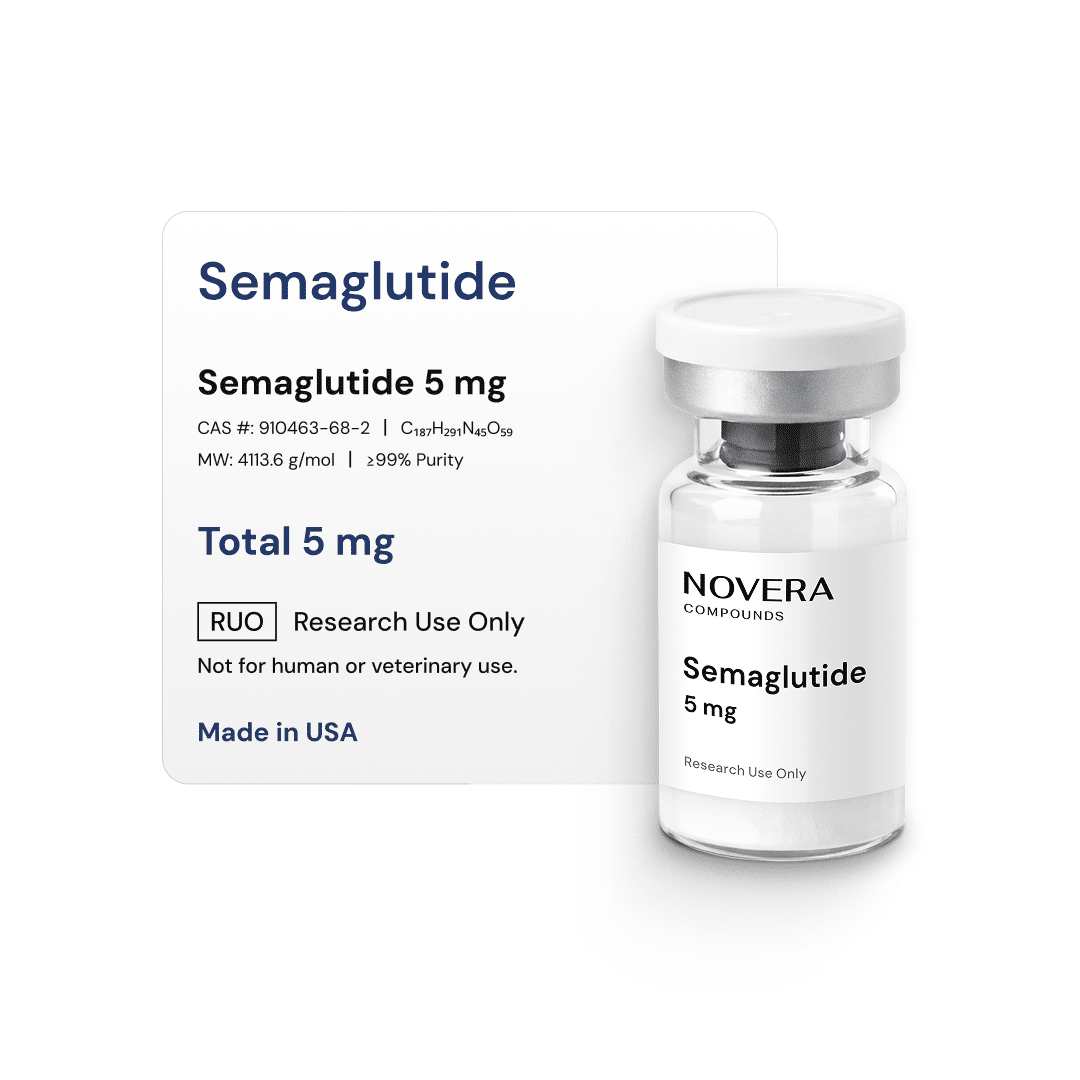
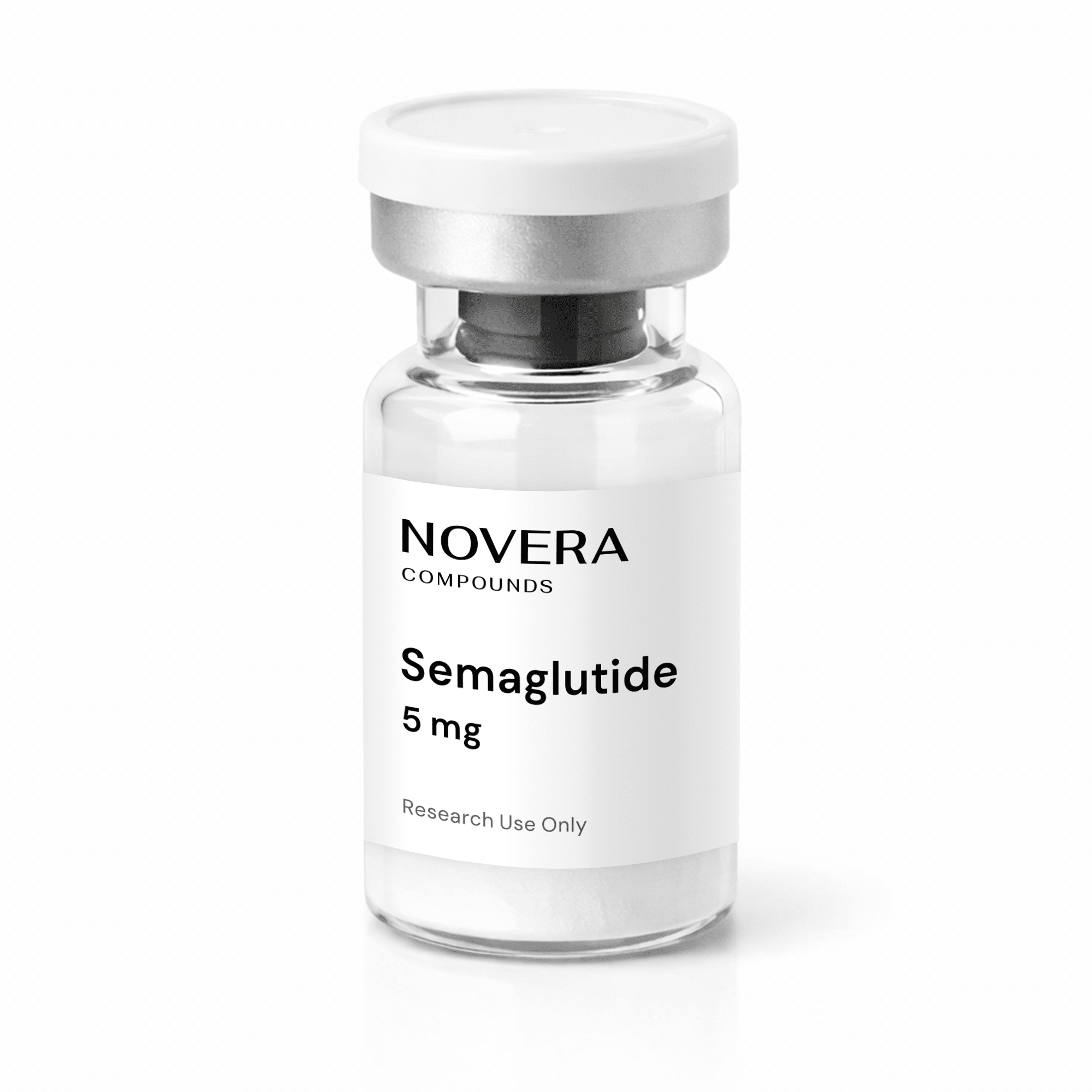
With a molecular weight of approximately 4113.58 g/mol, semaglutide GLP-1 peptideis provided as a high-purity, lyophilized (freeze-dried) powder in a 5 mg vial, designed for laboratory research use. This formulation is commonly used in studies investigating glucose regulation, appetite control, energy metabolism, and metabolic homeostasis in controlled research settings.
Semaglutide 5mg – Key Features and Benefits
Researchers who wish to buy semaglutide should know its notable benefits, making it a promising compound. Semaglutidepeptideis a valuable tool for laboratory research, offering the following characteristics:
- High Purity: ≥95% purity (verified by HPLC) for consistent and reproducible research results.
- Stable Formulation: Supplied as a lyophilized powder in a semaglutide 5 mg peptide vial for convenient storage and straightforward reconstitution using bacteriostatic water or sterile saline.
- Research Applications: Under investigation for effects on glucose metabolism, insulin secretion, appetite regulation, satiety signaling, and energy balance.
- Extended Stability: The modified structure—combining DPP-4 resistance and albumin-binding fatty acid modification—extends the peptide’s half-life, enabling prolonged research observation periods in controlled laboratory settings.
- Metabolic Research Focus: Supports research in glucose homeostasis, gastrointestinal signaling, neuroendocrine pathways, and systemic metabolic effects.
- Well-Characterized: Absorption, distribution, and binding characteristics are extensively documented in peer-reviewed research literature and structural studies.
Semaglutide 5mg Mechanism & Research Applications
Semaglutide activates glucagon-like peptide-1 (GLP-1) receptors, which are expressed in the pancreas, gastrointestinal tract, and brain. In research models, this activation has been associated with the following effects:
- Glucose Metabolism: Studied for its role in stimulating glucose-dependent insulin secretion from pancreatic β-cells and inhibiting glucagon release, contributing to glucose homeostasis in controlled research environments.
- Appetite and Satiety Signaling: Investigated for its effects on hypothalamic appetite-regulating neurons and satiety pathways, which may mediate feeding behavior in animal models.
- Energy Expenditure and Metabolic Rate: Examined for potential effects on thermogenesis, adipose tissue browning, and systemic energy balance in preclinical studies.
- Gastrointestinal and Neuroendocrine Function: Research examines the effects on gastric emptying, nutrient absorption, and the brain-gut signaling axes involved in metabolic regulation.
Semaglutide 5mg Dosing & Observed Effects in Research
In research settings, semaglutide is typically tested at varying doses depending on the experimental design and model system:
- Preclinical Models: Rodent studies typically employ doses ranging from 1 to 100 nmol/kg body weight, with commonly used doses between 10–25 nmol/kg for metabolic investigations.
- Clinical Research (Human Studies): Clinical trials typically begin with 0.25 mg administered once weekly, with dose escalation to maintenance doses of 1.0–2.4 mg weekly depending on study protocol and therapeutic endpoints.
- Observed Research Findings: In controlled laboratory and clinical settings, semaglutide has been observed to affect glucose concentrations, insulin and glucagon secretion, appetite-related hormones, and lipid metabolism. These observations are reported in peer-reviewed literature and represent findings in research contexts, not therapeutic claims.
Semaglutide 5mg Storage, Safety & References
Storage instructions for semaglutide for research peptide involve:
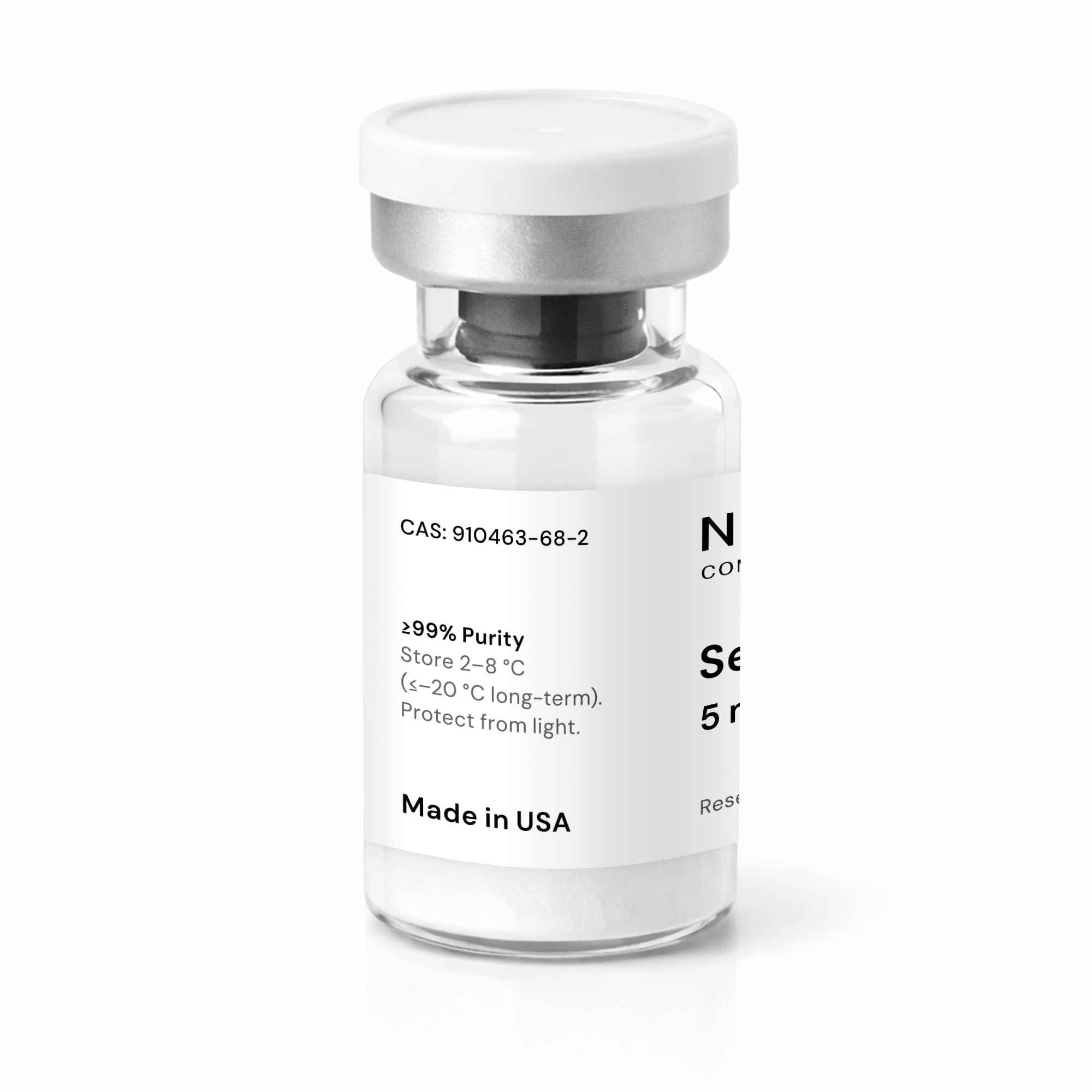
- Lyophilized Powder: Store at 2–8°C in sealed vials, protected from light and moisture. Long-term storage at –20°C is acceptable.
- After Reconstitution: Store reconstituted solutions at 2–8°C. Use within 7–10 days for optimal peptide integrity; limit vial punctures and avoid repeated freeze-thaw cycles.
- Handling Requirements: Use appropriate laboratory personal protective equipment, including gloves, eye protection, and a lab coat, when handling the peptide.
- Disposal: Dispose of unused material according to institutional safety protocols and applicable regulations.
- Safety: Always consult and follow the Safety Data Sheet (SDS) provided with the product.
References
https://www.ncbi.nlm.nih.gov/books/NBK603723
https://pmc.ncbi.nlm.nih.gov/articles/PMC5836914
https://pubchem.ncbi.nlm.nih.gov/compound/Semaglutide
https://pmc.ncbi.nlm.nih.gov/articles/PMC11674233
https://www.biorxiv.org/content/10.1101/2021.01.12.426449
https://pmc.ncbi.nlm.nih.gov/articles/PMC6474072
https://www.rcsb.org/structure/4ZGM
https://pdb101.rcsb.org/global-health/diabetes-mellitus/drugs/incretins/drug/semaglutide/semaglutide
https://www.nature.com/articles/s41591-022-02026-4
https://pubmed.ncbi.nlm.nih.gov/39046272
https://pubmed.ncbi.nlm.nih.gov/34305810
Compliance Notice
This product is intended for laboratory research use only and is not approved for human or veterinary use.