




Semax (30mg) About This Product
The synthetic Semax peptide is supplied as a lyophilized powder for controlled laboratory and preclinical research. It is a synthetic heptapeptide derived from the ACTH(4–10) sequence, consisting of ACTH residues 4–7 extended with a C-terminal Pro–Gly–Pro motif to improve stability and eliminate classical hormonal ACTH activity. The amino acid sequence is Met–Glu–His–Phe–Pro–Gly–Pro (MEHFPGP).
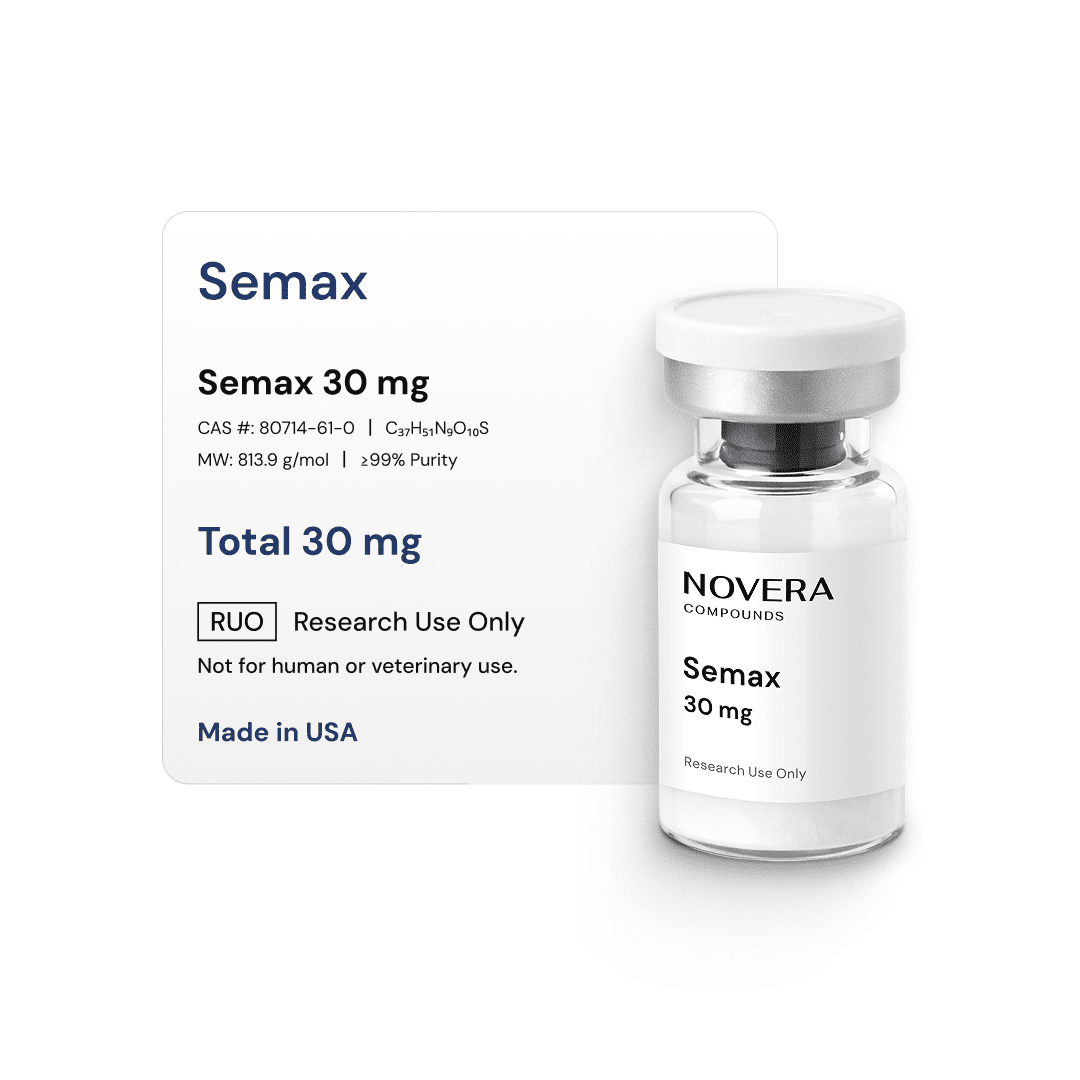
Semax has a reported molecular formula (C₃₇H₅₁N₉O₁₀S) and molecular weight (~813.9 g/mol). Research-grade material is typically manufactured at ≥95–98% purity (HPLC), with identity verified by mass spectrometry. It is water-soluble and compatible with common aqueous buffers.
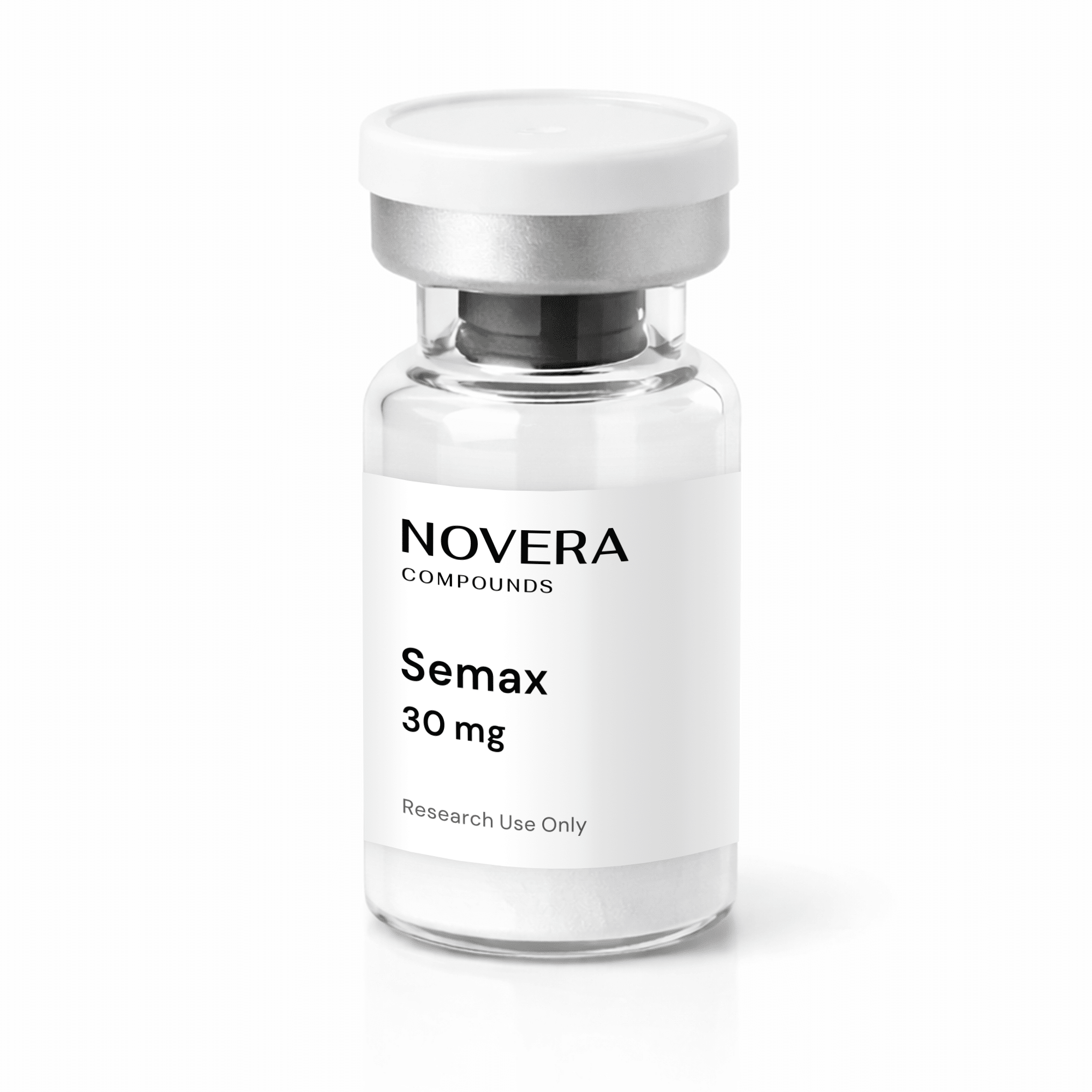
In Russian and Eastern European research programs, Semax has been studied in neurobiological, cognitive, and ischemia-related research contexts. The 30 mg vial format supports preparation of multiple experimental concentrations under controlled laboratory conditions.
Semax (30mg) Key Features and Benefits
- Defined ACTH-derived structure: Synthetic heptapeptide analog of ACTH(4–10), consisting of the ACTH(4–7) fragment (Glu–His–Phe–Pro) extended with a C-terminal Pro–Gly–Pro motif to support stability.
- High research-grade purity: Typically ≥95–98% purity, with analytical confirmation by HPLC and mass spectrometry.
- 30 mg lyophilized vial: Lyophilized powder format supports consistent preparation across experiments from a single batch.
- Well-characterized physicochemical profile: Documented molecular weight, aqueous solubility, and chromatographic behavior for reproducible handling.
- Neurobiological research history: Studied in models involving neurotrophic factors, gene expression, and cognitive endpoints.
- Flexible research routes: Investigated using intranasal and parenteral administration in preclinical and clinical research.
- Stable dry format: Freeze-dried presentation supports cold storage and controlled reconstitution when handled appropriately.
- For laboratory research use only: Supplied for institutions that buy Semax peptide or order Semax peptide for non-therapeutic study use.
Semax (30mg) Mechanism & Research Applications
Semax is being researched as a centrally active regulatory peptide rather than a hormone. Research focuses on how this modified ACTH-derived sequence may influence neurobiological signaling and immune-related processes in the central nervous system under controlled study conditions.
- Neurotrophin modulation: Studied for effects on brain-derived neurotrophic factor (BDNF) and nerve growth factor (NGF) expression in brain regions linked to learning and memory.
- Gene expression in ischemia models: Investigated in focal cerebral ischemia research for effects on genes related to inflammation, neurotransmission, and vascular function.
- Neurotransmitter balance: Examined for influence on dopaminergic, serotonergic, and cholinergic signaling systems.
- Neuroinflammatory processes: Studied for modulation of cytokine-related pathways and immune signaling markers in brain tissue.
- Cognitive and stress models: Used in research evaluating attention, stress response, and adaptive behavior outcomes.
These applications are investigational and limited to controlled laboratory or clinical research settings.
Semax (30mg) Dosing & Observed Effects in Research
This section summarizes dosing frameworks reported in published studies. It is provided for research context only and does not represent dosing guidance.
- Preclinical dosing ranges: In rodent studies, Semax has been administered at 50–250 μg/kg per dose via intranasal or systemic routes, depending on model design
- Neurotrophin studies: Single intranasal doses in rats have been associated with time-dependent increases in BDNF or NGF expression in specific brain regions
- Ischemia–reperfusion models: Repeated intraperitoneal dosing around 100 μg/kg at defined post-ischemia intervals has been used to study transcriptomic and functional changes
- Extended injury models: Daily dosing near 250 μg/kg for several days has been reported in post-injury learning and histological studies
- Clinical research context: In Russian clinical studies of ischemic stroke, intranasal Semax has been used at total daily doses ranging from 6–18 mg/day, typically over 5–10 days
- Dose–design dependence: Reported effects vary by route, timing, disease model, and outcome measures
All dosing examples above describe historical study conditions rather than recommendations. Semax (30mg) is supplied strictly for laboratory use, and any in vivo work must be justified, reviewed, and conducted under applicable ethical and regulatory frameworks.
Semax (30mg) Storage, Safety & References
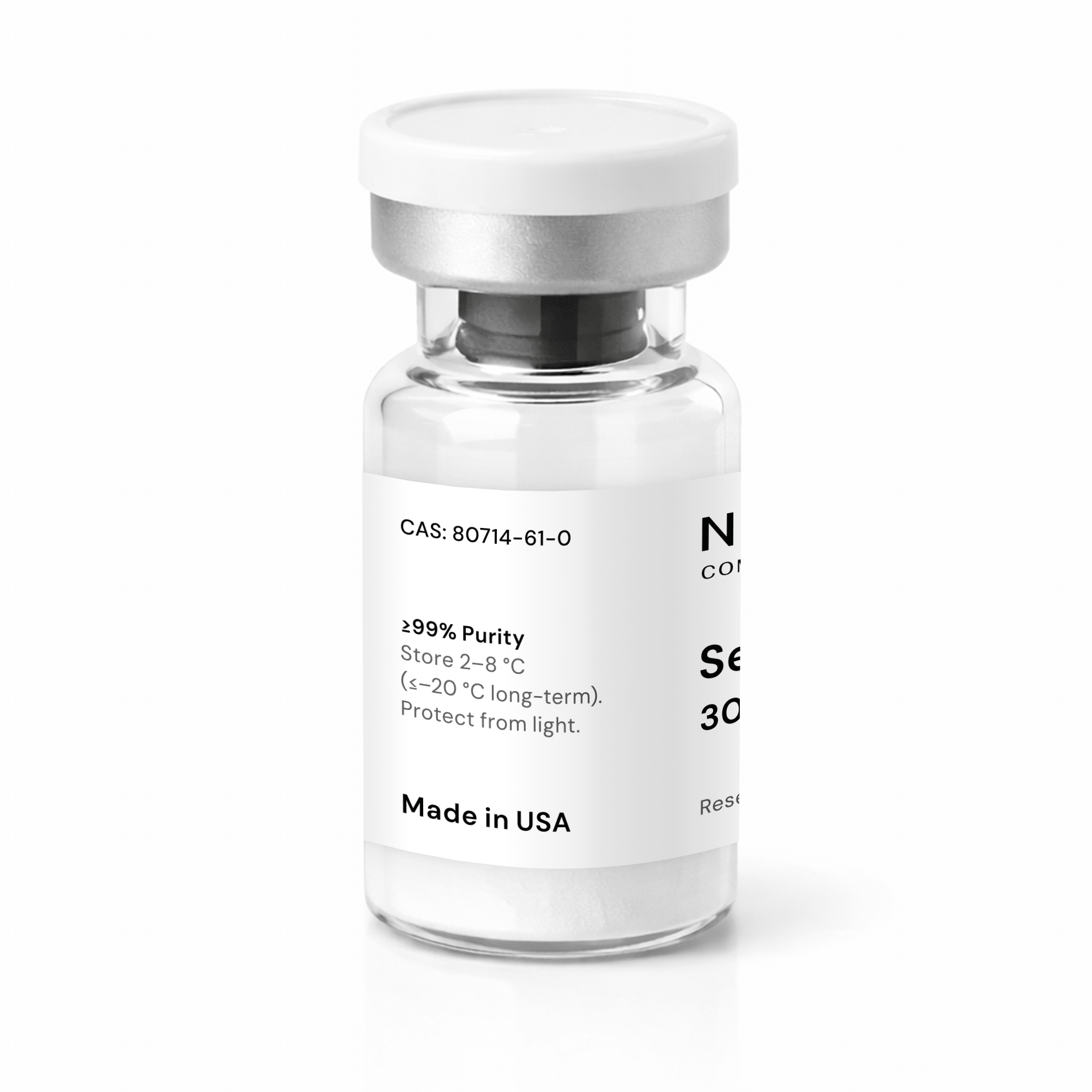
Store lyophilized Semax in a sealed vial, protected from light and moisture. For long-term stability, storage at ≤ –20°C is recommended.
After reconstitution with sterile water or an appropriate aqueous buffer, store solutions at 2–8°C, protect from light, and use within a protocol-defined stability window. Avoid repeated freeze–thaw cycles, and discard solutions with discoloration or particulate matter.
Researchers should follow standard laboratory safety procedures, including appropriate PPE and institutional handling protocols.
References
https://pmc.ncbi.nlm.nih.gov/articles/PMC11498467
https://pmc.ncbi.nlm.nih.gov/articles/PMC3987924
https://journals.eco-vector.com/2078-1962/article/view/609445
https://pubmed.ncbi.nlm.nih.gov/16362768
https://pubmed.ncbi.nlm.nih.gov/19662538
Compliance Notice
This product is intended for laboratory research use only and is not approved for human or veterinary use.