



Sermorelin (10mg) About This Product
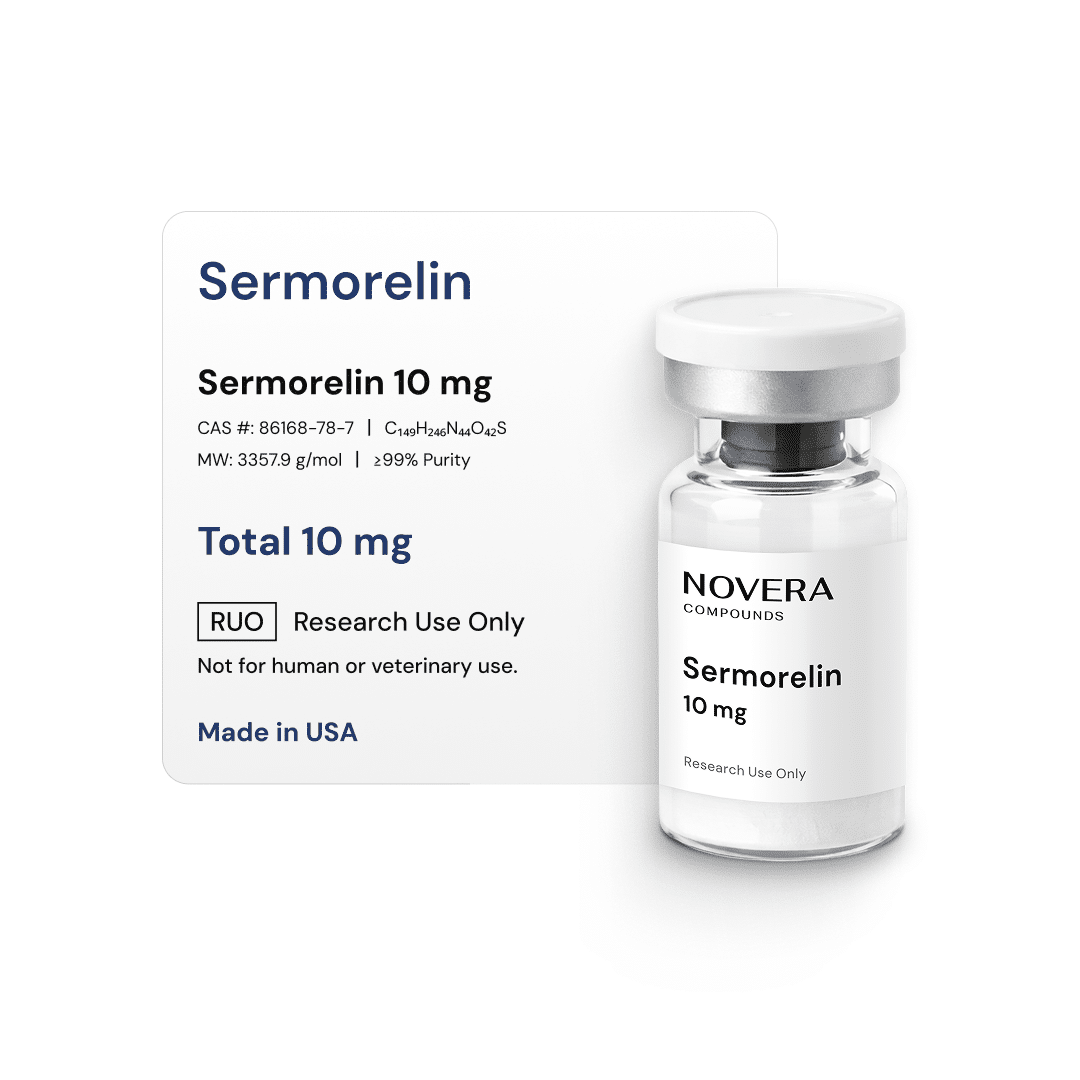
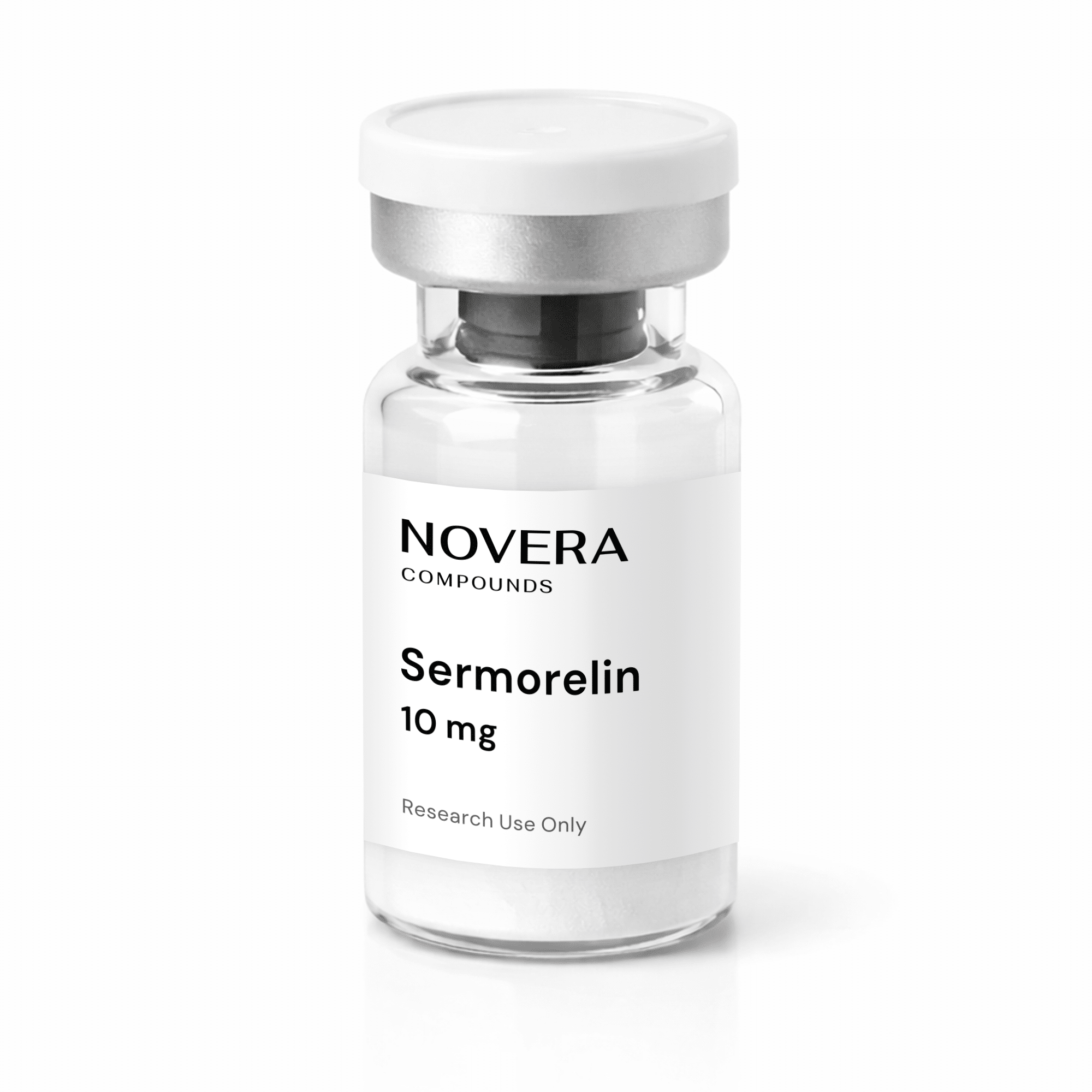
Sermorelin peptide (10mg) is a synthetic 29–amino acid analog of human growth hormone–releasing hormone (GHRH), corresponding to the biologically active N-terminal fragment (residues 1–29) of the native 44-amino-acid GHRH molecule. It is supplied as a lyophilized powder containing 10 mg per vial for controlled laboratory and preclinical research.
The peptide is C-terminally amidated, a modification used to enhance stability during experimental handling. Sermorelin has an empirical formula of C₁₄₉H₂₄₆N₄₄O₄₂S and an average molecular weight of approximately 3,357.9 g/mol. Research-grade material is typically manufactured to ≥98% purity, verified by analytical HPLC with identity confirmation by mass spectrometry.
In published research, Sermorelin has been studied as a growth hormone secretagogue, primarily in investigations of pituitary growth hormone (GH) reserve, age-associated changes in GH secretion, and downstream metabolic and body-composition parameters. The 10 mg vial format supports preparation of research solutions across the microgram-to-milligram ranges reported in experimental protocols. Laboratories that buy Sermorelin peptide commonly select this format to ensure consistency across study designs.
Sermorelin (10mg) Key Features and Benefits
- Defined GHRH analog structure: Synthetic 29-amino-acid peptide mirroring the active N-terminal fragment of human GHRH, designed to stimulate pulsatile GH secretion via pituitary GHRH receptors.
- High research-grade purity: Typically ≥98% purity, confirmed by HPLC and mass spectrometry.
- Convenient 10 mg vial format: Supports preparation of multiple experimental concentrations from a single batch, improving analytical consistency for laboratories that order Sermorelin peptide.
- Clinically referenced dose range: The 10 mg presentation supports research protocols that use 0.1–2.0 mg per administration for GH stimulation and metabolic studies.
- Broad research applications: Studied in GH deficiency diagnostics, age-related GH decline, body-composition research, immune markers, and metabolic biomarkers in pediatric and adult populations.
- Lyophilized for stability: Freeze-dried format supports long-term storage and controlled reconstitution under standard peptide-handling guidelines.
- For laboratory research use only: Not formulated, labeled, or approved for human or veterinary administration.
Sermorelin (10mg) Mechanism & Research Applications
Sermorelin is researched as a selective GHRH receptor agonist that mimics endogenous GHRH activity at the anterior pituitary. By stimulating pituitary somatotroph cells, it promotes pulsatile growth hormone release rather than sustained elevation, enabling investigation of physiologic GH dynamics under controlled conditions.
Research applications include:
- Growth hormone reserve testing: Used as a provocative agent to assess pituitary GH responsiveness following single-dose administration.
- Age-related GH decline: Investigated for changes in GH and IGF-1 associated with aging in adult research cohorts.
- Body composition and metabolism: Studied for effects on lean mass, adipose distribution, lipid parameters, and insulin sensitivity in controlled research settings.
- Neuroendocrine axis function: Applied as a tool for studying preservation of endogenous pituitary signaling compared with exogenous GH exposure.
- Immune and systemic markers: Early research explored indirect associations between GH stimulation, immune cell activity, and inflammatory markers.
All applications described remain investigational and are conducted within controlled laboratory or clinical research protocols.
Sermorelin (10mg) Dosing & Observed Effects in Research
The following summarizes dosing frameworks reported in published studies and is provided for research context only. It does not represent dosing recommendations.
Provocative Diagnostic Testing
- Intravenous bolus: 1 μg/kg, with serial sampling over 60–90 minutes to assess GH response.
- Observed pattern: Peak GH concentrations typically occur within 30–60 minutes.
Subcutaneous Research Regimens
- Pediatric research: Approximately 30 μg/kg/day, administered once daily or in divided doses, studied over extended periods.
- Adult metabolic and aging studies: Commonly 0.2–2.0 mg/day, often administered in the evening to align with nocturnal GH secretion.
- Short-term metabolic studies: 200–500 μg/day for 4–16 weeks, monitoring changes in IGF-1, body composition, and metabolic markers.
The Sermorelin (10mg) presentation supports diagnostic GH stimulation studies, dose-response experiments, and longer-term investigations of GH/IGF-1 dynamics in research settings.
Sermorelin (10mg) Storage, Safety & References
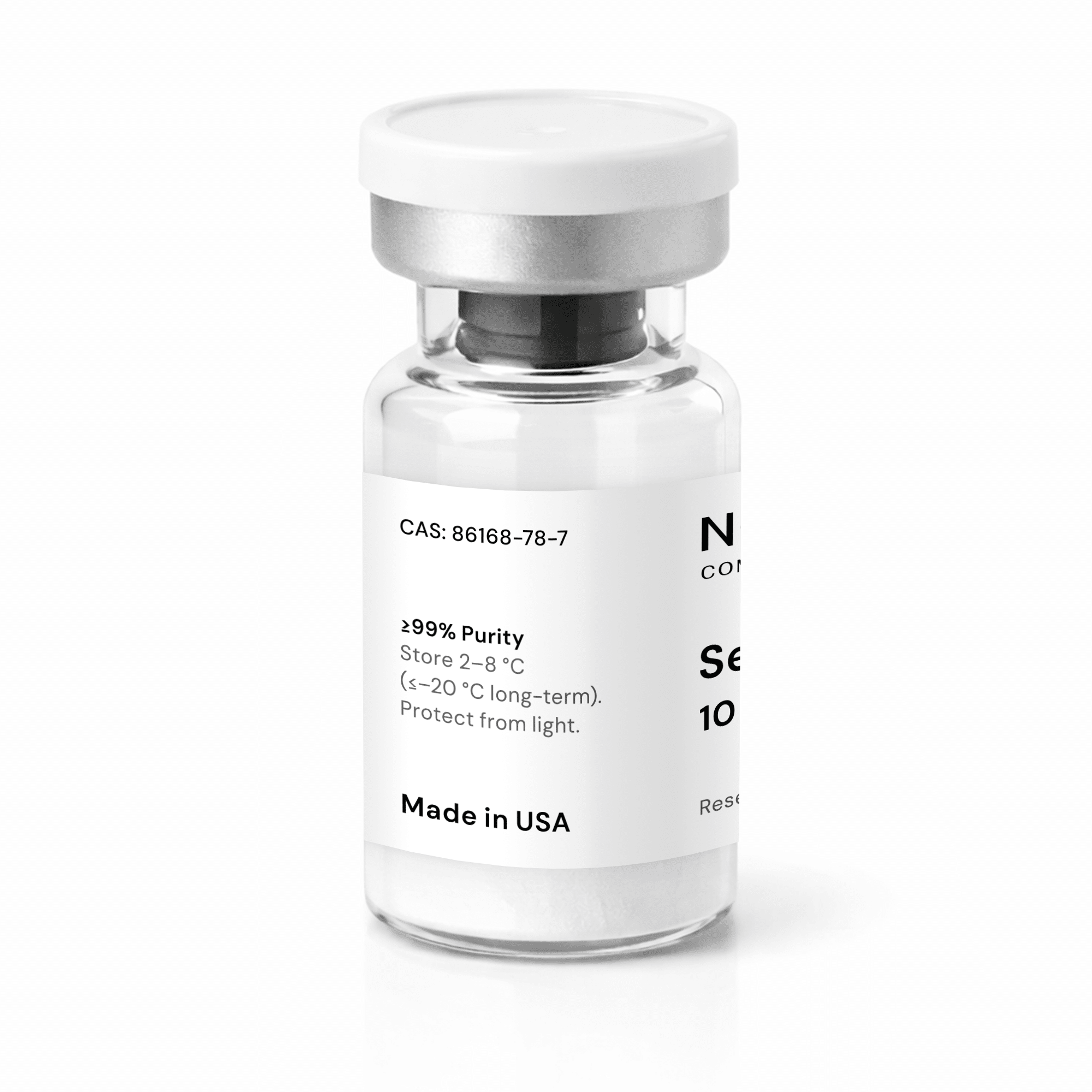
Store lyophilized Sermorelin in a tightly sealed vial at –20°C or lower, protected from light and moisture, to maintain peptide integrity. Vials should be exposed to room temperature only briefly during handling.
After reconstitution with sterile water, saline, or an appropriate aqueous buffer, store solutions at 2–8°C, protected from light, and use within a protocol-defined timeframe supported by stability data. Repeated freeze–thaw cycles should be avoided, and solutions showing particulates or discoloration should be discarded.
As a bioactive peptide influencing endocrine signaling, Sermorelin should be handled using standard laboratory safety procedures, including appropriate personal protective equipment, avoidance of accidental exposure, and disposal according to institutional and regulatory requirements.
References
https://pubmed.ncbi.nlm.nih.gov/18031173
https://academic.oup.com/jcem/article/82/5/1472/2823341
https://pmc.ncbi.nlm.nih.gov/articles/PMC2699646
https://academic.oup.com/edrv/article/19/2/203/2530830
https://pmc.ncbi.nlm.nih.gov/articles/PMC8165022
Compliance Notice
This product is intended for laboratory research use only and is not approved for human or veterinary use.