




SS-31 (14mg) About This Product
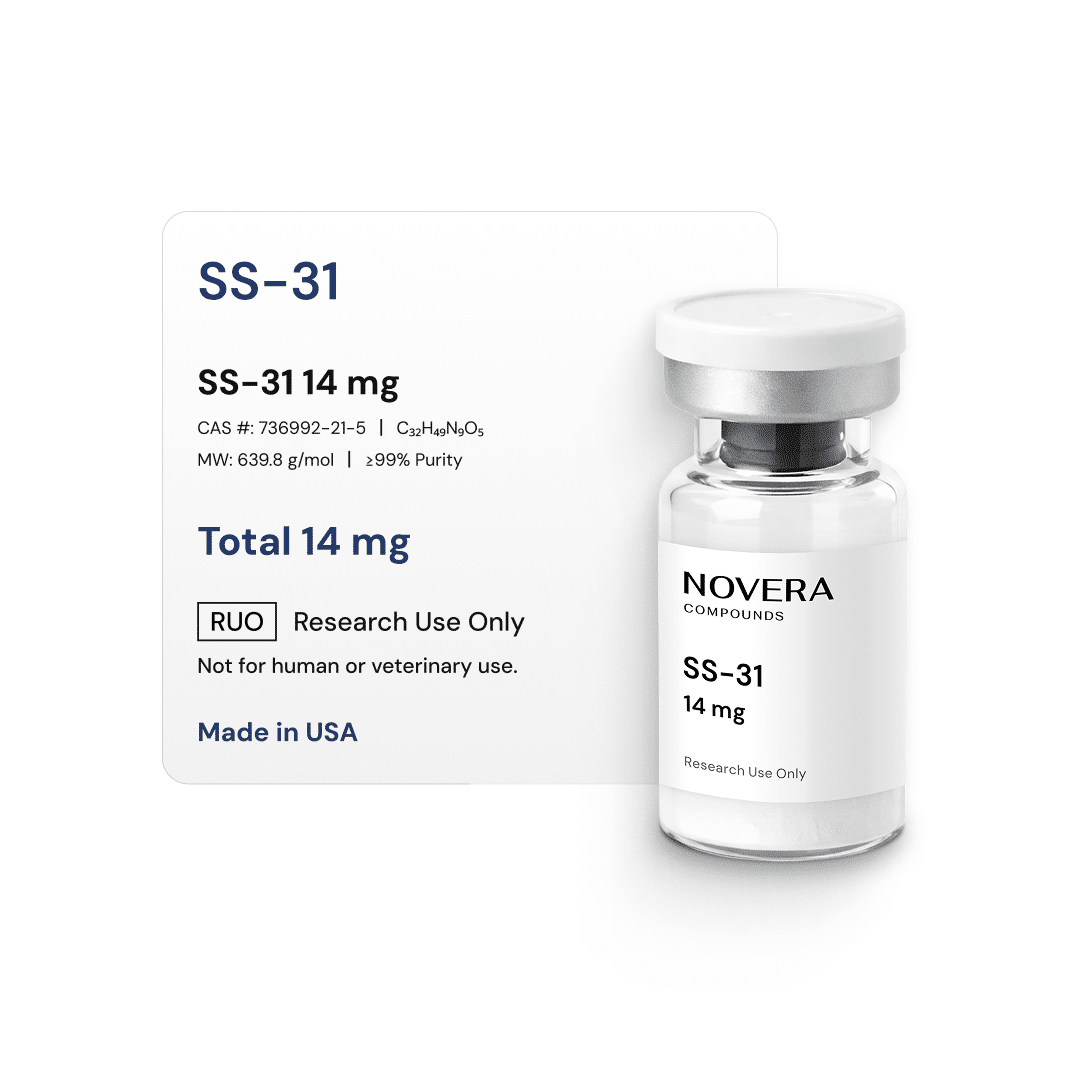
SS-31 (14mg) is a synthetic tetrapeptide composed of D-Arg-(2,6-dimethyl)Tyr-Lys-Phe-amide, where Dmt (2,6-dimethyltyrosine) is a modified tyrosine residue with direct reactive oxygen species (ROS) scavenging activity. SS-31 is also known as elamipretide and was previously designated MTP-131 or Bendavia in research literature.
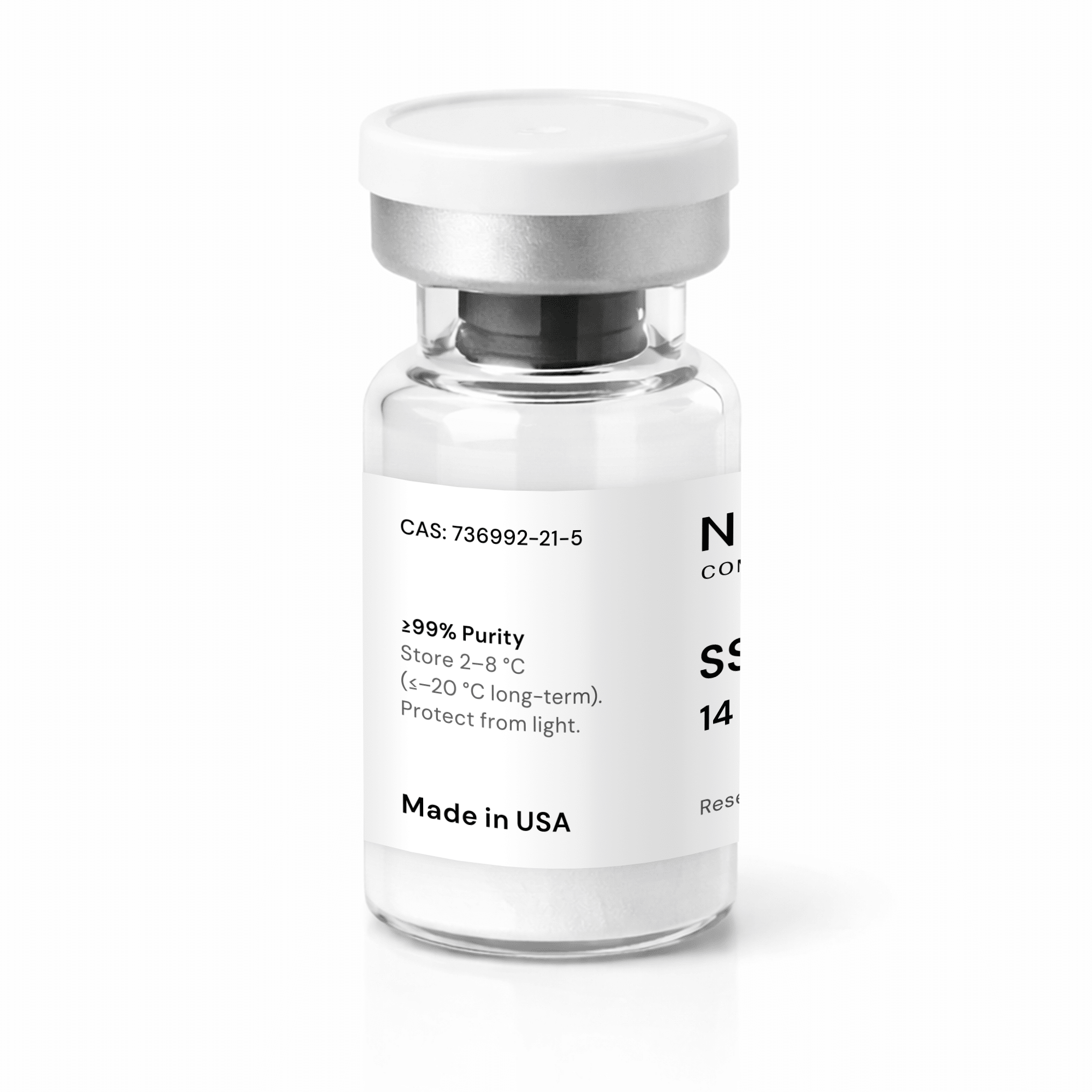
The SS-31 peptide has a molecular weight of 639.8 Da, molecular formula C₃₂H₄₉N₉O₅, and CAS Number 736992-21-5. It is a mitochondria-targeted peptide that selectively accumulates in the inner mitochondrial membrane, where cardiolipin, its primary molecular target, is located. Accumulation is driven by SS-31’s net 3+ charge, which enables electrostatic binding to cardiolipin’s anionic headgroups.
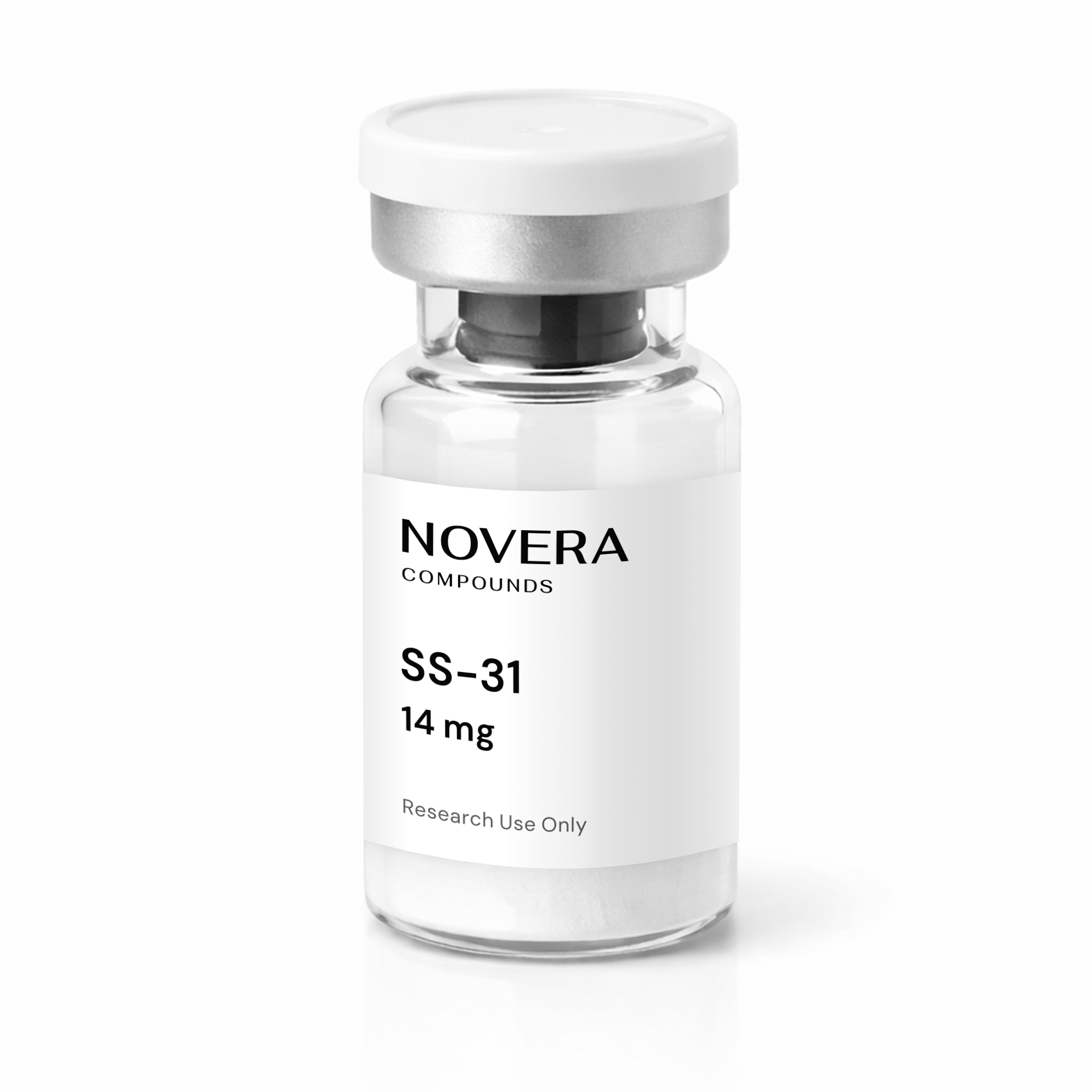
This product is supplied as a high-purity, lyophilized powder in a sealed research-grade vial and is provided strictly for laboratory research use.
SS-31 (14mg) Key Features and Benefits
- Cardiolipin-targeted mitochondrial peptide
- Defined tetrapeptide sequence with Dmt-mediated ROS scavenging
- Selectively localizes to the inner mitochondrial membrane
- Studied in in vitro and preclinical mitochondrial research models
- Stable formulation for reproducible experimental handling
- For laboratory research use only
SS-31 (14mg) Mechanism & Research Applications
The primary mechanism of SS-31 involves binding to cardiolipin on the inner mitochondrial membrane and inhibition of cardiolipin peroxidation. Under oxidative stress, cardiolipin peroxidation initiates mitochondrial dysfunction, including cristae disorganization, disruption of the electron transport chain (ETC), and membrane depolarization. SS-31 binding prevents this initiating event and supports preservation of mitochondrial structure.
By stabilizing cardiolipin-dependent cristae architecture, SS-31 supports proper assembly of ETC complexes and optimizes electron transfer efficiency. This reduces electron leakage and lowers mitochondrial ROS generation, while supporting ATP synthesis efficiency.
SS-31 also helps prevent the opening of the mitochondrial permeability transition pore (mPTP) during cellular stress. By maintaining inner-membrane integrity and reducing the ROS burden, SS-31 preserves mitochondrial membrane potential and limits cytochrome c release, limiting activation of apoptotic signaling pathways.
An additional protective layer is provided by Dmt-mediated ROS scavenging, in which dimethyltyrosine residues neutralize free radicals via oxidative coupling. Doing so reduces oxidative load within the mitochondrial environment.
Research models include isolated mitochondria, cultured cell lines from cardiac (H9c2), renal (HK-2), and neuronal (SH-SY5Y) origins, synaptosomal preparations, and rodent models of ischemia-reperfusion injury, metabolic stress, and mitochondrial dysfunction. SS-31 shows preferential activity in damaged mitochondria, with minimal effects reported in healthy baseline systems.
SS-31 (14mg) Dosing & Observed Effects in Research
In in vitro studies, SS-31 concentrations commonly range from 10–100 nM for chronic exposure designs and 1–50 μM for acute stress protocols, depending on the experimental model and endpoints measured. In preclinical studies, weight-based dosing (mg/kg) is used based on injury model and route of administration.
Reported experimental endpoints include:
- Mitochondrial membrane potential (e.g., TMRM, JC-1)
- ATP production and recovery kinetics
- Mitochondrial ROS levels
- Cristae structure and mitochondrial morphology
- Cardiolipin peroxidation status
- Cytochrome c localization
- Markers of mPTP opening
- ETC complex activity and redox balance
- Apoptosis-related markers
These findings guide experimental design in laboratories that order SS-31 peptide and remain limited to controlled research systems.
SS-31 (14mg) Storage, Safety & References
Store SS-31 in its lyophilized form at –20°C or below, protected from light and moisture. Prepare reconstituted solutions using sterile laboratory techniques and avoid repeated freeze–thaw cycles.
This product is intended exclusively for laboratory research. Laboratories who buy SS-31 peptide should have trained personnel handle it in approved research environments.
References
https://pmc.ncbi.nlm.nih.gov/articles/PMC3736700
https://pmc.ncbi.nlm.nih.gov/articles/PMC3736700
https://pmc.ncbi.nlm.nih.gov/articles/PMC3736700
https://pmc.ncbi.nlm.nih.gov/articles/PMC3736700
Compliance Notice
This product is intended for laboratory research use only and is not approved for human or veterinary use.