




SS-31 (50mg) About This Product
SS-31 (50mg) is a synthetic tetrapeptide composed of D-Arg-(2,6-dimethyl)Tyr-Lys-Phe-amide, where Dmt (2,6-dimethyltyrosine) is a modified tyrosine residue with direct reactive oxygen species (ROS) scavenging activity. SS-31 is also referenced in research literature as elamipretide, and has previously been designated MTP-131 or Bendavia.
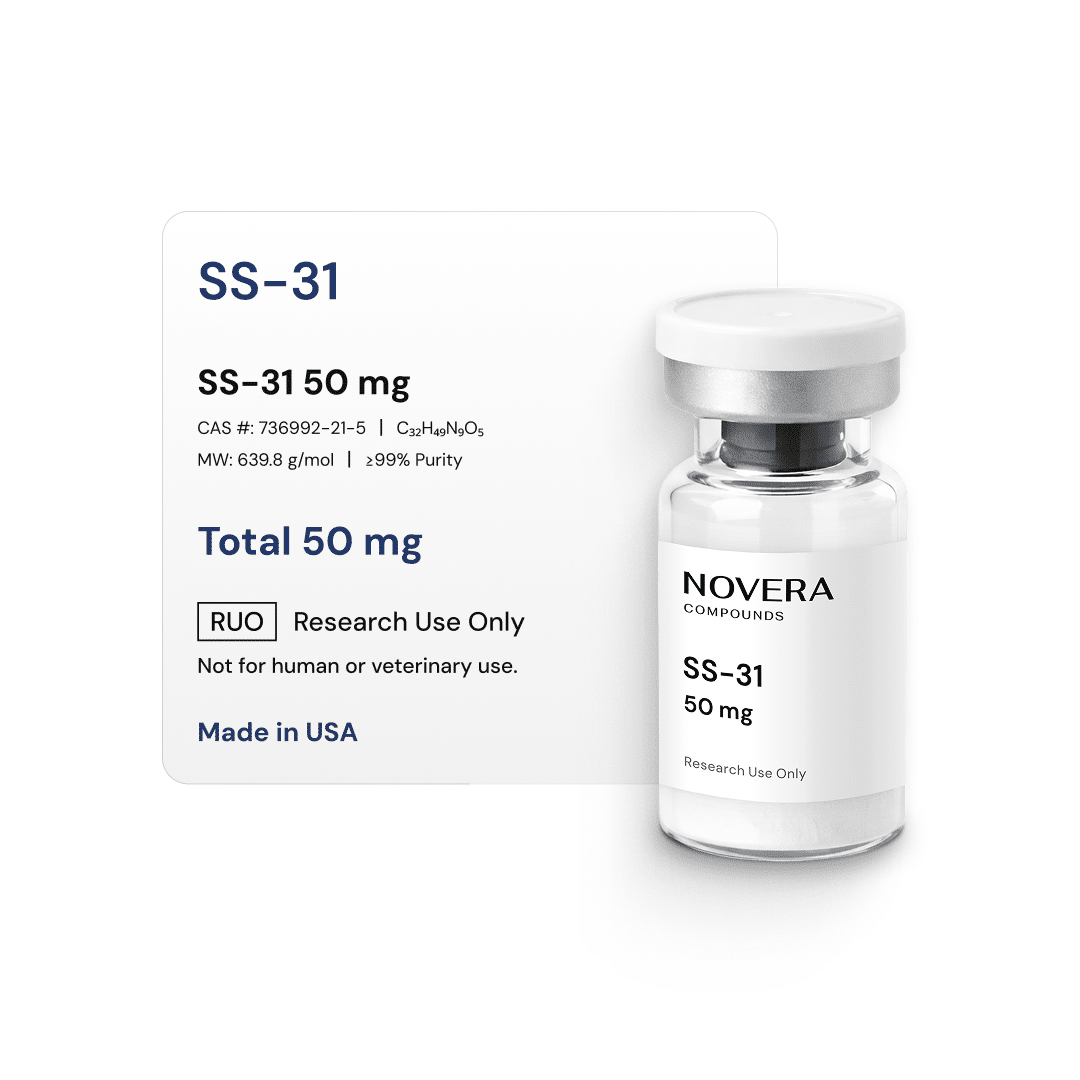
The SS-31 peptide has a molecular weight of 639.8 Da, molecular formula C₃₂H₄₉N₉O₅, and CAS Number 736992-21-5. It is a mitochondria-targeted peptide that preferentially accumulates in the inner mitochondrial membrane, where its primary target, cardiolipin, is located. This compartmental localization is supported by the peptide’s net 3+ positive charge, which promotes electrostatic association with cardiolipin’s anionic headgroups.
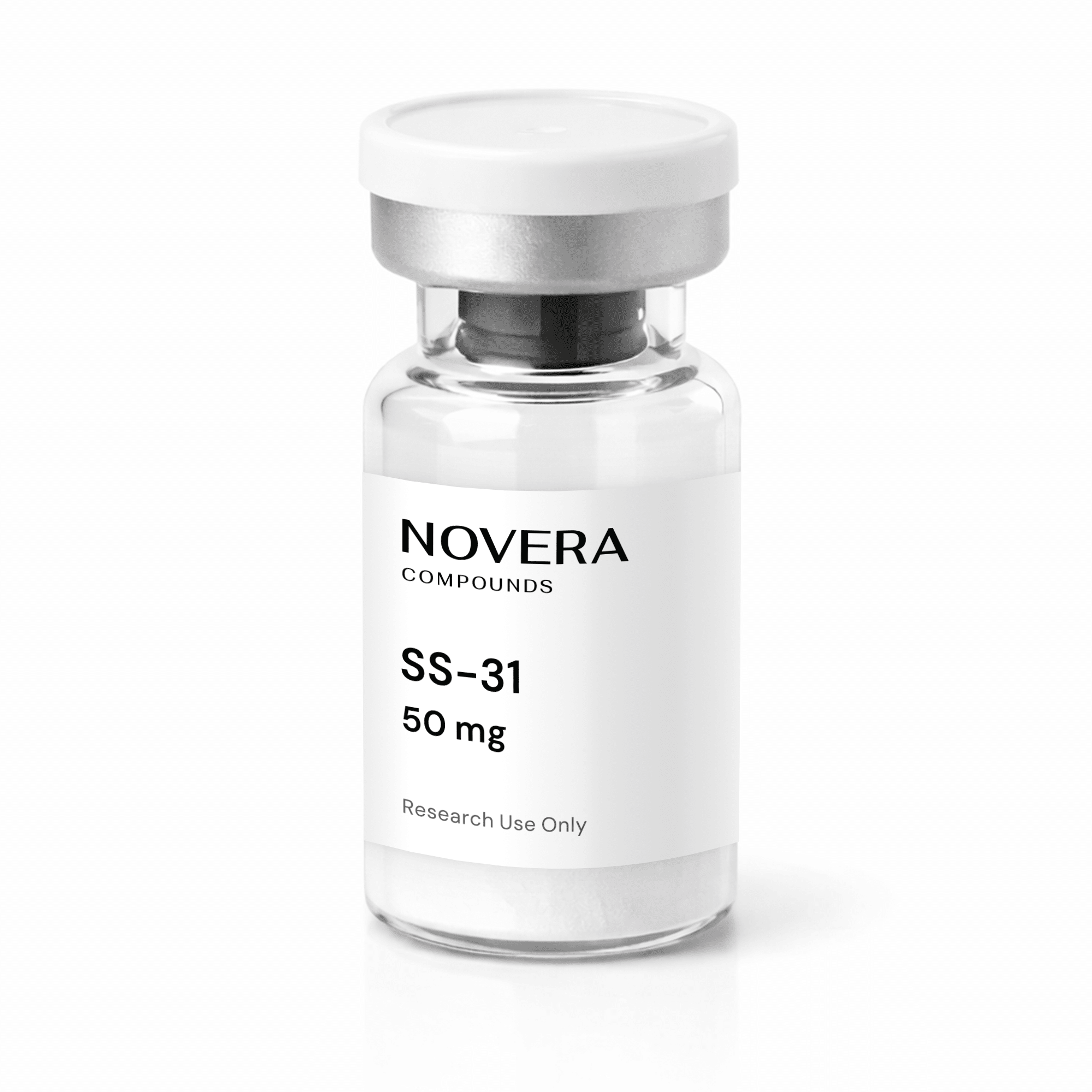
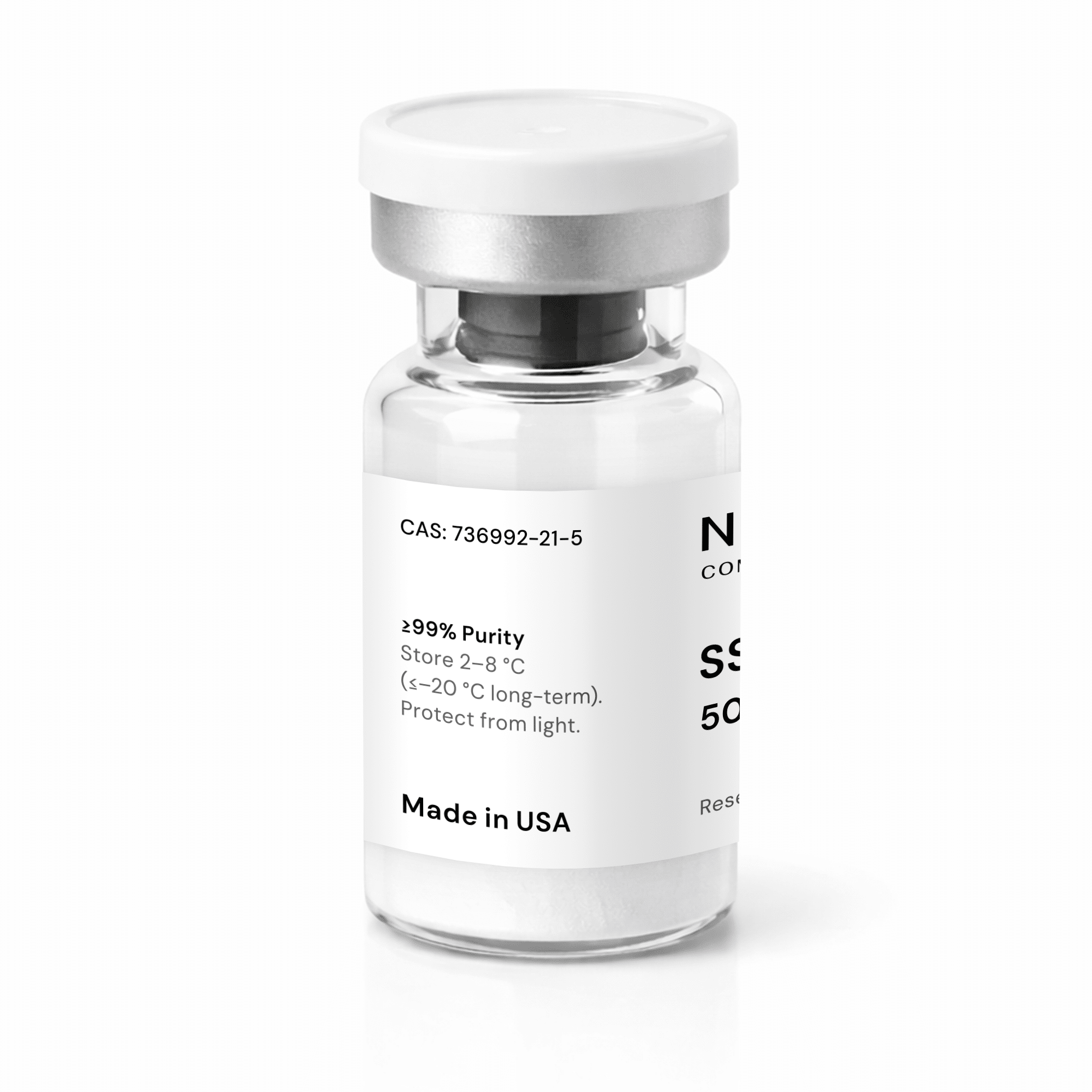
Laboratories that order SS-31 peptide receive it as a high-purity, lyophilized powder in a sealed research-grade vial. This product is intended strictly for laboratory research use.
SS-31 (50mg) Key Features and Benefits
- Cardiolipin-targeted mitochondrial peptide
- Defined tetrapeptide structure with Dmt-mediated ROS scavenging
- Preferential localization to the inner mitochondrial membrane
- Studied across in vitro and preclinical mitochondrial research systems
- Supports mechanistic work related to bioenergetics and oxidative balance
- Stable formulation suited to repeatable laboratory handling
- For laboratory research use only
SS-31 (50mg) Mechanism & Research Applications
SS-31 is investigated for its specific binding to cardiolipin within the inner mitochondrial membrane and its role in maintaining mitochondrial structure during stress. A central research focus is inhibition of cardiolipin peroxidation, an early event linked with cristae disorganization, electron transport chain (ETC) disruption, and loss of mitochondrial membrane potential.
By stabilizing cardiolipin-dependent cristae architecture, SS-31 supports ETC complex organization and improves electron transfer efficiency, which is associated with reduced electron leakage and lower mitochondrial ROS generation. These effects are examined alongside preservation of ATP synthesis efficiency in stressed experimental systems.
Research also evaluates SS-31 in relation to the control of mitochondrial permeability transition pores (mPTPs) during oxidative or ischemic stress. By supporting inner membrane integrity and reducing ROS burden, SS-31 is studied for its association with preserved membrane potential and reduced cytochrome c release, which aligns with reduced activation of apoptosis-related signaling in experimental models.
An additional mechanistic feature arises from direct ROS scavenging by Dmt residues, which can neutralize free radicals via oxidative coupling reactions within the mitochondrial environment.
Experimental systems include isolated mitochondria, cultured cardiac (H9c2), renal (HK-2), and neuronal (SH-SY5Y) cell models, synaptosomal preparations, and rodent models examining ischemia–reperfusion injury, metabolic stress, and mitochondrial dysfunction. Reports describe preferential activity in damaged mitochondria, with limited effects in baseline, unstressed systems.
SS-31 (50mg) Dosing & Observed Effects in Research
In in vitro studies, SS-31 is commonly evaluated at 10–100 nM in longer-exposure designs and at 1–50 μM in acute stress protocols, with ranges selected based on model conditions and endpoints. In preclinical studies, investigators use weight-based dosing (mg/kg) determined by injury model and administration route.
Reported experimental endpoints include:
- Mitochondrial membrane potential (e.g., TMRM, JC-1)
- ATP production and recovery kinetics
- Mitochondrial ROS levels
- Cristae structure and mitochondrial morphology
- Cardiolipin peroxidation status
- Cytochrome c localization
- Markers of mPTP opening
- Electron transport chain activity
- Apoptosis-related signaling markers
These observations are specific to the controlled systems used and guide laboratory protocol development rather than clinical interpretation.
SS-31 (50mg) Storage, Safety & References
Store SS-31 (50mg) in its lyophilized form at –20°C or below, protected from light and moisture. Prepare reconstituted solutions using sterile laboratory techniques and manage aliquots to minimize repeated freeze–thaw cycles, which can compromise peptide integrity. Laboratories buy SS-31 peptide to support consistent handling across repeat assays and comparative mitochondrial study designs.
This product is intended for use by trained laboratory personnel in approved research environments and should be handled in accordance with institutional safety and regulatory procedures.
References
https://pmc.ncbi.nlm.nih.gov/articles/PMC11409442
https://pmc.ncbi.nlm.nih.gov/articles/PMC3736700
https://pmc.ncbi.nlm.nih.gov/articles/PMC7334473
https://pmc.ncbi.nlm.nih.gov/articles/PMC11816484
Compliance Notice
This product is intended for laboratory research use only and is not approved for human or veterinary use.