




Tesamorelin (8mg) About This Product
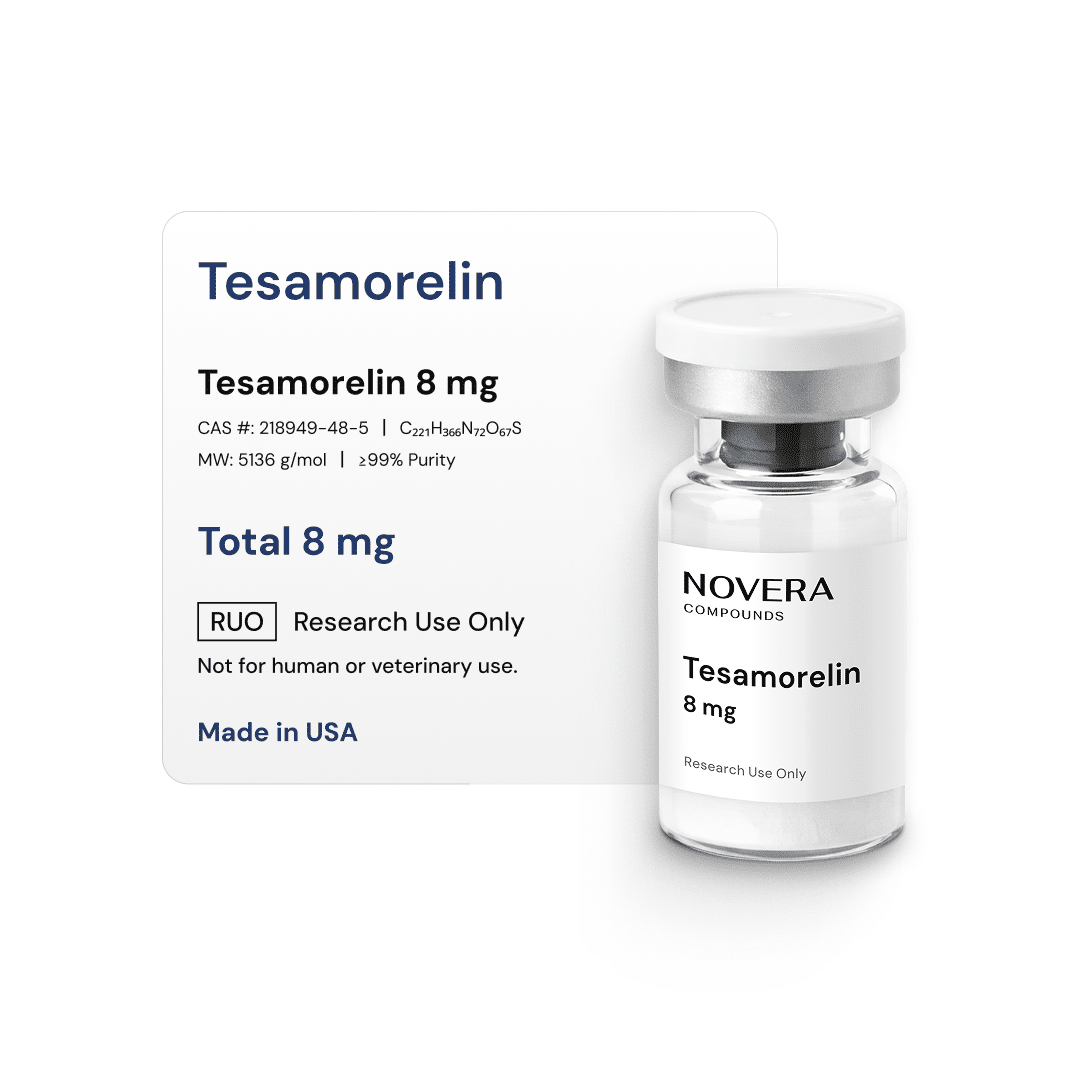
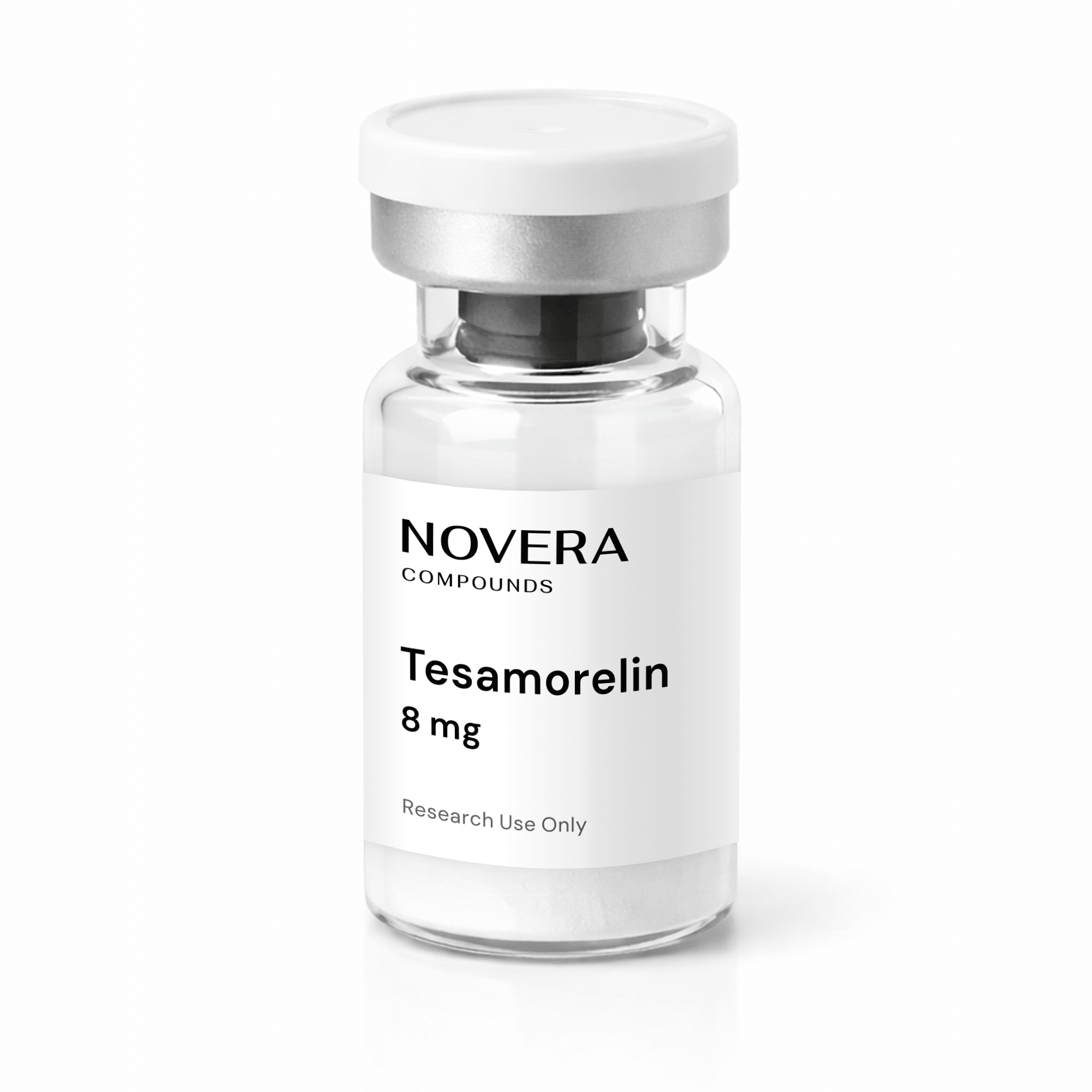
The tesamorelin peptide is a synthetic analog of human growth hormone–releasing hormone (GHRH) developed for laboratory and translational research involving endocrine signaling and metabolic regulation. This product contains 8 mg of tesamorelin, supplied as a lyophilized powder in a sealed research vial.
Tesamorelin is a 44–amino acid peptide derived from native GHRH and incorporates a modified N-terminus (trans-3-hexenoic acid). This structural modification improves resistance to enzymatic degradation and supports sustained biological activity in experimental models when compared with unmodified GHRH.
Laboratories that buy tesamorelin peptide commonly use the 8 mg vial format to support flexible study designs focused on growth hormone axis activity, metabolic pathways, and body-composition research.
Biochemical Characteristics
- Peptide class: Stabilized GHRH analog
- Amino acid sequence (44 residues): [Trans-3-hexenoic acid]-Tyr-Ala-Asp-Ala-Ile-Phe-Thr-Asn-Ser-Tyr-Arg-Lys-Val-Leu-Gly-Gln-Leu-Ser-Ala-Arg-Lys-Leu-Leu-Gln-Asp-Ile-Met-Ser-Arg-Gln-Gln-Gly-Glu-Ser-Asn-Gln-Glu-Arg-Gly-Ala-Arg-Ala-Arg-Leu
- Molecular weight: 5,135.86 Da (free base)
- Molecular formula: C₂₂₁H₃₆₆N₇₂O₆₇S
- CAS number: 901758-09-6
- PubChem CID: 44147413 (free base); 16137828 (acetate salt)
- Format: High-purity, lyophilized peptide
Tesamorelin (8mg) Key Features and Benefits
- High research purity: Typically ≥98–99%, verified by analytical testing
- Structural stability: N-terminal hexenoic acid modification improves resistance to enzymatic degradation
- Flexible vial size: 8 mg format supports repeated dosing and comparative study designs
- GHRH-family peptide: Targeted tool for studying endogenous GH secretion pathways
- Endocrine research focus: Used in investigations of GH/IGF-1 signaling, lipid metabolism, and body-composition dynamics
- Cold-chain compatible: Suitable for standard peptide storage and reconstitution protocols
- For research use only: Not approved for human or veterinary administration
Tesamorelin (8mg) Mechanism & Research Applications
Tesamorelin is investigated for its ability to stimulate endogenous growth hormone release by acting as a functional analog of native GHRH. It binds the growth hormone–releasing hormone receptor (GHRHR), a Class B G protein–coupled receptor, leading to adenylate cyclase activation, increased intracellular cAMP, and regulated pulsatile GH secretion.
Because GH is released in a physiologic, feedback-regulated pattern, tesamorelin is commonly used in research models where endogenous GH stimulation is preferred over direct GH exposure.
Key research applications include:
- Visceral adipose tissue (VAT) research: Studies examining VAT distribution and remodeling
- Muscle and anabolic signaling: Investigation of lean tissue maintenance and GH/IGF-1–mediated pathways
- Metabolic parameter studies: Evaluation of triglycerides, cholesterol profiles, and lipid handling
- Hepatic fat research: Assessment of liver fat content in metabolic and HIV-associated models
- Neuroendocrine investigations: Exploratory studies examining GH- and IGF-1–related effects on cognitive and neuroendocrine pathways
These applications focus on mechanistic and biological understanding rather than therapeutic evaluation.
Tesamorelin (8mg) Dosing & Observed Effects in Research
Published clinical and translational research has most commonly evaluated tesamorelin at 2 mg once daily, administered subcutaneously over 26-week to 12-month study periods. The 8 mg research vial supports preparation of solutions for repeated dosing, dose-response modeling, and longitudinal endocrine studies.
Reported findings include:
- Increased GH and IGF-1 levels in responder populations, with IGF-1 increases of approximately 181 μg/L (representing ~100–120% above baseline) documented in tesamorelin studies
- Visceral adipose tissue reductions of 15–20% in responder populations over 26-week protocols
- Preservation of lean mass in catabolic and aging research models
- Generally stable glucose homeostasis, with inter-individual variability
Effects on body composition are not sustained after discontinuation, with visceral fat reaccumulation observed once exposure ceases, a factor frequently considered in study design.
Tesamorelin (8mg) Storage, Safety & References
In its lyophilized (unopened) state, follow these for storage:
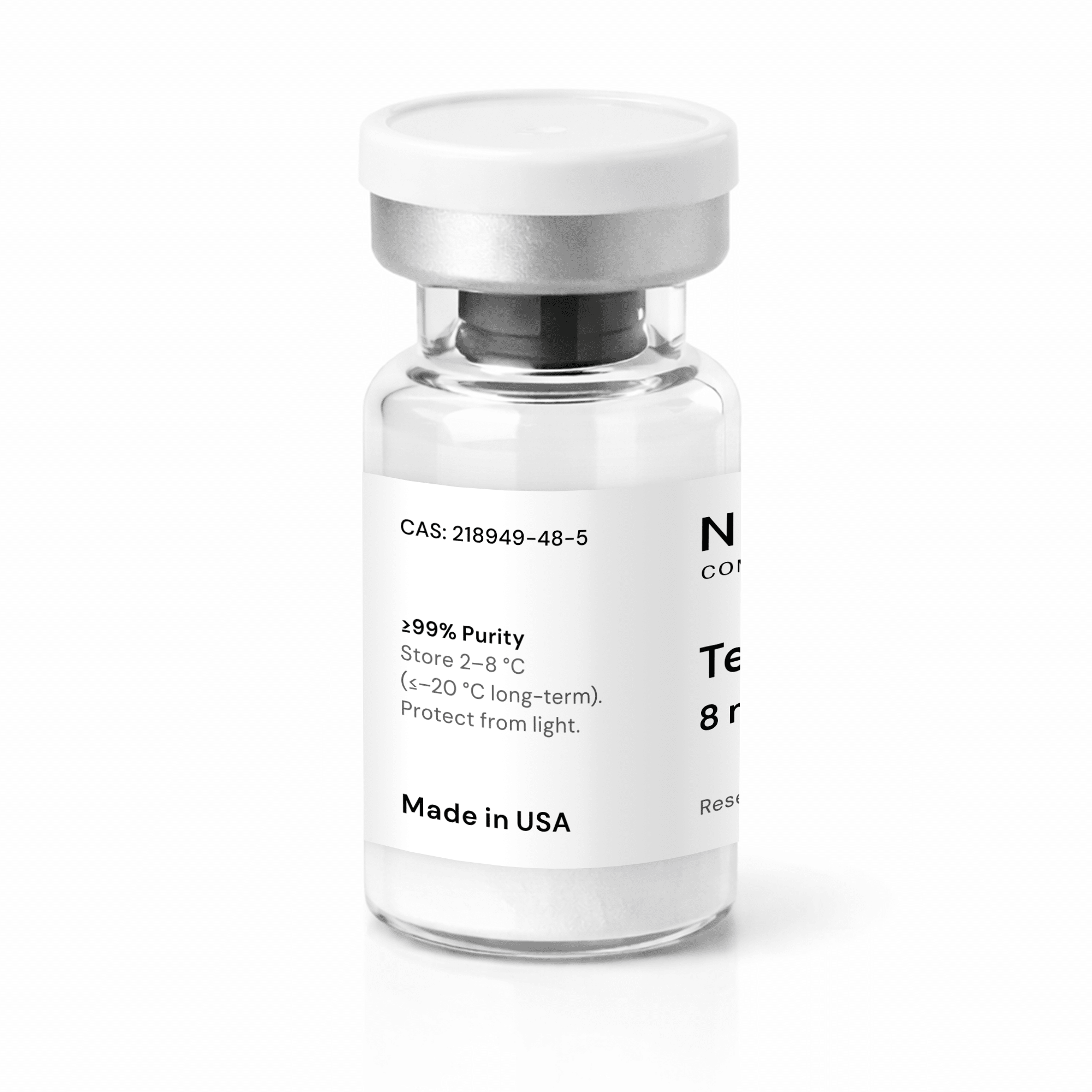
- Store at –20 °C or colder for long-term stability
- Short-term storage at 2–8 °C is acceptable during handling
After reconstitution, adhere to the following instructions:
- Use sterile aqueous diluent at pH 7.2–7.4
- Add slowly and gently swirl, do not shake
- Store reconstituted solution at 2–8 °C
- Typical stability 14–30 days, depending on protocol
Avoid repeated freeze–thaw cycles. When visually inspecting the vial, expect to see white powder. The solution should be clear and colorless.
Laboratories that order tesamorelin peptide must comply with all applicable institutional, biosafety, and regulatory requirements.
References
https://pubmed.ncbi.nlm.nih.gov/20554713
https://pubmed.ncbi.nlm.nih.gov/20943777
https://pubmed.ncbi.nlm.nih.gov/22495074
https://pubmed.ncbi.nlm.nih.gov/25038357
Compliance Notice
This product is intended for laboratory research use only and is not approved for human or veterinary use.