




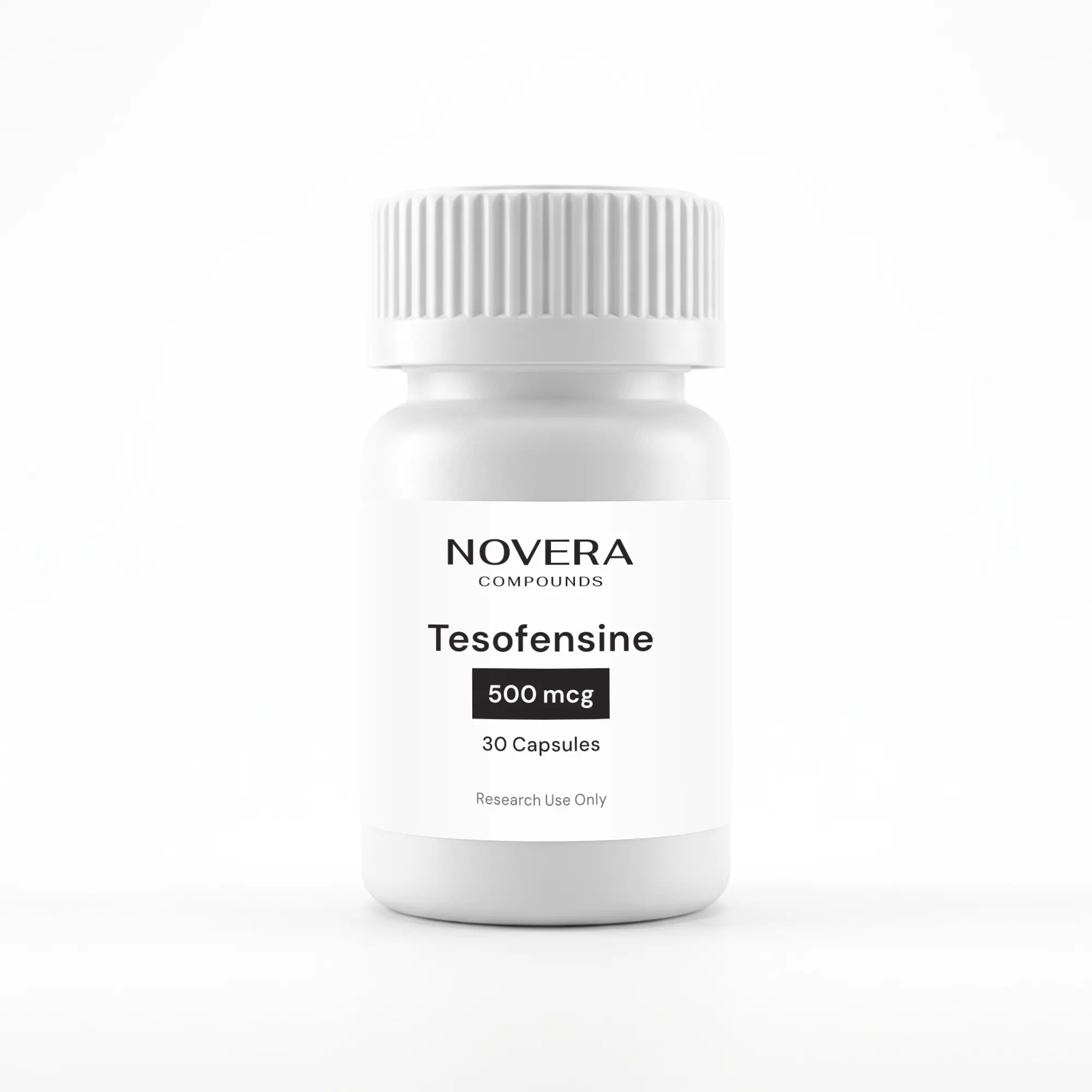
What Are The Purported Benefits Of Tesofensine (500mcg) 30 Capsules?
Tesofensine is a small-molecule compound that has been studied in metabolic and appetite-regulation research. Originally investigated in neurodegenerative disease research, it gained broader attention after studies consistently observed significant effects on body weight and food intake.
At the 500 mcg (0.5 mg) level, research interest has focused on balancing measurable effects and tolerability in study settings. Reported areas of investigation include:
- Weight-Management Research: Clinical studies have explored tesofensine for its potential to reduce body weight in obesity-related research programs.
- Appetite and Satiety Signaling: Tesofensine has been studied for its potential to reduce food intake and affect satiety-related signaling pathways in study models.
- Energy Expenditure Research: Some findings suggest it may influence pathways linked to metabolic rate and fat oxidation.
- Craving and Reward-Related Eating Behavior: Research has examined how modulation of neurotransmitters may affect food-related reward signaling and cravings.
- Neurocognitive Interest: Early findings have also prompted interest in possible neurobiological effects, including pathways associated with mood and cognitive regulation.
These findings reflect research observations and should not be interpreted as established medical outcomes.
What Is The Chemical Makeup Of Tesofensine (500mcg) 30 Capsules?
Tesofensine is a small-molecule compound (not a peptide) in the phenyltropane class. It is chemically designed to influence the reuptake of key monoamine neurotransmitters and is studied in research settings for its effects on appetite and metabolic regulation.
Technical Data
- Chemical Name: (1R,2R,3S,5S)-3-(3,4-dichlorophenyl)-2-(ethoxymethyl)-8-methyl-8-azabicyclo[3.2.1]octane
- CAS Number: 195875-84-4
- Molecular Formula: C₁₇H₂₃Cl₂NO
- Molecular Weight: 328.3 g/mol
- Compound Class: Phenyltropane derivative
- Research Mechanism (studied): Triple monoamine reuptake inhibition (DAT, SERT, NET)
For a finished capsule product, the 500 mcg per capsule refers to the amount of active compound per unit. Additional capsule excipients and fill materials may vary by manufacturer and should be confirmed on the product label or specification sheet.
What Does Scientific Research Say About Tesofensine (500mcg) 30 Capsules?
Published research has described tesofensine as a compound of interest in weight-management and metabolic studies, with multiple trials reporting dose-dependent effects on body weight. In clinical research, the 0.5 mg (500 mcg) dose is often highlighted as a dose of interest due to the balance between efficacy signals and tolerability observed in study participants.
Key Themes in Literature
- Dose-Dependent Weight Outcomes: Clinical studies have reported stronger weight-related effects at higher doses, while also noting differences in tolerability.
- Safety and Tolerability Monitoring: Frequently reported adverse events in research settings include dry mouth, insomnia, and increased heart rate, which are monitored during trials.
- Central Appetite Pathway Research: More recent studies have explored how tesofensine may affect hypothalamic circuits involved in feeding behavior and energy balance.
- Ongoing Development Interest: Tesofensine has continued to attract attention in clinical development pipelines and regulatory discussions in selected markets.
Overall, the current evidence supports continued scientific interest in tesofensine as an investigational compound in metabolic research, but it should not be presented as an approved treatment in general product-copy contexts unless jurisdiction-specific approval is confirmed and clearly stated.
What Are The Storage Conditions For Tesofensine (500mcg) 30 Capsules?
Tesofensine Capsules are generally more stable than many reconstituted peptide products, but proper storage remains important to maintain potency and capsule integrity over time. Exposure to heat, moisture, and light may reduce stability, especially in non-airtight packaging.
Recommended Storage Guidelines
- Capsules (Sealed)
- Room Temperature (15°C to 25°C): Best for standard storage.
- Capsules (Long-Term Storage)
- Refrigerated (2°C to 8°C): May extend stability in some cases (manufacturer-dependent).
- Raw Powder / Bulk Material
- Freezer (-20°C): Often used for long-term storage in research/lab settings.
Are you looking to buy Tesofensine (500mcg) 30 Capsules online?
If you’re looking to order Tesofensine (500mcg) 30 Capsules online at wholesale prices, contact Medical Spa RX for guidance on how to do so.
This product is supplied strictly for laboratory research use only and is not approved for human or veterinary administration. It is not intended for diagnostic, therapeutic, or clinical applications. Any reference to biological activity or potential effects is based solely on preclinical or in-vitro findings and should not be interpreted as validated clinical outcomes. Researchers are responsible for ensuring proper handling, storage, and disposal in accordance with institutional, federal, and international guidelines. By purchasing or using this material, the buyer confirms that they are a qualified researcher and that the product will be used exclusively in controlled research settings compliant with all applicable regulations.
References
- Astrup A, Madsbad S, Breum L, Jensen TJ, Kroustrup JP, Larsen TM. Effect of tesofensine on bodyweight loss, body composition, and quality of life in obese patients: a randomised, double-blind, placebo-controlled trial. Lancet. 2008;372(9653):1906-1913. doi:10.1016/S0140-6736(08)61525-1
- Axel AM, Mikkelsen JD, Hansen HH. Tesofensine, a novel triple monoamine reuptake inhibitor, induces appetite suppression by indirect stimulation of alpha1 adrenoceptor and dopamine D1 receptor pathways in the diet-induced obese rat. Neuropsychopharmacology. 2010;35(7):1464-1476. doi:10.1038/npp.2010.16
- Lehr T, Staab A, Tillmann C, Trommeshauser D, Schaefer HG, Kloft C. A quantitative enterohepatic circulation model: development and evaluation with tesofensine and meloxicam. Clin Pharmacokinet. 2009;48(8):529-542. doi:10.2165/11313370-000000000-00000
- National Center for Biotechnology Information. PubChem Compound Summary for CID 11370864, Tesofensine. https://pubchem.ncbi.nlm.nih.gov/compound/Tesofensine.