




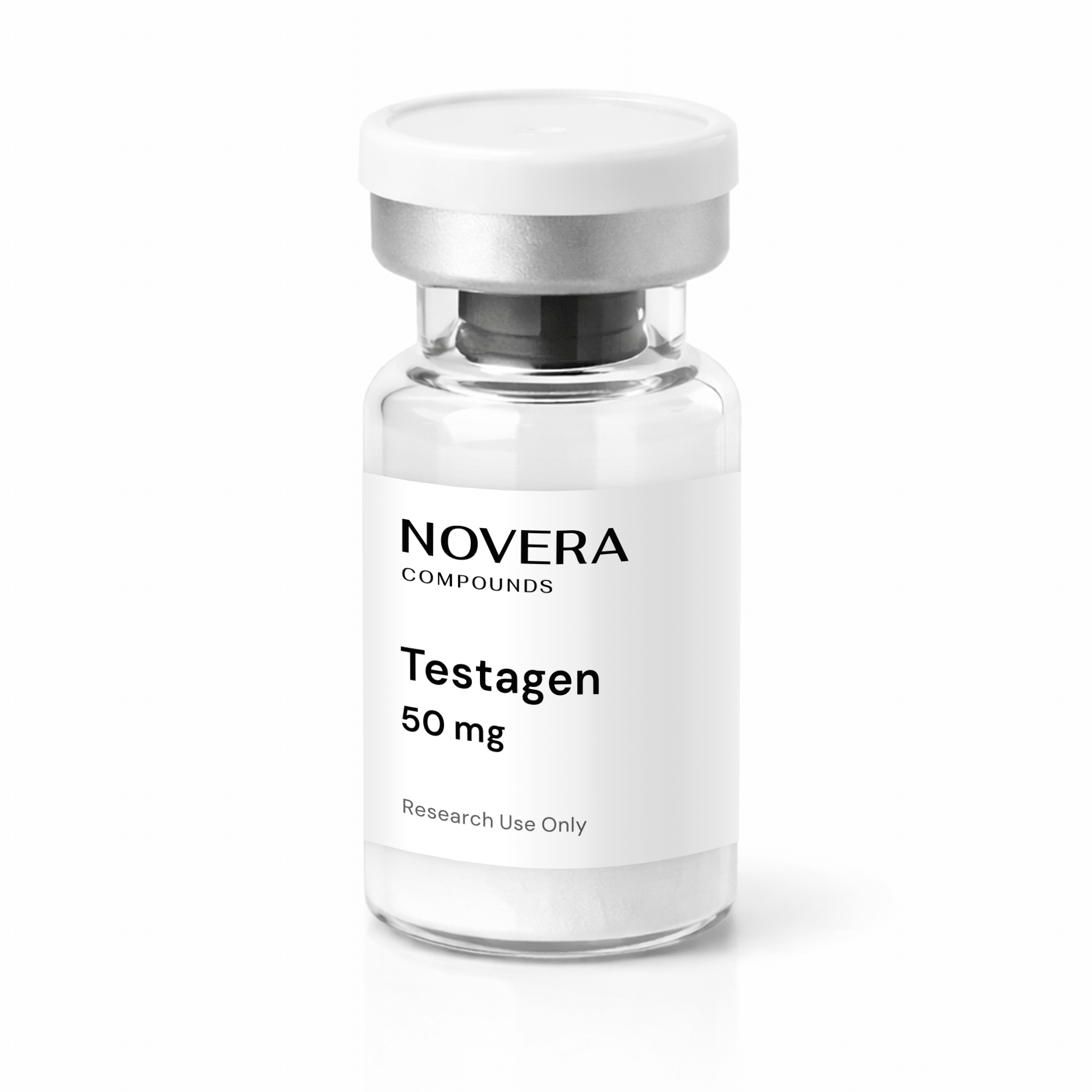
Testagen (50mg) About This Product
The Testagen peptide is a short synthetic signaling peptide studied within the Khavinson bioregulator peptide group. It is defined by the KEDG amino acid sequence, composed of lysine, glutamic acid, aspartic acid, and glycine. These peptides were originally identified from anterior pituitary peptide fractions and later reproduced synthetically for laboratory research applications.
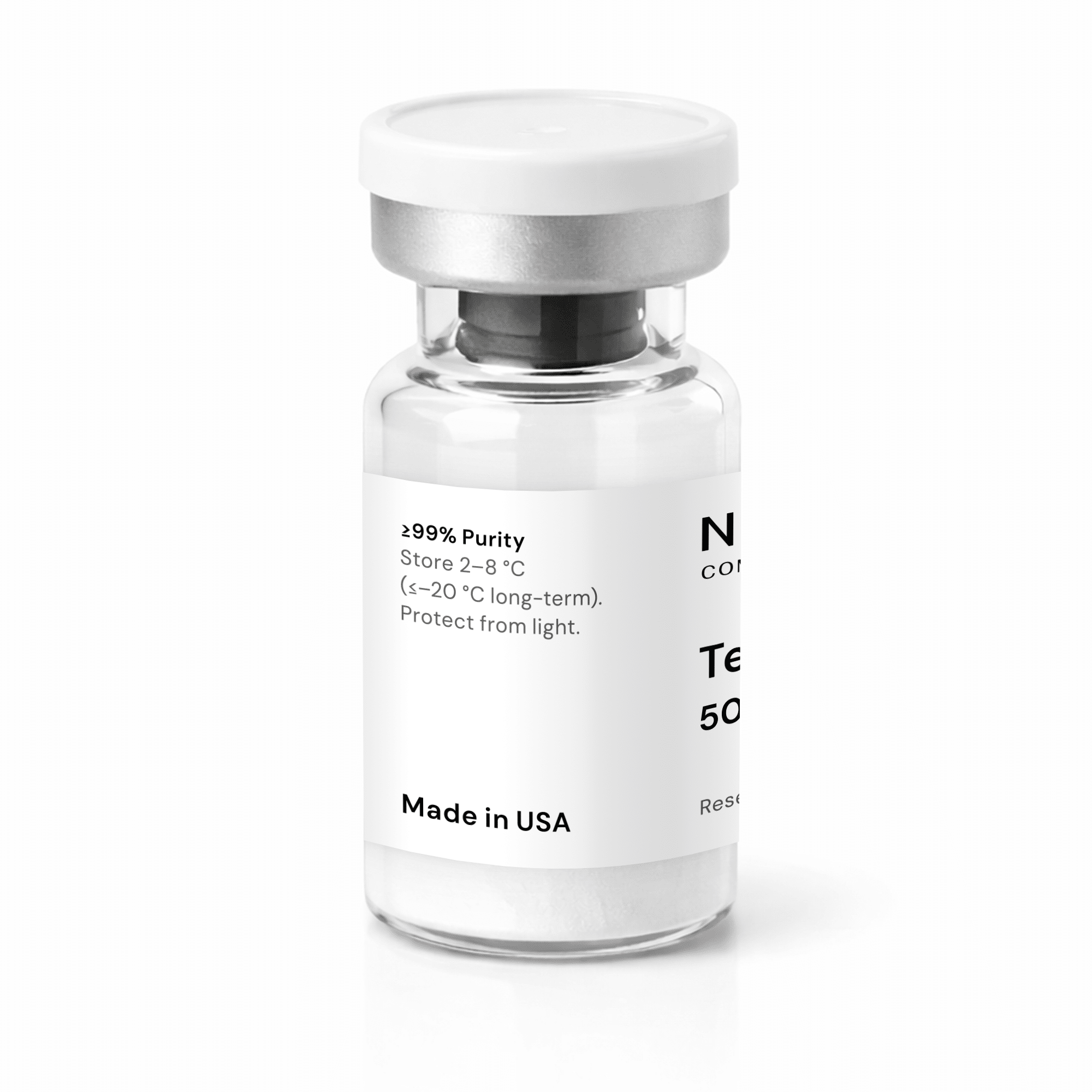
Testagen has a molecular weight of 447.2 g/mol and a molecular formula of C₁₇H₂₉N₅O₉. It is supplied as a lyophilized powder, manufactured to high purity standards (≥99%), with verification by HPLC analysis.
In research settings, Testagen has been examined for its involvement in endocrine system regulation, with primary emphasis on pituitary–thyroid axis signaling, gene expression modulation, and investigation of short peptide–DNA interactions. Secondary research has explored pituitary-gonadal axis dynamics and age-associated functional changes. Laboratories that buy Testagen peptide commonly use the 50 mg vial format to support repeated assays and extended experimental workflows.
Testagen (50mg) Key Features and Benefits
- High purity (>99% HPLC): Consistent research-grade specifications across batches
- Established bioregulator: Member of the Khavinson peptide family with documented laboratory study history
- Lyophilized formulation: Supports long-term stability under frozen storage
- Short tetrapeptide structure: KEDG sequence allows controlled molecular interaction studies
- Endocrine research focus: Examined in pituitary, reproductive hormone, and thyroid-related signaling models
- Cellular permeability: Studied for the capacity to cross cellular and nuclear membranes in experimental systems
- Oxidative stability profile: Lacks cysteine, methionine, and tryptophan, residues often associated with oxidative degradation
- For research use only: Not approved for human or veterinary use
Testagen (50mg) Mechanism & Research Applications
Testagen is investigated as a regulatory peptide that may influence gene expression and cellular signaling without altering DNA structure. Experimental studies suggest that short bioregulator peptides can cross cellular and nuclear membranes, enabling interaction with DNA-associated proteins and transcriptional control elements relevant to endocrine regulation.
PRIMARY APPLICATIONS:
- Hypothalamic–Pituitary–Thyroid (HPT) axis research: Evaluation of thyroid morphology, follicular organization, and thyroid hormone regulation in controlled experimental models, particularly in avian systems.
- Transcriptional regulation of thyroid-responsive gene-expression networks
SECONDARY APPLICATIONS:
- Hypothalamic–Pituitary–Gonadal (HPG) axis studies: Examination of reproductive hormone signaling, with a focus on models involving age-related hormonal decline or inflammatory stress.
- Cellular and immune-associated research: Investigation of stem-cell differentiation markers, immune cell development, and antioxidant enzyme activity, alongside exploratory work in cellular senescence pathways.
These applications are designed to explore mechanistic and regulatory processes, not therapeutic outcomes.
Testagen (50mg) Dosing & Observed Effects in Research
Published research involving Testagen has used model-specific dosing strategies, varying by species, route of administration, and study objective. Subcutaneous administration has been used in several animal and observational studies, while oral administration has shown lower bioavailability in comparative experiments. Standardized human dosing has not been established.
In avian research models of thyroid function, Testagen administration was associated with changes in thyroid morphology, follicular structure, and hormone-related parameters, as well as measurable effects on body-weight patterns.
Limited clinical observation studies have reported preliminary findings on endocrine parameters following peptide exposure, with responses varying across age groups, study durations, and experimental designs. Translation of dosing across models has not been validated.
Testagen (50mg) Storage, Safety & References
When handling Testagen in its lyophilized (unopened) state, adhere to the following:
- Store at –20 °C or lower for long-term stability
- –80 °C storage may be used for extended preservation
- Keep vials tightly sealed, protected from light and moisture
- Allow vials to reach room temperature before opening to limit condensation
After reconstituting the peptide, follow these instructions:
- Use sterile distilled water or a low-acidity buffer
- Add diluent slowly along the vial wall
- Store reconstituted solutions at 2–8 °C for short-term use
- Aliquot and freeze at –20 °C to avoid repeated freeze–thaw cycles
All handling must follow institutional biosafety procedures, including appropriate personal protective equipment and approved disposal methods. Laboratories that order Testagen peptide are responsible for compliance with local regulatory requirements.
References
https://pubmed.ncbi.nlm.nih.gov/34834147
https://www.clinmedjournal.com/jour/article/view/29/0?locale=en_US
https://ouci.dntb.gov.ua/en/works/7BAx32J9
https://khavinson.info/assets/files/2013-Khavinson_Kuznik.pdf
Compliance Notice
This product is intended for laboratory research use only and is not approved for human or veterinary use.