




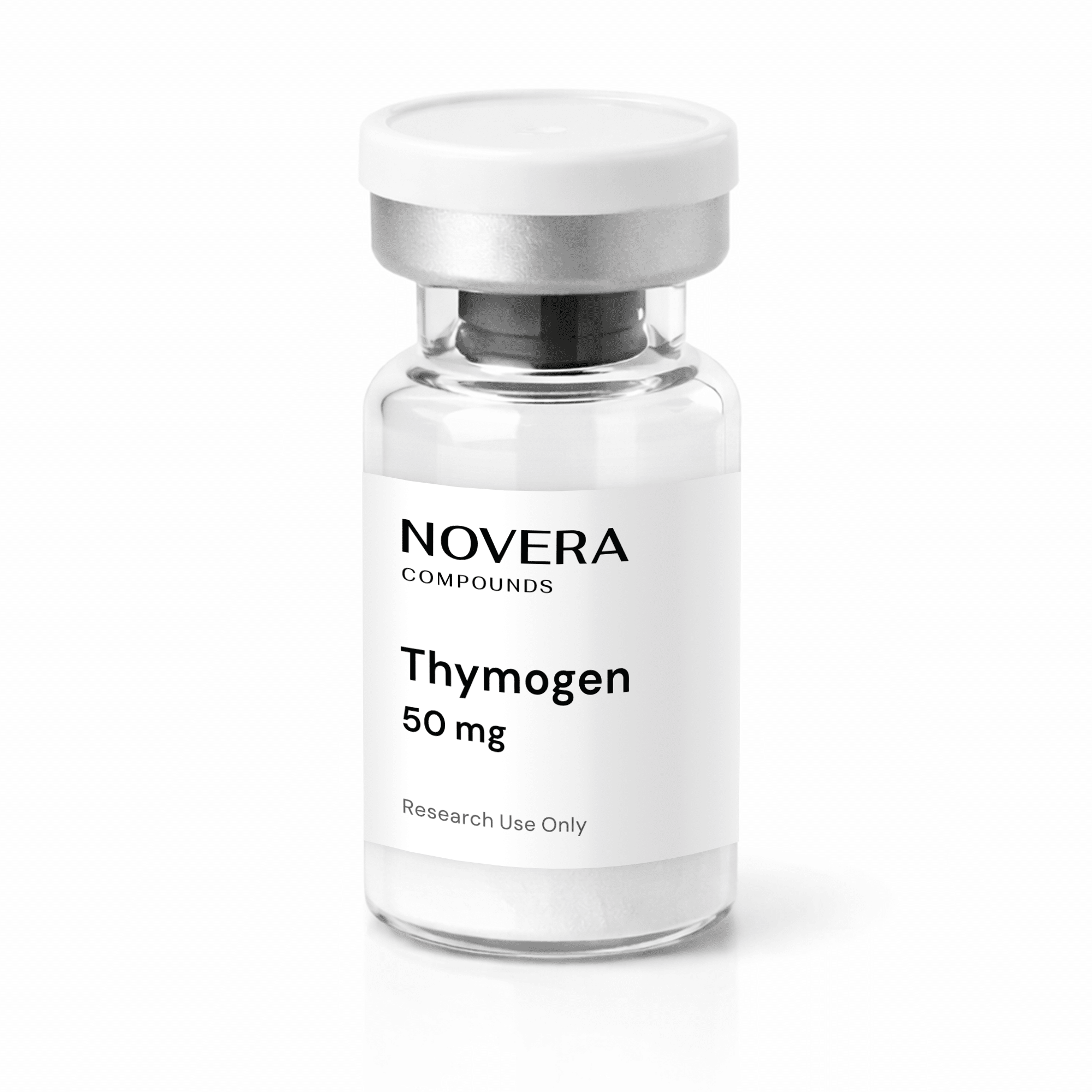


What Are the Purported Benefits of Thymagen (Thymogen) (50mg)?
Thymagen (also known as Thymogen or Oglufanide) is an immunobioregulatory peptide studied for its ability to support immune balance rather than broadly stimulate immune activity. By mimicking natural thymus signals, the thymogen peptide has been investigated for its role in T-cell maturation and differentiation, helping the immune system more accurately recognize and respond to pathogens.
Research suggests it may help normalize immune responses by moderating overactivity (as seen in allergies or autoimmunity) while supporting weakened immunity in chronic illness or during recovery. Because thymic function declines with age, Thymogen is also being researched for age-related immune decline and tissue repair in the context of physical stress. These applications illustrate ongoing interest among laboratories that buy thymogen peptide for immune-focused studies.
What Is the Chemical Makeup of Thymagen (Thymogen) (50mg)?
Thymogen is a synthetic dipeptide composed of:
- Peptide Sequence: H-Glu-Trp-OH
- Chemical Formula: C₁₆H₁₉N₃O₅
- Molecular Weight: 333.34 g/mol
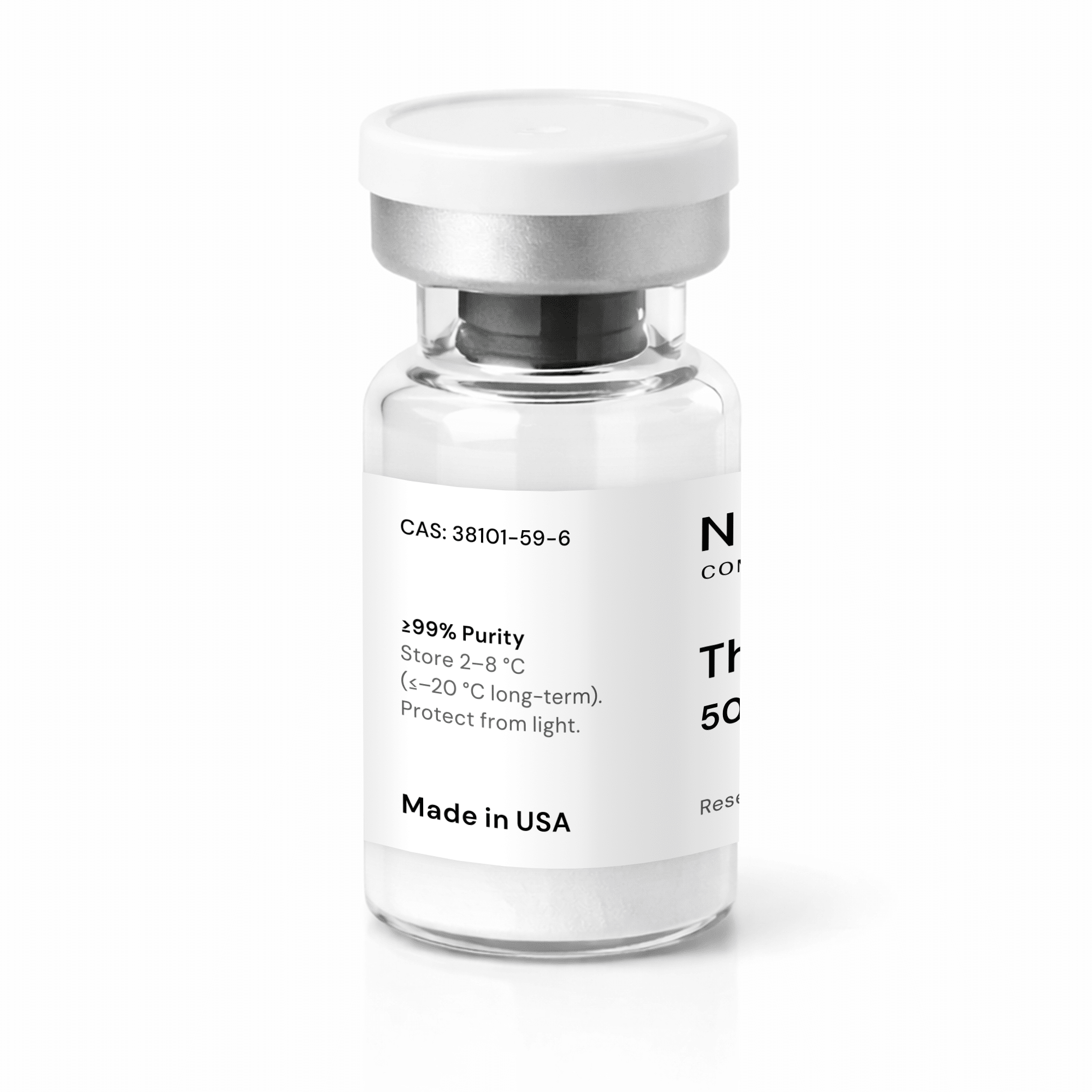
- CAS: 38101-59-6
This structure represents a bioactive fragment related to natural thymic peptides. It is believed to influence gene expression in immune cells, supporting processes involved in immune defense, repair, and homeostasis.
The 50mg label refers to the total lyophilized peptide content per vial rather than a single dose, an essential consideration for laboratories that want to order thymogen peptide.
What Does Scientific Research Say About Thymagen (Thymogen) (50mg)?
Thymogen has been studied for more than three decades, particularly in Eastern European literature, its use in clinical contexts has been reported in some regional sources for conditions involving infections, immunosuppression, and recovery settings (specific indications and regulatory status vary by jurisdiction and source).
Additional research has explored:
- Potential roles in hepatitis C management
- Effects on angiogenesis in oncology models
- The importance of its chiral (L-) form, which appears to support immune regulation
Across published work, Thymogen generally shows a favorable safety profile, with low toxicity and few reported adverse events, even at higher research concentrations.
What Are the Storage Conditions for Thymagen (Thymogen) (50mg)?
Because Thymogen contains tryptophan, which can be sensitive to oxidation, light protection and temperature control help preserve integrity during handling. Minimize cumulative room-temperature time by returning vials promptly to cold storage after receipt and after each use, and avoid unnecessary temperature cycling where possible. If a powder or solution develops yellow-to-brown discoloration, that can be consistent with oxidation and may indicate reduced experimental reliability.
- Storage: Store 2–8°C (≤−20°C long-term). RT exposure should be minimized. Protect from light.
Are you looking to buy Thymagen (Thymogen) (50mg) online?
If you’re looking to order Thymagen(Thymogen) (50mg) online at wholesale prices, contact Medical Spa RX for guidance on how to do so.
This product is supplied strictly for laboratory research use only and is not approved for human or veterinary administration. It is not intended for diagnostic, therapeutic, or clinical applications. Any reference to biological activity or potential effects is based solely on preclinical or in-vitro findings and should not be interpreted as validated clinical outcomes. Researchers are responsible for ensuring proper handling, storage, and disposal in accordance with institutional, federal, and international guidelines. By purchasing or using this material, the buyer confirms that they are a qualified researcher and that the product will be used exclusively in controlled research settings compliant with all applicable regulations.
Sources
https://pmc.ncbi.nlm.nih.gov/articles/PMC10487935
https://patents.google.com/patent/WO1997019691A1/en
https://www.actabiomedica.ru/jour/article/view/4491/0?locale=en_US