




What Are the Purported Benefits of Tirzepatide (100 mg)?
Tirzepatide peptide is a first-in-class dual incretin agonist designed to activate both GLP-1 and GIP receptors. This “twincretin” mechanism has been studied for its capacity to produce more substantial metabolic effects than single-pathway incretin therapies.
Clinical trials at approved weekly doses (up to 15 mg) have shown substantial and sustained weight reduction, with some study groups achieving average body weight loss exceeding 20%, alongside significant improvements in glycemic control, HbA1c, and insulin sensitivity. These effects are dose- and response-dependent and are achieved under carefully titrated clinical protocols, not from a single high-dose exposure.
Additional research reports:
- Improvements in lipid parameters
- Reduced appetite and delayed gastric emptying
- Favorable changes in markers of fatty liver disease
What Is the Chemical Makeup of Tirzepatide (100 mg)?
Tirzepatide is a synthetic 39–amino acid linear peptide, engineered to closely resemble native GIP while also activating GLP-1 receptors.
A key structural feature is a C20 fatty diacid side chain attached to a lysine residue. This modification promotes reversible albumin binding, extending the peptide’s half-life and enabling once-weekly dosing in clinical protocols.
- Peptide length: 39 amino acids
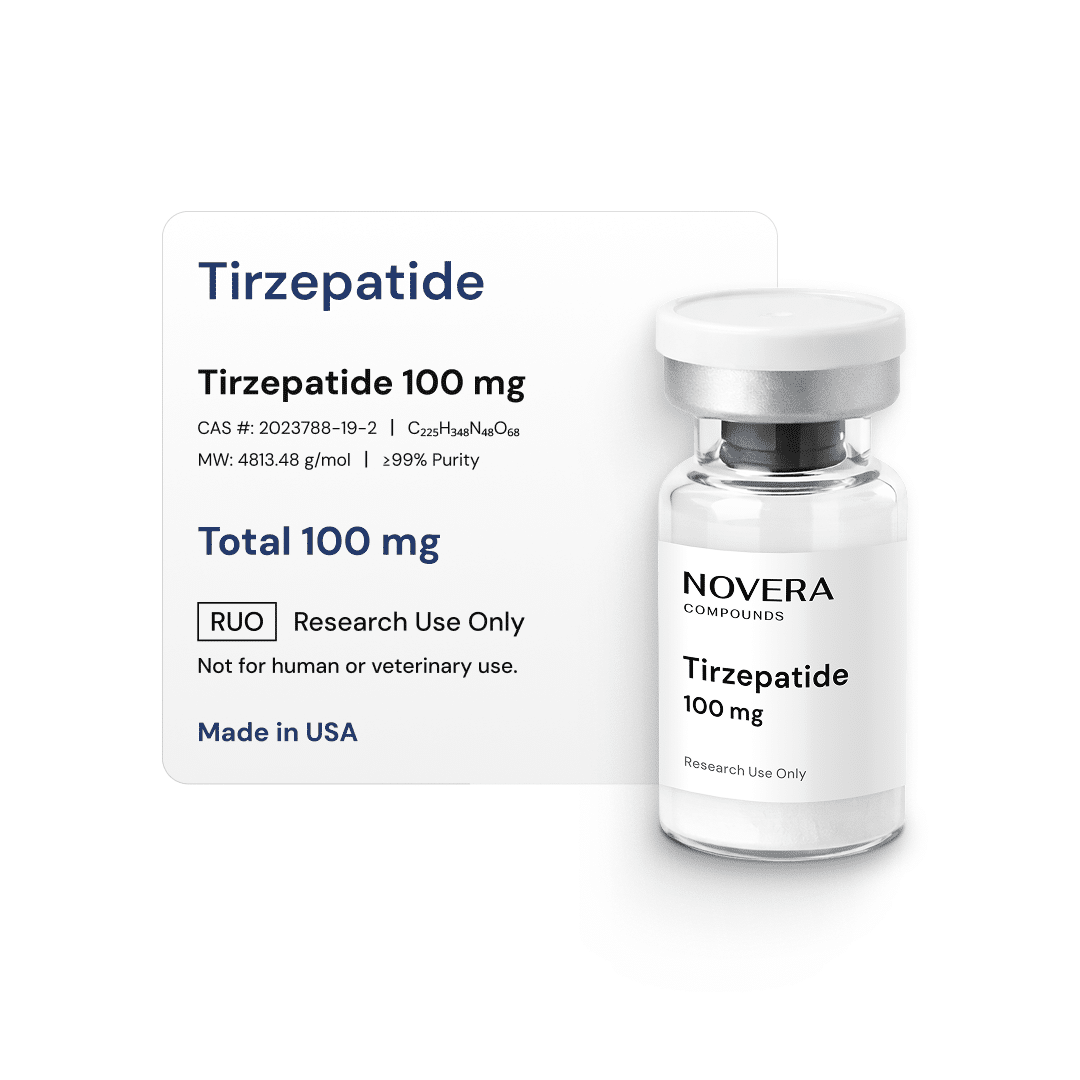
- Molecular weight: 4813.48 g/mol
- Chemical formula: C₂₂₅H₃₄₈N₄₈O₆₈
- CAS: 2023788-19-2
- Synonyms: P1206, LY3298176, tirzepatida, tirzepatidum, OYN3CCI6QE
- Peptide sequence: YXEGTFTSDYSIXLDKIAQKAFVQWLIAGGPSSGAPPPS
What Does Scientific Research Say About Tirzepatide (100 mg)?
Current FDA-approved and clinical trial regimens use gradual dose escalation, typically starting at low doses and titrating up to a maximum of 15 mg once weekly. Within this range, tirzepatide has been shown to:
- Reduce HbA1c to near-normal levels in many participants
- Produce clinically meaningful weight loss in people with type 2 diabetes and in obesity trials
- Exhibit a dose-dependent side-effect profile, with gastrointestinal events (nausea, vomiting, diarrhea) more frequent at higher doses
In a research context, a 100 mg vial is intended to be:
- Reconstituted under sterile conditions
- Divided into multiple, precisely measured doses
- Used within controlled experimental protocols, not as a one-time bolus
When working with the tirzepatide peptide at this scale, dosing should be aligned with established pharmacology and safety parameters derived from the approved clinical range.
What Are the Storage Conditions for Tirzepatide (100 mg)?
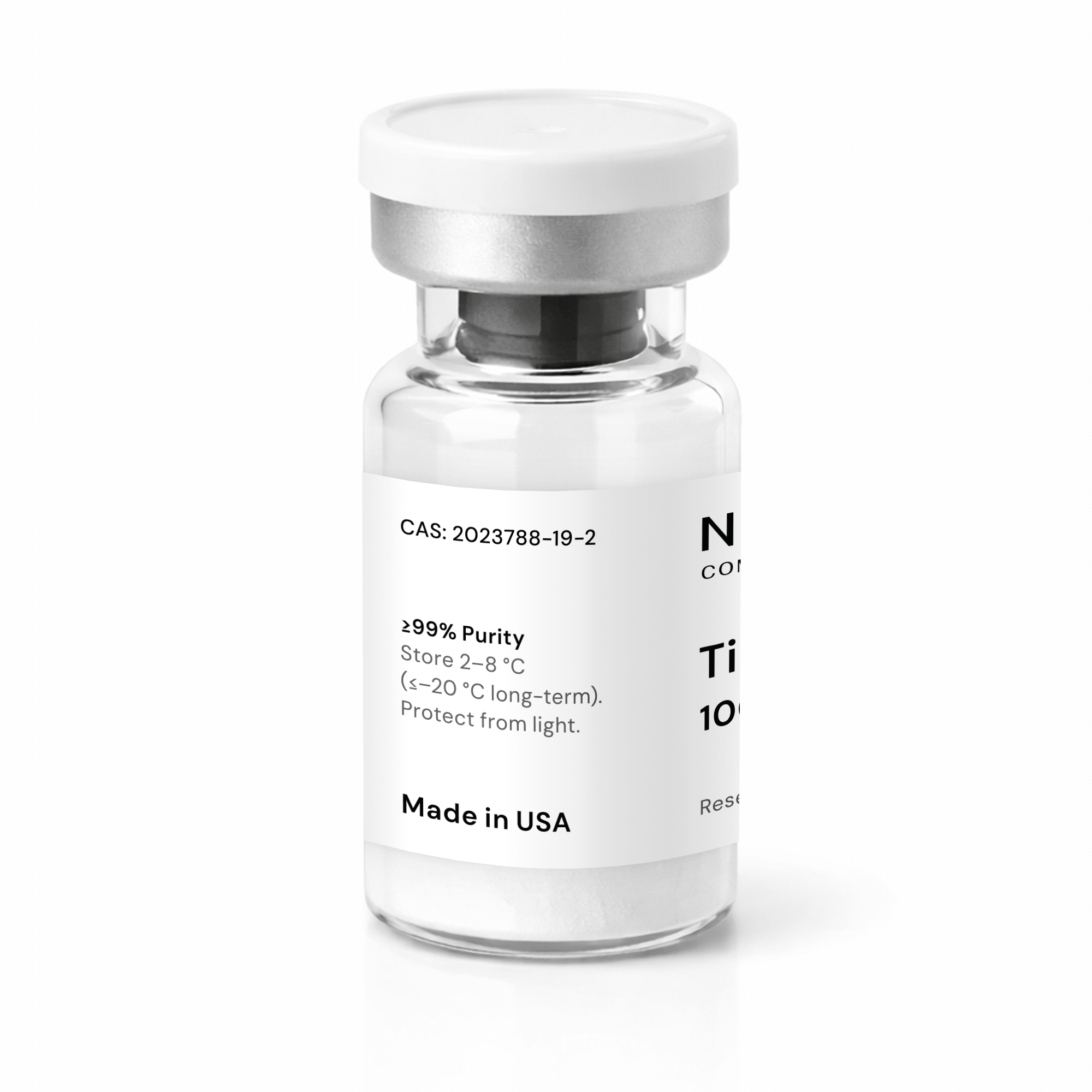
Unreconstituted (lyophilized) tirzepatide is commonly stored at <=-20 °C for long-term stability, protected from light and moisture, and transferred promptly to the recommended temperature upon receipt to help maintain peptide integrity for receptor-signaling assays.
After reconstitution in an appropriate diluent (e.g., sterile water, PBS, Tris buffer, or assay-specific buffer), solutions are typically stored at 2–8 °C and used within 24–48 hours in accordance with laboratory best practices. Avoid repeated freeze–thaw cycles; for longer workflows, aliquot reconstituted solutions and store at <=-20 °C while documenting freeze–thaw events to monitor potential loss of activity.
Are you looking to buy Tirzepatide (100 mg) online?
If you’re looking to order Tirzepatide (100 mg) online at wholesale prices, contact Medical Spa RX for guidance on how to do so.
This product is supplied strictly for laboratory research use only and is not approved for human or veterinary administration. It is not intended for diagnostic, therapeutic, or clinical applications. Any reference to biological activity or potential effects is based solely on preclinical or in-vitro findings and should not be interpreted as validated clinical outcomes. Researchers are responsible for ensuring proper handling, storage, and disposal in accordance with institutional, federal, and international guidelines. By purchasing or using this material, the buyer confirms that they are a qualified researcher and that the product will be used exclusively in controlled research settings compliant with all applicable regulations.
Sources
https://pubmed.ncbi.nlm.nih.gov/36050763
https://pmc.ncbi.nlm.nih.gov/articles/PMC9354517
https://pmc.ncbi.nlm.nih.gov/articles/PMC10614386