




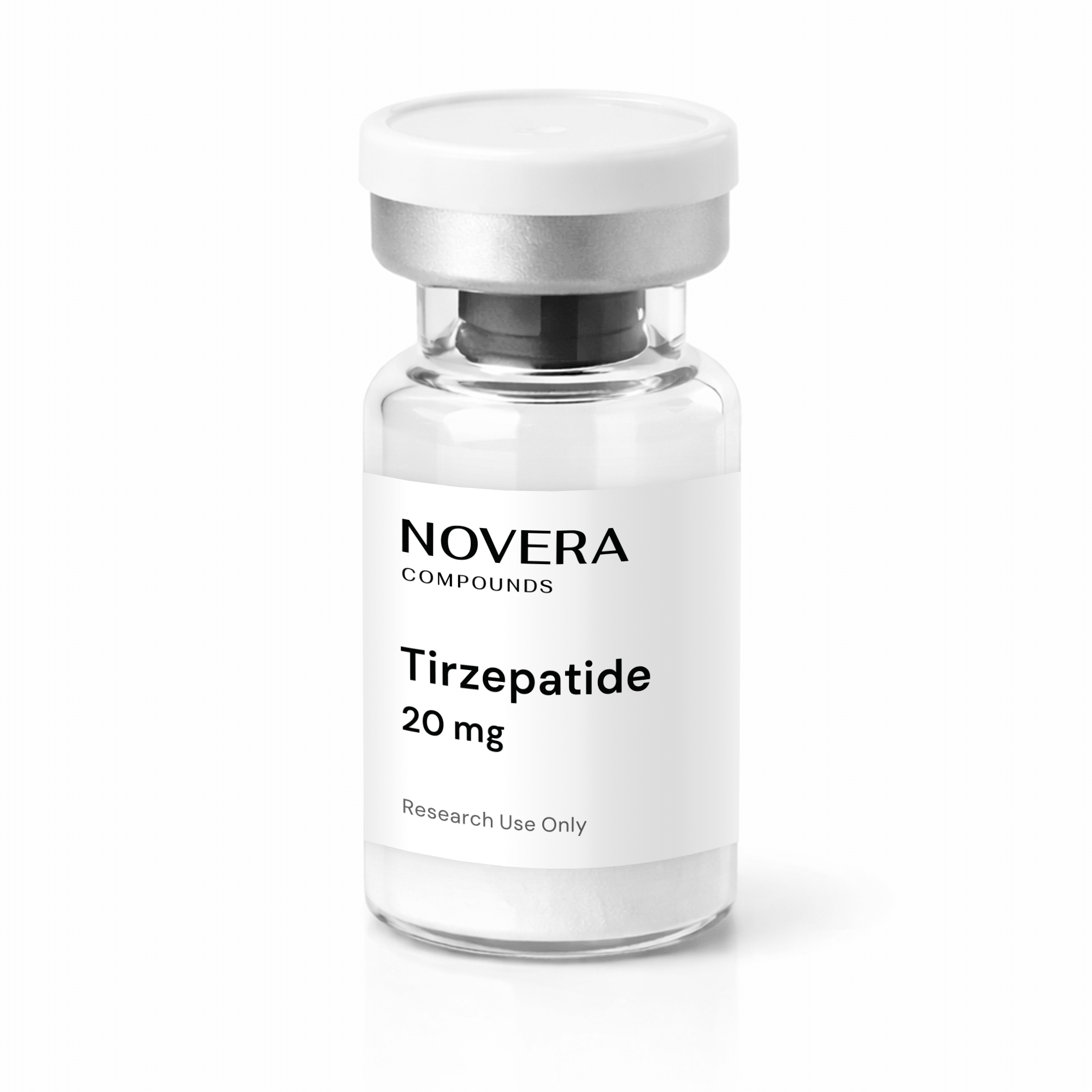


What Are the Purported Benefits of Tirzepatide 20 mg?
Tirzepatide is FDA-approved in single weekly doses up to 15 mg for therapeutic use. However, when Tirzepatide is prepared for research, analytical, and compounding applications, it is available in higher concentrations.
Clinical trials, including the SURMOUNT series, reported average weight reductions of roughly 15% to 22% over 72 weeks. Additional findings include improved glycemic control, favorable changes in cardiometabolic markers, and appetite regulation. As the Tirzepatide dual agonist, it enhances satiety and slows gastric emptying, which explains the growing interest in this peptide and the number of researchers looking to buy Tirzepatide responsibly.
What is the Chemical Makeup of Tirzepatide 20 mg?
Tirzepatide is a synthetic, long-acting peptide engineered to activate two complementary metabolic receptors: GIP and GLP-1. It is a 39-amino-acid linear polypeptide chain, designed for receptor activation and sustained activity. The Tirzepatide peptide is conjugated to a C20 fatty diacid through a molecular linker, enabling reversible albumin binding and extending its half-life to approximately five days.
Its molecular formula is C₂₂₅H₃₄₈N₄₈O₆₈. The molar mass is4813.48 g/mol. This precise structure is consistent across all concentrations, whether in a Tirzepatide 10 mg peptide or higher multi-dose formulations, such as Tirzepatide 20 mg. This stability makes it suitable for both therapeutic use and controlled laboratory research.
Chemical Identifiers and Specifications
- Chemical Formula: C₂₂₅H₃₄₈N₄₈O₆₈
- Molecular Weight: 4813.48 g/mol
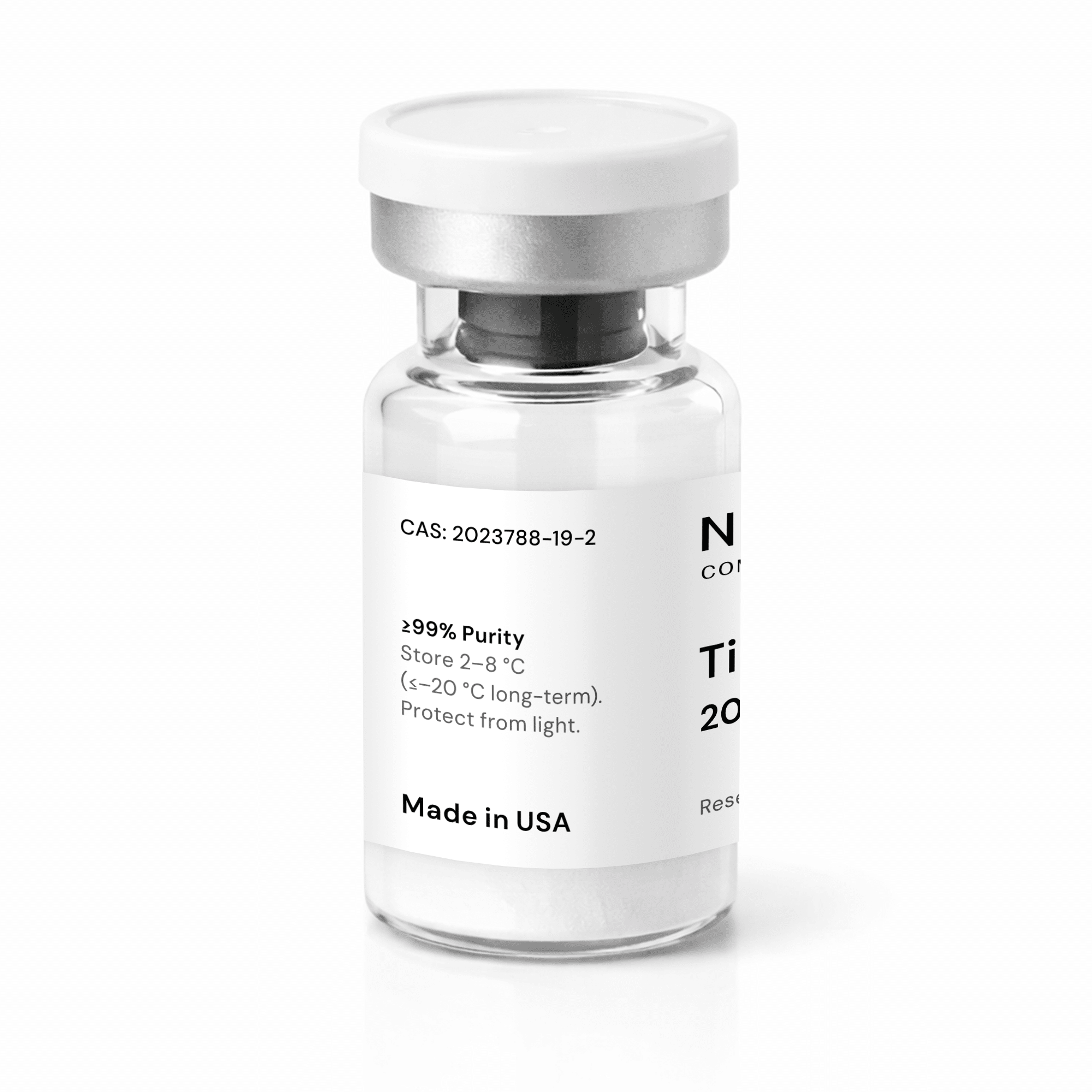
- CAS Registry Number: 2023788-19-2
- PubChem Compound ID: 163285897
- Common Synonyms: Tirzepatide, Dual Agonist
- Purity: ≥99% HPLC
- Appearance: Lyophilized powder
- Amino Acid Count: 39 (GIP and GLP-1 analogue)
- Sequence: YXEGTFTSDYSIXLDKIAQKAFVQWLIAGGPSSGAPPPS
What Does Scientific Research Say About Tirzepatide 20 mg?
Most scientific data on Tirzepatide comes from two major clinical trial programs:
- SURPASS Trials (Type 2 Diabetes, 40-week studies): Demonstrated superior HbA1c reduction compared to semaglutide 1 mg and placebo, with reductions of -2.30% at the 15 mg dose versus -1.86% for semaglutide.
- SURMOUNT Trials (Weight Management, 72-week studies): The SURMOUNT-1 trial demonstrated weight reductions at 72 weeks of approximately 15% (5 mg dose), 19.5% (10 mg dose), and 20.9% (15 mg dose), with placebo showing only 3.1% reduction. Extended studies, such as SURMOUNT-4, followed patients for up to 88 weeks under varying maintenance protocols.
What are the Storage Conditions for Tirzepatide 20 mg?
Proper storage is critical to maintaining the stability and integrity of Tirzepatide:
- Refrigeration: Store at 2°C–8°C (36°F–46°F).
- Room Temperature: Stable at up to 30°C (86°F) for up to 21 days, depending on the formulation.
- Light Protection: Keep in original packaging to avoid light exposure.
- Do Not Freeze: Freezing will irreversibly degrade the peptide.
- Handling: Avoid vigorous shaking to prevent molecular breakdown.
Adhering to these conditions ensures optimal stability for Tirzepatide for research and analytical use.
Are you looking to buy Tirzepatide 20mg online?
If you’re looking to order Tirzepatide 20mg online at wholesale prices, contact Medical Spa RX for guidance on how to do so.
This product is supplied strictly for laboratory research use only and is not approved for human or veterinary administration. It is not intended for diagnostic, therapeutic, or clinical applications. Any reference to biological activity or potential effects is based solely on preclinical or in vitro findings and should not be interpreted as evidence of validated clinical outcomes. Researchers are responsible for ensuring proper handling, storage, and disposal in accordance with institutional, federal, and international guidelines. By purchasing or using this material, the buyer confirms that they are a qualified researcher and that the product will be used exclusively in controlled research settings compliant with all applicable regulations.
Sources
https://pubmed.ncbi.nlm.nih.gov/35658024
https://go.drugbank.com/drugs/DB15171
https://www.ncbi.nlm.nih.gov/books/NBK585056/https://onlinelibrary.wiley.com/doi/abs/10.1002/oby.23612