



What Are the Purported Benefits of TRH Thyrotropin (20mg)?
Thyrotropin-releasing hormone (TRH), also known as protirelin, is a compact tripeptide (pyroglutamyl-histidyl-proline amide) endogenously produced by hypothalamic neurons and distributed across multiple regions of the central nervous system. In experimental neuroendocrinology, the TRH peptide is widely used as a mechanistic research probe to investigate hypothalamic–pituitary signaling, G protein–coupled receptor (GPCR) activation, and downstream second-messenger dynamics.
TRH functions as a hypothalamic regulatory peptide that modulates pituitary secretion of thyrotropin (TSH) and prolactin through activation of the TRH receptor (TRHR), a Gq-coupled GPCR. Beyond endocrine-axis biology, TRHergic circuitry has been examined in preclinical models of cerebellar synaptic plasticity, autonomic regulation, and integrative brainstem control of cardio-respiratory outputs, establishing TRH as a key neuromodulator for studying endocrine–neuronal coupling.
What Is the Chemical Makeup of TRH Thyrotropin (20mg)?
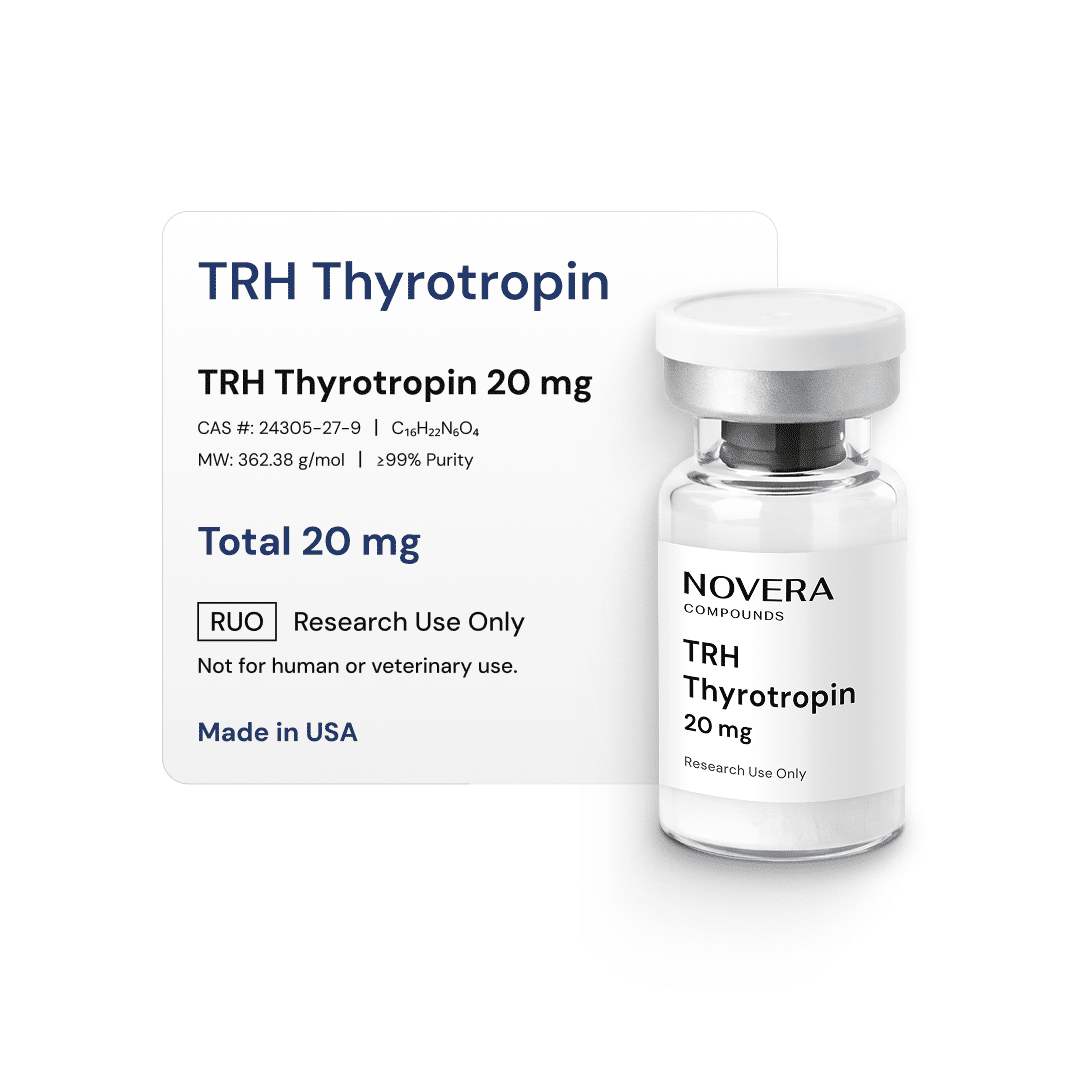
TRH is a compact, polar tripeptide consisting of only three amino acids. Its pyroglutamyl-histidyl-proline amide structure (pGlu–His–Pro–NH₂) exhibits rapid susceptibility to enzymatic turnover in biological matrices, making it well suited for short-acting signaling studies.
- Amino acid sequence: Pyr-His-Pro-NH2
- Molecular formula: C₁₆H₂₂N₆O₄
- Molecular weight: 362.38 g/mol
- CAS number: 24305-27-9
In mechanistic workflows, TRH is applied as a receptor ligand to quantify TRHR signaling and downstream readouts including:
- Phospholipase C activation
- Inositol phosphate (IP₃) production
- Intracellular Ca²⁺ mobilization
- Phosphorylation-dependent pathway changes
These measurements are conducted in cell-based, ex vivo, and in vivo animal systems. Larger research vials (e.g., 20 mg) are supplied to support analytical workflows when laboratories order TRH peptide for experimental use.
What Does Scientific Research Say About TRH Thyrotropin (20mg)?
TRH holds a foundational position in peptide research as the first hypothalamic releasing hormone ever isolated. In experimental neuroendocrinology, it is widely used as a mechanistic probe to investigate hypothalamic–pituitary circuitry, TRHR pharmacology, and hormone-release pathway mapping across controlled research models.
At the signaling level, TRH activates TRHR family GPCRs, which are commonly associated with Gq/11-mediated phosphoinositide signaling. Canonical downstream events include phospholipase C activation, generation of IP₃ and diacylglycerol (DAG), Ca²⁺-dependent signaling cascades, and measurable protein kinase–mediated phosphorylation changes. In neuronal circuits, TRHergic signaling has been examined for its role in modulating excitability and synaptic integration through activity-dependent pathways.
A significant area of investigation involves cerebellar research models, in which TRH has been evaluated as a neuromodulator that influences long-term depression (LTD) and procedural learning behaviors in rodents. Experimental paradigms demonstrate that modulation of TRH signaling alters motor learning rates across repeated task trials, supporting its relevance in motor coordination and plasticity research.
Additional studies examine TRH in autonomic and cardio-respiratory physiology, particularly within brainstem network models that regulate ventilation and cardiovascular responses under controlled experimental conditions. Comparative studies frequently benchmark native TRH against metabolically stabilized analogs (e.g., taltirelin) to assess signal persistence, receptor kinetics, and duration-of-action effects.
Neuroanatomical mapping further documents the localization and distribution of TRH and its receptors in hypothalamic and extrahypothalamic regions, informing research on integrative CNS control, neuroendocrine coupling, and cerebellar circuitry.
All findings remain limited to preclinical laboratory and animal model systems. TRH has not undergone FDA approval for clinical use. References are provided solely for research context, and institutions that buy TRH peptide do so for non-clinical experimental applications only.
What Are the Storage Conditions for TRH Thyrotropin (20mg)?
TRH is a compact, polar peptide with rapid enzymatic susceptibility; appropriate storage preserves structural integrity for experimental use.
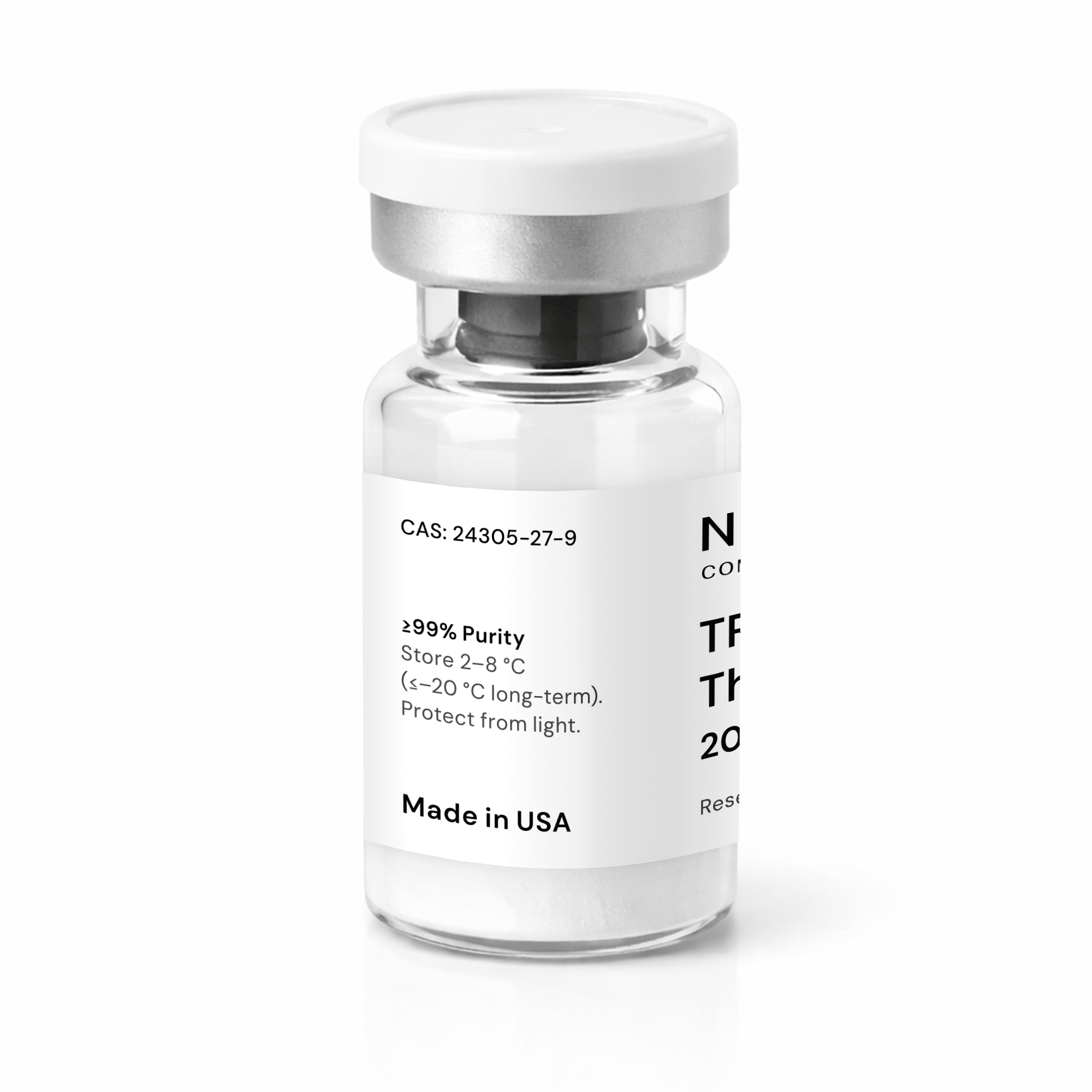
Store at 2–8°C for short-term use. For long-term storage, keep at ≤–20°C. Minimize exposure to room temperature and protect from light to maintain peptide stability.
Are you looking to buy TRH Thyrotropin (20mg) online?
If you’re looking to order TRH Thyrotropin (20mg) online at wholesale prices, contact Medical Spa RX for guidance on how to do so.
This product is supplied strictly for laboratory research use only and is not approved for human or veterinary administration. It is not intended for diagnostic, therapeutic, or clinical applications. Any reference to biological activity or potential effects is based solely on preclinical or in-vitro findings and should not be interpreted as validated clinical outcomes. Researchers are responsible for ensuring proper handling, storage, and disposal in accordance with institutional, federal, and international guidelines. By purchasing or using this material, the buyer confirms that they are a qualified researcher and that the product will be used exclusively in controlled research settings compliant with all applicable regulations.
Sources
https://pubmed.ncbi.nlm.nih.gov/15481810
https://pubmed.ncbi.nlm.nih.gov/25563352
https://www.frontiersin.org/journals/cellular-neuroscience/articles/10.3389/fncel.2018.00490/full