




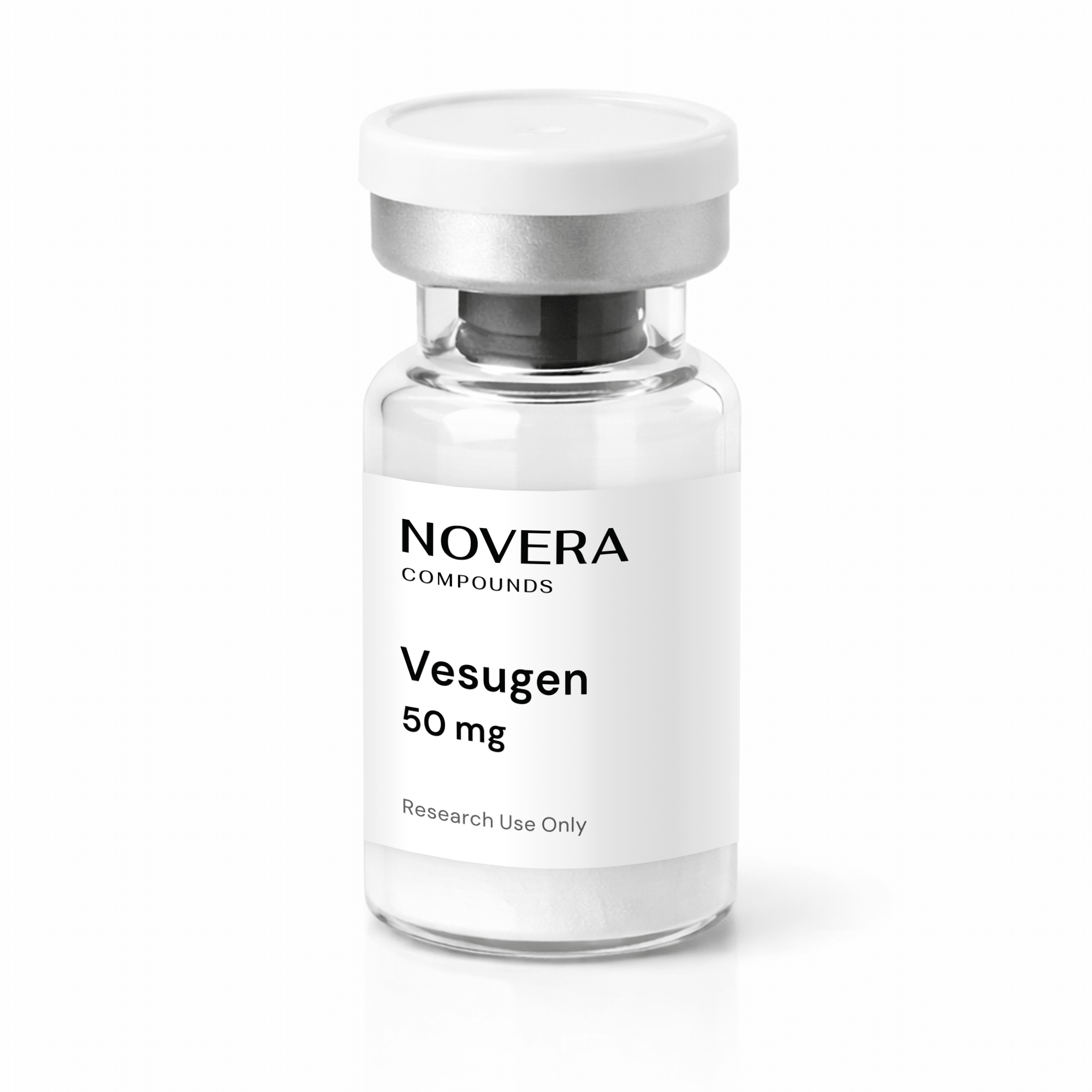
What Are the Purported Benefits of Vesugen (50mg)?
Vesugen (50 mg), also known as the T-38 peptide, is a synthetic tripeptide bioregulator composed of the amino acid sequence Lys–Glu–Asp (KED). It was initially derived from vascular tissue extracts and later synthesized for experimental research. Vesugen has been studied for its influence on endothelial function and vascular gene expression, particularly in controlled laboratory settings. Preclinical studies describe its involvement in angiogenic signaling, extracellular matrix remodeling, and smooth muscle cell activity. However, no therapeutic outcomes have been reported thus far.
Vesugen is investigated as a molecular regulator of vascular-associated transcriptional programs and related cellular signaling pathways. Research has examined its role in endothelial regulation, neuronal cell survival signaling, and gene-expression control mechanisms relevant to vascularized tissues. Its short, linear sequence supports use in controlled experiments focused on peptide-mediated modulation of cellular and molecular processes.
What is the Chemical Makeup of Vesugen (50mg)?
Vesugen is a compact tripeptide composed of three amino acids. It does not form higher-order secondary or tertiary structures under standard laboratory conditions. This structural simplicity supports reproducible biochemical interaction studies involving nucleic acids, transcription factors, and intracellular signaling complexes.
- Amino acid sequence: Lys-Glu-Asp (KED)
- Peptide length: 3 amino acids
- Molecular formula: C₁₅H₂₆N₄O₈
- Molecular weight: 390.39 g/mol
The 50 mg designation refers to the total amount of lyophilized material per vial and supports extended analytical workflows. Laboratories that order Vesugen peptide typically do so for multi-phase experimental designs rather than clinical use.
What Does Scientific Research Say About Vesugen (50mg)?
Vesugen is employed in preclinical research to examine peptide-driven regulation of endothelial function, neuronal gene expression, and metabolic signaling pathways. Its biochemical profile supports mechanistic studies addressing oxidative stress responses, transcriptional regulation, and enzyme-linked intracellular modulation in experimental models.
Primary research applications include:
- Endothelial cell proliferation and gene-expression studies
- Neuronal differentiation and survival signaling research
- Sirtuin-associated metabolic pathway investigations
- Oxidative stress and hypoxia-response models
- Epigenetic regulation and transcriptional control assays
Preclinical evidence indicates that Vesugen influences gene expression through peptide–DNA and peptide–protein interactions that alter transcriptional activity in vascular and neural cell populations. Experimental models report modulation of pathways involving SIRT1, endothelin signaling, and enzymes of the oxidative stress response. At the molecular level, KED peptides have been associated with the regulation of transcription factors involved in apoptosis, cell proliferation, and metabolic homeostasis.
Both in-vitro and animal-based models have examined Vesugen in the context of endothelial regulation, neuronal marker expression, oxidative stress modulation, and metabolic signaling. Additional investigations extend into experimental neurobiology and metabolic research, with an emphasis on hypoxia-response pathways, mitochondrial regulation, and epigenetic control of gene expression.
All findings remain confined to exploratory preclinical research. Vesugen has not undergone FDA approval for clinical use and is supplied solely for laboratory investigation. Institutions that buy Vesugen peptide use it within defined research and regulatory frameworks.
What Are the Storage Conditions for Vesugen (50mg)?
Vesugen is supplied as a laboratory-grade peptide for analytical and experimental applications. Appropriate storage preserves structural integrity and research reliability.
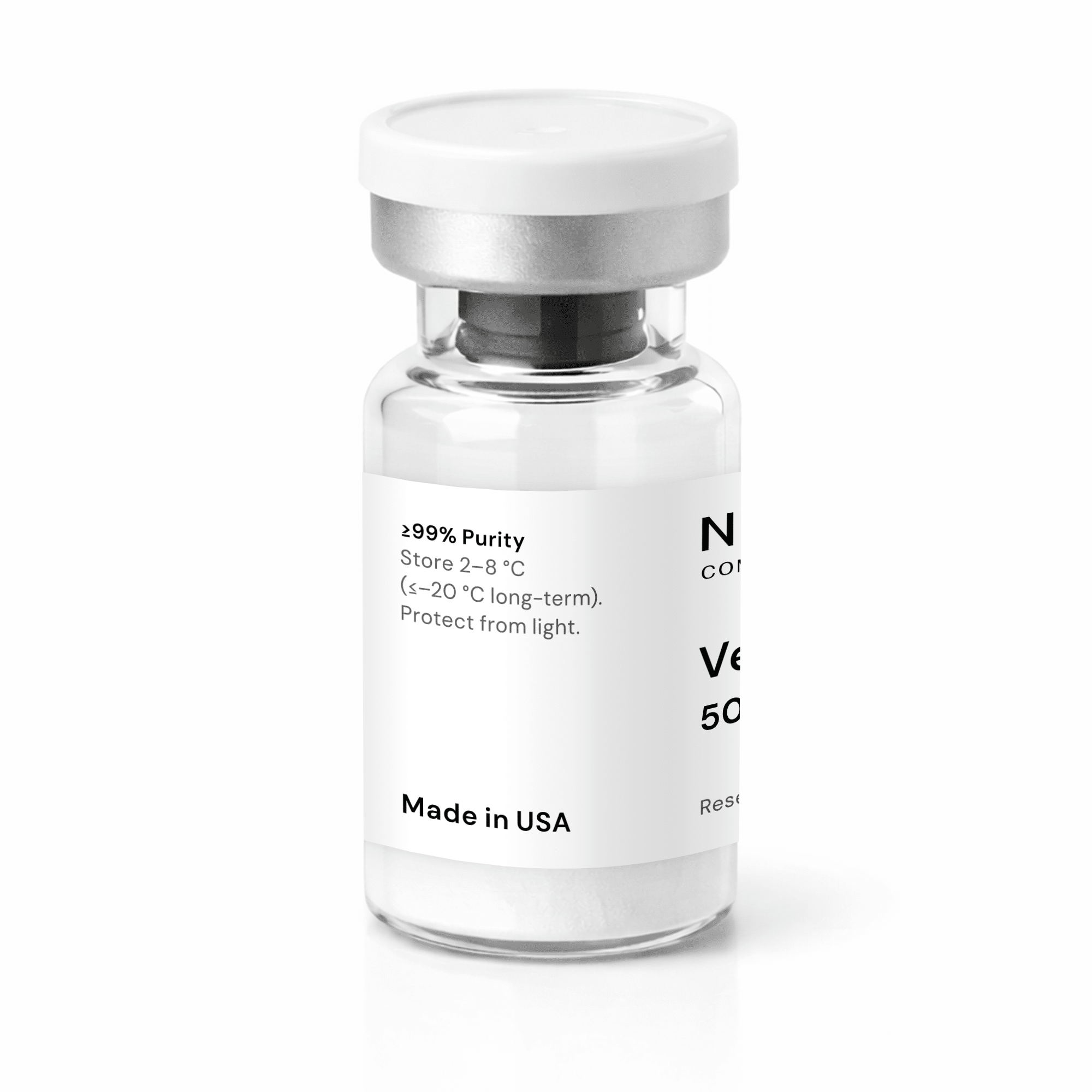
- Lyophilized Powder (Unopened): Store in a cool, dry, and dark environment. For long-term storage, freezing at −20°C is recommended. Refrigeration (2–8°C) is suitable for shorter durations.
- After Reconstitution: Refrigerate at 2–8°C and use within 7–10 days.
- Handling Tips: Allow vials to reach room temperature before opening to prevent moisture condensation. Protect from direct light and humidity to preserve peptide integrity.
Are you looking to buy Vesugen (50mg) online?
If you’re looking to order Vesugen (50mg) online at wholesale prices, contact Medical Spa RX for guidance on how to do so.
This product is supplied strictly for laboratory research use only and is not approved for human or veterinary administration. It is not intended for diagnostic, therapeutic, or clinical applications. Any reference to biological activity or potential effects is based solely on preclinical or in-vitro findings and should not be interpreted as validated clinical outcomes. Researchers are responsible for ensuring proper handling, storage, and disposal in accordance with institutional, federal, and international guidelines. By purchasing or using this material, the buyer confirms that they are a qualified researcher and that the product will be used exclusively in controlled research settings compliant with all applicable regulations.
Sources
https://pubmed.ncbi.nlm.nih.gov/19830585
https://www.mdpi.com/1420-3049/26/22/7053
https://link.springer.com/article/10.1134/S2079057015040116https://khavinson.info/assets/files/2008-Kozina.pdf