



VIP (6mg) About This Product
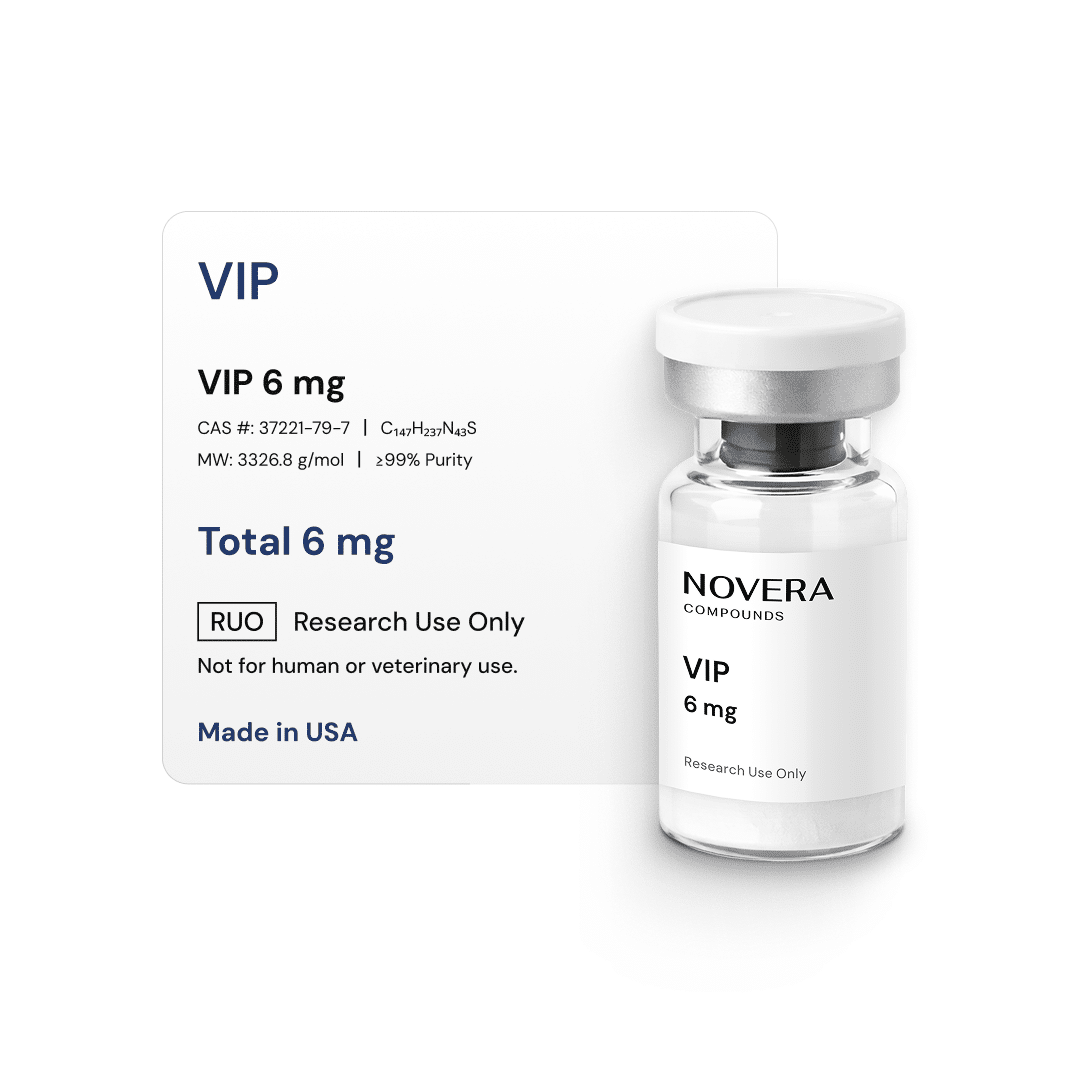
Vasoactive intestinal peptide (VIP) is a naturally occurring 28-amino acid neuropeptide belonging to the secretin/glucagon peptide superfamily. With a molecular weight of 3,326.8 g/mol and molecular formula C₁₄₇H₂₃₇N₄₃O₄₃S, the VIP peptide is endogenously produced throughout the central and peripheral nervous systems, with significant distribution in the gastrointestinal tract, pancreas, immune tissues, and vascular system.
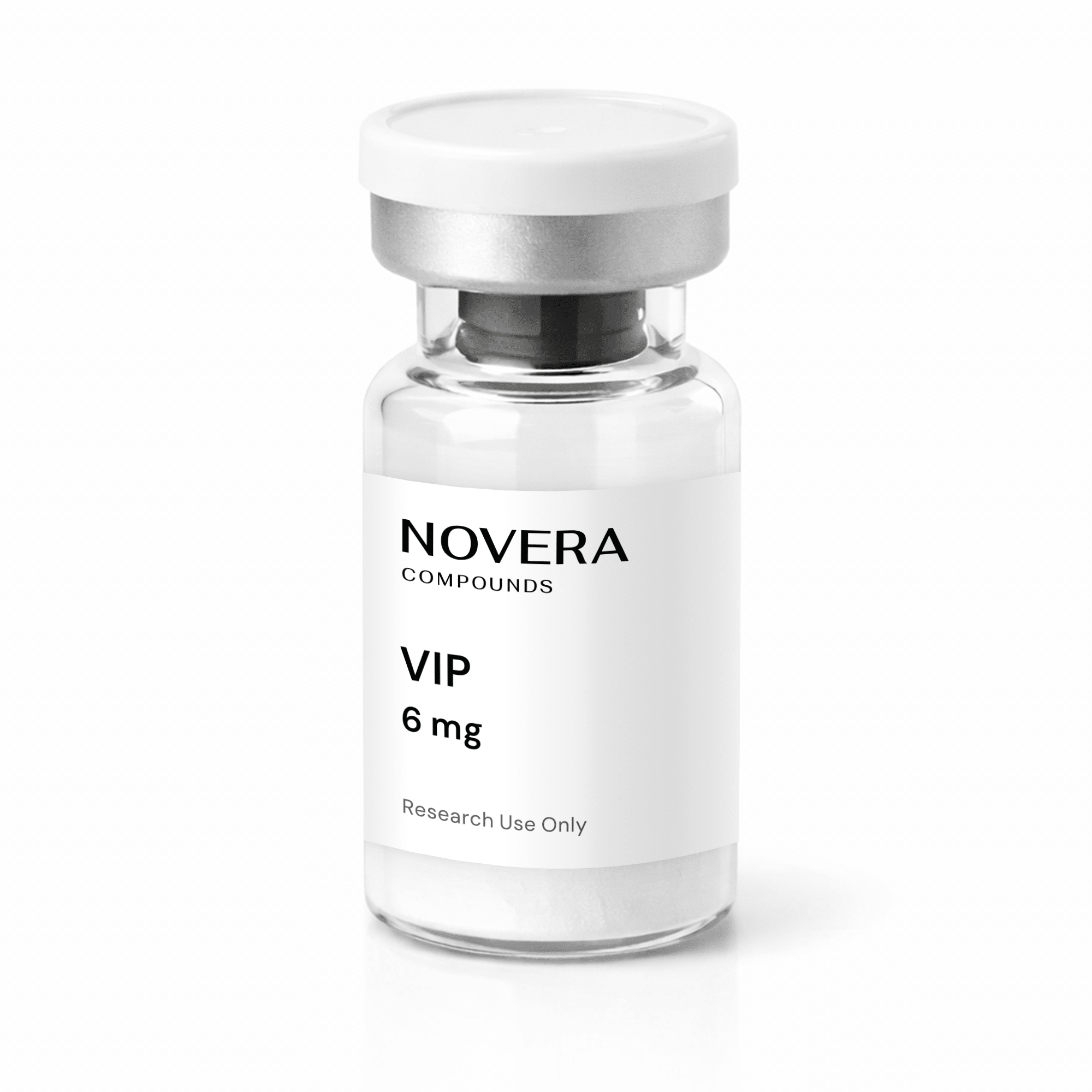
This 6 mg product is supplied as a lyophilized powder at >96% purity, typically provided as a trifluoroacetic acid (TFA) salt, and is intended exclusively for controlled laboratory research. Laboratories that buy VIP peptide commonly use it to investigate neuroendocrine signaling, immune regulation, vascular physiology, and gastrointestinal function. VIP has been extensively studied across multiple biological systems, making it a well-characterized tool for preclinical research applications.
VIP (6mg) Key Features and Benefits
- VIP research peptide: 28-amino acid neuropeptide with a defined structure and established molecular specifications
- High purity standard: >96% purity, verified by analytical testing to support reproducible research results
- Lyophilized 6 mg vial format: Optimized for storage stability and precise experimental preparation
- Multi-system research relevance: Used in neuroscience, immunology, vascular biology, and gastrointestinal physiology studies
- Endogenous signaling molecule: Native distribution across neural, immune, and vascular tissues supports diverse model applications
- Well-characterized signaling profile: Enables investigation of neuroimmune and neuroendocrine interactions
- Research-only availability: Qualified investigators may order VIP peptide exclusively for approved experimental use
- For laboratory research use only: Not approved for human or veterinary medical use
VIP (6mg) Mechanism & Research Applications
VIP functions as a multifunctional neuropeptide signaling molecule involved in communication between the nervous, immune, and endocrine systems. In laboratory research, VIP exerts its effects primarily through G-protein–coupled receptors (VPAC1 and VPAC2), leading to activation of adenylate cyclase and increased intracellular cyclic AMP (cAMP) levels. This signaling profile allows precise investigation of downstream cellular responses under controlled conditions.
- Immune Regulation Research: VIP has been extensively studied for its role in immune modulation. Experimental models report effects on cytokine expression patterns, including suppression of pro-inflammatory mediators and promotion of anti-inflammatory signaling. Studies examine VIP-associated effects on T-cell differentiation, dendritic cell activity, and macrophage-mediated responses in vitro and in vivo.
- Vascular Function Research: In vascular biology, VIP exhibits potent vasodilatory activity. Preclinical investigations examine its role in vascular tone regulation, endothelial signaling, blood flow modulation, and pulmonary vascular physiology.
- Gastrointestinal Physiology Research: VIP is widely used to study electrolyte secretion, smooth muscle relaxation, and mucosal barrier regulation in experimental gastrointestinal systems.
- Neuroprotection and Neuroinflammation Research: Additional research explores VIP-associated signaling in neuroprotection, neuronal survival, and modulation of neuroinflammatory pathways within nervous system models.
All applications described remain limited to preclinical research contexts and do not represent therapeutic claims.
VIP (6mg) Dosing & Observed Effects in Research
In cell culture systems, VIP is typically applied at nanomolar concentrations (approximately 1–10 nM), consistent with receptor binding and signaling characteristics in immune and neuronal cells. Some assays cover a broader range (0.01–100 nM) to assess dose-dependent responses.
In rodent research models, VIP has been administered via intraperitoneal or inhalation routes at reported doses of 1–5 nmol per animal (approximately 2–15 µg per mouse), often in repeated-dose protocols.
Reported laboratory observations include:
- Increased intracellular cAMP signaling
- Modulation of cytokine expression profiles
- Altered immune-cell activation and differentiation markers
- Vasodilatory responses in vascular preparations
- Effects on gastrointestinal ion transport and barrier integrity
- Suppression of inflammatory mediator expression
All observations derive exclusively from in vitro and animal studies. No FDA-approved clinical indications exist for VIP.
VIP (6mg) Storage, Safety & References
Store VIP (6 mg) as a lyophilized powder at 2–8 °C, protected from light and moisture, with the vial tightly sealed. Reconstitution should be performed using sterile, laboratory-grade solvents under aseptic conditions.
Reconstituted solutions should be stored at 2–8 °C and used within protocol-defined timeframes (commonly 1–2 weeks). For extended storage, aliquots may be frozen at −20 °C to −80 °C. Avoid repeated freeze–thaw cycles.
Standard laboratory safety practices apply, including the use of personal protective equipment (PPE). Avoid inhalation, ingestion, or direct contact with skin and eyes. Dispose of materials in accordance with institutional and regulatory laboratory guidelines.
References
https://pmc.ncbi.nlm.nih.gov/articles/PMC3883350
https://pmc.ncbi.nlm.nih.gov/articles/PMC6743256
https://pubmed.ncbi.nlm.nih.gov/31668399
https://pubmed.ncbi.nlm.nih.gov/22328918
https://pubmed.ncbi.nlm.nih.gov/20694540
Compliance Notice
This product is intended for laboratory research use only and is not approved for human or veterinary use.