




What Are the Purported Benefits of Wolverine Blend – BPC-157 (10 mg) / TB500 (10 mg)?
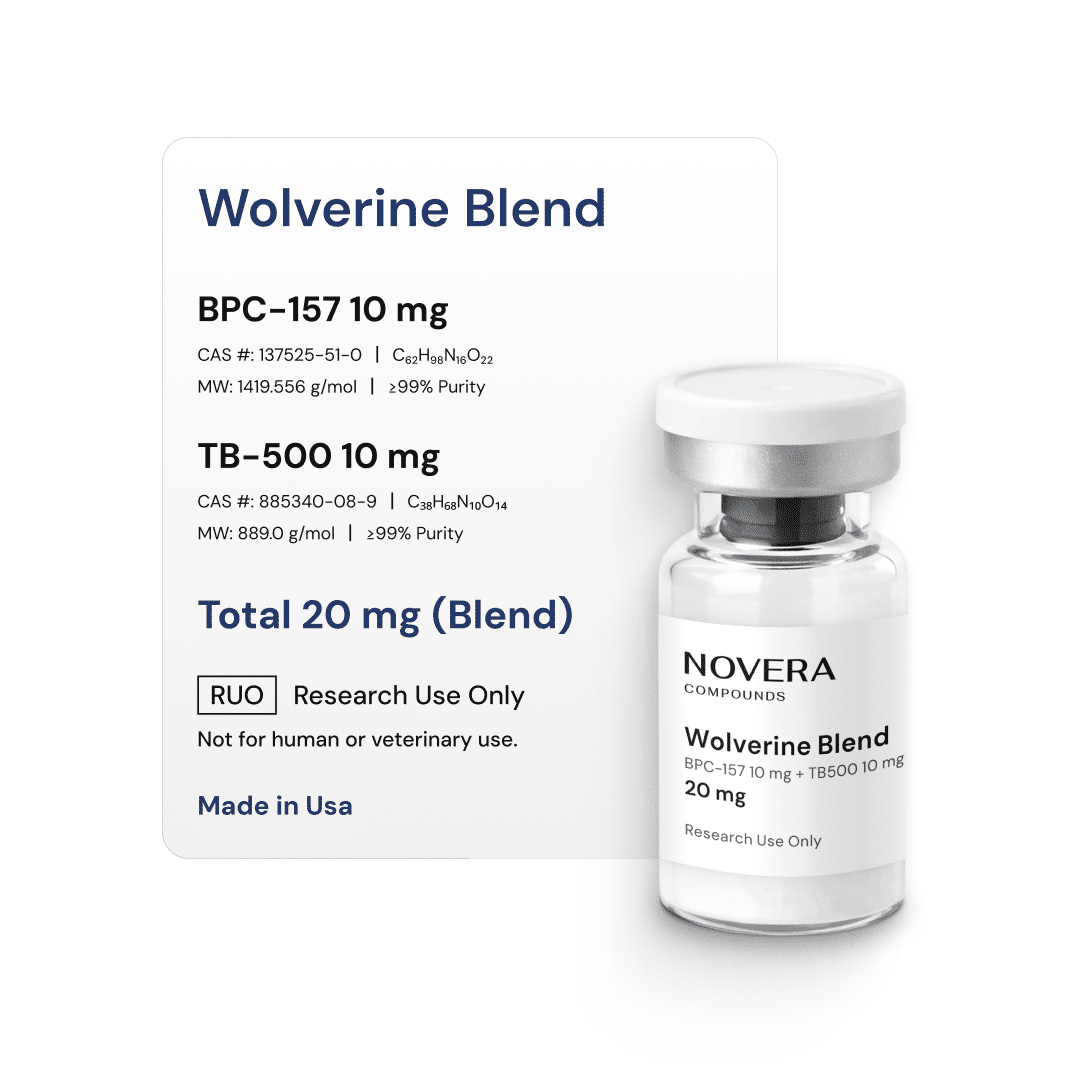
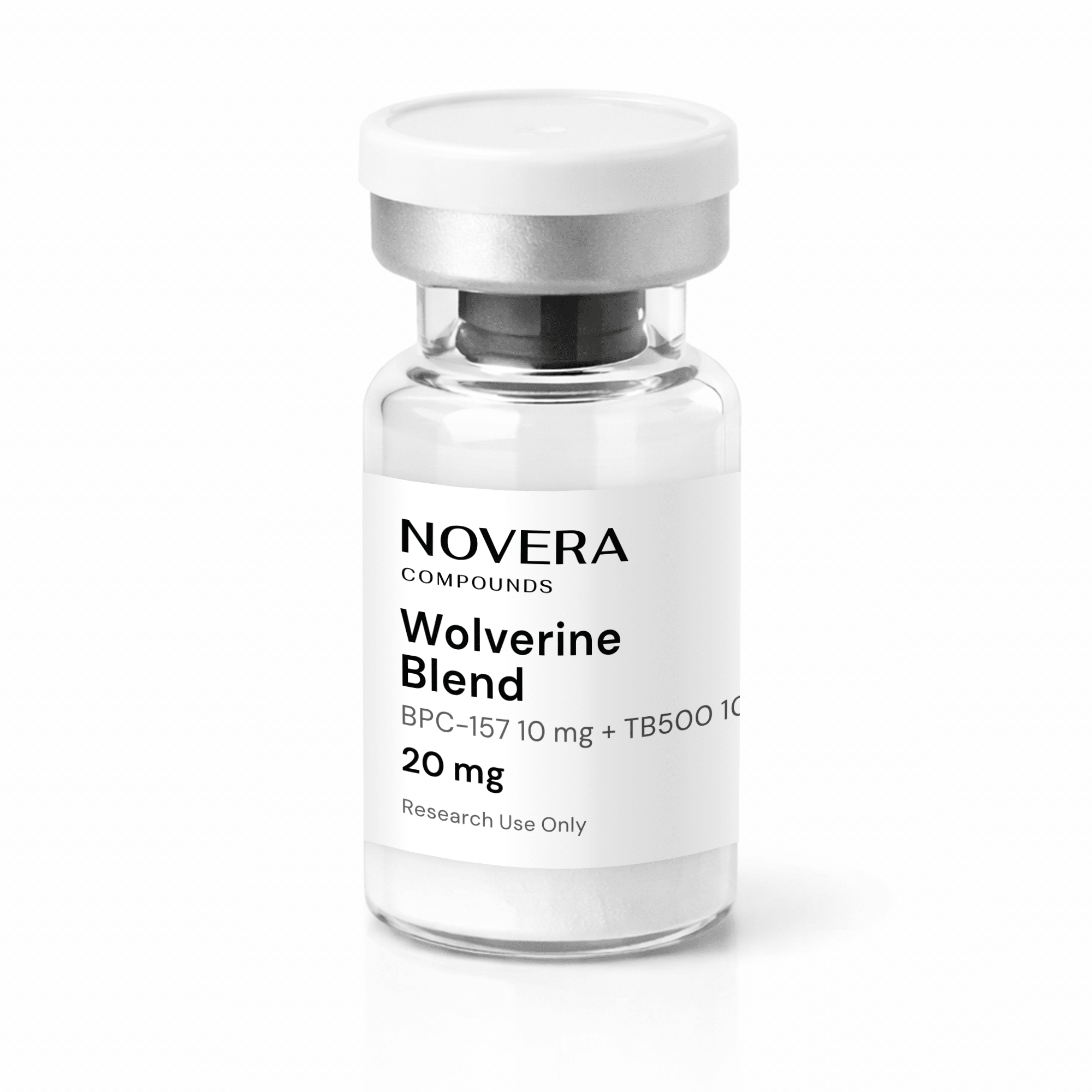
Wolverine Blend – BPC-157 (10 mg) / TB-500 (10 mg) is a research peptide formulation manufactured by Novera Compounds and classified under Peptides – Healing & Regenerative Peptides, with a total peptide content of 20 mg per vial.
Wolverine Blend combines BPC-157 and TB-500, two peptides that have been examined in preclinical research for their roles in tissue repair, cellular migration, and structural organization.
BPC-157 is a 15–amino acid gastric peptide fragment studied for its ability to modulate nitric oxide pathways and growth-factor signaling—processes linked to cell survival and migration. In tendon research models, BPC-157 has been associated with enhanced fibroblast activity, directional cell movement, and increased expression of growth hormone receptors on tendon fibroblasts.
TB-500 is a synthetic peptide related to thymosin beta-4, a protein involved in actin polymerization and cytoskeletal organization. Research literature associates TB-500 with regulation of cell motility, structural remodeling, wound repair processes, angiogenesis, and fibrotic signaling pathways.
These peptides act through distinct but complementary molecular mechanisms. BPC-157 has been examined primarily for its effects on intracellular signaling and gene-level regulation related to repair, while TB-500 is studied for its influence on the structural systems that enable cells to move and reorganize within damaged tissue.
Research interest centers on whether this combination addresses multiple rate-limiting steps in tissue repair, including cell recruitment, fibroblast function, extracellular matrix organization, vascular development, and the transition from inflammatory to remodeling phases. While individual peptide effects are documented in preclinical models, the combined effects of this specific formulation remain to be evaluated in controlled, peer-reviewed studies.
What is the Chemical Makeup of Wolverine Blend – BPC-157 (10 mg) / TB500 (10 mg)?
This blend contains two synthetic peptides supplied within a single vial at the following verified quantities, for a total vial content of 20 mg:
- BPC-157: 10 mg
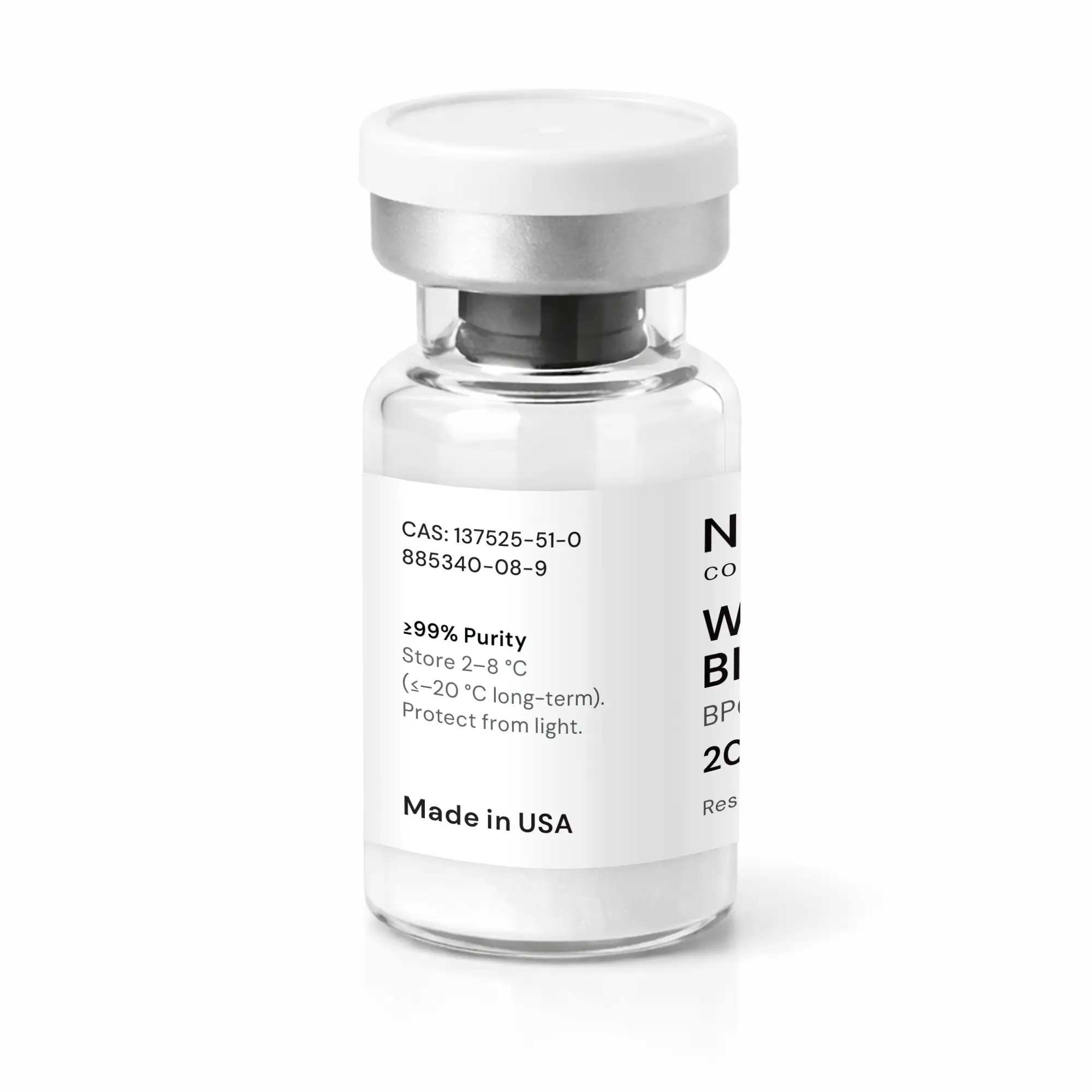
(CAS: 137525-51-0, Molecular Weight: 1419.535 g/mol, Chemical Formula: C₆₂H₉₈N₁₆O₂₂) - TB-500 (TB-4): 10 mg
(CAS: 885340-08-9, Molecular Weight: 889.0 g/mol, Chemical Formula: C₃₈H₆₈N₁₀O₁₄)
Each peptide has a distinct amino acid chain length and molecular structure, enabling researchers to investigate multiple, complementary cellular pathways simultaneously, including intracellular signaling, cytoskeletal organization, and tissue remodeling processes.
The peptide sequences associated with this formulation are:
- BPC-157:
Gly–Glu–Pro–Pro–Pro–Gly–Lys–Pro–Ala–Asp–Asp–Ala–Gly–Leu–Val - TB-500 (TB-4):
Ac–Ser–Asp–Lys–Pro–Asp–Met–Ala–Glu–Ile–Glu–Lys–Phe–Asp–Lys–Ser–Lys–Leu–Lys–Lys–Thr–Glu–Thr–Gln–Glu–Lys–Asn–Pro–Leu–Pro–Ser–Lys–Glu–Thr–Ile–Glu–Gln–Glu–Lys–Gln–Ala–Gly–Glu–Ser
These defined molecular and sequence characteristics allow for reproducible experimental use in preclinical and in vitro research models focused on tissue repair and regenerative signaling.
What Does Scientific Research Say About Wolverine Blend – BPC-157 (10 mg) / TB500 (10 mg)?
This peptide combination is used in experimental models examining:
- Dermal and soft-tissue wound repair, with emphasis on fibroblast recruitment and extracellular matrix deposition
- Tendon and ligament injury models, focusing on cell survival, outgrowth, and tissue organization
- Fibrotic pathway regulation and remodeling dynamics in connective tissues
- Angiogenesis and vascular network development during tissue regeneration
Effective tissue repair requires fibroblasts and immune cells to migrate to sites of injury. This migration depends on cytoskeletal remodeling, particularly actin-based cellular mechanics, which enable cells to move, attach, and reorganize within damaged tissue.
In tendon-focused preclinical studies, BPC-157 has been associated with enhanced cell survival and directed migration toward injury sites, suggesting involvement in repair-associated signaling programs. TB-500, studied through thymosin beta-4 research, has been linked to the regulation of actin-mediated cell movement, vessel formation, and tissue restructuring.
The proposed research hypothesis is that BPC-157 may support a signaling environment that enhances cellular responsiveness and survival, while TB-500 may facilitate the physical processes required for cell migration and structural organization. Validation of additive or synergistic effects requires controlled experimental designs that compare the combined formulation with each peptide alone, using standardized injury models and defined endpoints, such as migration rates, collagen organization, histological scoring, and functional recovery measures.
The research foundation for this formulation draws from tendon injury studies involving BPC-157 and thymosin beta-4 literature describing roles in remodeling, fibrosis regulation, and angiogenesis. For investigative work, some groups buy Wolverine peptide blends to compare combined exposure with single-peptide controls in matched models.
What are the Storage Conditions for Wolverine Blend – BPC-157 (10 mg) / TB500 (10 mg)?
Unreconstituted, lyophilized Wolverine Blend should be stored at –20°C and protected from light, moisture, and temperature fluctuations. Both peptides are sensitive to temperature and hydrolytic degradation. Minimize freeze–thaw cycles by transferring vials promptly to the recommended storage temperature upon receipt.
After reconstitution using bacteriostatic water, sterile water, or phosphate-buffered saline (PBS):
- Bacteriostatic water: Store at 2–8°C and use within 7–14 days
- Sterile water or PBS: Store at 2–8°C and use within 24–48 hours
For longer experimental timelines, divide reconstituted solutions into single-use aliquots stored at –20°C. Avoid repeated freeze–thaw cycles. Document preparation date, buffer type, and concentration for each aliquot. Sterile handling and adherence to institutional laboratory safety protocols are required.
Are you looking to buy Wolverine Blend – BPC-157 (10 mg) / TB500 (10 mg) online?
If you’re looking to order Wolverine Blend – BPC-157 (10 mg) / TB500 (10 mg) online at wholesale prices, contact Medical Spa RX for guidance on how to do so.
This product is supplied solely for laboratory research and is not approved for human or veterinary administration. It is not intended for diagnostic, therapeutic, or clinical applications. Any reference to biological activity or potential effects is based solely on preclinical or in vitro findings and should not be interpreted as validated clinical outcomes. Researchers are responsible for ensuring proper handling, storage, and disposal in accordance with institutional, federal, and international guidelines. By purchasing or using this material, the buyer confirms that they are a qualified researcher and that the product will be used exclusively in controlled research settings compliant with all applicable regulations.
Sources
https://pubmed.ncbi.nlm.nih.gov/21030672
https://pubmed.ncbi.nlm.nih.gov/25415472
https://pubmed.ncbi.nlm.nih.gov/27847966