




What Are The Purported Benefits Of Wolverine Blend – BPC-157 (5mg) / TB500 (5mg)?
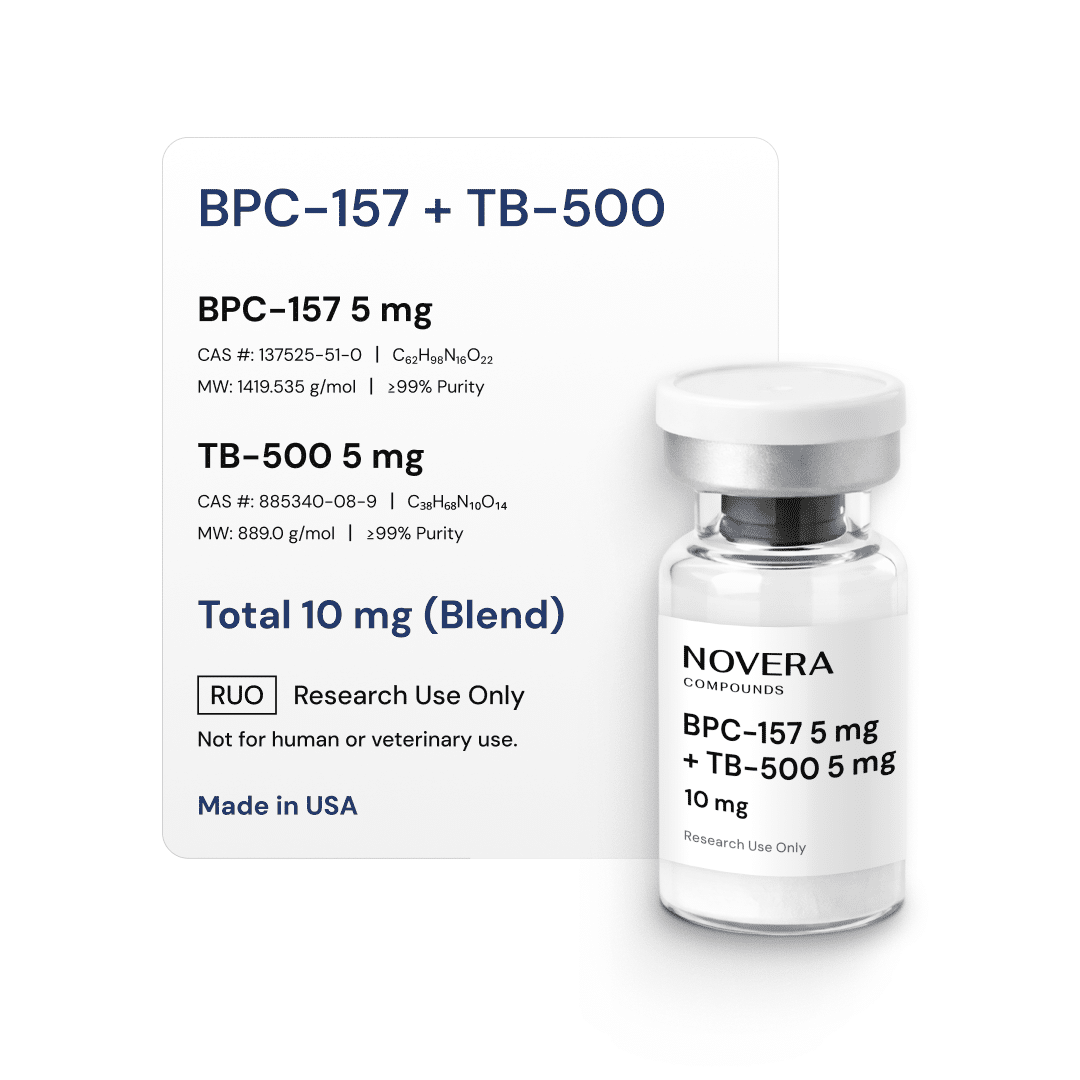
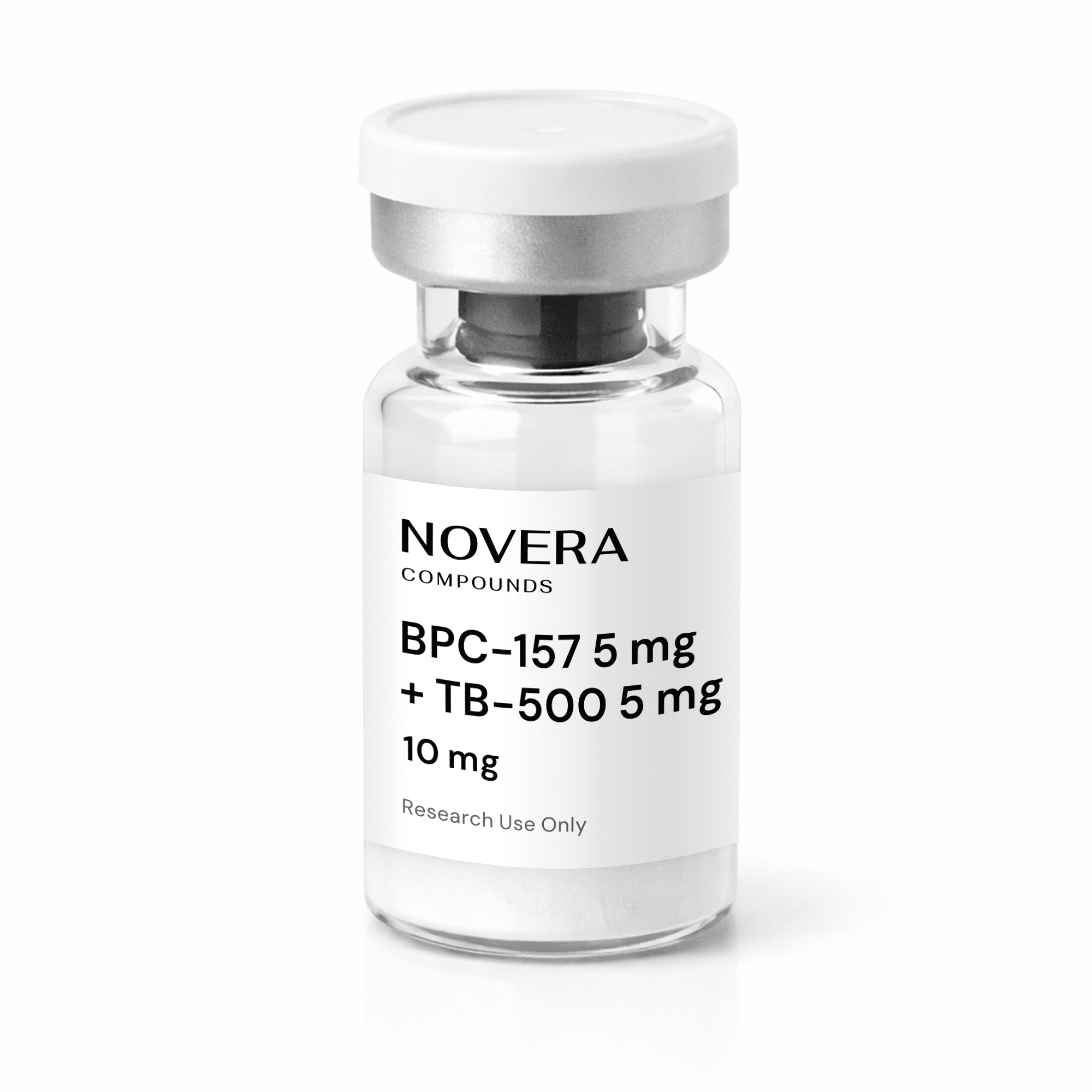
Wolverine Blend combines two widely studied research peptides—BPC-157 (5mg) and TB500 (5mg)—that are commonly explored in laboratory settings for their roles in cellular repair and regenerative processes.
In preclinical and in vitro research contexts, BPC-157 has been studied for its interactions with tissue repair-related processes, angiogenesis-related responses, and inflammatory pathway modulation. TB500 has been studied for its involvement in cell migration-related processes, actin-regulatory mechanisms, and wound-healing-related signaling.
Together, this combination is commonly examined in research models focused on:
- Pathways related to cellular regeneration
- Soft-tissue-recovery-related processes
- Inflammatory-response-related modulation
- Musculoskeletal-system-repair-related mechanisms
It is important to note that these observations are limited to controlled research environments and do not represent established clinical effects or therapeutic outcomes.
What Is The Chemical Makeup Of Wolverine Blend – BPC-157 (5mg) / TB500 (5mg)?
Wolverine Blend is a dual-peptide formulation composed of:
- BPC-157 (5mg): A synthetic pentadecapeptide consisting of 15 amino acids, originally derived from a protein fragment identified in gastric secretions. It is studied for its peptide-stability characteristics and resistance to enzymatic degradation.
- TB500 (5mg): A synthetic peptide fragment of thymosin beta-4, a naturally occurring protein involved in cell-migration processes and cytoskeletal-organization-related mechanisms. TB500 has been studied for its role in actin binding and cellular movement in research settings.
These peptides are typically supplied in lyophilized (freeze-dried) form to preserve structural integrity and stability during storage and transport.
What Does Scientific Research Say About Wolverine Blend – BPC-157 (5mg) / TB500 (5mg)?
Scientific literature on BPC-157 and TB500 largely derives from preclinical studies, including animal models and in vitro experiments.
BPC-157 research has explored:
- Gastrointestinal tissue-related recovery and repair processes
- Angiogenesis and vascular healing
- Interaction with nitric oxide pathways
TB500 studies have focused on:
- Cell migration and differentiation
- Wound-healing-related processes and tissue-remodeling-related pathways
- Cytoskeletal organization via actin regulation
While both peptides have shown activity in controlled laboratory environments, there is currently limited high-quality human clinical data to validate these findings in clinical practice.
As such, Wolverine Blend is best understood as a research compound combination used to investigate the synergistic effects between these two peptides.
What Are The Storage Conditions For Wolverine Blend – BPC-157 (5mg) / TB500 (5mg)?
To maintain the stability and integrity of Wolverine Blend:
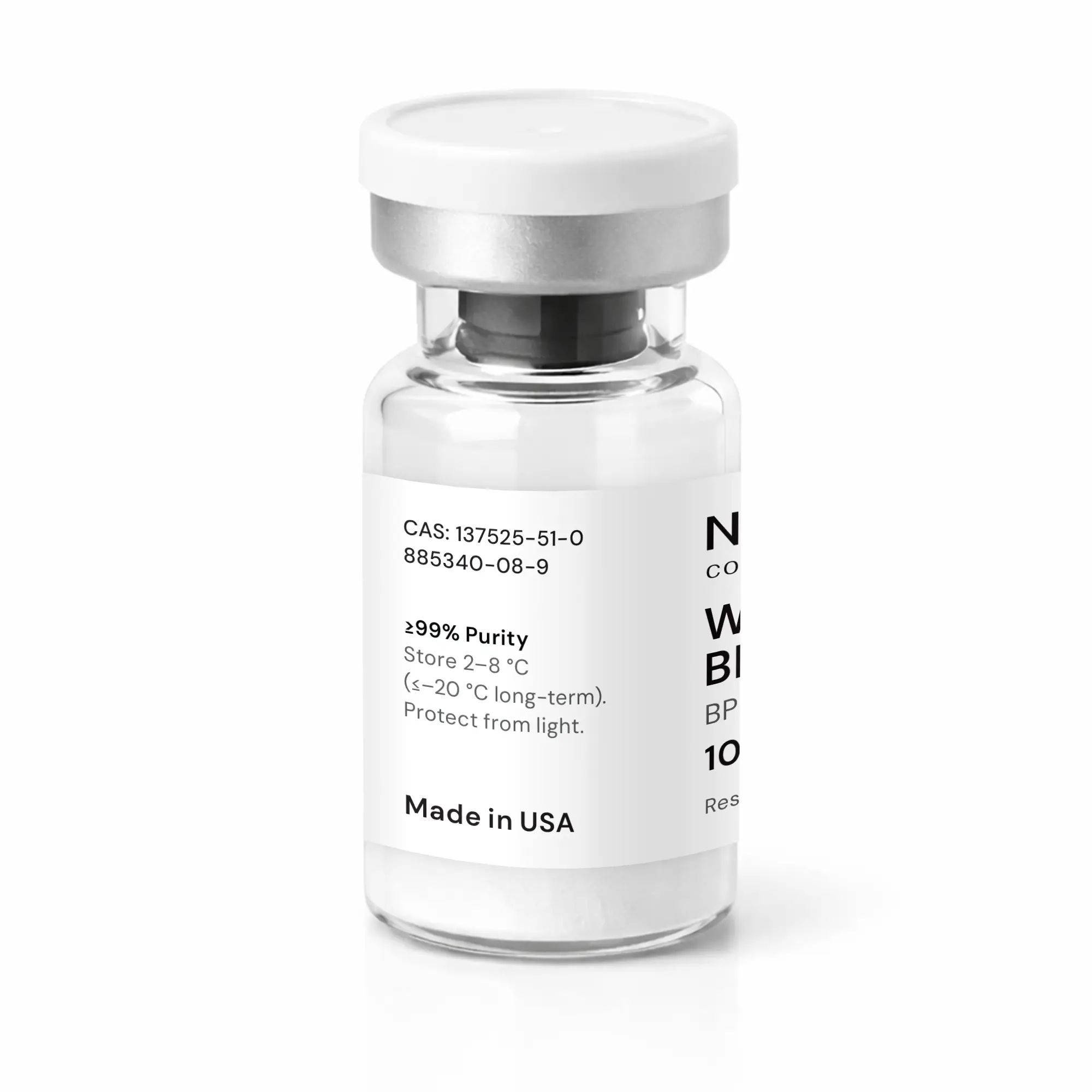
- Store in a cool, dry environment, away from direct light.
- Lyophilized peptide should be stored at 2–8°C (refrigerated) to help maintain structural integrity.
- Keep in the original, sealed container until use.
- Avoid repeated freeze-thaw cycles once reconstituted.
- Use proper laboratory handling protocols at all times.
Following appropriate storage practices is essential to preserve peptide structure and ensure reliability in research applications.
Are you looking to buy Wolverine Blend – BPC-157 (5mg) / TB500 (5mg) online?
If you’re looking to order Wolverine Blend – BPC-157 (5mg) / TB500 (5mg) online at wholesale prices, contact Medical Spa RX for guidance on how to do so.
This product is supplied strictly for laboratory research use only and is not approved for human or veterinary administration. It is not intended for diagnostic, therapeutic, or clinical applications. Any reference to biological activity or potential effects is based solely on preclinical or in-vitro findings and should not be interpreted as validated clinical outcomes. Researchers are responsible for ensuring proper handling, storage, and disposal in accordance with institutional, federal, and international guidelines. By purchasing or using this material, the buyer confirms that they are a qualified researcher and that the product will be used exclusively in controlled research settings compliant with all applicable regulations.
References
- Chang CH, Tsai WC, Lin MS, Hsu YH, Pang JH. The promoting effect of pentadecapeptide BPC 157 on tendon healing involves tendon outgrowth, cell survival, and cell migration. J Appl Physiol (1985). 2011;110(3):774-780. doi:10.1152/japplphysiol.00945.2010
- Malinda KM, Sidhu GS, Mani H, et al. Thymosin beta4 accelerates wound healing. J Invest Dermatol. 1999;113(3):364-368. doi:10.1046/j.1523-1747.1999.00708.x
- Philp D, Goldstein AL, Kleinman HK. Thymosin beta4 promotes angiogenesis, wound healing, and hair follicle development. Mech Ageing Dev. 2004;125(2):113-115. doi:10.1016/j.mad.2003.11.005